



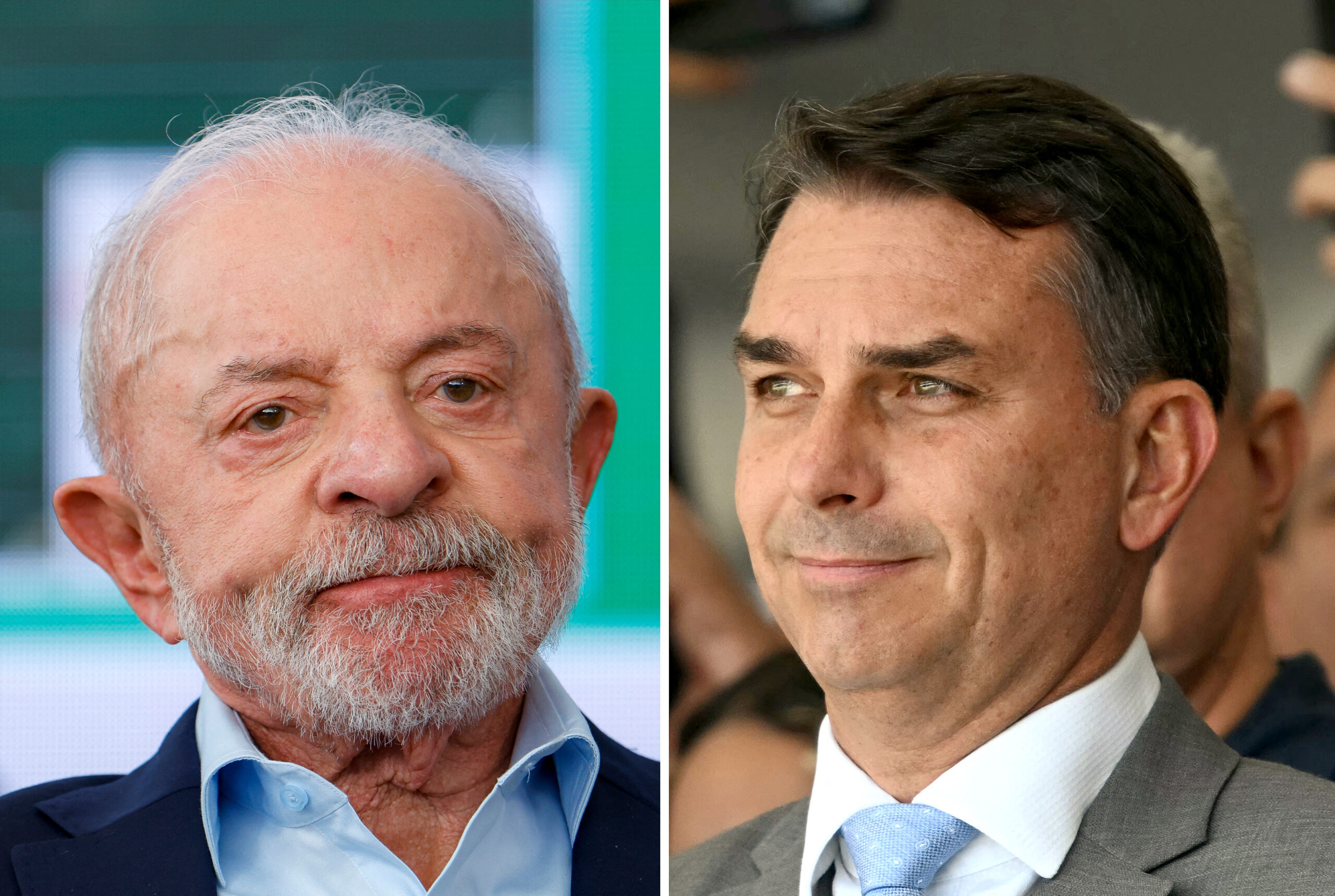
Senator Flávio Bolsonaro had a stronger than expected showing in the first round of Brazil’s presidential election on October 4, winning with 47.03% of votes compared to incumbent President Luiz Inácio Lula da Silva’s 45.16%. Since no candidate received more than 50%, they will face off in a second round on October 25.
Bolsonaro’s Partido Liberal (PL) also won key congressional races, and starting next year it will hold more seats than any other party in the Senate (28 of 81) and lower house (121 of 513).
The candidates had polled neck-and-neck in the run-up to the vote just as a major corruption scandal extended to much of Brazil’s economic and political establishment. Many Brazilians have been unenthusiastic about this election, and abstention (21.08%) was at its highest level since 1998.
AQ asked analysts to share their reactions and perspectives.

Brian Winter
Editor-in-Chief, Americas Quarterly
Flávio Bolsonaro will be the next president of Brazil unless the so-called “bomba” is real: The long-rumored existence of additional damning evidence in Banco Master or other scandals, supposedly being preserved for release during the second round. It could well be an urban myth, but I’ve been hearing about it from well-placed authorities since at least June. To swing the result to Lula, given the overwhelming math of Sunday’s result, and the resounding strength of the bolsonarista right in down-ballot races, it would truly have to be a hydrogen bomb, the kind they used to set off in the South Pacific.
Looking at the overall result, I am struck by the parallels: Brazil’s 2026 election, while not over yet, is looking so much like the U.S. in 2024. The triumphant return of the “Tropical Trumps,” prevailing over an 80-something president who lost his touch (as if Joe Biden never dropped out), as pocketbook issues, scandals, and worries over crime led the electorate to cast aside the sins of the prior term — COVID crisis response, scandals, and January 8th (6th).
Just like the U.S., this is a massive conservative wave election in Congress and governor’s races that — barring a surprise Lula comeback — will allow the Bolsonaros not just to return, but return more powerful than before, empowered to pursue their agenda and exact revenge upon enemies including the so-called deep state. The Brazilian variant may bring impeachment of Supreme Court judges and a purge of federal bureaucracy.
There will be excitement in markets, and it will be largely justified. Flávio Bolsonaro will have greater latitude than expected to pursue his agenda. This will begin with negotiations with Congress for an amnesty for his father Jair Bolsonaro, currently under house arrest. But given the scale of the result, Bolsonaro should have plenty of political capital left over to address Brazil’s biggest economic vulnerability today: a nominal budget deficit that approached an alarming 10% of GDP in recent months. Respected economic officials who had previously been shy about joining Flávio’s team may now lose their inhibitions.
Combine this new policy outlook with Brazil’s other assets, including rising commodity prices, rising oil exploration, and a very strong agribusiness sector, and there are reasons to think good times are ahead for Brazil.

Alessandra Ribeiro
Partner and Director of Macroeconomics and Sectoral Analysis at Tendências Consultoria in São Paulo, Brazil
Brazil’s presidential election showed a more favorable performance by the right candidate, Flávio Bolsonaro, than overall polling had indicated for the first round, highlighting the effect of strategic voting around the candidate seen as best positioned to challenge President Lula. Bolsonaro’s first-round lead (47.03%) over Lula (45.16%) suggests a high probability of a second-round triumph.
Beyond Bolsonaro’s potential victory, based on the results, the Brazilian Congress appears to have a predominantly center-right configuration. In theory, this scenario would suggest a favorable environment for advancing the agenda advocated by Bolsonaro.
However, this is unlikely. Despite the majority of center-right parties in Congress, recent years have seen the Executive weaken relative to the Legislative, which has become increasingly independent in advancing its own agenda in the Brazilian Congress. Additionally, the center-right parties lack unity of purpose, creating potential conflict between the typically Bolsonaro-aligned agenda and the agenda that should be pursued, especially on the major Achilles’ heel of the Brazilian economy: fiscal adjustment.
The political leadership of the potential new president will be put to the test. On the one hand, if Bolsonaro wins, it will still likely be by a narrow margin, and he will have to manage conflicting agendas to achieve even minimal success in advancing his economic plan. In this regard, one of the first acts of his government is likely to be freeing his father, former President Jair Bolsonaro, from his current house arrest, as well as promoting broad amnesty for those involved in the events of January 8, 2023.
Financial markets and investors are likely to react positively to his election. From an economic standpoint, the market will focus on progress in fiscal adjustment. Flávio’s promises point to rapid fiscal adjustment supported by agendas that are not very feasible, so the risk of disappointment is significant. We believe his potential new government will attempt to address the dynamics of the main categories of mandatory spending while simultaneously reducing taxes. The net effect on generating a primary surplus would be a moderate increase over time, which should lead to the stabilization of public debt only in the medium term.

Thomas Traumann
Political analyst at GloboNews TV and the O Globo newspaper
There are three weeks until the second round and, in Brazilian politics, this is the equivalent of three centuries. But Sunday’s anti-Workers’ Party tsunami makes Flávio Bolsonaro the clear favorite to be elected Brazil’s next president.
Bolsonaro’s Liberal Party accumulated a larger bench than any other party in the Senate (28 senators) and in the Chamber of Deputies (an estimated 121 seats). If elected, then, Flávio Bolsonaro will have the autonomy from the Centrão bloc of parties that his father attempted but never achieved.
Over the last 50 years, hundreds of analysts have written the obituary of President Luiz Inácio Lula da Silva and, after his impressive comeback in 2022, had to rewrite it all over again. But Sunday’s defeat is harsher. Lula is now 80 years old and has only three weeks to convince Brazilians that he deserves another chance.
What Washington May Misread in Brazil’s Election
President Lula and Flávio Bolsonaro have more in common than meets the eye on key issues, including trade with China and critical minerals.
AQ Podcast | Brazil’s Scandal-Plagued Election
Political analyst Thomas Traumann on the mudslinging in the Supreme Court, and other factors in the October election
Brazil’s Economy Is Slowing. Will It Ruin Lula’s Chances?
Voters are feeling the squeeze from high interest rates and other factors.
The Battle for Brazil’s Swing Voters: Women
The Bolsonaro family has struggled with women voters, but inflation and other pocketbook issues may give them an opening now.