



This article was updated on October 22
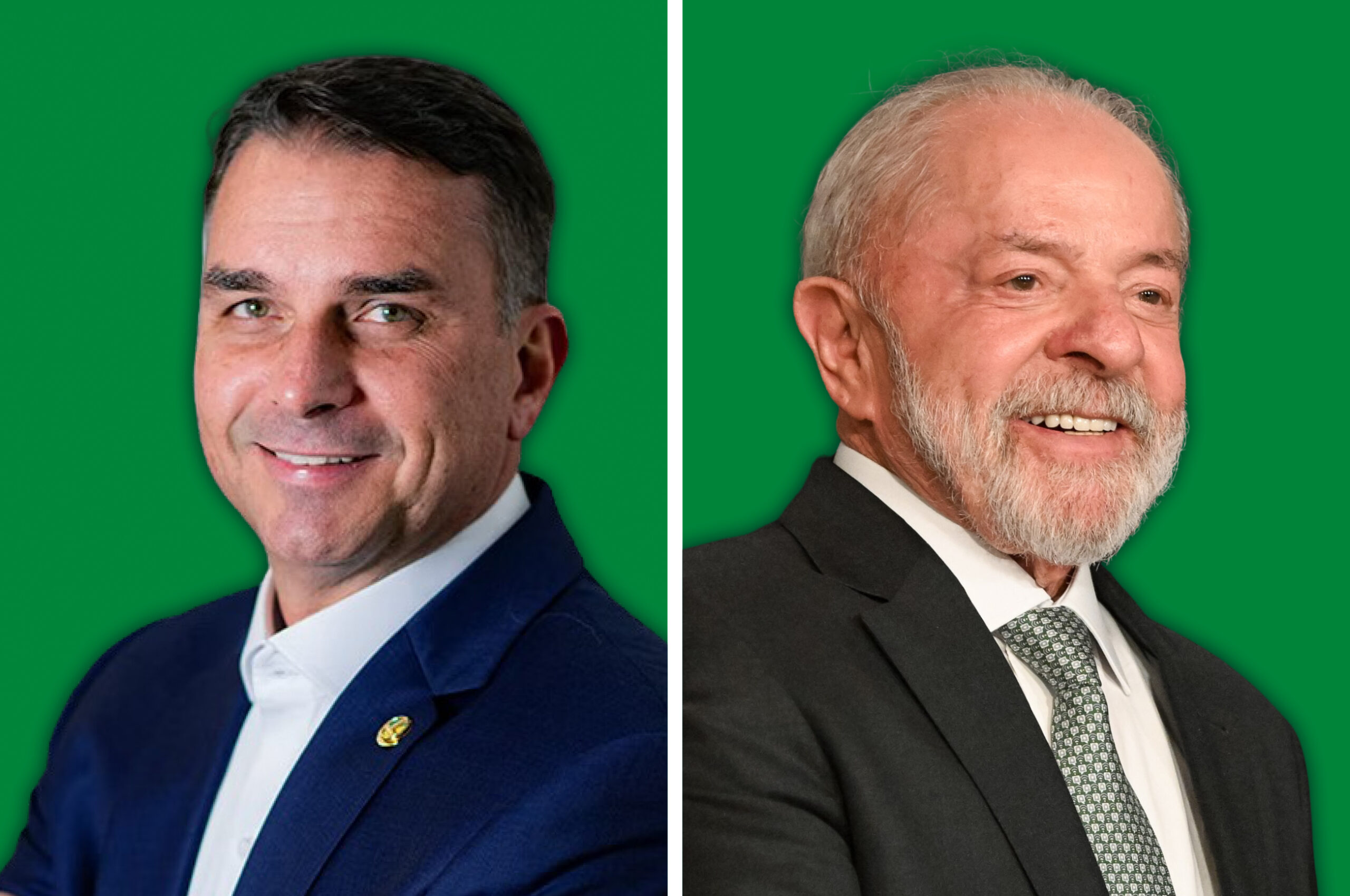
Brazil’s presidential race is down to two highly polarized candidates who are polling neck-and-neck: President Luiz Inácio Lula da Silva, who is seeking a fourth term, and Senator Flávio Bolsonaro, a son of former President Jair Bolsonaro. Flávio outperformed expectations in the October 4 first-round vote, winning with 47.03%, while Lula placed second with 45.16%. The candidates will compete in a second round on October 25.
A banking scandal involving much of Brazil’s political and economic elite has become a top campaign issue. Security, inflation and affordability are also among voters’ top concerns. Disputes over tariffs and terrorist designations against Brazilian gangs announced by the Trump administration have made the relationship with the U.S. another major topic in the race.
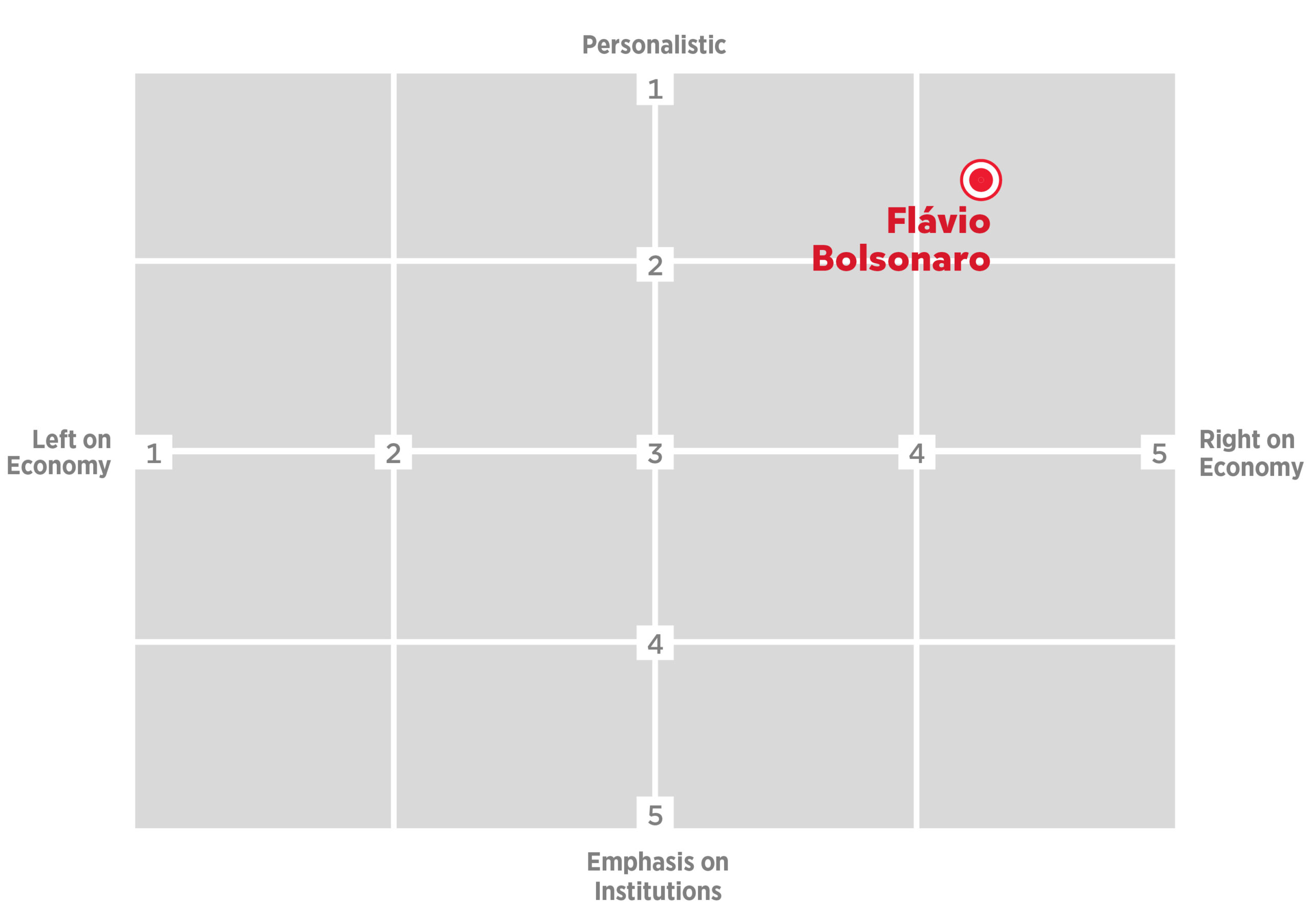
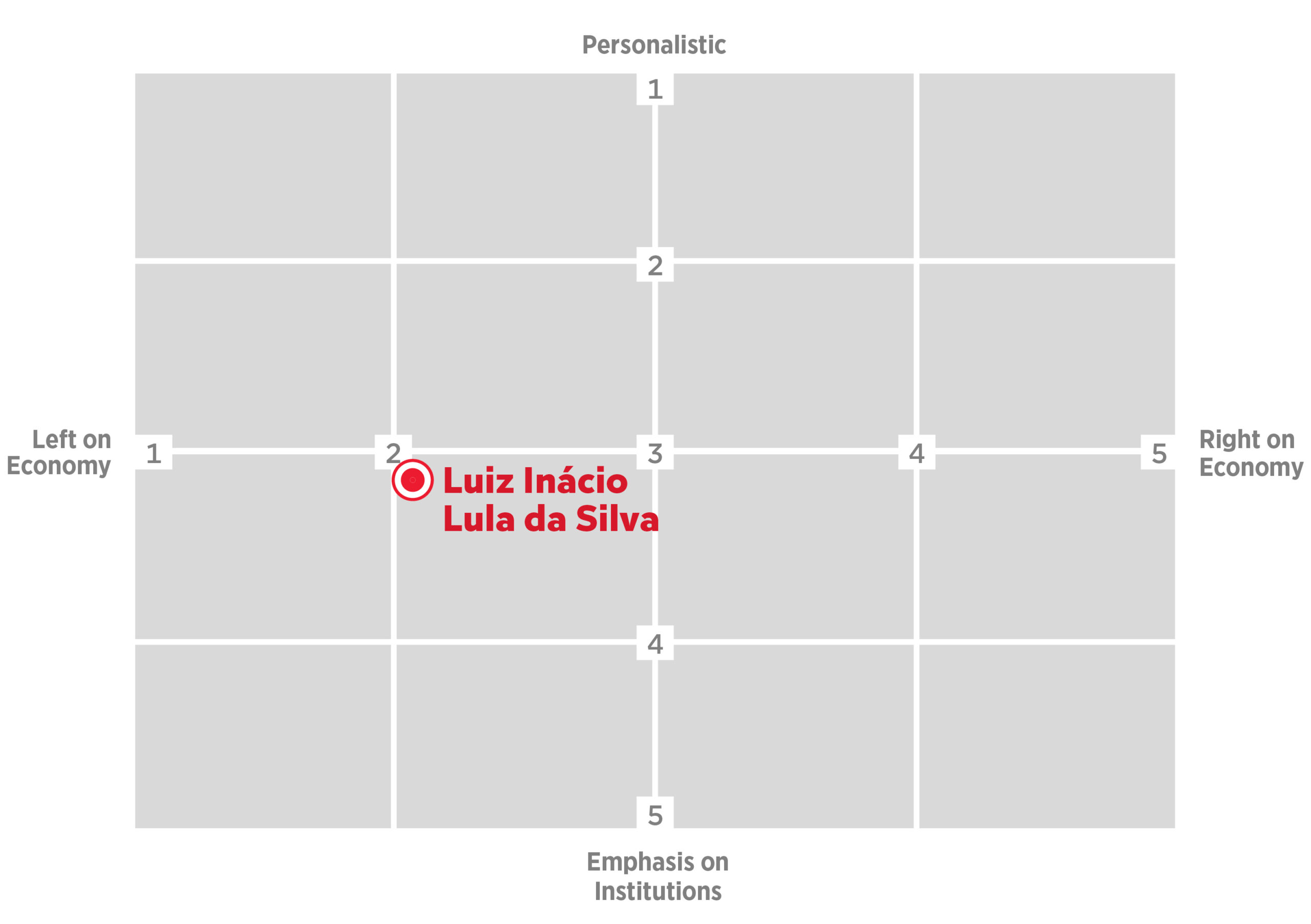
AQ asked a dozen nonpartisan experts on Brazil to help us identify where each candidate stands on two spectrums: left versus right on economic matters, and personalistic versus institutionalist on leadership style. The results are mapped on the charts below. We’ve published the average response, with a caveat: Platforms evolve, and so do candidates.

Flávio Bolsonaro
45, Senator
Partido Liberal (PL)
“It is with great responsibility that I confirm the decision of Brazil’s greatest political and moral leader, Jair Messias Bolsonaro, to entrust me with the mission of continuing our national project.”
HOW HE GOT HERE
The eldest son of former President Jair Bolsonaro, Flávio is running a campaign centered on continuing his father’s political legacy. He served four terms in Rio de Janeiro’s state assembly (2003-19) and won his 2018 Senate campaign with more than 4 million votes. His father, currently serving a 27-year sentence after being convicted of planning a coup following his defeat in the 2022 presidential election, endorsed Flávio’s presidential bid last December. The decision came as a surprise to some observers who expected the former president to back São Paulo Governor Tarcísio de Freitas.
WHY HE MIGHT WIN
Flávio surprised many observers with his first-round victory, and he is known to be less combative than his father and brothers. He is the head of the Senate’s Public Security Committee, and voters see Flávio as tougher on crime than Lula. Despite declining national homicide rates, violence remains Brazilians’ top concern. Those dissatisfied with the country’s current direction, a majority according to Ipsos polling, may prefer a change from the incumbent administration. In the runoff between Flávio and Lula, voters who backed other right-wing candidates in the first round will likely vote for Flávio. He received a polling boost following revelations that Supreme Court Justice Alexandre de Moraes, the lead justice in the case that resulted in Jair Bolsonaro’s sentencing for attempting a coup, had alleged links to disgraced banker Daniel Vorcaro. Moraes has denied any wrongdoing.
WHY HE MIGHT LOSE
A recording of Flávio requesting money from Vorcaro for a film about Jair Bolsonaro was leaked in May, and Flávio is under investigation for alleged corruption for the financing. Flávio has denied any wrongdoing related to Vorcaro and to an alleged kickback scheme while he was in the Rio state assembly, a case that ended without a trial. A public spat with his stepmother, former first lady and Senator-elect for the capital district Michelle Bolsonaro, has lost Flávio support from women and independent voters. Quaest polling indicates that more Brazilians blamed Flávio than Lula for the 25% U.S. tariff on Brazil levied in mid-July.
WHO SUPPORTS HIM
Flávio’s strongest backing comes from voters in southern and southeastern parts of the country, particularly men and evangelicals, who make up about 27% of the population. Javier Milei and Benjamin Netanyahu have endorsed him, and Donald Trump has signaled his support. Former presidential contenders Ronaldo Caiado, Romeu Zema and Augusto Cury have also endorsed Flávio. Although he previously stated he would prefer a woman as his running mate, Flávio selected PL lawmaker Alfredo Gaspar, a former prosecutor and secretary of public security in the northeastern state of Alagoas.
WHAT HE WOULD DO
Flávio would seek an amnesty for his father and those convicted for their involvement in the January 8, 2023 storming of Brasília. He has released a 12-point security policy, Brasil sem Medo (Brazil without Fear), that includes plans to declare criminal groups “narcoterrorist organizations” and build five new maximum-security prisons modeled on El Salvador’s system. Flávio has promised a fiscal adjustment equivalent to about 1.5% of GDP over 18 months, and his platform includes plans to eliminate at least 10 ministries, reduce taxes, and invest approximately $174 billion in highways, waterways, ports, airports and railways over four years. On foreign policy, he has committed to repairing relations with Argentina, the U.S. and Israel while noting that he will negotiate with China, the European Union, the U.S., and Asian nations.
IDEOLOGY
Luiz Inácio Lula da Silva
80, President
Partido dos Trabalhadores (PT)
“Our homeland is not for sale. Our sovereignty is nonnegotiable. Brazil belongs to Brazilians.”
HOW HE GOT HERE
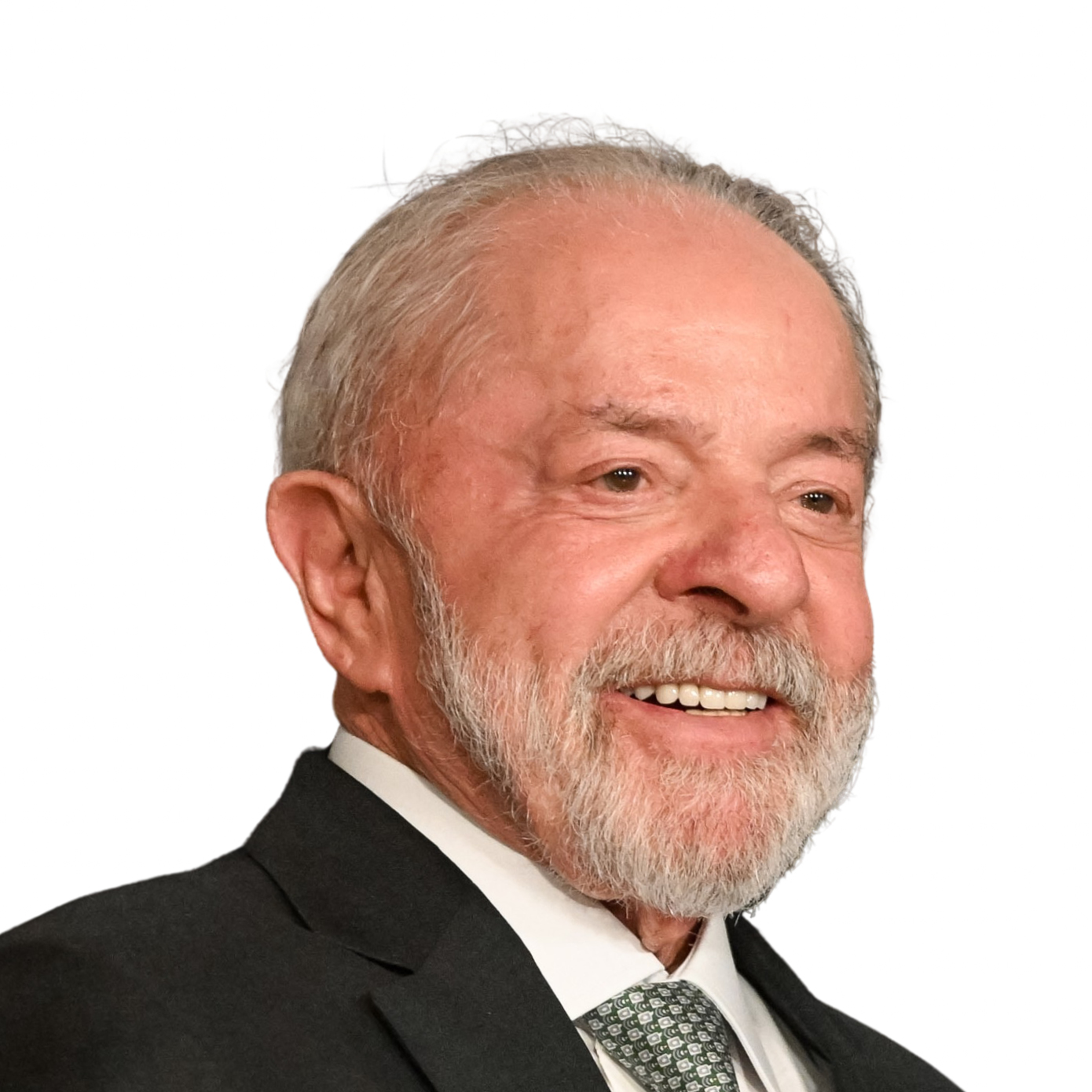
Lula is running for president for the seventh time, framing his bid partly as a way to prevent the Bolsonaro family’s return to power. A fixture in Brazil’s politics since the 1980s, Lula narrowly defeated Jair Bolsonaro in the 2022 election. In his third term, he has sought to reactivate Brazilian foreign policy while navigating a turbulent relationship with the U.S. under Trump 2.0, and his popularity has risen when he has denounced tariffs as infringements on Brazilian sovereignty. Over the past year, he has maintained a relatively steady approval rating but faces an uncertain reelection campaign.
WHY HE MIGHT WIN
Ahead of the election, the Lula government has expanded a debt-relief program and introduced temporary fuel subsidies amid rising gas prices due to the war in Iran. In September, Lula announced a 15% increase in benefits provided by his signature Bolsa Família program as well as a ban on online gambling, moves approved by a majority of Brazilians, according to recent Quaest polling. Lula retains a lead over Flávio among women, who are key swing voters in this election. In a potential boost for Lula, Congress approved a widely popular constitutional amendment, championed by the president, abolishing the six-day work week and transitioning to a five-day, 40-hour model.
WHY HE MIGHT LOSE
Despite the relative strength of Brazil’s economy, with unemployment near historic lows, affordability remains a major issue for voters. Many worry about Lula’s age—if reelected, he would be 81 on inauguration day (January 5, 2027)—and polling indicates Brazil’s electorate is shifting to the right. Alleged ties between Vorcaro and Supreme Court Justice Alexandre de Moraes, who some perceive as an ally of Lula, could affect his reelection bid. Respondents in a September poll from Atlas/Bloomberg found that the alleged links between Vorcaro and members of the Supreme Court have damaged Lula’s candidacy (52.3%) more than Flávio’s (20.8%). Since 1989, no candidate who finished second in the first round of a presidential election has gone in to win the runoff.
WHO SUPPORTS HIM
Compared to Flávio, Lula has stronger support in the northeast, and among women, lower-income voters, Catholics, and people 60 years old and over. Current Vice President Geraldo Alckmin, a moderate former governor of São Paulo, is his running mate again.
WHAT HE WOULD DO
Lula has stated that his fourth term “will be about helping this country take the decisive leap toward becoming a developed nation.” He has proposed creating a public security ministry, and in a shift from the PT’s longstanding position, he endorsed lowering the age of criminal responsibility from 18 to 16 specifically for heinous crimes, a move that is broadly aligned with public opinion. In a fourth term, Lula would likely stick to his playbook, prioritizing social programs, strengthening state energy company Petrobras and supporting offshore oil drilling near the mouth of the Amazon River while curbing deforestation and expanding the use of renewables. In addition to asserting Brazil’s role on the global stage, Lula’s program emphasizes deepening ties with BRICS, the Global South, and the G20.
IDEOLOGY
ABOUT THE AUTHOR

Emilie Sweigart
Reading Time: < 1 minuteSweigart is an editor at Americas Quarterly and a policy manager at the Americas Society/Council of the Americas
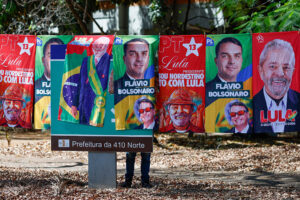
What Washington May Misread in Brazil’s Election
President Lula and Flávio Bolsonaro have more in common than meets the eye on key issues, including trade with China and critical minerals.
AQ Podcast | Brazil’s Scandal-Plagued Election
Political analyst Thomas Traumann on the mudslinging in the Supreme Court, and other factors in the October election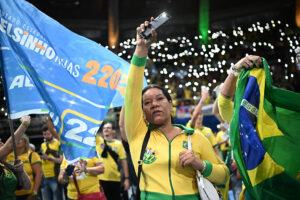
The Battle for Brazil’s Swing Voters: Women
The Bolsonaro family has struggled with women voters, but inflation and other pocketbook issues may give them an opening now.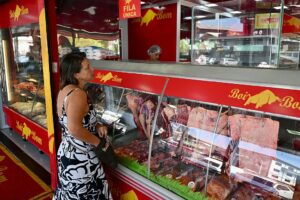
Brazil’s Economy Is Slowing. Will It Ruin Lula’s Chances?
Voters are feeling the squeeze from high interest rates and other factors.