



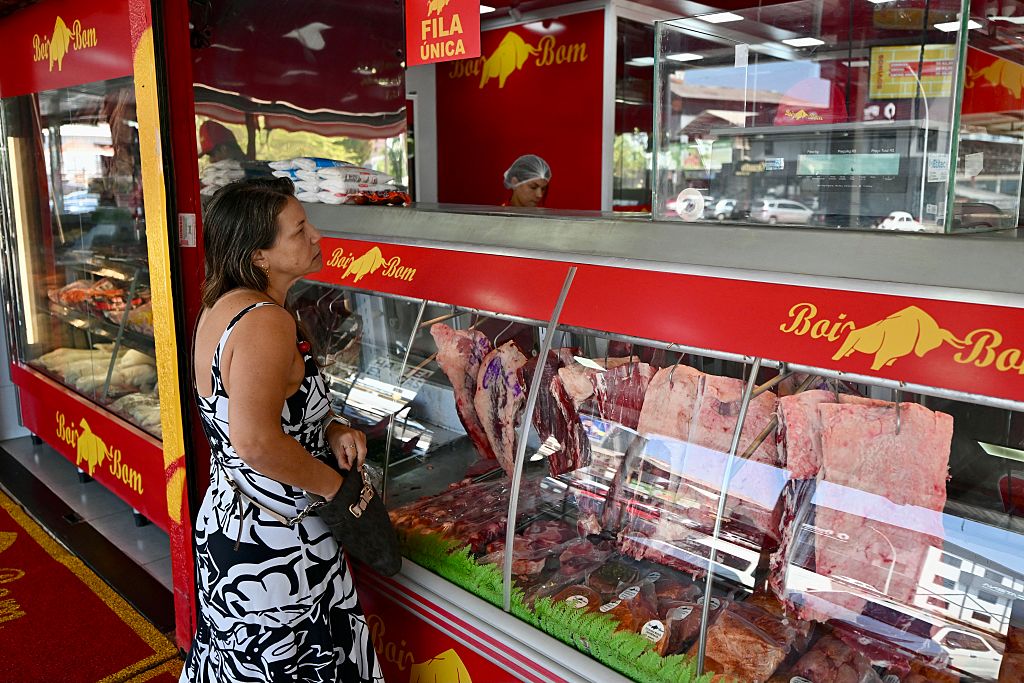
SÃO PAULO — With less than a month to go until Brazil’s election, the economy is clearly slowing under the weight of high interest rates, rising debts and consumer concerns about affordability. Whether the downturn is enough to fatally wound President Luiz Inácio Lula da Silva’s reelection bid is another question entirely.
In the most recent survey from Quaest, a local pollster, almost half of Brazilians agreed that the economy has worsened over the last 12 months. The statistics back them up: GDP expanded 1.1% in the first quarter, and only 0.5% quarter-over-quarter in the second, and Tendências forecasts average growth of 0.1% in the second half of this year. For 2026 as a whole, GDP growth is expected at 1.9%, down from 2.3% last year.
Those numbers would likely be even worse without a “reelection package” designed to boost its electoral competitiveness throughout 2026. A broad set of measures—including income tax exemptions for workers earning up to five minimum wages, easier debt renegotiation, incentives for low-income housing purchases, and support for home renovation—has helped provide some support for consumer sentiment.
Even though unemployment remains near historic lows, the cooling in activity is showing up in the labor market. Job growth has moderated, with employment up 0.9% in July versus 2.4% in the same period a year earlier. Real average earnings rose 3.3%, compared with 3.8% in the same period a year ago. Informality appears to be stabilizing at the margin after several years of decline and 11 consecutive months of contraction. Formal employment—defined as jobs with official registration, labor protections, and social security contributions—is also losing steam. So far this year, 921,000 formal jobs have been created, compared to 1.2 million in the same period last year. In short, momentum is clearly fading, but there are no signs at this stage of a more acute deterioration in the near term.
On the inflation front, recent data have been somewhat more encouraging. Despite fuel price shocks, supply-side issues affecting some food items, and a gradual easing in activity, inflation has moderated from the peaks seen in April 2025. Based on the preliminary August reading, 12-month inflation slowed to 4.2%, down from 5.5% in April of last year, as prices of goods and services posted their first decline in a year. Since June, falling food prices have contributed to disinflation, a trend that should continue through September.
That said, inflation is expected to pick up again in the final months of the year, especially due to the El Niño-related impact on food prices and renewed fuel price pressures. Even so, those stronger pressures should be concentrated in November and December. At Tendências, we expect inflation to end the year around 5%, versus 4.3% in 2025.
A relevant factor?
Financial conditions remain very tight. Although the central bank has been gradually cutting interest rates, monetary policy remains firmly contractionary. The effects of keeping financial conditions highly restrictive for an extended period are becoming increasingly evident. A 14% Selic rate—the benchmark rate—and a steep and pressured yield curve have weighed heavily on the financial position of households and firms. Higher delinquency, greater demand for emergency credit lines, and an increase in court-supervised restructuring filings reflect the strain facing the private sector.
At Tendências, we estimate that debt servicing now absorbs roughly 30% of average monthly household income, including both interest and principal payments. That is the highest level in the historical series, which dates back to 2004. This ratio is expected to remain broadly stable through year-end. As for delinquency, a modest improvement is expected by year-end, supported by the government’s debt renegotiation programs for households and businesses.
So what does this all mean for Lula and his main opponent, Flávio Bolsonaro?
Basically, the economic slowdown, while clearly perceived by voters, does not currently appear severe enough to be the deciding factor in the October election. Other areas, such as the crisis involving the Brazilian Supreme Court, misuse of state resources, influence peddling, corruption, and relations with the U.S. seem more likely to determine the outcome.
As a result, Tendências still sees Lula as the slight favorite in a close race likely to be decided in the October 25 runoff. That assessment reflects the opposition’s weaknesses more than the government’s strengths.
Flávio Bolsonaro faces high rejection rates, and voters still appear to fear the Bolsonaro’s family return to power more than another Lula administration—although concern levels are high in both cases. In addition, other right-wing candidacies are likely to fragment the opposition vote in the first round, highlighting persistent coordination problems within the opposition camp.
If, however, the economy slows more sharply than expected, with clearer repercussions for the labor market, the balance could shift toward the opposition. Other issues—such as a crisis involving the Brazilian Supreme Court, corruption, influence peddling, misuse of state resources, and relations with the United States—are more likely than the economy to move the electoral needle.
ABOUT THE AUTHOR

Alessandra Ribeiro
Reading Time: 3 minutesRibeiro is Partner and Director of Macroeconomics and Sectoral Analysis at Tendências Consultoria in São Paulo, Brazil.

The Battle for Brazil’s Swing Voters: Women
The Bolsonaro family has struggled with women voters, but inflation and other pocketbook issues may give them an opening now.
Brazil: Meet the Candidates 2026
President Luiz Inácio Lula da Silva and Senator Flávio Bolsonaro will compete in the October 25 runoff.