



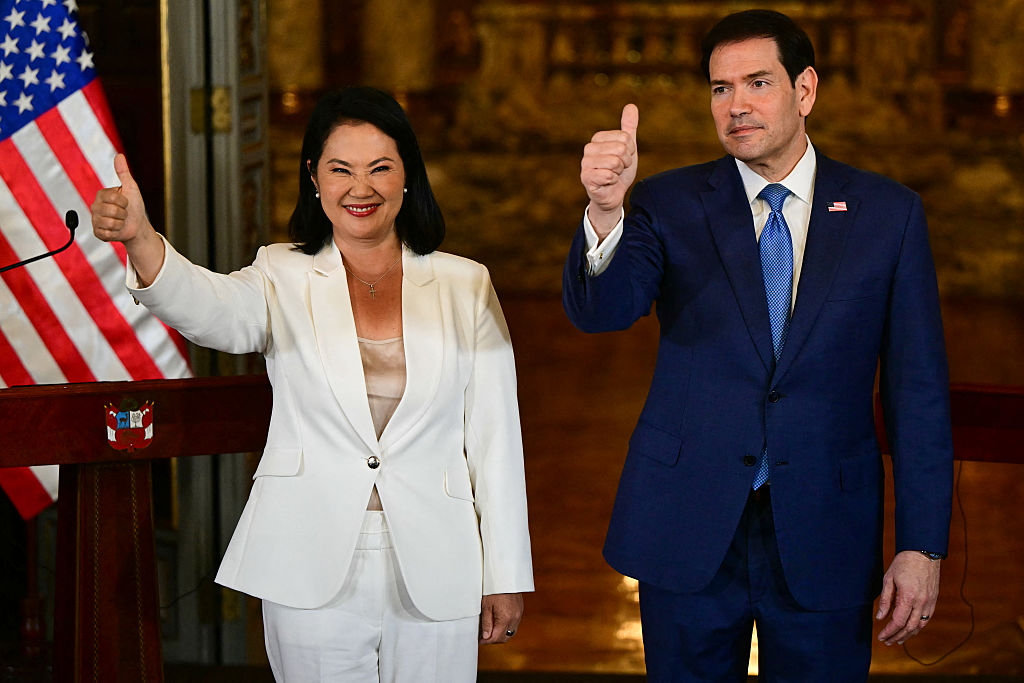
When U.S. Secretary of State Marco Rubio visited Lima last month, the official agenda focused on security cooperation, Peru’s entry into the U.S.-led “Shield of the Americas” alliance, and bilateral relations with President Keiko Fujimori. However, in the strategic realm, the shadow of China’s influence over the port of Chancay loomed large, and with it, the question of whether Washington could apply in Peru the same pressure it used earlier this year to dislodge Chinese-linked port operators from the Panama Canal.
At a joint press conference with Rubio, Fujimori avoided addressing China directly; instead, she spoke broadly about APEC and advocated for continued economic engagement with the bloc of nations Peru joined in 1998. However, she announced a “new era” in bilateral relations with the U.S.—offering reciprocity to Washington—signaling an intention to elevate security and diplomatic ties while insulating trade relations with China.
Ahead of his visit, Rubio published an op-ed in Peruvian media accusing Beijing of trapping Latin American nations with “promises that hide predatory practices” and using infrastructure investments to expand its strategic footprint at the expense of regional sovereignty. The Chinese embassy in Lima responded on social media, asserting that Chinese investment in Peru is “transparent and complies with the law” and that the “Western Hemisphere is ‘no one’s backyard.’”
Until now, Lima has played the diplomatic neutrality card successfully, reflecting a broader regional reluctance—particularly among newly installed right-wing governments—to pick a side in the U.S.-China strategic competition. This stance sets the stage for a different approach and possible outcome than what Panama endured with its canal months ago.
The Panama playbook
In January, Panama’s Supreme Court ruled unconstitutional the concessions held by Hong Kong-based CK Hutchison Holdings to operate two ports at the entrances of the Panama Canal. The ruling followed a year of diplomatic pressure from the U.S., which included unsubstantiated claims that China controlled the Panama Canal.
In response, CK Hutchison initiated arbitration proceedings against Panama, Chinese authorities increased detentions of Panama-flagged vessels in Chinese ports, and China’s COSCO Shipping suspended its operations at Panama’s Balboa port. In doing so, China was not only punishing Panama; it was also engaging in geopolitical signaling, not directed at the U.S., but at countries like Peru, whose importance to Beijing’s position in Latin America has increased significantly.
Hidalgo Calatayud Espinoza/picture alliance via Getty Images
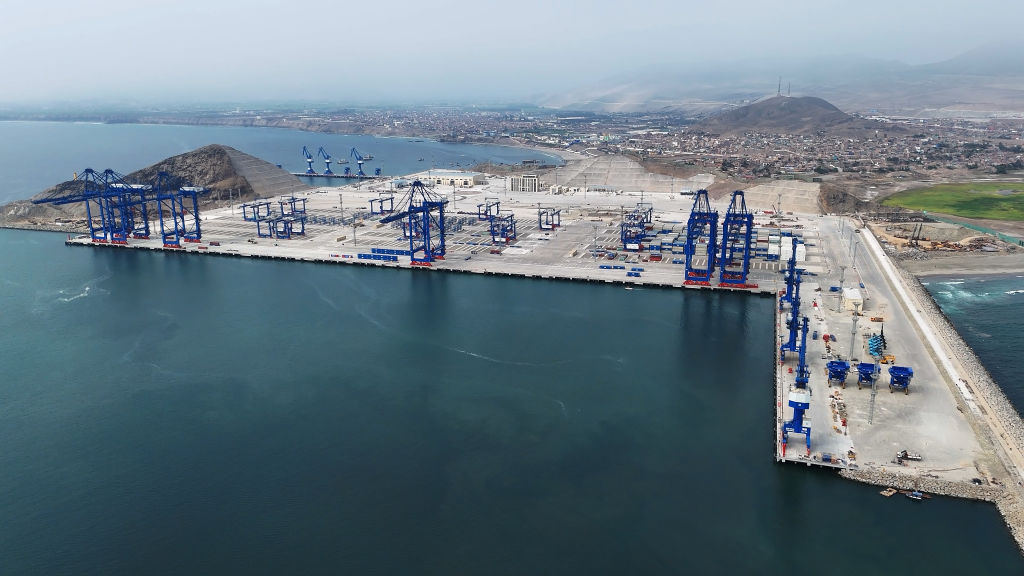
The Chancay port is one of China’s most ambitious projects in the Americas. Formally inaugurated in November 2024 by Presidents Dina Boluarte and Xi Jinping, it is the key logistics hub in the Americas under the Belt and Road Initiative, with total investment of roughly $3 billion. The Chinese state-owned enterprise COSCO Shipping Ports owns a majority stake, meaning China ultimately controls the port.
Unlike the ports of Balboa and Cristobal in Panama, Chancay has no concession, only ownership. Thus, the question remains whether Peruvian authorities can sufficiently oversee the port and its operations.
The Trump administration has not applied pressure on Peru regarding Chancay to the same degree it did with Panama — at least not publicly. But it is unclear what Washington expects from Fujimori on this issue, who has positioned herself as a Trump ally and has a stronger mandate than her immediate predecessors. Mauricio Claver-Carone, Trump’s former envoy for Latin America, said last year that Chancay would deepen Peru’s “unreliable dependency on China.”
After Panama’s Supreme Court decision, Peruvian tribunals have been scrambling over the same question. In February, a Peruvian court curbed state oversight of Chancay. Following the ruling, the U.S. warned that Peru could lose its sovereignty over the port to China. By midyear, an appeals court reversed the ruling, and the Constitutional Tribunal—the nation’s highest court— is set to decide the matter.
Given the geopolitical risks of appearing to surrender regulatory control to a foreign entity, a ruling restoring state oversight remains the most likely outcome. If so, Peru would gain a statutory mechanism to inspect facilities and cargo, enforce customs, or impose dual-use bans. This could satisfy some U.S. concerns without outright taking over the ports, while still triggering regulatory friction and additional legal challenges with COSCO.
If the Constitutional Tribunal rules against state oversight, Peru will effectively cement COSCO’s operational autonomy over the Pacific port, severely straining relations with Washington and heightening fears that Peru has lost sovereign control over critical national infrastructure.
The Reversibility of Chancay
As Panama’s takeover of the Balboa and Cristobal ports shows, these decisions carry significant consequences, especially when dealing with an assertive superpower like China. Thus, replicating the Panama blueprint in Chancay, undoing a multibillion-dollar investment, this time one directly undertaken by a Chinese state-owned company, would carry far higher economic, diplomatic, and strategic costs for Peru than revoking the port concessions did for Panama.
China’s influence in Peru’s economy remains significant. China is Peru’s top economic and trading partner. Trade volume between the two countries speaks for itself: China is Peru’s largest export destination, mostly for copper, iron, and other minerals, and its leading source of imports, including consumer and industrial goods. This, together with Chinese investment in key sectors like mining, energy, and infrastructure, raises the stakes. China’s leverage over Peru—which some would even call strategic dependence—means applying the Panama playbook would face much heavier economic friction and is thus unlikely. China has consolidated its regional logistics network in Chancay and intends to keep it that way.
For Peruvian Foreign Minister Carlos Espá, choosing between the U.S. and China is a false dilemma. His approach mirrors that of most right-wing governments in the region: close political ties with Washington and continued economic engagement with Beijing. According to Espá, maintaining this balance depends on respecting national sovereignty, including non-extraterritoriality and the prohibition of military (dual) use of ports.
Whether this perspective aligns closely with President Fujimori’s rationale remains to be seen. The real dilemma for Peru lies in accurately balancing the structural security concerns of the U.S. against the heavy gravitational pull of Chinese commercial dominance in the country.
ABOUT THE AUTHOR

Alonso E. Illueca
Reading Time: 4 minutesIllueca is an associate professor and researcher at Universidad Santa María La Antigua.

Panama May Need a New Trump Strategy
The country’s accommodating stance so far hasn’t stopped the U.S. president from demanding the return of the canal.
AQ Podcast | Chancay Port and the China-U.S. Battle in Latin America
A former finance minister brings a big-picture perspective on what the Chancay port really means for Latin America.