



This article is adapted from AQ’s special report on Mexico’s path forward
In August 1982, when Mexico announced that it could not pay its debts, the U.S. government, acting through the New York Federal Reserve and the U.S. Treasury, raced to both support the country and contain the resulting damage to the global banking system.
Thus began a long, often arduous process of trying to support Mexico—and integrate it more with the United States. Throughout the 1980s and early ’90s the U.S. supported Mexico in its economic liberalization plan, its debt restructuring, the creation of the Brady plan for debt relief and Mexico’s eventual return to financial markets. Throughout, it became ever more clear that real integration of the three North American economies—the U.S., Canada and Mexico—was a structural idea which would benefit the economies, politics and security of all three countries.
So, on January 1, 1994, NAFTA took effect after multiple years of negotiation and political debate. Years since saw only one additional major crisis, in December of 1994, when the Tequila Crisis disrupted the reformist path, and the peso was devalued as investors lost confidence. The U.S. again came with leadership, prompting the IMF and other lenders to put together a $50 billion dollar package.
NAFTA (more recently USMCA) was a deliberate political calculation and in my opinion a huge success, integrating supply chains and creating thousands of jobs in all three countries. The agreement encouraged investment across North America including most importantly Mexico. Mexico became our largest trading partner. It combined the favorable demographics of Mexico with the innovation in the U.S. and Canada. It was by far the most successful trade agreement in the world.
I am, therefore, bewildered as I see continued attempts to take the essence of the old NAFTA apart. Doing so would offer a path for other countries to take a leading role in North America. Separating from USMCA would make goods more expensive for North American consumers, particularly in the U.S., and jeopardize the financial health of many companies—particularly small and medium size enterprises which are at the heart of the supply chain.
I laud President Claudia Sheinbaum for her patience and her continued vision for an integrated and strong North America.
ABOUT THE AUTHOR

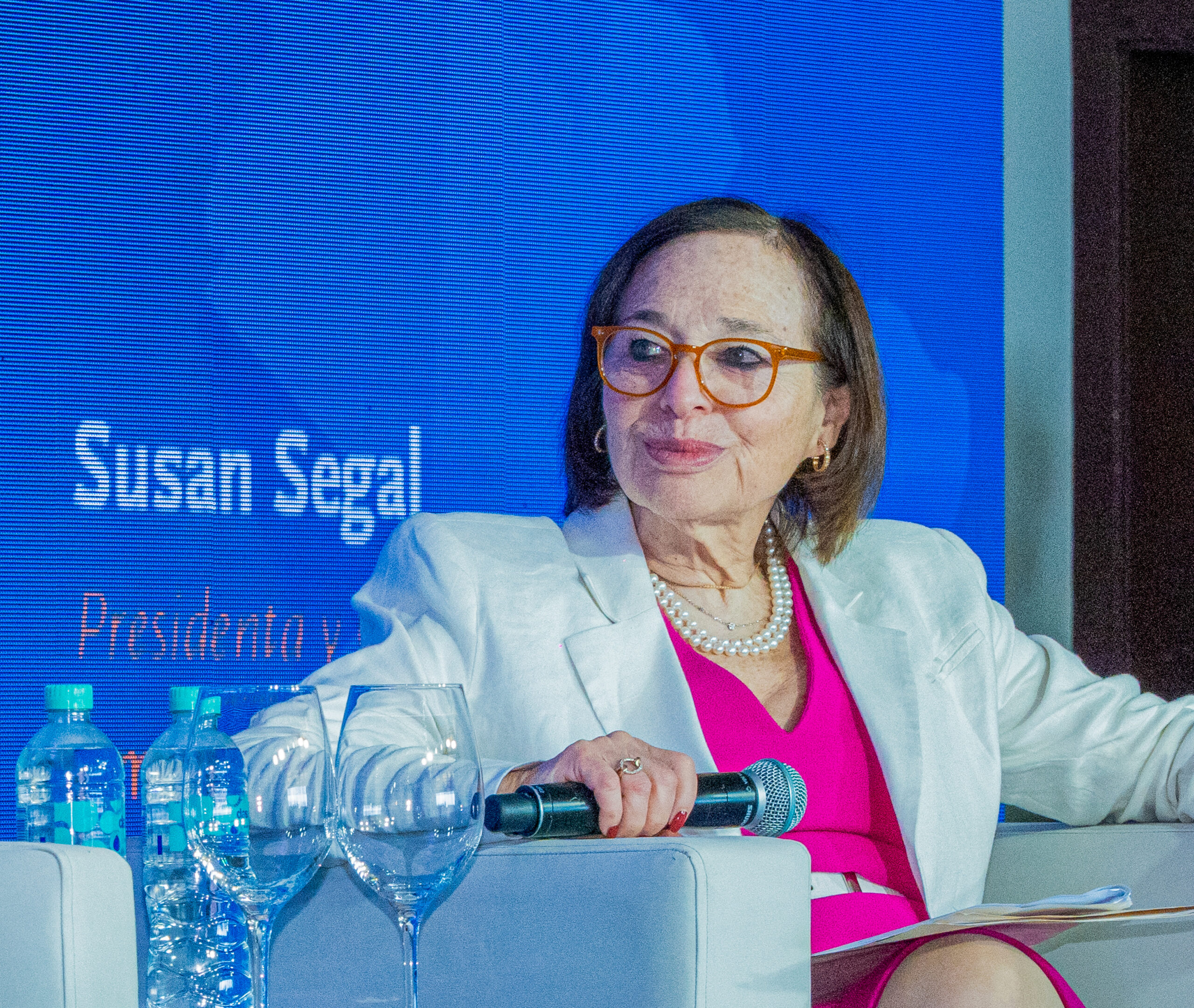
Susan Segal
Reading Time: 2 minutesSegal is President and CEO of Americas Society and Council of the Americas.
NEW AQ: A Middle Path for Mexico
Mexico can cope with uncertainty in the U.S. by focusing on domestic reforms.