


RIO DE JANEIRO — The global biofuel boom is gathering speed. War in the Middle East, oil price volatility, and fears of supply disruptions in the Strait of Hormuz have strengthened the case for alternatives to petroleum, particularly in import-dependent Asian economies. The Middle East war is projected to push energy prices up 24% this year alone, while disruptions around the strait have produced what analysts call the largest oil supply shock in history.
That geopolitical impulse is reinforcing a longer transition already underway. Global biofuel demand is nearing 200 billion liters a year, and could reach 310 billion liters a year by 2030. Growth is being driven by road-fuel policies, higher blending mandates, aviation and maritime demand, and emerging low-carbon fuel standards. Biofuels are attractive because they can be blended into existing engines, depots, and distribution systems while electrification advances unevenly across aviation, agriculture, shipping, and heavy freight.
But Brazil shows why biofuels should not be treated simply as clean-energy commodities. They are also high-volume, infrastructure-intensive, and financially complex supply chains. They depend on crops, oils, alcohols, ports, terminals, distributors, tax systems, certification regimes, banks, and payment companies. In markets where organized crime already penetrates logistics, finance, and fuel distribution, the energy transition can create new opportunities for illicit profit.
Brazil is the most important test case. It is one of the world’s leading biofuel producers and has moved aggressively to raise blending mandates. Last June, the National Energy Policy Council approved increasing mandatory ethanol blending in gasoline from 27% to 30% (E30) and biodiesel blending in diesel from 14% to 15% (B15). U.S. agricultural officials reported that Brazil produced 9 billion liters of biodiesel in 2024 and forecast continued expansion in 2025. Soybean oil dominated feedstock use, while methanol and additives accounted for about 10% of production costs.
That expansion is occurring in a fuel market already exposed to criminal capture. Operation Carbono Oculto, launched last August, was described by Brazil’s Receita Federal as the country’s largest operation against organized crime in terms of institutional cooperation and scope. Authorities said around 1,000 fuel stations linked to the group moved R$52 billion between 2020 and 2024. A fintech allegedly operated as a “parallel bank,” and at least 40 investment funds were reportedly used to conceal assets.
Methanol, money, and the PCC
The alleged structure was not marginal. Authorities seized roughly $220 million in assets, and São Paulo prosecutors linked the scheme to the Primeiro Comando da Capital (PCC), Brazil’s most powerful criminal faction. The alleged structure included investment funds with $5.5 billion in assets, ethanol plants, fuel stations, shell companies, payment institutions, and irregular methanol imports used in fuel tampering.
This is the hidden vulnerability in the biofuel boom. Fuel markets are attractive to organized crime because they combine enormous cash flow, complex taxation, thin margins, blending opacity, and routine cross-border logistics. Unlike cocaine or illegal gold, fuel is a legal commodity. Criminal profits can be laundered through apparently ordinary distributors, service stations, receivables, trading companies, and infrastructure assets. Biofuels add another layer of complexity because feedstocks, additives, carbon claims, and certification systems create additional points of manipulation.
Methanol illustrates the problem. Biodiesel is produced by transesterifying fats and oils, typically using methanol as the short-chain alcohol. In legitimate markets, methanol is an industrial input. In poorly supervised fuel markets, it can become a vector for fraud. Diverted or irregular methanol can be used to adulterate fuels, evade taxes, and obscure product origin. Monitoring methanol imports, distribution, declared end-users, and actual delivery should therefore be part of biofuel governance, not a technical afterthought.
China’s role adds a global dimension. The International Energy Agency says the country accounts for about 58% of global methanol production and is expanding low-carbon methanol capacity. That makes Chinese supply central to the clean-fuels transition. But it also makes traceability from the port terminal to the declared end-user essential. The risk is not methanol’s origin, but its diversion once inside weakly supervised distribution networks.
Last month, Caldic, a Netherlands-based chemicals distributor majority-owned by Advent International, was placed under investigation in Brazil over alleged links to methanol sales that investigators say were diverted into a PCC-linked fuel-fraud scheme. Its Brazilian subsidiary, Quantiq, said it was cooperating with investigators and that an internal audit had found no wrongdoing by management. Whatever prosecutors conclude, the case exposes a deeper governance gap, as due diligence built for ordinary chemical sales may be inadequate in fuel markets vulnerable to adulteration, diversion, and laundering.
GPC Química, owned by Dexxos Participações, was also named in a court document last August and later faced scrutiny over methanol sales, though the suspect volumes were described as smaller. Dexxos said it did not condone illegal acts, while GPC has said it conducted business strictly under applicable laws and regulations.
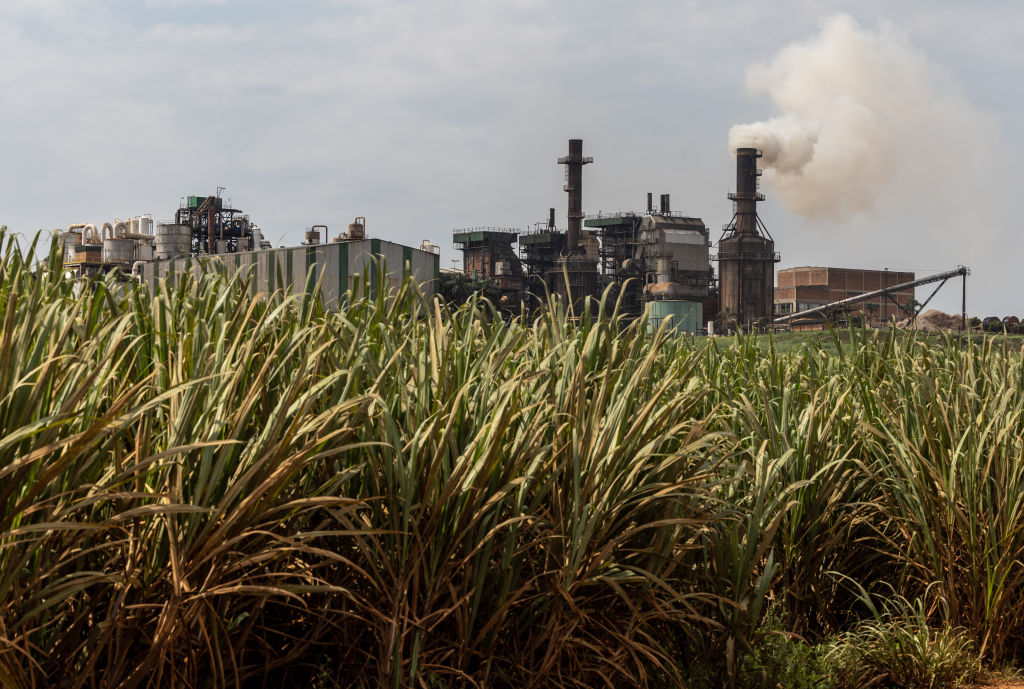
The risk extends beyond diesel and gasoline. In São Paulo’s sugarcane belt, suspects arrested over 2024 sugar cane fires reportedly told police they had organized crime links. A state official suspected PCC involvement as retaliation for government anti-crime actions. More than 2,100 fires affected 59,000 hectares of cane and regrowth areas that year, causing estimated losses of R$350 million. A federal prosecutor cautioned that there was not yet proof of coordinated organized crime arson, but the episode shows how vulnerable biofuel feedstock regions can become when land, enforcement and criminal markets overlap
Palm oil carries a different but related threat. In Pará, Brasil Biofuels and Agropalma, the largest palm oil producers, have been accused by rights groups of serious abuses linked to land conflicts, violence and alleged fraudulent land grabs, though both companies have denied wrongdoing and contested the allegations. These are not proven PCC cases. But they expose a similar vulnerability: weak land governance and inadequate supply-chain controls around supposedly green feedstocks.
Financial disputes around the sector also warrant attention. Bio Clean Energy, a Brazilian biodiesel venture, provides another example. Its co-founder filed a civil RICO suit in the Southern District of New York against Banco Bradesco, Bradesco Securities U.S., Tricon Energy, and several individuals. The docket lists the nature of the suit as racketeering. Public filings and statements allege a scheme that destroyed Bio Clean’s biodiesel business, but these remain allegations, not judicial findings.
De-risking the next green frontier
The lesson is not that Brazil should abandon biofuels. Ethanol, biodiesel, and sustainable aviation fuel will remain central to the country’s energy strategy and to global decarbonization efforts. The lesson is that clean fuels require clean governance. Carbon intensity cannot be the sole metric. Banks, traders, regulators, airlines, and fuel buyers also need to factor in what might be called the criminal-governance premium, the hidden cost of sourcing low-carbon fuels from supply chains vulnerable to organized crime, tax fraud, land conflict, adulteration, and illicit finance.
That means transparency in beneficial ownership for fuel distributors, ethanol plants, biodiesel producers, port operators, and trading companies. It means financial regulators treating fuel-sector fintechs, receivables funds, and investment vehicles as potential laundering nodes. It means energy regulators monitoring methanol imports, customer due diligence, delivery records, blending anomalies, and tax-credit claims. It also means certification systems for biodiesel and sustainable aviation fuel should screen not only for emissions but also for land conflict, embargoed areas, labor abuses, and criminal-risk exposure.
Brazil’s biofuel expansion is a strategic opportunity. It can reduce oil dependence, support rural economies, and help decarbonize sectors that cannot electrify quickly. But the same infrastructure that allows biofuels to scale also makes them vulnerable to criminal capture. The question is no longer whether biofuels can grow. They can. The question is whether the state, banks, traders, and buyers can scale oversight fast enough to keep criminal capital from turning clean fuel into another illicit frontier.
ABOUT THE AUTHOR

Robert Muggah
Reading Time: 4 minutesMuggah is a co-founder and research director of the Igarapé Institute, a leading think tank in Brazil. He is also the co-founder of the SecDev Group and SecDev Foundation, digital security and risk analysis groups with global reach.
Brazil’s Gangs in Trump’s Crosshairs
The possible designation of Brazil's PCC and CV as foreign terrorist organizations would carry consequences for banks, companies and politics.
Why Lula Is Struggling
Brazil’s October election now looks like a coin-flip, writes AQ’s editor-in-chief.