



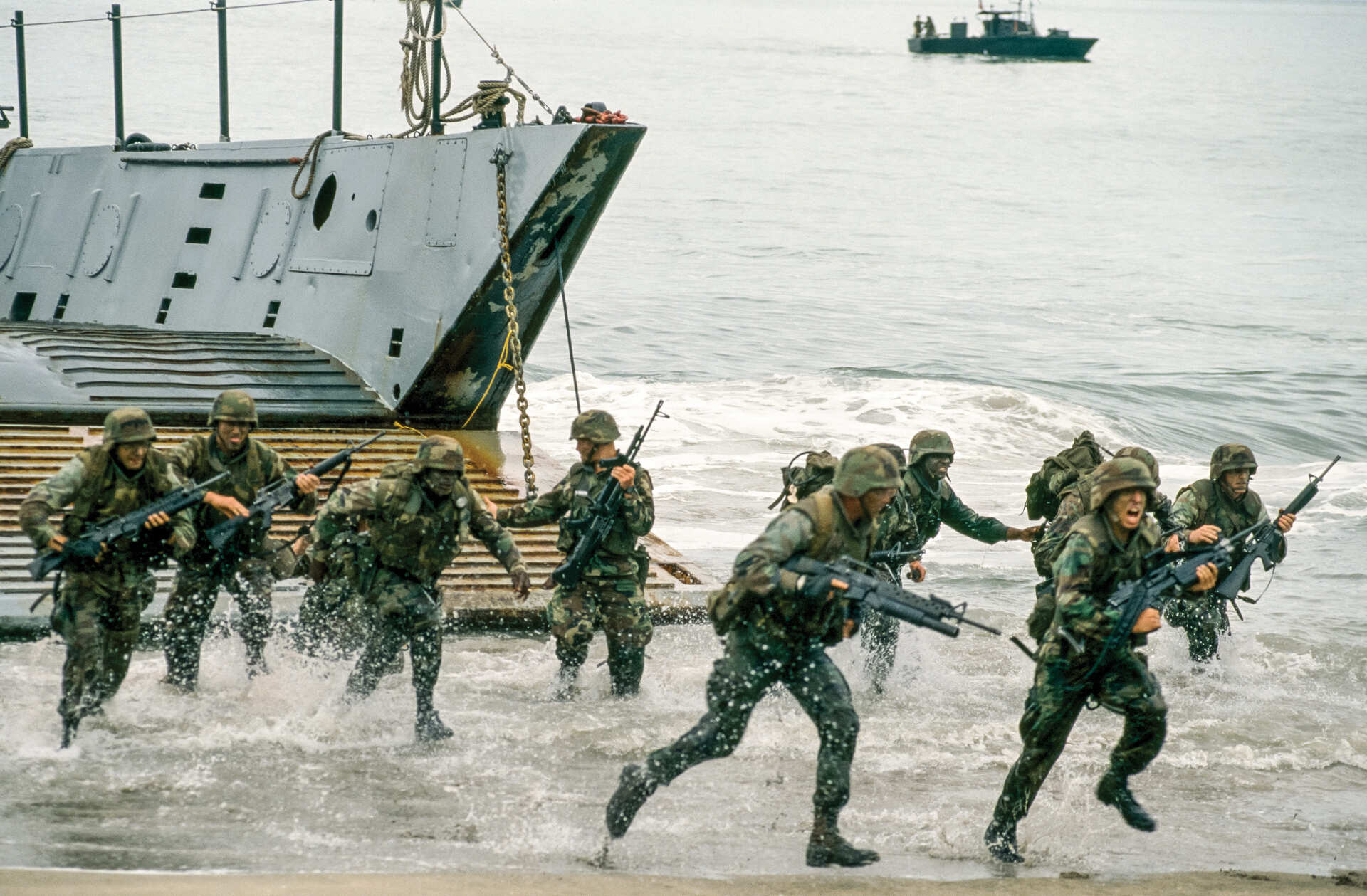
This article is adapted from AQ’s special report on the Trump Doctrine | Leer en español | Ler em português
The year was 1902, and the world’s eyes were on Venezuela. European powers, furious over Caracas’ unpaid debts, menacingly deployed gunboats to the southern Caribbean. U.S. President Theodore Roosevelt believed that, in this instance, the Monroe Doctrine did not apply.
“If any South American state misbehaves toward any European country,” Roosevelt declared, “let the European country spank it.”
Spank it they did. Germany, acting with support from Great Britain and Italy, declared a blockade of Venezuela’s ports, seized or disabled most of its small navy and shelled targets on the coast. Roosevelt quickly came to regret his acquiescence: The episode bolstered Germany’s reputation as a rising global power, European creditors began receiving preferential treatment over their U.S. counterparts, and a defiant President Cipriano Castro remained in power.
And so, thanks largely to Venezuela, America’s famous “big stick” was born.
“The attitude of men like myself toward the weak and chaotic governments and people south of us is conditioned … on the theory that it is our duty, when it becomes absolutely inevitable, to police these countries in the interest of order and civilization,” wrote the president in what became known as the Roosevelt Corollary, the basis for countless U.S. invasions and other interventions in Latin America in the 20th century. In 1908, Roosevelt’s last full year in office, Castro finally departed in a bloodless coup with Washington’s backing, giving rise to a new and more authoritarian leader who was friendlier to U.S. interests.
As the old adage goes: History doesn’t always repeat itself, but it does sometimes rhyme. Today, President Donald Trump’s actions in Venezuela, Mexico and elsewhere have prompted comparisons to the more interventionist era of the 19th and 20th centuries, raising questions about what—if anything—history can teach us about what might happen next.
In recent months, as Trump built up his own flotilla off Venezuela’s coast and then ordered the capture of Nicolás Maduro, I read or re-read classic works about the U.S.’s long history in Latin America such as Beneath the United States (1998, by Lars Schoultz) and Inevitable Revolutions (1983, by Walter LaFeber), plus more modern entries including “Our Hemisphere”? (2021, by Britta Crandall and Russell Crandall) and America, América (2025, by Greg Grandin).
The purpose is not to try to dazzle the reader with a long litany of clever parallels, but to better understand why the U.S. has so often plunged headfirst into Latin American affairs; how such interventions often end; and how Trump’s motivations and tactics may differ from those of his predecessors, either because times have changed or he is truly sui generis.
Here then are four lessons that history might be able to teach us about the Trump Doctrine:
1. Trump isn’t the exception—he’s the norm.
Listening to Trump speak while reading all this history often felt like watching a split screen.
The president’s declaration in the hours after Maduro’s capture that “American dominance in the Western Hemisphere will never be questioned again” recalls not only Roosevelt but James Polk, who in the 1840s led the Mexican-American War and the incorporation of Texas, adding over 1 million square miles to U.S. territory; or William McKinley, who wrested control of Puerto Rico and the Philippines from Spain (and raised tariffs) at the turn of the 20th century, and received a prominent mention from Trump in his second inaugural address.
Meanwhile, the president’s emphasis on the interests and grievances of U.S. energy companies in Venezuela echoes the so-called “Dollar Diplomacy” of William Taft. Trump’s ultimately successful attempts to help his allies in 2025 elections in Honduras and Argentina were reminiscent of Woodrow Wilson’s stated desire in the 1910s to “teach the South American republics to elect good men.”
If the rhetoric is familiar, it’s because many of the underlying ideas are older than the republic itself. As Grandin reminds us in America, América, U.S. merchants of the 18th century were able to sail down the Mississippi, across the Caribbean and up the Magdalena River into Colombia to sell their wares with almost total ease—a small example of how Americans came to think of the Caribbean basin in particular as part of their “near abroad.”
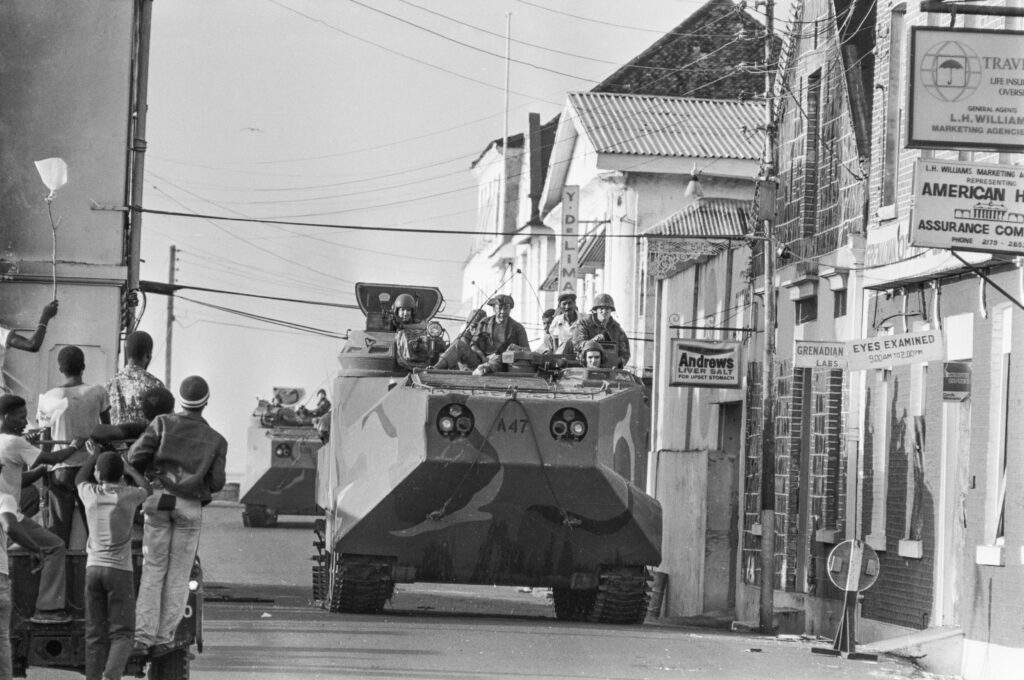
Getty Images
Trump’s talk of renewed expansionism, expressed in his stated desire to “take back” the Panama Canal, and also acquire Greenland, is also unmistakably American—a trait that Alexis de Tocqueville saw as inseparable from the national character, as much about profit as “the love of the constant excitement occasioned by that pursuit.”
For much of U.S. history, “manifest destiny” seemed set to lead the country’s borders not just west but south, an idea that inspired figures like William Walker, an American lawyer who in the 1850s declared himself president of Nicaragua, briefly winning recognition from Washington. Francis P. Loomis, number two at the State Department under Theodore Roosevelt, reflected the thinking of his era when he said, “I think it is our destiny to control more or less directly most all of the Latin American countries”—not just through annexation but by “administering their revenues,” a concept Trump has embraced for post-Maduro Venezuela.
A few U.S. presidents, such as John Quincy Adams in the 19th century or Warren Harding and Jimmy Carter in the 20th, showed little interest in exercising such power. But most did—until relatively recently. Lyndon Johnson deployed more than 20,000 troops to the Dominican Republic in 1965. As Joan Didion reminds us in her 1987 memoir Miami, Ronald Reagan was widely ridiculed by Cuban exiles for his inability to topple Fidel Castro, reflecting an enduring, much broader belief that Washington could accomplish anything in Latin America if it just tried hard enough.
In retrospect, the exceptional period may prove to be the 30 years or so that followed the end of the Cold War. Those years saw a relative emphasis on sovereignty and trade – and a drift of U.S. focus toward other regions like the Middle East, especially after the attacks of September 11, 2001, that many in Latin America saw as “benign neglect.”
Those days seem over, at least for now.
2. … but there are important differences.
The high water mark of Washington’s interventionism in the Americas came during the 1900s and 1910s, an era that saw the U.S occupy the Dominican Republic, Cuba, Nicaragua and Haiti (the latter two countries for more than 20 years), as well as support the creation of Panama (and its canal) and invade Mexico.
But all that was during a time when the nation was emboldened by its overwhelming victory in the Spanish-American War of 1898 and the final conquest of the American West. Similarly, the renewed interventions of the 1950s and 60s in places like Guatemala and the Dominican Republic, as well as ambitious nation-building projects like John F. Kennedy’s Alliance for Progress, were overseen by the generation that emerged victorious from World War II.
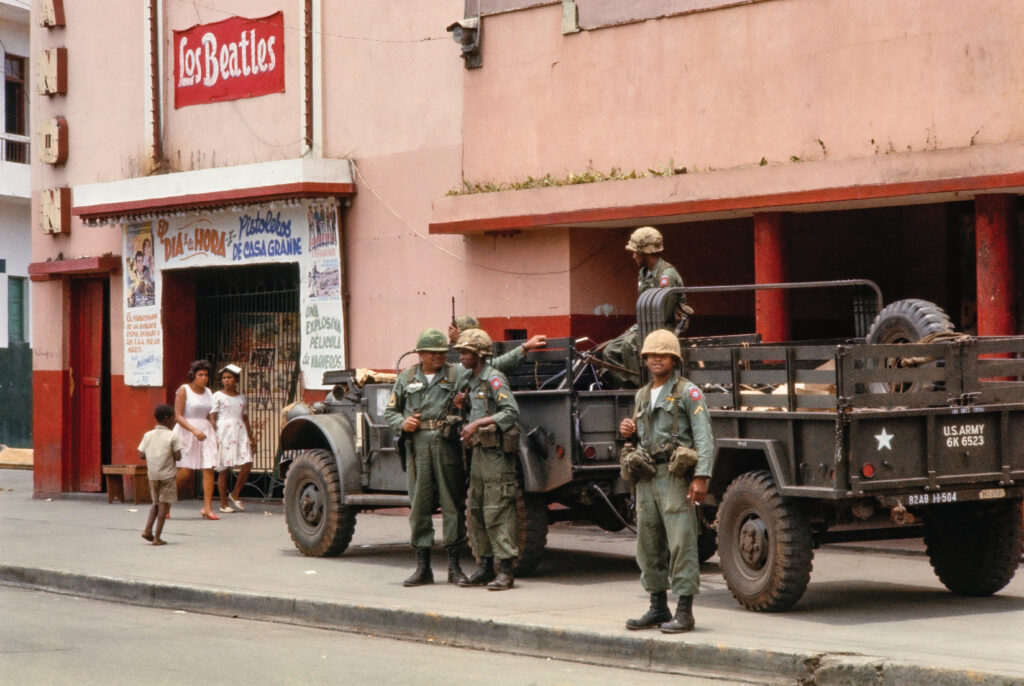
Getty Images
In Trump’s era, the opposite seems to be true, with a nation still deeply averse to anything resembling the failed occupations of Iraq and Afghanistan. Prior to the operation that removed Maduro, some 70% of Americans said they were opposed to the idea of military intervention in Venezuela. While the spectacular success of that raid may keep the doves at bay for a while, it’s notable that—at least at the time of writing—Trump has committed to precisely zero American “boots on the ground” in Caracas or elsewhere.
Trump’s tone toward Latin America also appears to differ from his predecessors.
John Adams, the second president, wrote that “the people of South America are the most ignorant, the most bigoted, the most superstitious of all the Roman Catholics.” Taft spoke of the “miserable… character of the governments of that continent” and the “right to knock their heads together.” Henry Kissinger famously said in 1970, regarding Chile, that “I don’t see why we need to stand by and watch a country go communist due to the irresponsibility of its own people.” Other presidents were guided by grand principles, such as Wilson’s goal of spreading democracy or McKinley’s desire to “uplift and civilize” Spain’s former colonies.
Trump, by contrast, seems driven not by moralizing ambitions or any particular disdain toward Latin America’s leaders, but by a comparatively narrow view of U.S. interests – namely, the need to reduce the flow of drugs and unauthorized migration into the U.S. Trump’s desire to contain the influence of China in the Americas, while important, has not yet morphed into the overriding policy priority in the way that stopping the Soviets, Spaniards or Germans did for previous presidents.
To what extent motive and tone truly matter remains to be seen. But they may help explain why Trump has been able to establish working relationships not just with his growing number of conservative allies in the region, but with leftist leaders like Brazil’s Luiz Inacio Lula da Silva and Mexico’s Claudia Sheinbaum.
“He has been surprisingly respectful,” a Brazilian official who has participated in calls with Trump told me. “At least, he hasn’t treated us any worse than (he has) the Europeans.”
SIX KEY U.S. ADMINISTRATIONS
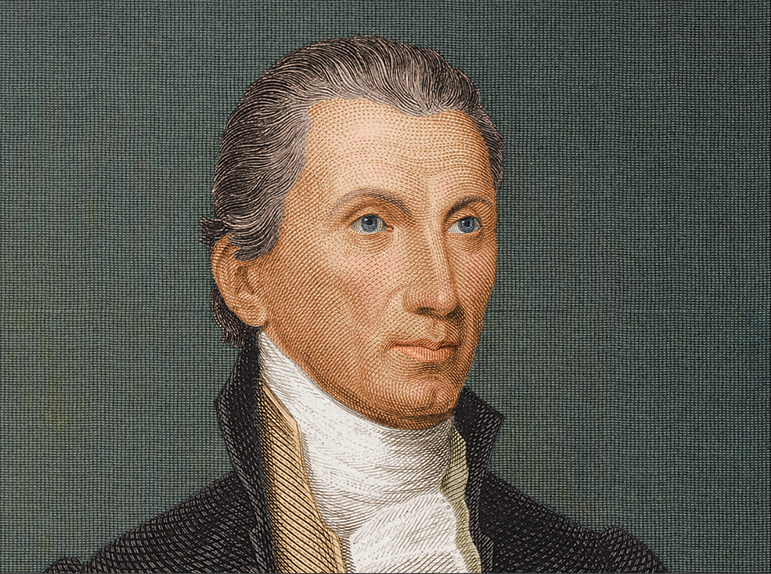
1817–25
James Monroe
Monroe outlined the region’s most famous “doctrine,” warning European powers against further colonization in the Western Hemisphere. As conceived by his administration, the doctrine was mainly defensive, asserting U.S. interests without committing to military intervention or regional management.
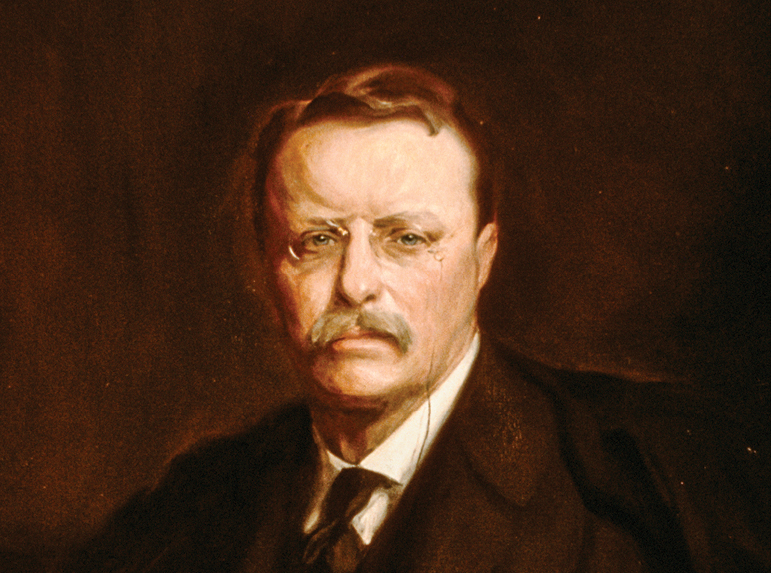
1901–09
Theodore Roosevelt
Roosevelt dramatically expanded U.S. interventionism through the Roosevelt Corollary, claiming a U.S. right to act as a “police power” in Latin America. His presidency marked the shift from hemispheric warning to direct occupations and financial control, especially in the Caribbean and Central America.
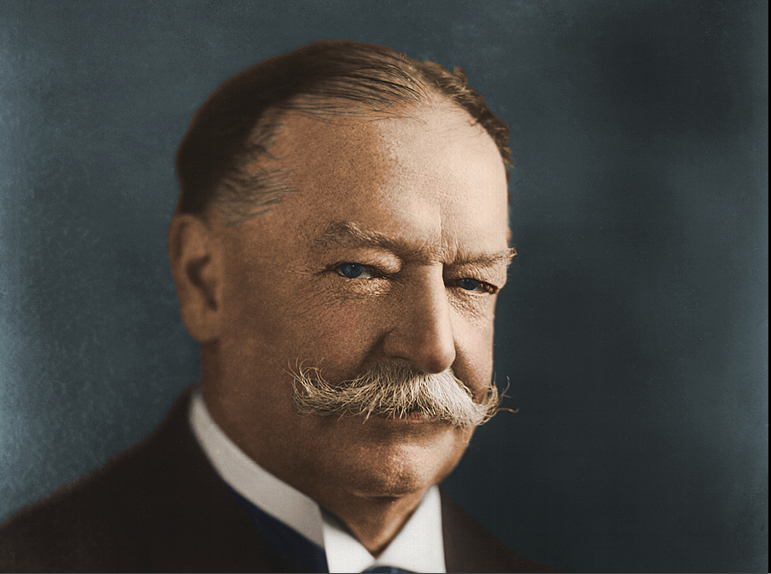
1909–13
William Howard Taft
The author of “Dollar Diplomacy,” which saw Latin America primarily through the lens of trade and corporate interests—and often used U.S. military force to support them. Attempted to create a protectorate in Nicaragua.
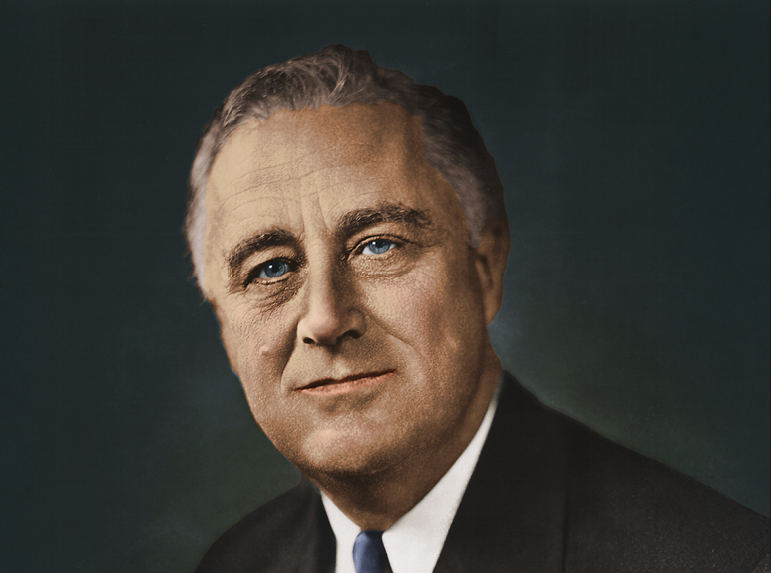
1933–45
Franklin Delano Roosevelt
FDR reversed decades of military intervention with the Good Neighbor Policy, pledging non-interference and respect for sovereignty. Under his leadership, U.S. troops withdrew from occupied countries, and helped pave the way for Latin American countries to join the Allied cause in World War II.
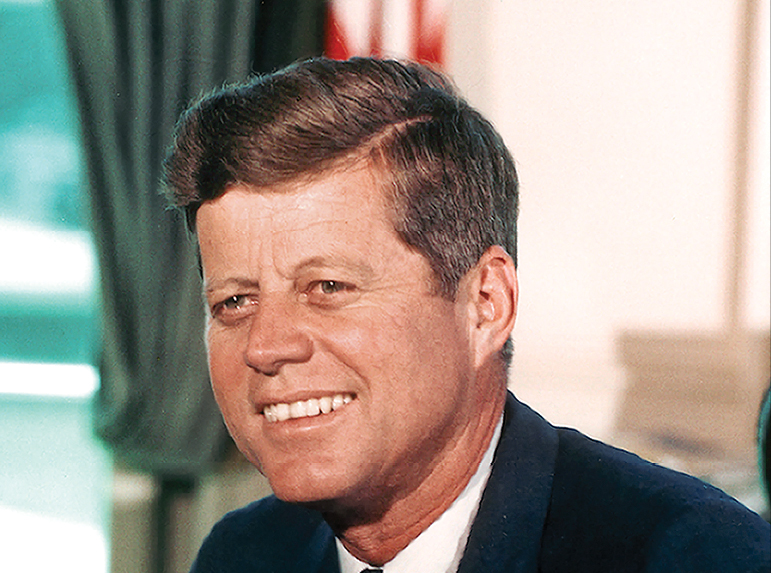
1961–63
John F. Kennedy
In the wake of the Cuban revolution, Kennedy aimed to contain communism through the Alliance for Progress, an ambitious economic development program. He also resorted to direct military action including the Bay of Pigs invasion and the Cuban blockade of 1962 that almost led to nuclear war with the Soviet Union.
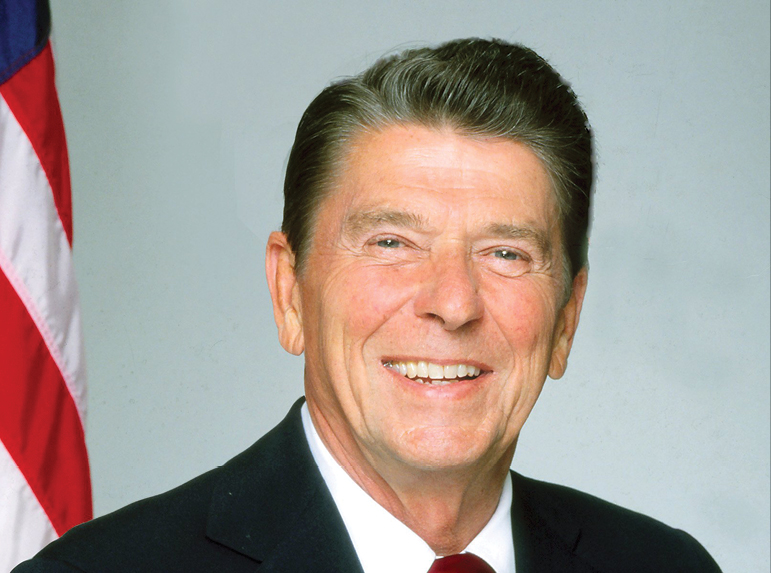
1981–89
Ronald Reagan
The U.S. became deeply involved in wars in Central America, which Reagan saw as an integral part of the global fight against communism. His 1983 invasion of Grenada reaffirmed the U.S. willingness to use military force following the non-interventionist Jimmy Carter years.
Photos: Getty Images
3. Don’t expect consistency.
While Trump often seems singularly unpredictable, the truth is that it’s never been easy to anticipate how a White House will behave toward Latin America.
Even the most famous regional “doctrine” of all, announced by President James Monroe in his State of the Union address of 1823, was greeted by confusion at the time—and for decades afterward. The warning against foreign (then, European) interference was expressed in such obtuse fashion that, a century later, Wilson complained the doctrine “escaped analysis.” A presidential candidate of the 19th century mused that the Monroe Doctrine “might be a good thing, if one could only find out what it was.”
In modern times, observers have raced to parse Trump’s National Security Strategy, published in November. It contained an unusually lengthy and prominent section on the Western Hemisphere, declaring that Washington would “readjust our global military presence” to focus on the Americas, and also outlined a “Trump Corollary” to the Monroe Doctrine, vowing to “deny non-hemispheric competitors the ability to position forces or other threatening capabilities, or to own or control strategically vital assets, in our hemisphere.”
But history tells us such declarations tend to be written by people other than the president—and reflect the views and disagreements of Cabinet officials more than any real-world governing philosophy. One reason the Monroe Doctrine confused early readers was because its authors, namely John Quincy Adams, Monroe’s secretary of state (and future president himself), strongly believed the U.S. should not fill the void left behind by European powers in the Americas—a fairly radical idea during that era, as well as this one.
Indeed, U.S. presidents have often openly contradicted themselves—or, perhaps more charitably, evolved in the face of evidence. Even as Wilson oversaw the peak era of U.S. interventionism, he declared that “It does not lie with the American people to dictate to another people what their government should be.” Theodore Roosevelt, in Schoultz’s analysis, was much less enthusiastic about the big stick by the end of his presidency, telling an audience with regard to Cuba: “I am seeking the very minimum of interference necessary to make them good.”
As the Crandalls note in their book, even Reagan, the ultimate cold warrior, changed tack on Chile policy twice—and was instrumental in convincing Augusto Pinochet to hold, and accept, a 1988 referendum that would lead to the end of his rule. Reagan’s bet, which proved correct, was that Chile would be more stable once democracy had returned.
Latin America has spawned an outsized share of “doctrines” over the years. History suggests most of them should be taken with a grain of salt.
4. There is always a backlash—at home and abroad.
And so we return to Venezuela one last time:
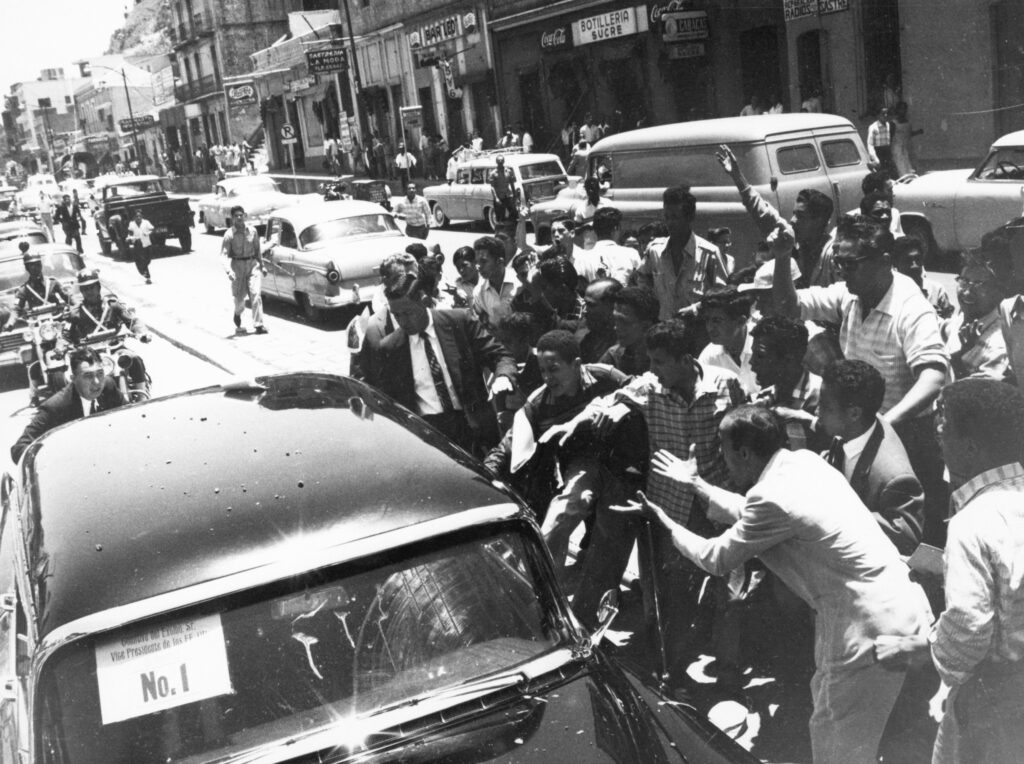
In 1958, as Fidel Castro and his fellow rebels were gaining momentum in the mountains of Cuba, and the Communist threat seemed to be spreading throughout Latin America, Richard Nixon—then Dwight Eisenhower’s vice president—agreed to undertake a regional goodwill tour.
It started well enough with stops in Argentina and Uruguay, but Nixon faced an angry crowd of students in Lima, and was then met by a booing, hissing crowd at the airport in Caracas. On his way to a wreath-laying at the tomb of Simón Bolívar, Nixon’s motorcade was stopped by an angry crowd that smashed out the vehicles’ windows. “For fourteen agonizing minutes,” Schoultz wrote, “Nixon and his wife sat trapped in their separate limousines while the press captured an occurrence unique in U.S. history—enraged demonstrators spitting on the vice president of the United States.”
Nixon’s driver eventually guided the car over the highway’s median and raced through opposing traffic to the safety of the U.S. embassy. But the incident in many ways presaged the difficulties that the U.S. would face throughout Latin America in the second half of the 20th century.
Getty Images
Such events were often the product of local dynamics. But opposition to U.S. “imperialism,” past and present, clearly helped fuel the rise of leaders from Castro to Juan Domingo Perón, Daniel Ortega, and Hugo Chávez. The consequences for U.S. policymakers and business interests were devastating.
Even the most hawkish U.S. officials recognized the seemingly inevitable cycle of intervention and backlash. Upon returning to Washington and addressing his peers in Eisenhower’s Cabinet, Nixon blamed the Caracas incident on Communist agitators, but added: “The United States must not do anything that would support an impression that it is helping to protect the privileges of a few.”
In today’s rapidly evolving context, it’s difficult to know where the parallels might begin and end. Polls suggest that people throughout Latin America were even more supportive of Trump’s intervention than the public in the U.S. The hard, reflexively anti-American left of old seems to be in retreat all over the region, and Trump-aligned conservatives like José Antonio Kast and Daniel Noboa have been winning recent elections. Yet polling by the Pew Research Center and others has suggested that the image of the U.S. may have fallen since Trump’s return, while China’s is on the rise in parts of Latin America—likely presaging at least some trouble in years to come.
There may also be a backlash within the U.S. itself. Key senators of the 1920s launched investigations into the U.S. occupations of Haiti and the Dominican Republic and even held hearings in both countries. Franklin Delano Roosevelt’s “Good Neighbor” policy of the 1930s, which helped pave the way for Latin American countries to join the Allied cause in World War Two, was a direct counterreaction to the interventionism of the early 20th century.
In the final reading, there is probably no substitute for the observation by Theodore Roosevelt’s own secretary of state, Elihu Root, made in 1905, about a year after the president announced his famously aggressive corollary:
“The South Americans now hate us, largely because they think we despise them and try to bully them,” Root wrote a senator. “I really like them and intend to show it. I think their friendship is really important to the United States, and that the best way to secure it is by treating them like gentlemen.”
“If you want to make a man your friend,” he concluded, “it does not pay to treat him like a yellow dog.”
ABOUT THE AUTHOR

Brian Winter
Reading Time: 11 minutesWinter is the editor-in-chief of Americas Quarterly and a seasoned analyst of Latin American politics, with more than 25 years following the region’s ups and downs.