



SÃO PAULO—For much of the past two decades, Washington worried that it was losing Latin America by neglecting it. Today, the risk may be the opposite. The United States is paying attention again, but in ways that could accelerate the geopolitical trends it is trying to reverse.
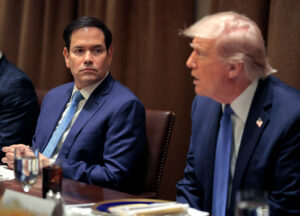
President Donald Trump has made the Western Hemisphere central to U.S. foreign policy with the “Trump Corollary” to the Monroe Doctrine, asserting renewed U.S. leadership in the hemisphere and rejecting the influence of outside powers.
This week, amid escalating tensions with Brazil, the State Department amplified the message once again, posting a video on social media that concludes with Trump’s assertion that American dominance in the Western Hemisphere “will never be questioned again.” The timing is telling. What might once have sounded like presidential bravado is increasingly being presented as a governing principle of U.S. regional policy.
The diagnosis behind this strategy is not entirely wrong. Trade between China and Latin America and the Caribbean exceeded $500 billion in 2024, and China is now the region’s second-largest trading partner and its largest bilateral creditor. The Trump administration seems to assume that renewed attention, combined with enough economic and political pressure, can force the region’s governments to reduce their exposure to Beijing.
Paradoxically, U.S. pressure may make alternatives to Washington more appealing to Latin America. Recent diplomatic maneuvers between the U.S., Brazil and Argentina show how this dynamic is unfolding and the risks it carries.
The costs of autonomy
Relations between the U.S. and Brazil have deteriorated sharply ahead of the October presidential election as trade measures have become entangled with Brazilian politics. At the end of July Brazil denied visas to U.S. officials who the government believed intended to question the country’s electoral process, and on August 4 the U.S. revoked the visa of Brazil’s ambassador in Washington.
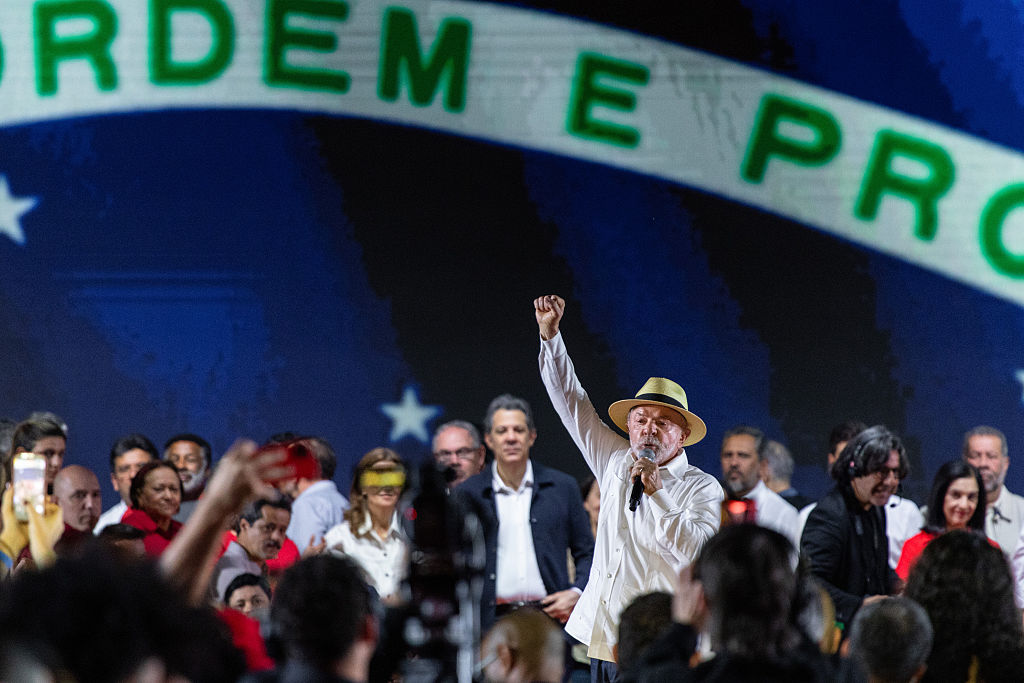
Brasília has framed the dispute as a question of sovereignty. Foreign Minister Mauro Vieira called the actions “unprecedented” and insisted that Brazil “will not be governed by remote control from a foreign capital.” His language captures the broader tension now emerging in the relationship: Where Brasília sees sovereign autonomy, Washington increasingly sees resistance to its regional authority.
Viera also criticized Argentine President Javier Milei for comments made in July while visiting the country to support Flávio Bolsonaro’s presidential campaign. Fewer than two weeks later, Brazil downgraded diplomatic relations with Argentina after another round of public attacks by Milei against President Luiz Inácio Lula da Silva.
These developments reveal something important about Washington’s emerging hemispheric strategy. Argentina under Milei represents the promise of alignment with Washington; Brazil under Lula symbolizes the costs of autonomy.
The consequences of U.S. pressure
Washington’s approach may be tempting in the short term, particularly for an administration that understands foreign policy through the language of loyalty and leverage, but it carries a serious strategic risk. If Latin American governments conclude that access to Washington depends increasingly on ideological alignment, they will have stronger incentives to diversify their relationships to reduce their vulnerability to changes in U.S. politics.
The most important consequence of U.S. pressure on Brazil is not that Lula will suddenly “choose” China. Brazil has spent decades resisting binary alignment, and its foreign policy tradition is far more comfortable with diversification than with geopolitical camps. The more consequential shift is subtler: China, an indispensable economic partner, is becoming a useful strategic hedge for Brazil.
Political rhetoric cannot easily undo China’s structural role in Brazil’s economy. In 2025, China bought $55.3 billion in Brazilian agricultural products. This accounted for nearly one third of Brazil’s agricultural exports, compared to the U.S.’s 6.7%.
Moreover, economics and geopolitics are becoming more intertwined. When Lula and Xi Jinping spoke by phone in late July, Xi offered support for Brazil in resisting what Beijing described as “external interference.” The leaders also discussed stronger strategic coordination, and Lula said the conversation included support for advancing talks on a potential trade agreement between China and Mercosur.
For years, Brasília approached such an arrangement cautiously. It is now being discussed as relations with Washington worsen, underscoring the U.S. strategy’s unintended consequences. The more Washington makes dependence on the U.S. feel like a political vulnerability, the more valuable diversification becomes.
Argentina and the limits of alignment
Even Argentina demonstrates the limits of the U.S.’s more ideological strategy. Milei may be one of Trump’s closest allies in the hemisphere, but economic realities have forced Buenos Aires to preserve important ties with Beijing. Argentina has maintained a multibillion-dollar currency swap with China even as Milei aligned himself closely with Washington.
Recent tensions over Huawei have exposed how difficult it is to translate political affinity with the U.S. into economic disengagement from China. This should give Washington pause.
Coercion can become self-defeating
There is a paradox at the heart of the Donroe Doctrine. The Monroe Doctrine sought to exclude European powers from the hemisphere, but China’s presence cannot simply be pushed offshore. The Asian giant is deeply embedded in the region’s trade, commodity markets, infrastructure and financial relationships.
Greater Latin American autonomy does not necessarily amount to a victory for China. Washington makes a strategic mistake when it interprets every refusal to align as evidence of Beijing’s advance. Brasília’s preference for autonomy predates China’s rise, and today’s more multipolar international system gives Brazil and other countries more instruments with which to pursue it.
A successful U.S. strategy would need to make partnership with Washington more attractive, rather than making alternatives more necessary. The Donroe Doctrine’s greatest risk is not that Latin America will reject the U.S. and embrace China. The region is too plural, too economically interconnected, and too politically heterogeneous for such a simple realignment. It is that by trying to make Latin America choose, Washington will teach its governments why they should never have to.
ABOUT THE AUTHOR

Fernanda Magnotta
Reading Time: 4 minutesMagnotta is a senior fellow at the Brazilian Center for International Relations and a professor of the International Relations Program at Fundação Armando Alvares Penteado in São Paulo.
China’s New Playbook for Latin America
Beijing is shifting from an era of large loans and infrastructure initiatives toward more targeted, strategic engagement.
Brazil Deepens Its Bond With China
The already important relationship is gaining momentum, as U.S. policies drive Brazil to seek closer collaboration with China.
China Doubles Down on Latin America
The recent China-CELAC forum underscores how LAC must position itself strategically amid shifting geopolitics.