



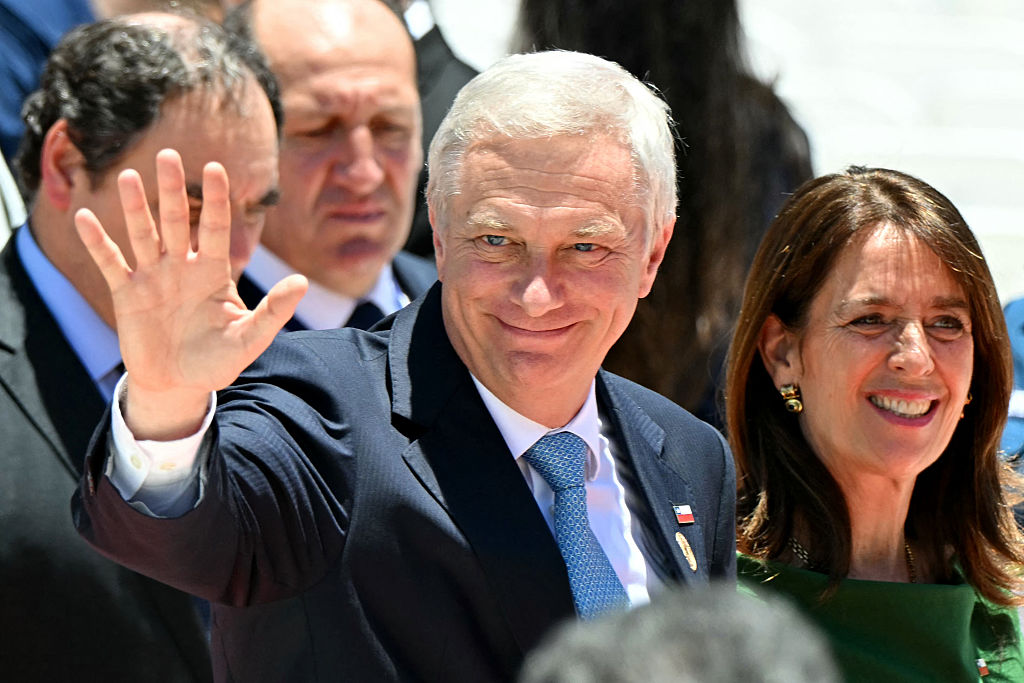
SANTIAGO—José Antonio Kast reached the presidency of Chile with a promise as simple as it was effective: the return of order. Backed by classic right-wing issues (the economy, security, and migration) and the concept of an “emergency government,” Kast achieved something rare in the history of the Chilean right: connecting with the broad majority of citizens.
The campaign was meticulously planned. The candidate made few mistakes, and he was surrounded by a cohesive, loyal team. Moreover, in the runoff election, Kast managed to unite all right-wing factions around his candidacy. Thus, when beginning his administration, Kast had a historic opportunity to provide the country with genuine political leadership. He had electoral support, a connection to citizens’ urgent concerns, a polished discourse, and a parliamentary majority within reach. As if that were not enough, the previous left-leaning administration departed from office deeply disoriented and without a future project.
To properly understand this, it is necessary to step back in time. If the slogan of order proved so successful, it was fundamentally because the left failed to properly manage the cycle of mobilizations, protests, and constitutional experiments that began in October 2019.
Following that uprising, the left believed it was witnessing a foundational moment, which led a segment of the left (particularly Frente Amplio and the Communist Party) to endorse violence in the streets and defend a constitutional project with Chávez-style overtones (rejected at the polls in 2022). Put briefly, once citizens turned their backs on it, the left found itself without tools or discourse, as if it had nothing to offer beyond outdated utopias. Kast weathered all this turbulence with the calm of someone who knows how to wait: Every period of social upheaval is followed by a demand for order.
The central question, however, is how to provide order in a society that increasingly distrusts politics and is heavily strained by the accelerated modernization of recent decades. It is true that the 2019 social uprising was violent, but it also revealed a deep unease that should not be dismissed. This, it seems to me, is Kast’s main challenge: turning the idea of order into a political project capable of addressing the complexities of contemporary Chile and of understanding crises as part of a sequence rather than as isolated episodes.
His administration is running against the clock. Kast’s approval rating has declined following an increase in fuel prices, and just last week, it hit the lowest level since his inauguration after a brief rebound. This trend suggests he has little room for error.
The problems
The question, then, is whether Kast’s government is up to these tasks. Of course, it is still too early to draw definitive conclusions: As I write these lines, the government has been in power for only two months. Even so, it already seems possible to identify the tendencies of the new administration, and the signs are rather troubling.
To begin with, meeting the expectations raised during the campaign has not been easy. The government’s first problem lies in its own design. Following an old temptation of the Chilean right, Kast formed his Cabinet by placing more trust in technocrats than politicians. Indeed, there are few party members among the ministers, but many personalities from the private sector with no parliamentary or public experience.
This decision is strange coming from Kast—who has practiced politics for some three decades—and it has damaged the government’s ability to act. Paradoxically, the person who has most emphasized these difficulties is Arturo Squella, the president of Kast’s political party. Squella has repeatedly pointed out that the government lacks the right balance between politics and technical expertise.
The area where this problem is perhaps most evident is security. Without a doubt, this was Kast’s main campaign promise, but the minister in charge—a former prosecutor with no political experience—has failed to give citizens any sense of certainty. On this issue, the president is playing with fire, because Chileans entrusted him with power, assuming that at least this promise would be fulfilled.
As relevant as Kast’s decline in popularity is the perception of his strategy. According to CADEM’s most recent poll, 64% of citizens believe the government doesn’t have a security plan. The situation is worrisome, or even worse. In recent comments, Chile’s public security minister, Trinidad Steinert, has confirmed this perception, responding with a certain disdain each time she has been asked about an orderly security plan.
To be fair, public perceptions of security have so far remained at acceptable levels, and homicide figures, for example, do not show serious deterioration. Still, it is obvious that over time, demands will rise in proportion to the expectations created during the campaign.
In any case, the difficulty is not limited to this issue. More generally, and with few exceptions, ministers lack the ability to communicate politically, regardless of their technical knowledge. This leaves the government without the tools necessary to advance its own agenda.
A second challenge
If the first challenge does not appear to be met, the second, more difficult one seems even further off: The government has not even managed to sketch out a discourse that goes beyond day-to-day events and looks toward the bigger picture. The return of order is a good campaign slogan, but it is far from easy to define what it actually means or how to achieve it. So far, the government has shown little interest in developing a sophisticated narrative about the country’s situation, leaving it with little room to maneuver as time passes. In short, the country’s path needs not only to be administered, but also thought through.
At present, the administration is committed to an ambitious economic reform that has a good chance of passing in Congress, and the left will likely remain directionless for at least the rest of this year. Given the oil shock, meeting growth and employment goals will be difficult; promises of 4% growth now seem out of reach as GDP growth will likely not exceed 2%-2.5%.
For this reason, it is important to recognize that the historic opportunity is enormous and requires more ambitious measures to fully capitalize on the moment’s potential. Specifically, Kast must forge a broad coalition that unites all right-wing factions and looks toward the future. However, this must not prevent him from maintaining a connection with the public’s concerns to keep the opposition sidelined. This calls for a nuanced strategy, a cohesive team, and a president who does not squander his energy on futile controversies.
A good way to frame the problem is to ask what kind of president Kast wants to be. In his first speech as president-elect, Kast outlined a narrative of national unity reminiscent of Patricio Aylwin, who was Augusto Pinochet’s successor and led a national reconciliation effort. However, in other speeches, he has leaned toward the antagonistic stridency of new right-wing movements, and there have also been instances in which he has behaved like an ordinary political actor.
If Kast truly wants to rise to the challenges facing the country—challenges he articulated during his campaign—he must hold himself to a much higher standard. This is not a time for erratic behavior or routines suited to normal times; the country is crying out for something different. If Kast does not fully grasp the challenge before him, he will condemn himself to being just another swing in the political pendulum that has been going for two decades. The decision is in his hands.
ABOUT THE AUTHOR

Daniel Mansuy
Reading Time: 5 minutesMansuy holds a doctorate in political science from the University of Rennes in France and is a professor at Universidad de Los Andes in Chile and a political analyst.
The Question Facing José Antonio Kast
Chile’s new president may govern as a moderate, but there are risks of a more radical approach.
Kast’s Cabinet Set to Confront Distinctly Political Challenges
Chile’s president-elect has rolled out a pro-business cast of ministers, tasked with finding political solutions, an expert writes.