


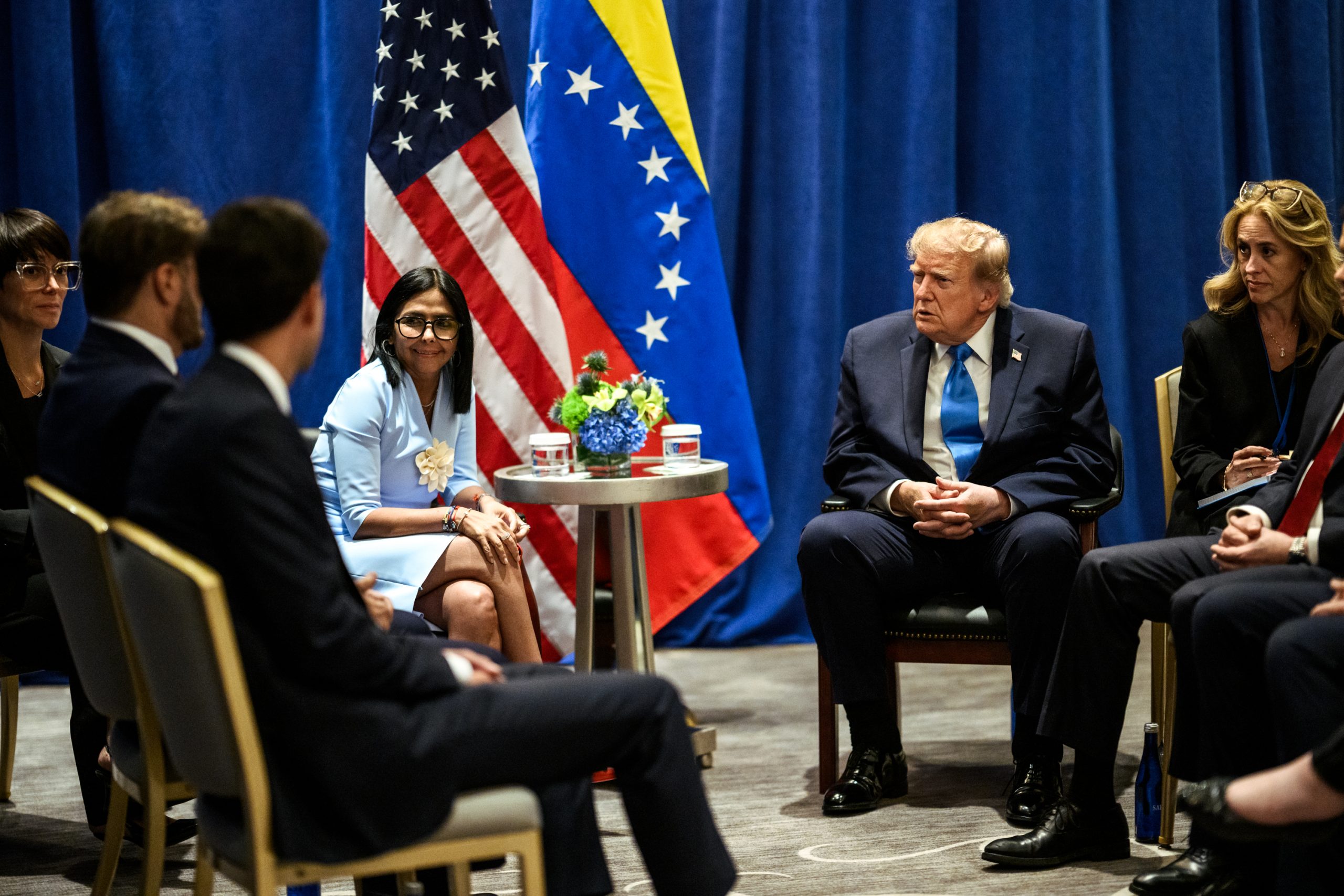
CARACAS—In a matter of days, elections have become a recurring theme in Venezuela and Washington. Speaking at the UN General Assembly last week, acting President Delcy Rodríguez promised to hold elections at the “right moment,” and President Donald Trump admitted they discussed the issue during their first-ever meeting on the sidelines of the international gathering. Before these events, lawmakers Ted Cruz and Bernie Moreno had been pressing for free and fair elections, and on Thursday, the Senate’s Foreign Relations Committee is reportedly expected to review the issue in a closed-door meeting.
While the announcement and public recognition of the need to hold elections in Venezuela may seem encouraging for the long-sought democratic transition, one piece is missing from the equation: the Trump administration’s commitment to setting an electoral calendar.
The three-phase plan Secretary of State Marco Rubio disclosed in January—stabilization, recovery, and transition—never included dates, and Trump did not set a date for elections at the UN meeting held last week. The lack of a clear, verifiable roadmap to hold a vote in the country is becoming a test that boils down to a single question: Is Washington willing to set an electoral timetable when doing so may conflict with its most immediate economic and strategic intentions?
Almost ten months after the capture of Nicolás Maduro, the U.S. continues to exert extraordinary and unprecedented leverage over Venezuela. This leverage is shaping not only the regime’s actions but also those of the organized opposition. Still, contradictions remain: Even as Washington sponsors a political dialogue between the opposition and the regime—with a third round of talks set to start in mid-October—political leader María Corina Machado is struggling to return to the country after seven unsuccessful attempts, amid the U.S.’s reluctance to facilitate her comeback. Without an electoral timetable, any achievement in the ongoing negotiations will only cement what now looks like fragile, elusive stability.
Asymmetrical progress
The U.S. plan is advancing, but with a strikingly asymmetrical commitment. The first two phases are being implemented through verifiable instruments: licenses, contracts, funds audited by KPMG, an IDB loan in preparation, a controversial $150-$200 billion debt restructuring process yet to start in earnest, and most recently, the “biggest oil deal in world history” involving a little-known Barbados-based oil operator, North American Blue Energy Partners (NABEP), owned by the controversial Venezuelan entrepreneur Alejandro Betancourt.
The third phase is being implemented through statements rather than firm commitments. What matters to Washington is under contract; what matters to Venezuelans has only been promised.
Washington acknowledges that there is no deadline for elections, and the regime has filled the vacuum in its own way. Jorge Rodríguez, president of the National Assembly, announced, with a dose of cynicism, four elections, with the presidential election at the end of the list. Some are right to fear that the regime’s intention—playing and using “the timeframe established by the Constitution”—points to the ordinary electoral calendar, under which an elected government, which is not the case here, may well extend its reign until 2031.
As Thomas C. Schelling’s work on conflict and cooperation through game theory analysis shows—in his seminal book The Strategy of Conflict (1960)—a commitment is credible when it is visible, costly to reverse, and carries automatic consequences. Washington has avoided all three conditions in the political phase because setting a date would force it to punish a useful partner. Without a date, time works in the regime’s favor. The Barbados Agreement already showed in 2023 how commitments without automatic costs for noncompliance end.
A sequencing fallacy?
The negotiating dialogue has produced some results. The second round concluded on September 25 with a seven-member council of jurists that will review candidates for the Supreme Court and a commitment to appoint the commission that will begin its selection. It is the first step involving named individuals, but it is not decisive: Its opinion is nonbinding, the decision remains with a pro-government National Assembly, and four of its members have already served as judges.
The third round, scheduled for mid-October, has no public agenda. So far, what is being delivered has minimal costs, while what would transfer real power is being postponed: decisions involving the electoral authority, the electoral calendar, political prisoners, and the return of exiles. In my latest book, Conflict and Negotiation, I argue that in authoritarian regimes, negotiation becomes an instrument for buying time. What is new is that the tactic also serves the actor overseeing the current process. The negotiation absorbs pressure from Congress, the diaspora, and allies while Washington advances its objectives.
The U.S. strategy of building state capacity as a prerequisite for elections implies several risks. Improving governance, debt sustainability, state capacity, and ultimately reconstructing a country after devastating twin earthquakes can take decades. Tying elections to the latter means postponing them indefinitely. American scholar Thomas Carothers argued in 2007 against the so-called “sequencing fallacy”: Autocrats do not build the rule of law that would constrain them. An elected government is better positioned to build those conditions, capable of asking citizens to make sacrifices an appointed government cannot demand.
Machado’s eventual return to Venezuela would turn an administered sequence into a contest over an electoral calendar and increase the regime’s fear and the cost of tolerating an opposition with a leader supported by a large majority of the country. That threatens the stabilization and cooperation Washington is protecting. For stabilization, Machado may be a risk; for a credible democratic transition, her participation is essential.
Unlocking the process
The current regime will not democratize out of its own calculations; it will do so only when the cost of resisting exceeds the cost of yielding. Washington has already reduced the cost of tolerating the regime—recognition, engagement, and freedom from prosecution—without raising the cost of resisting. It has delivered the carrot of survival without the stick of an electoral timetable.
Three forces could change that calculation: the demands of the external debt agenda, which typically make institutional restoration a precondition for financing; pressure from the U.S. Congress, which is already discussing an electoral calendar; and Machado’s return.
At the UN General Assembly, Delcy Rodríguez asked the world to observe the changes in Venezuela. It’s worth doing so, not forgetting that a pledge and a meeting in New York do not create legitimacy; a calendar with dates would give the Trump/Rubio three-phase plan credibility. Until that exists, the country only has a fragile, borrowed stability—and every loan comes with a due date.
ABOUT THE AUTHOR
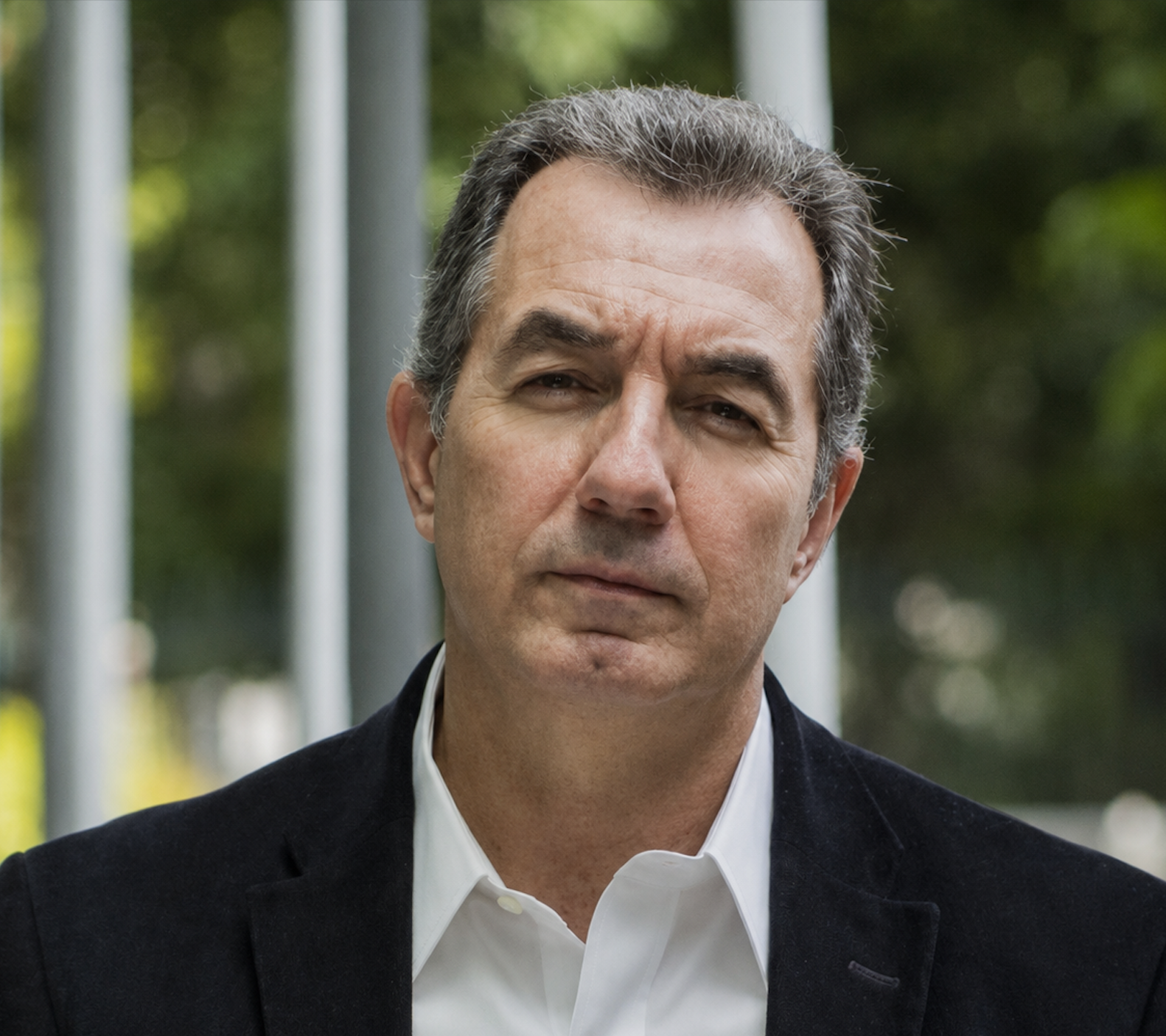
Benigno Alarcón Deza
Reading Time: 4 minutesAlarcón Deza is a political analyst, researcher, and former Director of the Center of Government and Political Studies at Universidad Católica Andrés Bello in Caracas. He’s also a professor at UCAB and UCV and a Managing Partner at Polis Consultores.
Venezuela’s Complicated U.S. Oil Deal
An accord anchored on billions of dollars lacks the depth needed to transform a neglected national oil industry, an expert writes.
Venezuela’s Overwhelming Electricity Crisis
Simultaneous pressures are colliding at the worst possible time, making power generation a central test of the country’s capacity to recover.