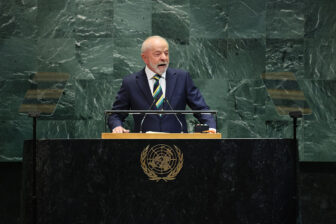





SÃO PAULO—Rare earths are universally recognized as key to the global energy transition. But they also appear to have accomplished something almost as momentous: bringing Donald Trump and Luiz Inácio Lula da Silva together.
Indeed, when the presidents of the United States and Brazil abruptly put their months-long conflict aside and began negotiating starting this September, a shared interest in rare earths was seen as one of the main reasons.
Brazil has the world’s second-largest proven reserves of rare earths behind China, but has struggled to develop them due to a lack of capital and expertise. The U.S. has stepped up its search for rare earths after China threatened to withhold the materials earlier this year.
The question now facing both countries is: Can they reach a mutually beneficial deal?
Recent events added fresh momentum. Last week in Washington, Brazilian and U.S. officials—including representatives from the Inter-American Development Bank, the U.S. Commerce Department and Brazil’s Ministry of Mines and Energy—formally reopened their critical minerals dialogue, with rare earths at the center. According to public readouts, both sides signaled interest in joint ventures and technical cooperation to accelerate Brazil’s capacity to extract and process rare earths, while the U.S. emphasized the urgency of diversifying supply chains away from China. The meeting was described as the clearest indication yet that Brasília and Washington are prepared to move from political alignment to practical, investment-oriented collaboration on the issue.
Brazil’s mineral abundance
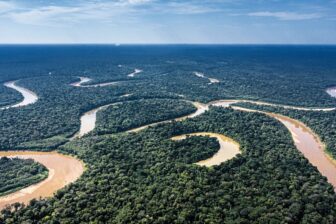
Brazil’s potential is well-known. The U.S. Geological Survey (USGS) ranks the country second worldwide in rare earth reserves, at roughly 21 million tons, and credits it with a range of other contributions to the global economy, including over 90% of global niobium output—an alloy essential to aerospace and advanced steel manufacturing. The vast deposits of critical resources position the country to play a pivotal role in reshaping supply chains.
A recent deal offers reason for hope. In early November, the U.S. International Development Finance Corporation agreed to provide up to $465 million to Brazilian rare earth producer Serra Verde. The company’s mine, Pela Ema, in Brazil’s Goiás state, contains mainly neodymium, praseodymium, terbium and dysprosium, which are necessary for producing magnets used in key applications.
Brazil’s mineral wealth is both vast and diverse. The country hosts some of the world’s most promising lithium reserves, concentrated in Minas Gerais’ Jequitinhonha Valley, where international firms like Sigma Lithium are investing heavily.
Brazil also has the second-largest reserves of graphite, another key battery material, with new mines coming online in Bahia and elsewhere. It has rich deposits of nickel and cobalt, likewise critical for clean energy, as well as niobium, copper, and other rare earths vital to high-tech and defense supply chains.
While the U.S. still produces some alumina domestically, Brazil has become its most important external source, providing roughly 60% of all U.S. alumina imports in recent years, USGS data show.
In nearly every high-tech sector, Brazil possesses something Washington needs. For Brazil, the challenge is how to turn mineral abundance into industrial power without slipping back into the old cycle of exporting raw materials and importing dependency. The two interrelated keys are to move up the value chain and to advance technologically.
Negotiations with Washington should focus on securing commitments for processing, refining, and R&D investment within Brazil—anchoring mineral production in domestic growth rather than dependency.
Moving up the value chain
Turning those priorities into reality will require concrete mechanisms capable of anchoring production inside Brazil. One path is co-financing, where Brazil’s state development bank BNDES and the U.S. Development Finance Corporation could replicate models already used in Africa and Southeast Asia to de-risk strategic-minerals projects—opening space, for example, for Brazil-based rare earth separation plants in Bahia.
Another is joint research, drawing on partnerships between Brazilian universities and U.S. national laboratories such as Ames Lab to advance refining techniques, permanent-magnet development, and recycling technologies.
A third involves logistics and energy infrastructure, with bilateral support for transmission upgrades in the north or rail-port improvements in Maranhão to make downstream processing competitively viable. In all three areas, technology transfer is not separate but embedded: it would flow through financing conditions, shared pilot facilities, and the adoption of advanced industrial systems—ensuring Brazil moves up the value chain rather than remaining a supplier of unprocessed ore.
Brazil should also seek preferential access for low-carbon exports, such as pilot quotas or streamlined certification for green aluminum or low-carbon steel in U.S. procurement programs. It should press for mutual recognition frameworks that would allow Brazilian producers meeting rigorous ESG standards to qualify more readily for U.S. clean-supply incentives—reducing compliance costs and providing clearer market advantages.
Financing and technical assistance for refining and logistics, as outlined above, would reinforce this shift up the value chain. Finally, Brazil could pursue tariff relief on steel, aluminum and biofuels—long-standing points of friction that limit the competitiveness of Brazilian exports even where the carbon profile favors deeper integration.
Critical minerals have become the foundation of geopolitics. As global powers compete to secure the resources of the green and digital revolutions, access and processing capabilities increasingly define technological leadership.
For Brazil, the stakes are incredibly high. Managed wisely, mineral diplomacy can drive an economic transformation—enabling the country not only to supply the world but also to influence its technological future. Mismanaged, it risks repeating the old cycle of exporting raw materials and becoming dependent on imports.
In a time of transactional international relations, Brazil’s capacity to negotiate confidently with the Trump administration—on its own terms and with a long-term perspective—can determine its role in the emerging global order. Although the global economy may be decoupling, Brazil remains one of the few nations vital to both sides.
ABOUT THE AUTHOR

Fernanda Magnotta
Reading Time: 4 minutesMagnotta is a senior fellow at the Brazilian Center for International Relations and a professor of the International Relations Program at Fundação Armando Alvares Penteado in São Paulo.