




Brazil and Trade: Brazil’s Ambivalent Welcome to the World
Just a few years ago, Brazil was brimming with optimism. Rising global demand for resources led to an export and consumption boom. The official poverty rate was declining sharply, thanks to an expansion of the social safety net and falling unemployment. When GDP growth hit 7.5 percent in 2010, it seemed that the “sleeping giant” … Read more

Higher Ed: Private Investors Get Into the Game
The combination of sustained economic growth in Latin America, a region-wide expansion of the middle class, and a newly competitive business environment has boosted demand for quality education, and stoked desires for alternatives. The alternatives are coming from a slew of new and lower-cost online courses. This innovation has produced a wave of private investment … Read more

Oil Sparks in the Amazon: Local Conflicts, Indigenous Populations, and Natural Resources by Patricia I. Vásquez
Since the early 1990s, the rising price of crude oil and other key natural resources—and the resulting drive by governments and private companies to extract those resources—has led to sharp conflicts in Latin America. At the core of these disputes is the clash between national economic interest and the rights of Indigenous people inhabiting the … Read more
MOOCs in Development: Fad or Future?
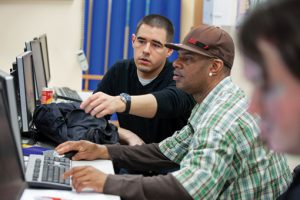
Those following tech and continuing education news have been surprised by the rising popularity of Massive Open Online Courses (MOOCs).1 The basic promise for professionals in Latin America and the Caribbean is quite alluring: free online access to a world-class knowledge base. But questions remain. Will this new learning methodology last, or fade quickly once … Read more
Security in South America: The Role of States and Regional Organizations by Rodrigo Tavares
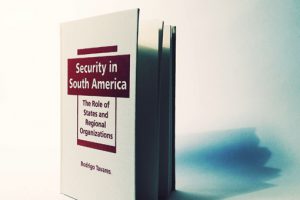
Nowhere in the world is the web of treaties, agreements and agencies concerned with regional security needs as thick as in Latin America. The region has seen one of the most dramatic institutional transformations of the late twentieth and early twenty-first century. Among the many reasons for this transformation is the widespread rejection of U.S. … Read more

Student Debt in the Americas
The promise of upward mobility for Latin America’s new middle classes has led to swelling university enrollment rates, but also to growing debt.1 In Colombia, high school graduates enrolling in higher education rose from 24.87 percent in 2002 to 45.02 percent in 2012.2 Meanwhile, in 2011, 23 percent of 25- to 34-year-old Mexicans had attained … Read more

Policy Updates
A snapshot of policy trends and successes in the region.

10 Things to Do: Patagonia, Argentina
Patagonia, the rugged, southern frontier region shared by Argentina and Chile, was once believed to be the home of a race of giants. It still looms large as a wild landscape where myth and reality coincide. The site of major hydro projects, the Argentine Patagonia also boasts four World Heritage sites. The best place to … Read more
Monday Memo: Colombian Legislature – Argentine Debt – Peruvian Environmental Law – Deaths in Nicaragua – Bolivian Child Labor
This week’s likely top stories: Colombia inaugurates a new legislature; Argentina must pay its debt by July 30; Reforms to Peru’s environmental agency are criticized; Five Nicaraguans are killed after a Sandinista anniversary celebration; Bolivia allows those as young as 10 to work. Colombia installs new legislature: As Colombia’s new legislature was sworn in on … Read more
Travelogue FIFA: A Journalist’s World Cup Journey
For the past month, I have been working in Brazil providing production services for international broadcasters covering the World Cup. Twelve Brazilian different cities hosted the tournament, which began on June 12 in São Paulo, and 32 nations from all over the globe participated—bringing hordes of players, fans and reporters to remote parts of Brazil … Read more
Monday Memo: BRICS Summit – Argentina and Russia – U.S. Immigration – FARC and Colombian Peace – World Cup Riots
This week’s likely top stories: BRICS leaders meet in Brazil; Argentina and Russia sign energy agreements; U.S. considers action on child immigrants; Colombian forces strike FARC; Argentine soccer fans riot. BRICS leaders to launch new bank at summit: Leaders from Brazil, Russia, India, China, and South Africa will convene in Fortaleza, Brazil for the sixth … Read more
Building the Relationship, BRICS by BRICS
On July 15, the leaders of the five BRICS countries—Brazil, Russia, India, China and South Africa—will convene in Fortaleza, Brazil. This will mark the sixth official meeting between the member nations since the creation of the group in 2009. Only two days after the final of the World Cup, Brazilian President Dilma Rousseff has the … Read more
Argentina’s Economy and the 2015 Presidential Elections
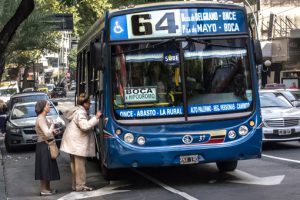
There’s more than a year to go until Argentina’s October 2015 presidential elections, but campaign season unofficially kicked off last October when the headquarters of National Deputy Sergio Massa (Frente Renovador, or Renewing Front party) and current Buenos Aires Mayor Mauricio Macri (Propuesta Republicana, or Republican Proposal party—PRO) erupted in joy upon hearing the results … Read more
World Cup Unifies Brazil in Joy, Despair
In 1945, the Brazilian football clubs Remo and Paysandu took the pitch here in Belém, gateway to the Amazon in the northeastern state of Pará. One of many face-offs of their famous century-old rivalry, the match became significant for more than just the 7-0 drubbing that Paysandu inflicted. It would leave a deep scar on … Read more
Brazil Crashes out of the World Cup
Brazil was routed 7-1 by Germany during yesterday’s World Cup semifinal match in Belo Horizonte, marking the South American nation’s biggest defeat in the history of the tournament. Neymar Jr., Brazil’s star player, was out of the lineup with a fractured vertebrae from Friday’s physical clash with Colombia. But more than their striker, the seleção … Read more

PUBLISHED BY AMERICAS SOCIETY/ COUNCIL OF THE AMERICAS
680 Park Avenue
New York, NY 10065
Phone: (212) 249-8950