



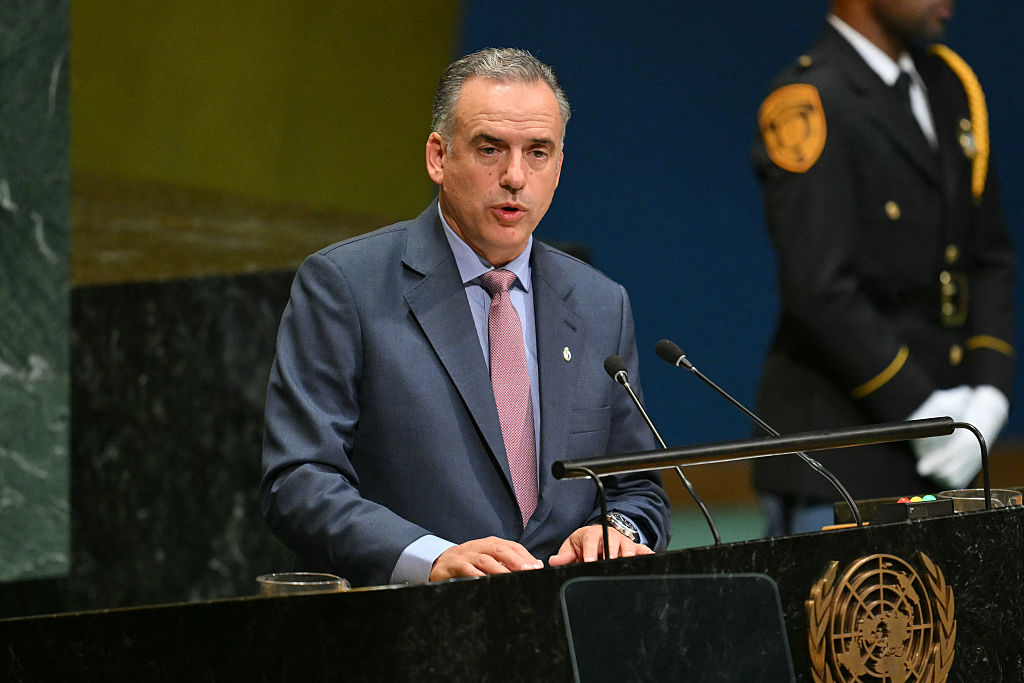
President Luiz Inácio Lula da Silva’s surprising victory in Brazil has reinvigorated the Latin American left, and few places breathed a bigger sigh of relief than Uruguay. In 2024, as Uruguay’s president-elect Yamandú Orsi made his first overseas trip to Brasília to visit the Partido dos Trabalhadores (PT) leader. This year, ahead of the historic October election, he made his support clear and warmly congratulated Lula on his comeback, calling him a “friend.”
Uruguay’s governing Frente Amplio was even more enthusiastic in its support for Lula. The party, which is farther left than the president, has a strong anti-Bolsonaro stance and characterized the election as part of a wider resistance against the far right. These statements reveal what was at stake for the Orsi administration and the broader left in Uruguay in relation to the outcome of the Brazilian election. However, apart from a short-term boost, Lula’s victory is unlikely to alter the government’s fortunes at home.
After 20 months in office, Orsi’s government is unpopular because the economy shows little sign of growth and crime rates have failed to decrease. According to the latest poll by Cifra, Orsi’s approval rating reached a historic low of 24% in October, with 57% disapproving of his administration. Currently, Orsi has the lowest approval rating of any president in their second year in office since 2000.
On a brighter note, his personal favorability ratings are firmer, at 41%, and much higher among Frente Amplio voters, at 68%. This underscores the ongoing perception gap among the electorate between Orsi as an affable leader and an effective one—a gap he will need to bridge. Working in his favor are his pragmatic streak and willingness to show flexibility. As he said in May after his polling numbers took a dive, “Obviously, if there are people who are not very satisfied, it is because something is not going well. You have to know how to correct course.”
A survey released in mid-September by the local pollster Factum found that public security and economic issues are by far the top concerns for Uruguayans.
Notably, the poll (the latest available) also showed that 55% of Frente Amplio voters say security is their top concern, while 26% point to the economy.
Lessons from Brazil and potential pitfalls
Lula’s victory was a watershed moment in Latin American politics, as it was the first example in many years of an incumbent left-wing government winning reelection. He also won amid concerns about crime, low economic growth, and a high cost of living that were top of mind for voters. Lula’s victory also demonstrated that the left is adopting the social media communication strategies that had been the domain of the right.
The parallels with Uruguay are clear, and the Uruguayan left will analyze the lessons from Lula’s victory to determine the best strategies to secure the Frente Amplio’s continuation in power for the 2030-35 term. Unlike in Brazil, the incumbent president cannot run for re-election, which may give the party an advantage, given Orsi’s relatively low approval ratings. Potential candidates from the Frente Amplio include Alejandro Sánchez, the secretary of the presidency, the economy minister, Gabriel Oddone, and the vice president, Carolina Cosse.
Although he has not officially declared his intention to run for president, many expect former President Luis Lacalle Pou (2020-25) of the Partido Nacional (the largest party on the right) to throw his hat in the ring. It will be very difficult to frame him as a radical, given that voters already know how he governs. Lacalle Pou ended his term with a high approval rating of 53%. Regardless of who the right-wing candidate is, they are unlikely to adopt the radical free market policies of Argentina’s President Javier Milei or a Bukele-style security agenda, like Flávio Bolsonaro had promised.
Another potential pitfall is assuming the euphoria following Lula’s win will be durable for the left. Economic forecasts in Brazil have taken a decidedly negative turn following the results. The state of the economy is one of Orsi’s weak spots. GDP expanded by 1.8% in 2025 and is estimated to grow by a mere 0.9% this year. According to EIU forecasts, economic activity is expected to accelerate to 2% next year, in part thanks to increased agricultural output from more favorable climatic conditions. However, a slowdown in Brazil and potentially in Argentina—due to political jitters ahead of its contentious election— could dent that prospect.
Lula’s unexpected victory also showed that polls are becoming less accurate and political surprises are more common than in the past. Many voters are fickle and decide how to vote just before the election as partisan identification weakens. Their vote is often tied to issues and personalities, especially among younger voters. Changing voting behavior reinforces the importance of a strong social media strategy to appeal directly to voters in the critical weeks and even hours before the vote. Uruguay’s left has the advantage of being well organized with a powerful union and student movements that can mobilize people onto the streets and create viral videos like those that flooded Brazilian social media.
Because extreme polarization is not the defining feature of Uruguayan politics, voters will evaluate their political options based on the state of the economy and, increasingly, their perception of crime. The concerns about crime stem partly from high-profile criminal acts that dominate news headlines, but also from the raw data. Although Uruguay’s homicide rate is near the middle of the regional ranking, it is significantly higher than rates in Argentina or Chile, which have similar levels of development.
According to the latest figures from the government, homicides reached 312 over the January-September period, which is up 13% from the same period last year. This is also the highest level since the peak of homicides in 2018.
This increase occurred despite the government’s launch of a crime reduction plan in March. Uruguay’s interior minister, Carlos Negro, recognizes the challenge that narco-trafficking produces, but rejects calls for mano dura, referring to tougher penalties as “punitive magical realism.”
However, signs of fatigue are growing, along with greater openness to a more draconian approach. Findings from the latest Latinobarómetro survey suggest Uruguayans’ tolerance may be wearing thin: 45% would accept a nondemocratic government if it resolved the country’s problems, and El Salvador’s Nayib Bukele is the foreign leader they view most favorably. Recent developments in Costa Rica, another full democracy according to the EIU’s Democracy Index, which is adopting a Bukele-style approach to crime, should serve as a warning that even the region’s strongest democracies are vulnerable to backsliding if crime remains unresolved.
ABOUT THE AUTHOR

Nicolás Saldías
Reading Time: 4 minutesSaldías is a Principal Economist for the Americas at the Economist Intelligence Unit and received his Ph.D. in political science from the University of Toronto.