


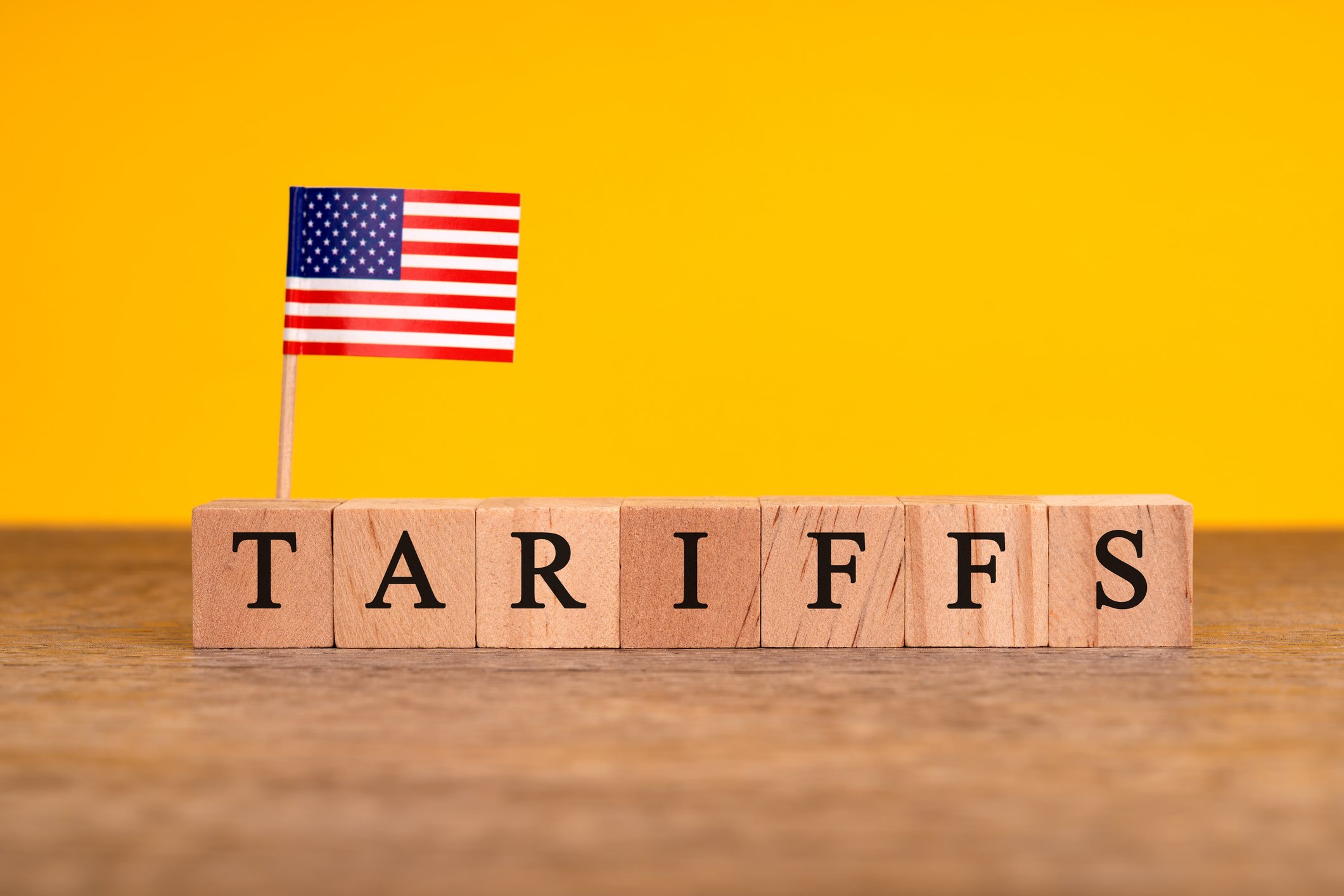
Christopher Nolan’s The Odyssey reminds us that ordinary people remain subject to monumental powers beyond their reach, be they ancient deities or modern presidential decrees. The tariffs imposed last year by President Donald Trump, in what he dubbed Liberation Day, have reshaped the global economy and fall into the second category. Dismantling those levies will be complicated, even in a new scenario where the U.S. Congress is dominated by Democrats.
Last year alone, the tariffs brought in $264 billion in net revenue to the U.S. government, more than seven times what was collected in 2017. Voters may have rejected the president’s tariff policy at the polls, but the revenue it generates has become too large for either party to give up. The International Emergency Economic Powers Act (IEEPA) tariffs were broad, sudden, and unpredictable.
However, in February, the Supreme Court struck them down. It was the administration’s first major legal defeat on trade, but losing this instrument did not signal a retreat. Trump simply reached for other tools in his trade arsenal to ensure the survival of his signature policy, and that strategy could be in motion again under a Democratic Congress. According to the Budget Lab at Yale University, the average statutory U.S. tariff rate stands at 11.2% as of October 2026, up from approximately 2.5% at the start of 2025.
Recent threats by Trump to double tariffs on Mexican exports because of an undocumented migrant caravan potentially reaching the U.S. will come to nothing because the number of migrants is limited (approximately 600), and Mexican President Claudia Sheinbaum will not allow that caravan—or any other—to reach the US border. Crossings of undocumented migrants from Mexico are at their lowest levels since the late 1960s.
Why the midterms won’t change the tariff wall
The midterm results are unlikely to significantly change U.S. trade policy. Congress may seek greater influence, but Trump can and likely will veto such efforts. The administration will continue to rely on existing trade instruments, including Section 232 (national security) and Section 301 (unfair trade practices). Trade policy will remain volatile, but targeted agreements by country and product will still be possible, particularly where the U.S. needs imports, including certain agricultural products and critical minerals.
A Democratic Congress can change the tone of the debate, the intensity of congressional oversight, and the volume of complaints, but most tariff-related authorities sit with the executive branch. Lawmakers seeking to challenge the administration’s tariffs would face a presidential veto that takes two-thirds of both chambers to override. Nor do they reset with a new president. The Biden administration kept most of the first Trump administration’s China tariffs (Section 301) and Section 232 duties, adjusting how some applied to allies rather than tearing them down. Protectionism has become bipartisan.
The fiscal math locks them in further. The Congressional Budget Office puts the 2026 fiscal deficit at roughly $2 trillion, with net interest alone running above $1 trillion a year, more than the government spends on national defense. The debt problem is bipartisan, and once tariff revenue on this scale is written into the budget baseline, no administration will find it easy to give up. Moreover, current Sections 232 and 301 tariffs are expected to replace less than 60% of the revenue projected under IEEPA, incentivizing a push for stronger tariffs rather than easing off.
Under a future administration, tariff policy volatility might change. A new president could mean fewer sudden tariff announcements, reversals, and social media threats, which would be a boon to multinational corporations planning to invest in the Americas. Even if the turbulence fades, the tariffs will remain.
Implications for Latin America: Sticks and carrots
Tariffs are sticky now because their political and fiscal logic is self-sustaining, even if they raise prices at home or fail to reduce the U.S. trade deficit. For Latin America and other U.S. partners, the terms of engagement with Washington are not promising.
The “sticks” will be new Section 232, 301, and 338 tariffs. The “carrots” will be market access: exemptions, quotas, and preferential treatment, and the power to grant or pull them back. Brazil’s coffee, Canadian critical minerals and Mexican auto exemptions were not spared out of good faith or generosity. They were exempted through a cold calculation to keep prices down at home.
Countries that understand how much more solid the tariff wall is this time, and can leverage their own industries and supply chains in negotiations, will push for deals over the size and shape of their trade carve-outs, not over whether they can return to the status quo that existed before Trump’s Liberation Day.
ABOUT THE AUTHORS

Diego Marroquín Bitar
Reading Time: 3 minutesMarroquín Bitar is a fellow at the Center for Strategic and International Studies. He writes from DC.

Antonio Ortiz-Mena
Reading Time: 3 minutesOrtiz-Mena, PhD, is the CEO of AOM Advisors, Adjunct Professor of International Political Economy at Georgetown University, and Chair of the USMCA Committee at the Mexican Foreign Trade Council (COMCE). He writes from DC.