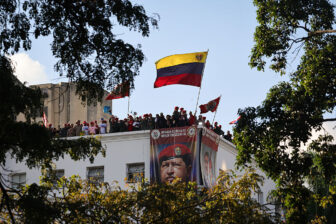




More than two weeks after the Delta Force’s extraction of Nicolás Maduro from Fuerte Tiuna in Caracas, a few things are clearer. One is that regime decapitation does not equal regime change. On the surface, not much appears to have changed in Venezuela’s capital. The same thugs patrol the streets, the population remains afraid to voice dissent, and state media continues spewing the same propaganda.
Delcy Rodríguez has taken over as the country’s interim president in a seemingly seamless transition. However, the effects of Donald Trump’s brief and sharply effective intervention—for Venezuela, Latin America, and U.S. policy—run much deeper. They will likely influence events for months, if not years. And that’s where the uncertainties start.
Rodríguez’s administration is potentially less stable than it appears. Because of its military origins and foundations, the Chavista regime has always placed unity above all else. But the new interim president has thrust herself into a world of hard power, which she doesn’t control directly. Neither did Maduro, but he was anointed by Chávez, a secular saint for his loyalist base. For all practical purposes, Rodríguez was chosen by Trump. So she must navigate between the Scylla of the men with guns—General Vladimir Padrino and Diosdado Cabello—and the Charybdis of American pressure.
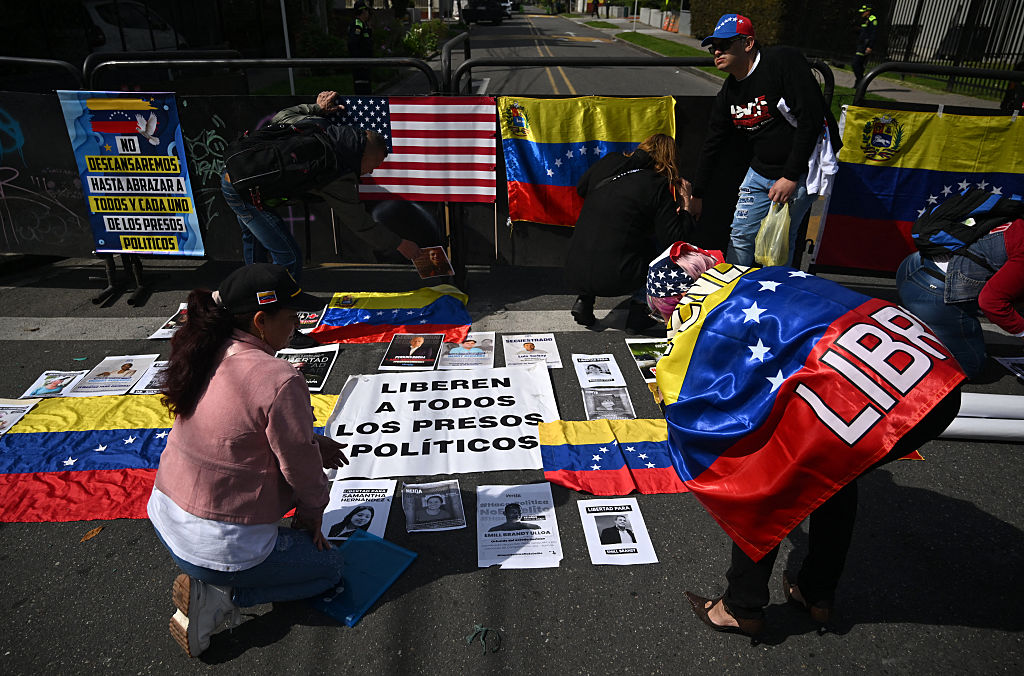
So far, she is doing what Trump wants. But agreeing, under pressure of the continuing naval blockade, to sell oil to the U.S. while continuing with the theatrics and rhetoric of Chavista fidelity is the easy part. The hesitant pace of the release of political prisoners (only 139 or so out of around a thousand) is an indication of the internal resistance to any kind of political opening. Many of the freed prisoners have reportedly been required to sign promises of silence, and their legal cases remain open.
The next steps will be harder for Rodríguez. The opposition will continue to press for an unconditional amnesty for all prisoners, a return to freedom of association and speech and an early election. The independent opinion polls carried out so far suggest this is the desire of the overwhelming majority of Venezuelans. The Trump administration is already pushing for a 180-degree pivot in Venezuela’s international alliances, and especially for no more subsidised oil for Cuba.
The delicate balance
Both these changes, and especially a political opening, are anathema to Cabello in particular. Sitting next to the new president at her first cabinet meeting, he pointedly wore a cap with the slogan “dudar es traición” (to doubt is betrayal). In all this, the key figure is General Padrino, the defence minister and armed forces commander since 2014. For all that Cabello’s colectivos of armed Chavista thugs are highly visible on their motorbikes, it is the armed forces that count. They are eroded by corruption, but they remain the strongest institution in the country. At its core, the regime of Hugo Chávez and Nicolás Maduro was a military one, with a civilian front. Which way Padrino will go is perhaps the single most important question in Venezuela.
That is because there are potential tensions in Washington as well. By limiting himself to a single extraction operation, removing Maduro like a rotten tooth in an otherwise undisturbed denture, Trump has avoided the quagmires of invasion, occupation and nation building. It is clear that he loves delivering “one and done” kinetic spectacles around the world. He knows that the MAGA base hates the idea of “forever wars”, as he himself has called them. He has learned from Iraq.
The problem for the administration is that this reduces its control, especially since a second attack on Venezuela has been “cancelled”. Despite Trump’s claim, the U.S. is not running Venezuela. Even Secretary of State Marco Rubio’s correction of that, to say that it is running Venezuelan policy, is not yet wholly true.
The assumption must be that Trump has focused on getting hold of Venezuelan oil because he knows he must check the rise in the cost of living at home or risk a big defeat in the mid-term elections in November. Some increase in oil output may happen more quickly than some think—even under the constraints of sanctions and incompetence, Venezuela’s production doubled between 2020 and last year, to approximately 1.2m barrels per day. But that contrasts with 3.2 million when Chávez took office. A recovery to that kind of level requires large-scale investment and a predictable political framework.
Calling for elections
Trump also wants cooperation on curbing migration and drug-trafficking. Since most cocaine that transits Venezuela is bound for Europe, that may not be too hard for the regime. In all of this, Trump clearly sees Rodríguez’s authoritarian government as potentially more reliable than the opposition led by Maria Corina Machado, as his gushing praise for the former and reserve towards the latter has made clear. But as time goes by, the pressure for a democratic transition is likely to mount. Rubio, after all, is a Florida Republican and has spent years calling for the overthrow of the regimes in both Venezuela and Cuba.
The most useful thing the U.S. could do now to prepare the ground is to find a general who can lead the cleansing of the armed forces and the start of the restoration of the state’s monopoly of force, cracking down on the colectivos, marauding Colombian guerrillas and organised crime.
Latin America is still shell-shocked by all this. That Maduro lacked all legitimacy, and that other countries in the region have had to absorb about 8 million Venezuelans because of his regime’s despotic failure, means that many Latin Americans have applauded the U.S. operation. That it required the Delta Force to do the job is an indictment of the region’s failure to force a democratic transition in Venezuela. Perhaps diplomatic pressure was never going to be enough. But the region could and should have pressed much harder. Instead, Brazil, Mexico, and Colombia, in particular, at various stages gave Maduro a free pass.
A democratic and prosperous Venezuela is in the interests of Latin America and the U.S. Even those in the region who dislike Machado should push for political liberalization and a timetable for an election. As for Trump, he may find that putting his own stamp on an authoritarian regime does not deliver the benefits he expects.
ABOUT THE AUTHOR
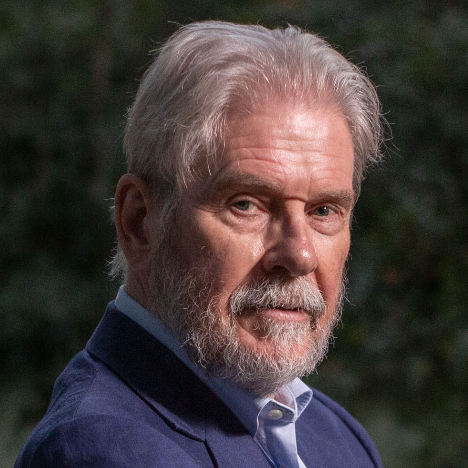
Michael Reid
Reading Time: 4 minutesReid is a former Americas editor of The Economist. His latest book is “Spain: The Trials and Triumphs of a Modern European Country” (Yale).