


This article is adapted from AQ’s special report on Latin America’s space race
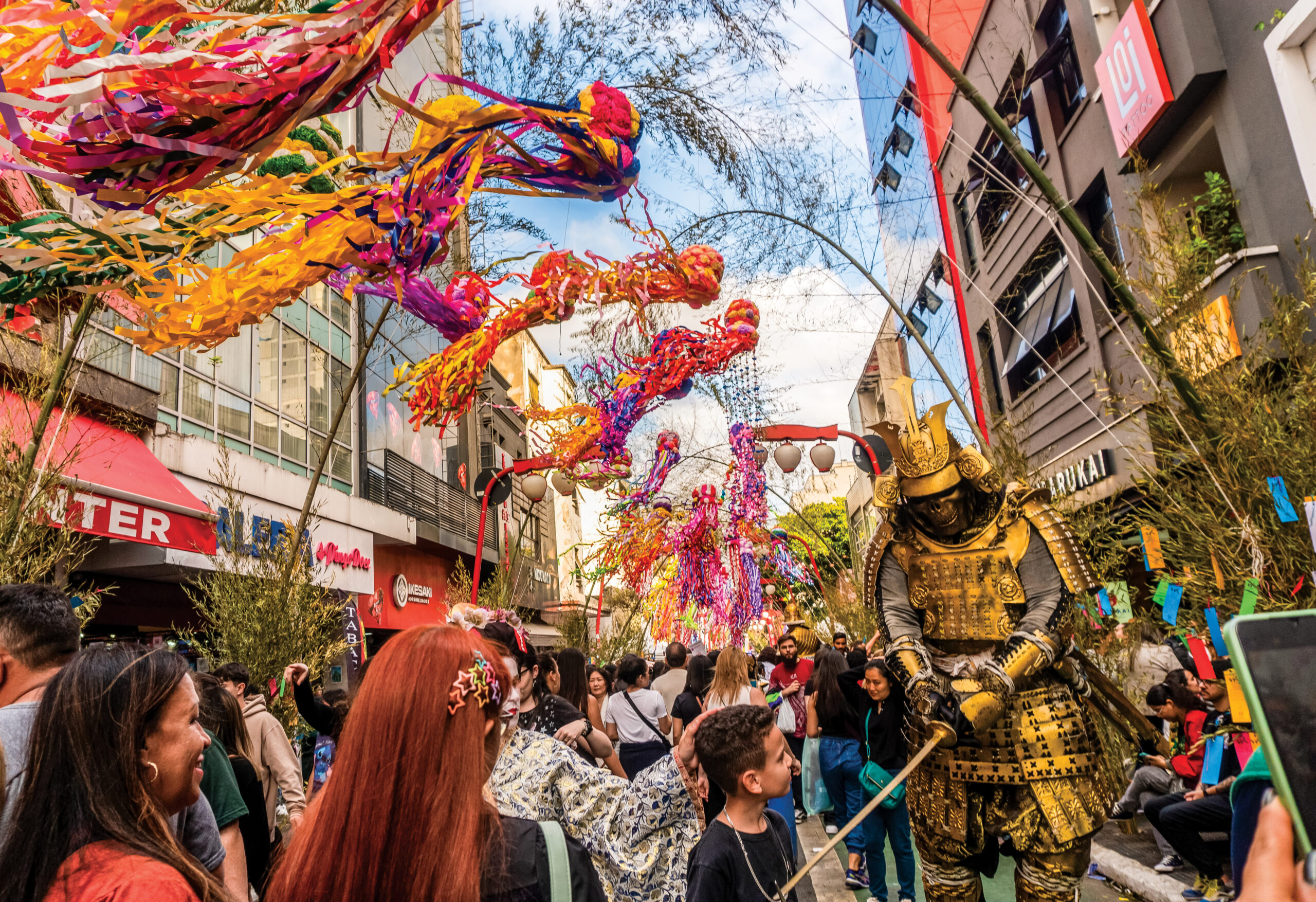
In a city that is not exactly famous for its tourist attractions, Liberdade is something of an oasis.
With its charming red suzurantô street lanterns, shops selling manga comics, and a bevy of sushi restaurants, the neighborhood on the edge of São Paulo’s old downtown has long attracted Brazilian and foreign visitors alike. A well-curated museum tells the story of the 200,000 Japanese immigrants who arrived in Brazil beginning in the 1900s, many of them toiling on coffee fazendas to work off the debts from their journey before moving to the city. Today, São Paulo has the world’s largest Japanese-descended population of any city outside Japan.
A great story, one most paulistas know by heart.
But not the actual origin story of Liberdade.
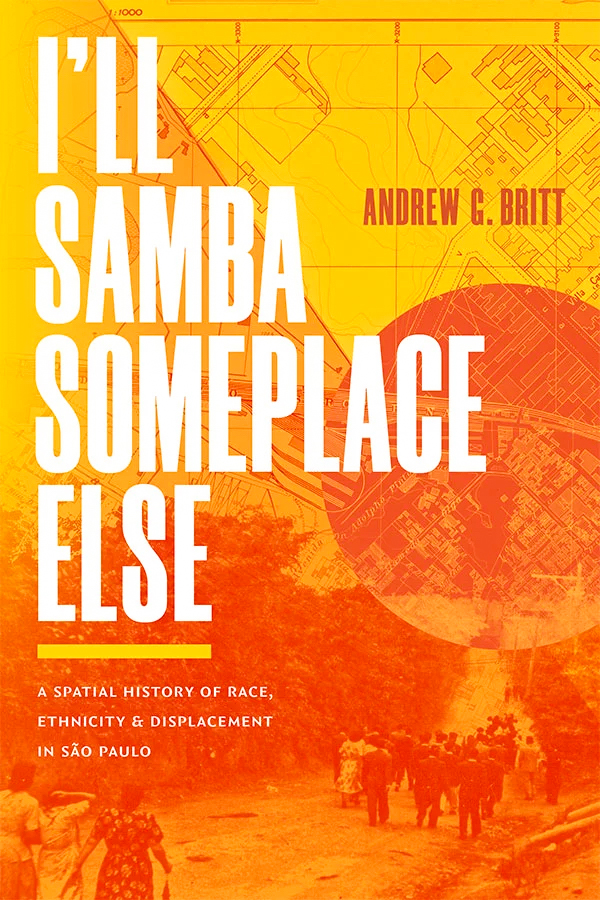
As Andrew G. Britt writes in his new book I’ll Samba Someplace Else, Liberdade had another identity well before the arrival of the Japanese—as a home to freed slaves. This story remains largely unknown among Brazilians, even though the neighborhood’s true origin is, after all, (probably) contained in its name.
Liberdade was for decades a center of Black culture in a city that long thought of itself as whiter than the rest of Brazil. The neighborhood was the site of the headquarters of the Black Brazilian Front, founded in 1931 and widely considered the first organization of its kind to fight for better education and equal rights. São Paulo’s first samba school had its origins there. Liberdade’s tiny, dilapidated Chapel of the Afflicted, built in 1779, is still today a pilgrimage site for people, many of them Afro-Brazilian, who leave their wishes on the church doors in the hope they will come true.
How could this history be so often ignored? As Britt, an assistant professor at the University of Texas, documents extensively, the city had a custom of paving over, literally, its Black past. Liberdade and other historically Black neighborhoods including Bexiga and Saracura were targeted for destruction when 20th-century planners wanted to build highways and otherwise modernize the city.
That is a story with parallels in many U.S. cities, but it had an extra twist given São Paulo’s carefully curated identity as a city of immigrants from Europe, the Middle East, and Asia. In the 1930s, when São Paulo state adopted a flag with white and black stripes and a red inset, which its designer meant to symbolize the country’s “three races,” the historian in charge of São Paulo’s state history museum lashed out, saying “it attributes to the paulista population a dose of African blood that is entirely false.”
Today, there is a growing consciousness of the real history—in São Paulo, and Brazil as a whole. In the 2022 census, 43% of city residents identified themselves as Black or mixed race, up from 30% in 2000. This, advocates say, was the result not of major demographic change, but a growing racial consciousness, aided by both Brazilian factors (rising university enrollment, especially among Black and working class students) and global ones (the murder of George Floyd).
Liberdade itself has only recently begun to reflect this evolution. The neighborhood’s central plaza is home to a statue of Deolinda Madre, founder of Liberdade’s samba school. It is now one of 12 monuments honoring Black people out of a total of 366 in the city, according to several counts. The plaza itself was also renamed in 2023 by São Paulo’s mayor. Its new title? Praça da Liberdade África-Japão.
ABOUT THE AUTHOR

Brian Winter
Reading Time: 3 minutesWinter is the editor-in-chief of Americas Quarterly and a seasoned analyst of Latin American politics, with more than 25 years following the region’s ups and downs.
‘The Radical Spanish Empire’ Shows the Power of Paperwork
A new book explores how 16th-century commoners wielded the legal system against their colonizers to surprising effect.
Latin America’s Unfinished Revolutions
Alma Guillermoprieto’s reportage in “The Years of Blood” embodies the drama and complexity of our new century.