




Latin America’s artificial intelligence modernization is gaining momentum. Governments are adopting new tools, developing regulatory frameworks, training workforces, and pursuing technology partnerships. In doing so, they increasingly face a choice between American and Chinese technology ecosystems, a decision that has lasting consequences for their technological sovereignty.
At stake is who will provide the infrastructure, platforms, data systems, standards, and expertise that will form the foundation of the region’s future AI capabilities. Latin American governments must therefore demand that sovereignty be built into their technology acquisitions.
The Trump-Xi meeting in Washington on September 24th further illustrates the growing U.S.-China competition over AI, advanced chips, export controls, and global technological leadership. The White House organized a dinner with technology leaders including Jeff Bezos, Elon Musk, Jensen Huang, Tim Cook and Sam Altman, as well as executives from the banking and industrial arena, but according to reports, it did not include any executives from Chinese companies.
The gathering underscored the tension and the stakes. Chinese companies have already accumulated a significant technological presence in the region, and U.S. firms are increasing their investments from Mexico to Argentina. Yet, this competition is far from a winner-take-all outcome. As Latin American governments increasingly look to build sovereignty into their technology acquisitions, Washington must consider strategic options to claim victory in the hemisphere.
Regional leaders
In Brazil, the competition is explicit. In August, President Luiz Inácio Lula da Silva’s administration announced a $444 million initiative for technological independence, splitting its key investments between Chinese and American firms. Huawei and iFlytek will help develop supercomputing infrastructure in Rio de Janeiro, while Nvidia is expected to supply a separate high-performance AI supercomputer in Rio Grande do Norte. The broader investment project also includes a national cloud, domestic semiconductor development and a center for algorithmic transparency.
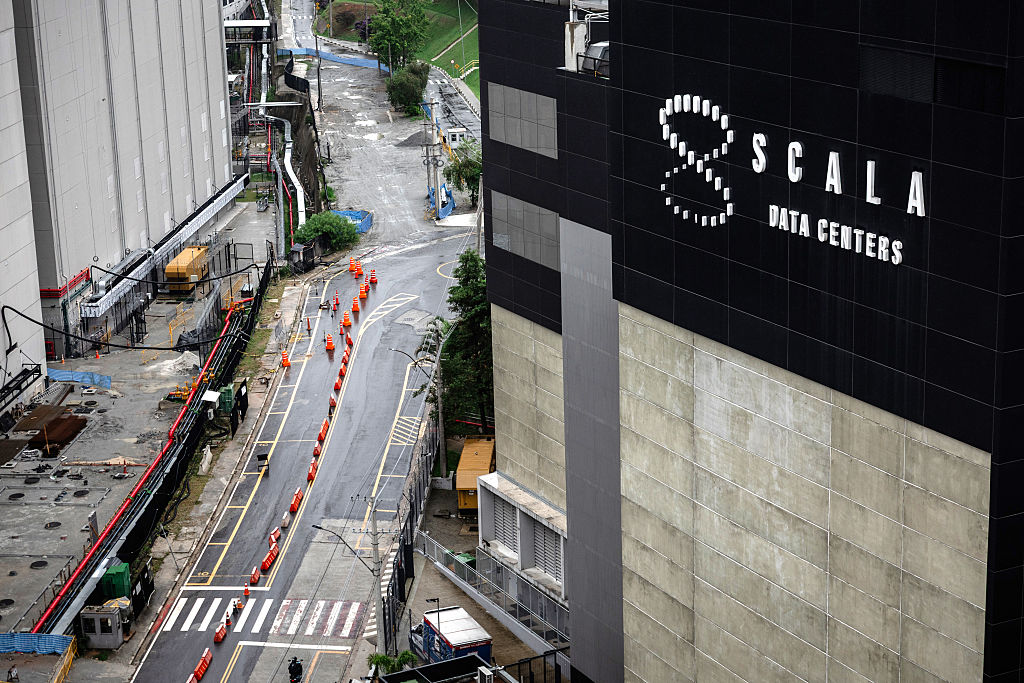
Argentina’s President Javier Milei’s outreach shows how this competition is already taking shape. In May 2024, he traveled to Silicon Valley to meet with the leaders of OpenAI, Google, Apple and Meta as part of an effort to position Argentina as a regional hub for AI and advanced technology. Last October, he met with representatives from OpenAI, Sur Energy and Argentina’s state energy company to discuss Stargate Argentina, a proposed data center with a planned power capacity of up to 500 megawatts. In early September, Milei hosted the leadership of DayOne Data, a Singapore-based builder of AI data centers and cloud infrastructure that emerged from the international business of China-based GDS Holdings.
Peru offers another example. Its government signed a three-year AI cooperation agreement with the U.S. Embassy last month covering regulation, workforce development, cybersecurity and infrastructure, including cloud computing, data centers and 5G, while explicitly promoting participation by U.S. AI providers.
These cases show Latin American countries leveraging both Washington and Beijing while seeking to preserve their technological autonomy—and point to a broader strategic challenge for Washington. Rather than pursuing wholesale technological decoupling from China, the U.S. should pursue strategic displacement and more intentionally provide credible alternatives to Chinese technology in sectors where dependence creates economic, security, or geopolitical vulnerabilities.
Who has the advantage?
The foundation of AI modernization extends far beyond the models themselves. It includes computing capacity, cloud and data infrastructure, telecommunications, cybersecurity, and technical expertise. Once governments and key institutions build around a particular ecosystem, switching can become costly and disruptive. A procurement decision today could become a structural dependency tomorrow, shaping not only AI capabilities but also satellite data, communications, energy systems, critical infrastructure and government and security functions. The infrastructure choices countries make could influence how much strategic and technological autonomy they retain in the future.
China understands this. Huawei Cloud has established an extensive footprint across Latin America, while other Chinese companies have helped build telecommunications, surveillance, and government-service systems in the hemisphere. At last year’s China-CELAC Forum, Beijing paired a 66 billion yuan credit line, scholarships, and thousands of training opportunities with expanded cooperation in 5G, the digital economy and AI.
Not every Chinese contract is a threat. Much of it is ordinary commerce. The problem, however, for Latin American governments and U.S. national interests, is that Chinese contracts and technical engagement can create vendor lock-in, limit interoperability, expose sensitive data and proliferate Chinese technical standards, ultimately making Beijing progressively harder to replace in critical sectors. China’s advantage is that it often offers an end-to-end package at a fraction of the price, including financing, implementation, training, and long-term support.
The U.S. should focus on strategically displacing Chinese technology where it creates coercive dependencies for Latin American countries and strategic vulnerabilities for the U.S. The U.S. needs stronger coordination across financing, technology, diplomacy, education, and private-sector partnerships to reduce dependence on Chinese systems and replace them with more secure, transparent, and interoperable alternatives where U.S. and regional security are most exposed.
This is not a call to remove every Chinese router. Washington should concentrate on cloud and computing infrastructure, government data systems, telecommunications, cybersecurity, critical infrastructure, space-enabled AI, and national-security applications. Strategic displacement should not require governments to choose Washington in every transaction.
The answer is sovereignty by design. Latin American governments should require data portability, interoperable systems, meaningful audit rights, strong cybersecurity, competitive procurement, and clear exit provisions in major technology contracts. AI sovereignty does not mean building every chip, cloud platform, or model at home. It means maintaining enough control and domestic expertise that no foreign provider becomes indispensable.
What it takes to work
To take the lead, the U.S. must offer credible choices. The Development Finance Corporation, Export-Import Bank, and Commerce Department’s American AI Exports Program should assemble competitive packages for data centers, secure cloud environments, telecommunications, and shared regional computing capacity, something that is already in the works in several countries. American universities and companies should expand technical exchanges, cybersecurity training, government fellowships, and public-sector procurement expertise. Infrastructure without people able to operate, evaluate, and secure it is simply another form of dependency.
Interoperability and sovereignty should become the American brand. The U.S. proposition should not be that its technology creates a different form of lock-in, but that partnership with the U.S. offers greater choice, transparency, accountability, and room to change course. This approach would give Latin American countries greater control over their technology choices while helping shape a Western Hemisphere AI ecosystem grounded in democratic norms and responsible governance.
The competition runs far deeper than which AI model Latin America uses. What matters is who builds the infrastructure beneath those models, whose standards shape that infrastructure, and whether governments retain the freedom to change course.
ABOUT THE AUTHORS

Brian Fonseca
Reading Time: 4 minutesFonseca is the Director of Florida International University’s Jack D. Gordon Institute for Public Policy and an International Security Fellow at the DC-based think tank New America. He is also co-founder of ARSoft US, a U.S.-based AI and immersive technology company.

Alexandra Bishop
Reading Time: 4 minutesBishop is a research analyst at the FIU Jack D. Gordon Institute for Public Policy.

Can Latin America Become a Data Center Powerhouse?
An ongoing boom suggests major opportunities lie ahead, but only if the region invests in education and worker training.
Latin America’s Data Center Gold Rush: Myth and Reality
Governments need to define rules of engagement to secure the best terms from the current investment boom.