


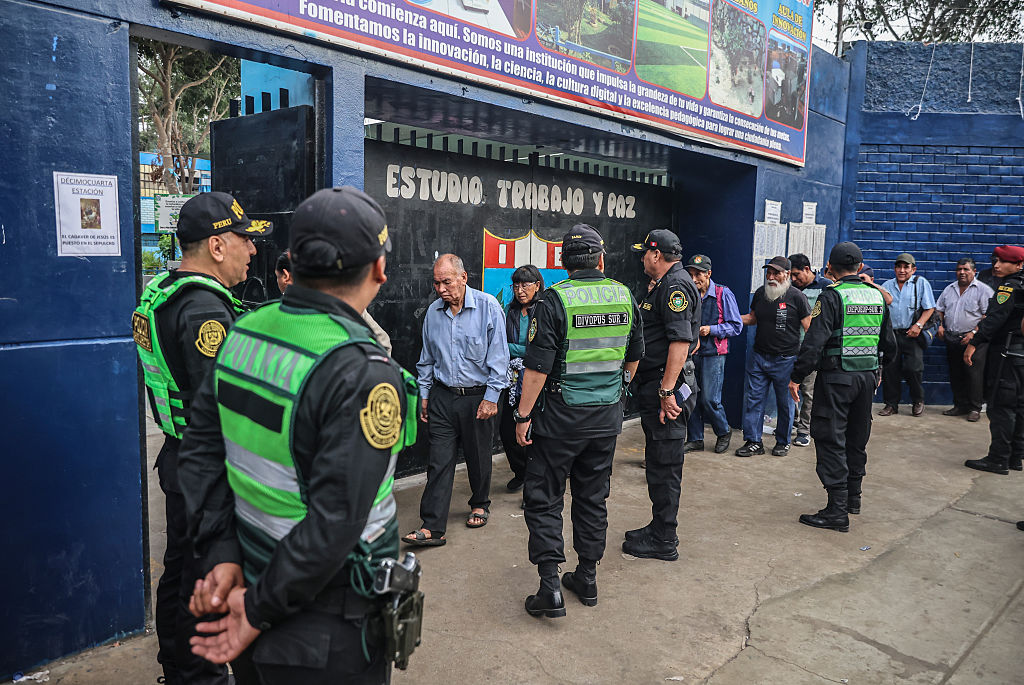
Almost a month has passed since Peru’s general election on April 12 and, extraordinarily, there is still no official result. That reflects the recent descent into incompetence of the electoral agency, which meant voting had to be extended into a second day in three districts of Lima. But incompetence is not fraud, contrary to the noisy but baseless claim of Rafael López Aliaga, the ultra-conservative candidate. There is little doubt that Peru is heading for a runoff on June 7 between Keiko Fujimori, a conservative running for the fourth time, and Roberto Sánchez of the far left.
On the face of things, this election is a repeat of the last one in 2021, when Fujimori narrowly lost to Pedro Castillo, a rural teacher of the far left whom Sánchez served as a Minister of Foreign Trade and Tourism. Castillo, backed by the regimes in Cuba and Venezuela (both more powerful back then), self-destructed when he declared the closure of Congress and the judiciary, and was swiftly arrested.
But there are differences. This election may help end the chronic political instability that has seen no fewer than eight different presidents since 2016. What is less clear is whether it will improve public policy in a country where this has become the preserve of special interests, some of them illegal.
This time Fujimori is better placed to win. Anti-Fujimorismo has been the dominant current in Peruvian politics for much of this century. It is a legacy of the autocratic rule of Alberto Fujimori, Keiko’s father, in the 1990s. For many Peruvians, he was a savior who defeated hyperinflation and the Maoist terrorists of the Shining Path and set the economy on a track of lasting growth. For many others, he undermined democratic institutions and used corruption and the intelligence service as instruments of government.
Keiko Fujimori has at times been a destructive figure. Convinced that she was denied the presidency in 2016 by dirty tricks, she used her party’s parliamentary strength to make life impossible for the centrist governments of Pedro Pablo Kuczynski and Martín Vizcarra (who also had their own faults). But Fujimori is herself the victim of judicial persecution: she spent a total of 17 months in prison without trial for not declaring campaign donations. That was not a crime at the time, and the charges against her were eventually dismissed. José Domingo Pérez, the prosecutor who pursued her, is now defending Castillo and supporting Sánchez. (That is an echo, in reverse, of Sergio Moro, the Brazilian judge who set out to jail Lula and then became justice minister in the government of Jair Bolsonaro.)
There are signs that anti-Fujimorismo is waning, especially since the death of Alberto in 2024. In 2021 Castillo won 800,000 more votes than Fujimori in the first round; in 2026, she leads Sánchez by a similar margin in the still ongoing count. Although he is from Lima, Sánchez, who has adopted Castillo’s symbol of a peasant straw hat, has strong support in the southern Andes, the poorer and more Indigenous part of Peru. It feels ignored and disrespected by Lima’s elites. He is also backed by Peru’s numerous informal and illegal miners and its coca growers. Fujimori, whose Fuerza Popular party stands for popular capitalism, is stronger in Lima and the coast.
In the past 10 years, power has, to a large degree, moved from Lima’s presidential palace, some 400 or so meters eastward down Jirón Junín, to the seat of the country’s Congress. That has coincided with extreme political fragmentation. The result is that, between them, Fujimori and Sánchez won fewer than a third of the votes, as was the case with Castillo and Fujimori in 2021.
The political landscape
Peru’s historic political parties were weakened by Alberto Fujimori. They have been partly replaced by personal vehicles run as businesses or outfits that are beholden to illegal interests (to an extent that applies to both Fujimori’s and Sánchez’s parties). In the outgoing Congress, the 120 seats were shared out among a dozen parties. Yet many of them collaborated in constitutional changes that have turned Peru into something close to a de facto parliamentary regime.
In the past five years, Congress has ousted three presidents. It has also threatened Peru’s prized macroeconomic stability by initiating spending measures totaling ~$10 billion. In an overreaction to the excesses of politicized prosecutors, it has approved laws that weaken the fight against crime, which has surged in the past four years. It has either revoked or failed to apply reforms that attempted to regulate poor-quality private universities and several hundred thousand informal miners. It reinstated the Senate (abolished by Alberto Fujimori), although this was rejected in a 2018 referendum.
There is some hope now of greater stability. While this election, absurdly, saw 37 presidential hopefuls, a change in the law means that only six parties met the threshold for representation in Congress. Among those who didn’t make it were two with the most obvious links to criminal interests. Fujimori will command 22 of the 60 seats in the newly reinstalled Senate, which is enough to block impeachment. Sánchez would be vulnerable.
The defeat of López Aliaga is a sign of moderation. He is a poor pastiche of Donald Trump; his mediocre record as mayor of Lima and aggressive insults raised doubts about his suitability for high office and made his appeal among Lima’s elite hard to understand. On the other hand, Jorge Nieto, a centrist, did unexpectedly well, winning 11% of the vote. Ironically, were López Aliaga to get his way and secure a re-run of the election in Lima, Nieto, who was previously little known, would probably be the biggest beneficiary.
Possible outcome
If Sánchez wins the runoff, Peru’s economic stability and growth prospects would be threatened. Like Castillo, he wants a new constitution that would give the state a much bigger role in the economy. He wants energy, mining, ports, and airports to be state-controlled. He would not reappoint Julio Velarde, the long-serving governor of the nation’s central bank (BCRP), the architect of monetary and currency stability. Some of these proposals would be blocked by the new Congress. But businesspeople who only months ago were in a bullish mood are starting to worry.
As for Fujimori, she defends Peru’s private sector-led economic model. She promises “Peru in order,” focusing on fighting crime by hiring more police and building four new mega-prisons. Her government plan is fairly conventional and includes promises to increase spending on the public health service. But it has a social-conservative slant. She is against abortion, and a promise that parents should control their children’s education is a not-so-veiled rejection of “gender ideology.”
The big question if Fujimori wins is whether she would seek to govern from the center, as her generally moderate campaign discourse suggests. Her actions over the past decade, during which she has exercised significant influence in Congress, suggest otherwise. As president, would she seek to rein in the power of the legislature? Some will fear a relapse into authoritarianism. But many Peruvians in a country with anarchic tendencies today would resist that. The runoff is likely to be close. A narrow majority may conclude that Fujimori poses a smaller risk to their country’s prospects.
ABOUT THE AUTHOR
Michael Reid
Reading Time: 5 minutesReid is an author and journalist. His books include “Forgotten Continent: A History of the new Latin America”.
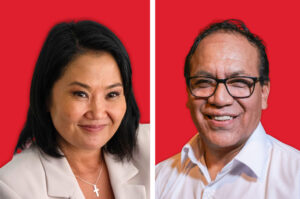
Peru: Meet the Candidates 2026
Keiko Fujimori and Roberto Sánchez will compete in a polarizing runoff on June 7, with crime and protracted political instability top of mind for voters.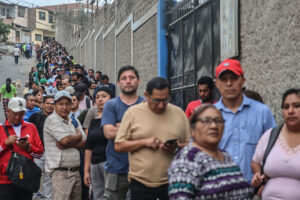
A New Test for Peru’s Economic Resilience
A runoff between Fujimori and Sánchez, if confirmed, will put the country’s famous macroeconomic stability at risk, a former finance minister writes.