



After months of preliminary meetings and endless public comments, the formal review of the USMCA agreement is finally here. Ahead of the July 1 meeting, public debate and expectations have focused on the choreography: who is signaling what, which sectors will be reopened, and whether the agreement will be extended for another 16 years or slide into costly annual reviews. While these considerations are undoubtedly relevant, they have crowded out the dimension that will shape North America’s security and competitiveness: how to treat and compete with China.
Concern about unfair trade—dumping and illegal subsidies—and about the scale and intent of Chinese investment in the region now drives much of how Washington, Ottawa and Mexico City approach one another. These concerns are being managed reactively, country by country, in ways that often raise barriers to legitimate trade within North America.
A high-sounding and drawn-out overture has led to this moment. President Donald Trump’s rhetoric and tariff policy have strained the trust of his counterparts. While earlier this year Canada’s Mark Carney warned about the “rupture” of the international system, Mexico’s Claudia Sheinbaum has shown a restrained demeanor, expressing confidence in the negotiations. Building a new consensus for the North American bloc will always be challenging, but in many ways, the stakes are higher than those reflected in the isolated issues of trade and investment at the center of the collective agreement under review. There’s much more in play.
The three countries worry about China’s unfair trade practices, and all three have reacted individually. The problem is that these measures sometimes overshoot. Designed to counter unfair competition and secure domestic supply, they can end up obstructing deeper regional integration instead. As geopolitical tectonic plates are shifting worldwide, North America has a decision to make, and three strategic moves are worth considering.
A database on China’s investment
One key issue complicating matters is that the three countries are debating Chinese investment in the region without agreeing on its exact nature and extent. For instance, independent assessments diverge sharply on the stock and flows of Chinese investment in the United States and Mexico.
Until the three governments work from a common database detailing the nature and extent of Chinese investment across North America, they will be designing trade and investment policy partly blind. A shared, mutually agreed factual database is not a technicality; it is the precondition for every other decision. So far, it does not exist. Creating it should be an early, concrete deliverable of the review.
A shared database also enables something more ambitious: coordination. Today, each country acts alone against China’s unfair trade practices. The logic is straightforward: The more we coordinate externally, the lower the barriers we need internally.
The three countries might explore a common external tariff or something approaching it on selected items—not as an unfair-trade remedy, but as a shared perimeter. This is genuinely difficult because each country has a different web of free trade agreements, and all three must, in addition, honor their commitments under the World Trade Organization. But creative, rules-compliant approaches exist. One option: a common tariff on electric vehicles and/or steel from non-FTA partners, set within WTO limits.
The U.S. currently imposes tariffs on steel and aluminum imports from Canada and Mexico under Section 232 of the Trade Expansion Act of 1962, a Cold War-era law that allows tariffs on national security grounds. The concern is real: Cheap Chinese steel—often dumped or subsidized and sometimes routed through other countries to hide its origin—distorts global and U.S. markets. But the U.S. can’t produce enough steel or aluminum on its own, so taxing two reliable neighbors does little for security. North America would be better served if the U.S. eliminated those tariffs and the three countries coordinated a shared tariff aimed at the real problem: subsidized or dumped steel slipping in from outside the region.
Rules of origin: smarter, not tougher
Today, USMCA’s rules of origin are agnostic about the origin of capital and technology. It is plausible that during the review, the U.S. will seek to change that by attaching conditions on where capital and technology come from.
This is where being smart beats being tough. Legitimate unfair-trade and security concerns can be addressed through more effective, regionally minded origin tracing tools that did not exist when NAFTA was last renegotiated—blockchain-based tracing of the origin of goods, for instance, now makes verification far cheaper and more reliable than a thicket of paperwork. “Tough” measures, by contrast, often just impose costs on ourselves. The goal should be precision, not friction.
The overdue piece: investment screening
The most effective way to address concerns about the origins of capital and technology is also the most neglected: Modernize foreign investment screening—especially in Mexico—so it directly addresses national security and coordinates it on a trilateral basis.
None of this is new, which makes the delay hard to defend. In late 2023, then–Treasury Secretary Janet Yellen asked her Mexican counterpart to establish a bilateral working group on investment screening. It is now mid-2026. The pace has been inexcusably slow. A modernized screening system—security-focused, with fair, trusted, and clear consultation mechanisms, and full respect for each country’s sovereignty—is urgent.
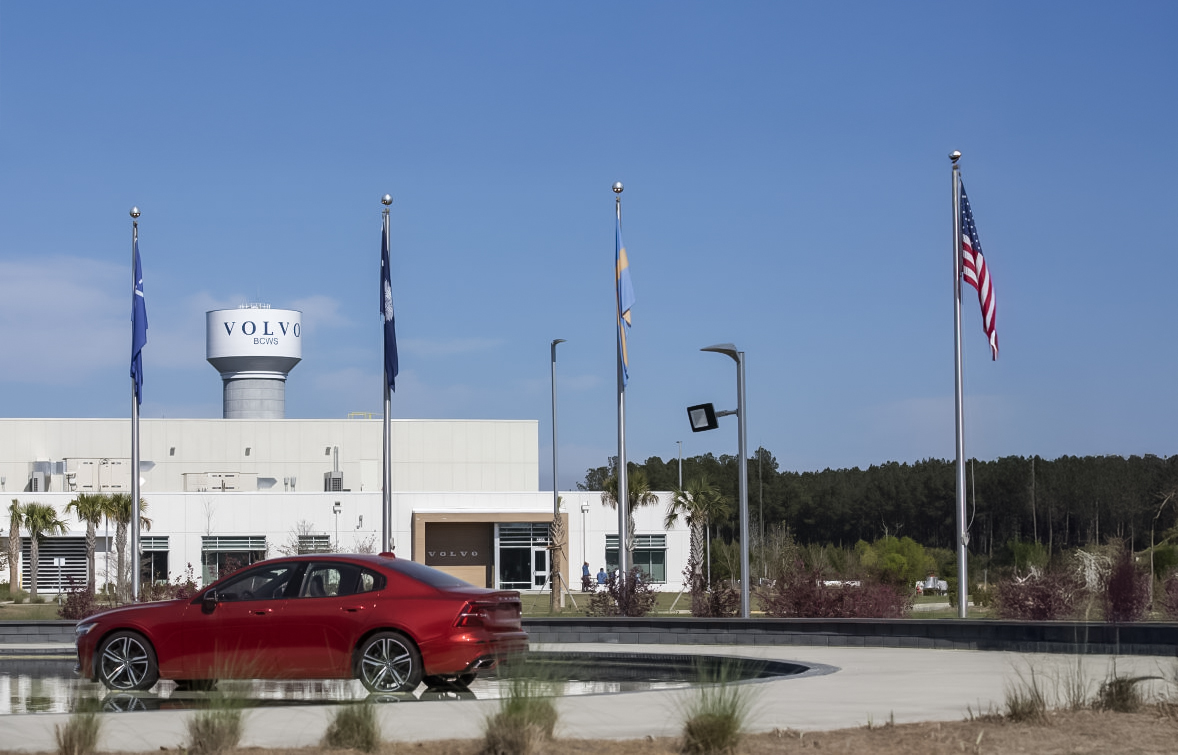
It also requires frankness in both directions. Washington has raised concerns about Chinese investment in Mexico, but there is also meaningful Chinese investment in the U.S., and the regional stance toward it deserves the same clarity. The U.S. has an evolving narrative on China, and in May, Trump took 17 CEOs, including Tesla’s Elon Musk and Nvidia’s Jensen Huang, to meet the country’s authorities. Consider that Volvo Cars—owned by China’s Geely—operates a major assembly plant in South Carolina. The line between welcome—as the Volvo plant should be—and worrisome investment is not as simple as it is often drawn. Frank, constructive conversations would help address such issues.
A savvier approach
If made seriously—frankly, analytically, and with a regional lens—these three decisions would enable North America to treat national security and trade-and-investment decisions as mutually reinforcing rather than as trade-offs. A shared factual baseline, smart rules of origin, and modernized, coordinated investment screening are not concessions any one country makes to another. They are how all three get what they actually want: more investment, more jobs, and prosperity that strengthens their economies, exports and security—rather than coming at the expense of security or each other.
The 2026 review will be remembered less for how the three governments managed the daily headlines than for whether they answered the China question pragmatically. Will North America choose to be smart, or merely tough?
ABOUT THE AUTHOR

Antonio Ortiz-Mena
Reading Time: 4 minutesOrtiz-Mena, PhD, is the CEO of AOM Advisors, Adjunct Professor of International Political Economy at Georgetown University, and Chair of the USMCA Committee at the Mexican Foreign Trade Council (COMCE). He writes from DC.
The views expressed in this article are the author’s own and do not necessarily reflect those of any institution or organization with which he is affiliated

The Strategic Link Between USMCA and Critical Minerals
North American security requires that critical minerals be part of trade negotiations, writes a former Mexican ambassador to the U.S.
The Implications of Mexico’s Stubborn U.S. Trade Surplus
Upcoming trade negotiations could be affected by Mexico’s widening trade surplus with the U.S., an economist writes.