




This article is adapted from AQ’s special report
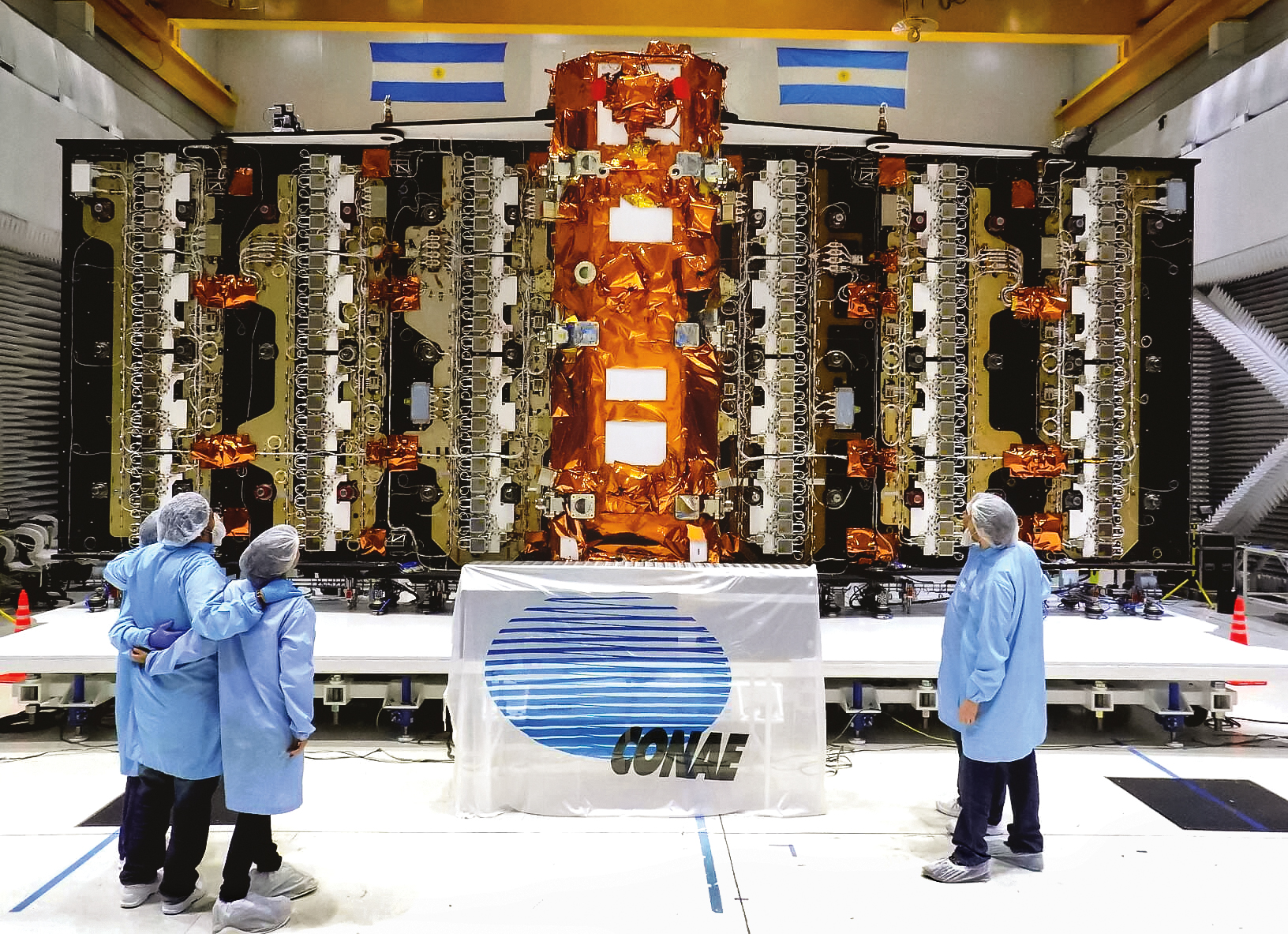
BUENOS AIRES—At a time when fiscal constraints and political volatility often undermine long-term planning in Latin America, Argentina’s SAOCOM satellite program stands out as a rare example of sustained strategic investment.
Developed by the National Space Activities Commission (CONAE) in the 2000s during the presidency of Néstor Kirchner, the program relied on major contributions from the state-owned technology firm INVAP, the nation’s atomic commission (CNEA), private company VENG, and Italy’s space agency. Unlike conventional optical satellites, SAOCOM-1A (launched in 2018) and SAOCOM-1B (2020) are equipped with L-band synthetic aperture radar (SAR) that can collect data through clouds, smoke, and darkness, providing reliable information under virtually any weather conditions.
Argentina designed the satellites—as part of an ambitious $600 million project—primarily to support its thriving agricultural sector, monitor natural disasters, and measure soil moisture. The satellites help improve crop management, assess drought risk, and strengthen disaster preparedness.
“The true value of projects like SAOCOM lies not merely in the satellite itself, but in the knowledge, experience, and industrial capabilities they generate—which can subsequently be applied to new missions, products, and enterprises,” Gabriel Sanca, a professor and researcher at the National University of San Martín (UNSAM), told AQ.
Through a partnership with Italy’s space agency, SAOCOM also supports the operation of COSMO-SkyMed, a dual-use (civilian and military) Earth observation satellite constellation considered one of the world’s most advanced systems for environmental monitoring and emergency management.
A next-generation SAOCOM-2 constellation is under development, although launch schedules remain undetermined. Early plans envisioned launches in 2025 and for this year, but more recent international mission databases suggest deployment could slip into the latter part of the decade. CONAE declined to comment on details for the upcoming launches.
In the meantime, Argentina has also made inroads with microsatellites. In April, a shoebox-sized satellite, known as ATENEA, transmitted its first telemetry data from space as part of NASA’s Artemis II mission, highlighting the sector’s potential and global aspirations.
ABOUT THE AUTHOR

Horacio Aizpeolea
Reading Time: 2 minutesAizpeolea is a journalist based in Buenos Aires.

How Satellogic Is Trying to Reshape the Space Race
The company founded in Buenos Aires is pushing competitors to rethink who owns the sky.
NEW AQ: Latin America Looks to the Stars
The region has a huge opportunity in the booming global space industry. What is necessary to take full advantage?
The Space Race Comes to Latin America
The region wants to be not just a battleground, but a protagonist in the burgeoning space economy.
Latin America’s Quest for Space Sovereignty
The region’s pursuit of autonomy in the growing space sector will be complicated. The U.S. can be an important partner.
Latin America Has a Space Agency. Now Comes the Hard Part
ALCE held its first general assembly in Mexico in February, but faces questions about funding and political buy-in.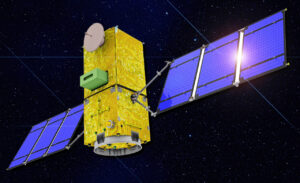
Brazil’s Landmark Satellite Program
Amazônia-1, the first satellite entirely designed and operated by Brazil, is part of a larger mission.
The Crucial Challenge of Building Space Expertise
As Latin America acquires more space technology, workforce development will be key to reaping the benefits.