




This article is adapted from AQ’s special report
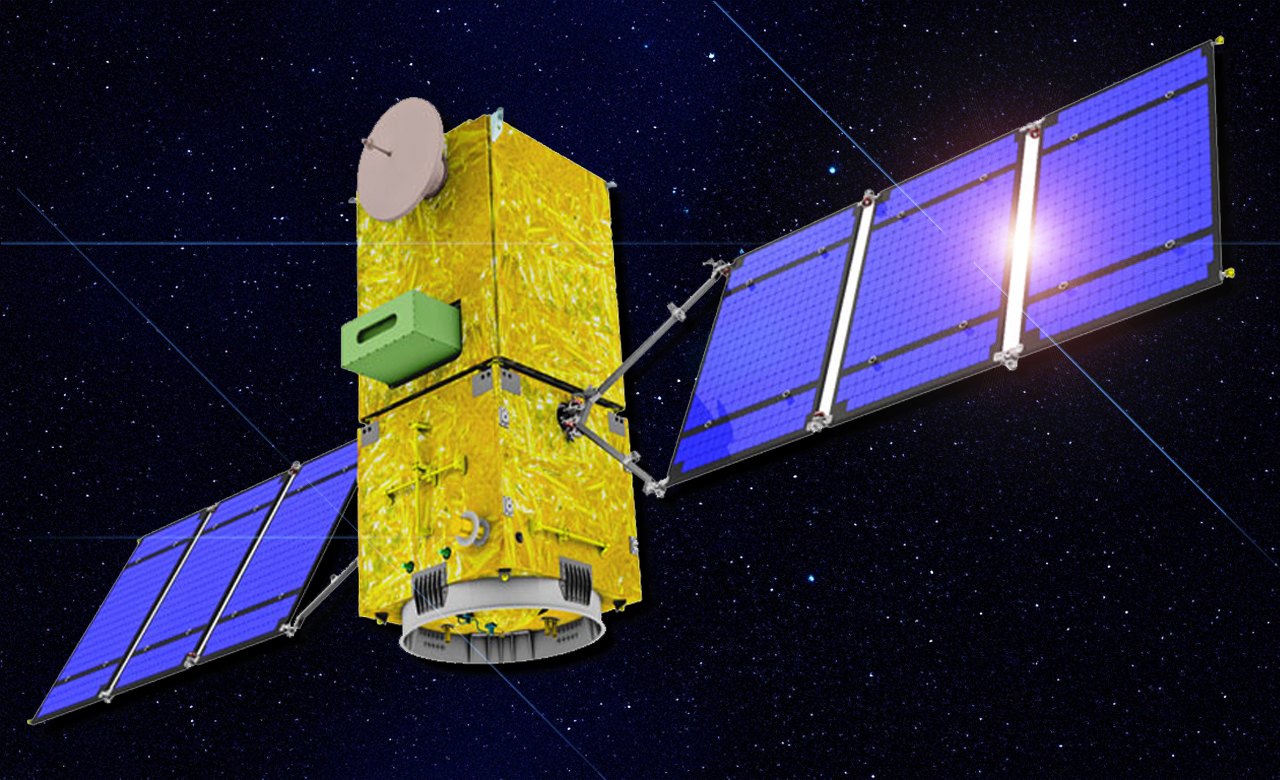
With the launch of the Amazônia-1 satellite five years ago, Brazil displayed its growing space capabilities. Now, the country plans to put two new units into orbit as part of a mission to observe and monitor deforestation in the Amazon, natural resources and agricultural areas.
Launched from India in February 2021, Amazônia-1 was the first Earth observation satellite fully designed and operated by Brazil, built on lessons learned from the ongoing China-Brazil Earth Resources Satellites (CBERS) program, which began in the 1980s. Since then, Brazil has engaged in technology transfer and exchange with China as well as developed its own satellite capabilities.
Amazônia-1 is the first to use Brazil’s Multi-Mission Platform, a generic satellite bus designed to be cost-effective and reduce development time. The platform will also be used on Amazônia-1B, a satellite expected to launch from Europe’s Spaceport in French Guiana in 2027. It will be part of Brazil’s AQUAE mission to monitor domestic water resources, and a dual satellite program with Argentina, SABIA-Mar, to monitor oceans and coastal areas. A launch date for Amazônia-2, the Amazônia mission’s final satellite, is yet to be announced.
Despite Amazônia-1’s success, “celebrating one or two satellites launching is not enough” for the size of Brazil’s space ambitions, Bruno Martini, an aerospace scientist at the Brazilian Air Force University (UNIFA), told AQ.
Funding remains a major obstacle. According to the National Confederation of Industry (CNI), Brazil’s space sector received $47 million in public funding in 2023, equivalent to 0.002% of its GDP and the second-lowest level of investment in the G20, ahead only of Mexico.
Brazil has had “great ambitions since the ’60s,” said science journalist Salvador Nogueira. “But if you don’t have a space policy that invests adequately, we can’t really go that much forward.”
ABOUT THE AUTHOR

Emilie Sweigart
Reading Time: 2 minutesSweigart is an editor at Americas Quarterly and a policy manager at the Americas Society/Council of the Americas
NEW AQ: Latin America Looks to the Stars
The region has a huge opportunity in the booming global space industry. What is necessary to take full advantage?
The Space Race Comes to Latin America
The region wants to be not just a battleground, but a protagonist in the burgeoning space economy.
Latin America’s Quest for Space Sovereignty
The region’s pursuit of autonomy in the growing space sector will be complicated. The U.S. can be an important partner.
How Satellogic Is Trying to Reshape the Space Race
The company founded in Buenos Aires is pushing competitors to rethink who owns the sky.
Argentina’s Global Satellite Aspirations
The national space agency’s satellite program is a rare example of sustained strategic investment.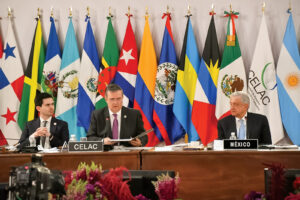
Latin America Has a Space Agency. Now Comes the Hard Part
ALCE held its first general assembly in Mexico in February, but faces questions about funding and political buy-in.
The Crucial Challenge of Building Space Expertise
As Latin America acquires more space technology, workforce development will be key to reaping the benefits.