




This article is adapted from AQ’s special report
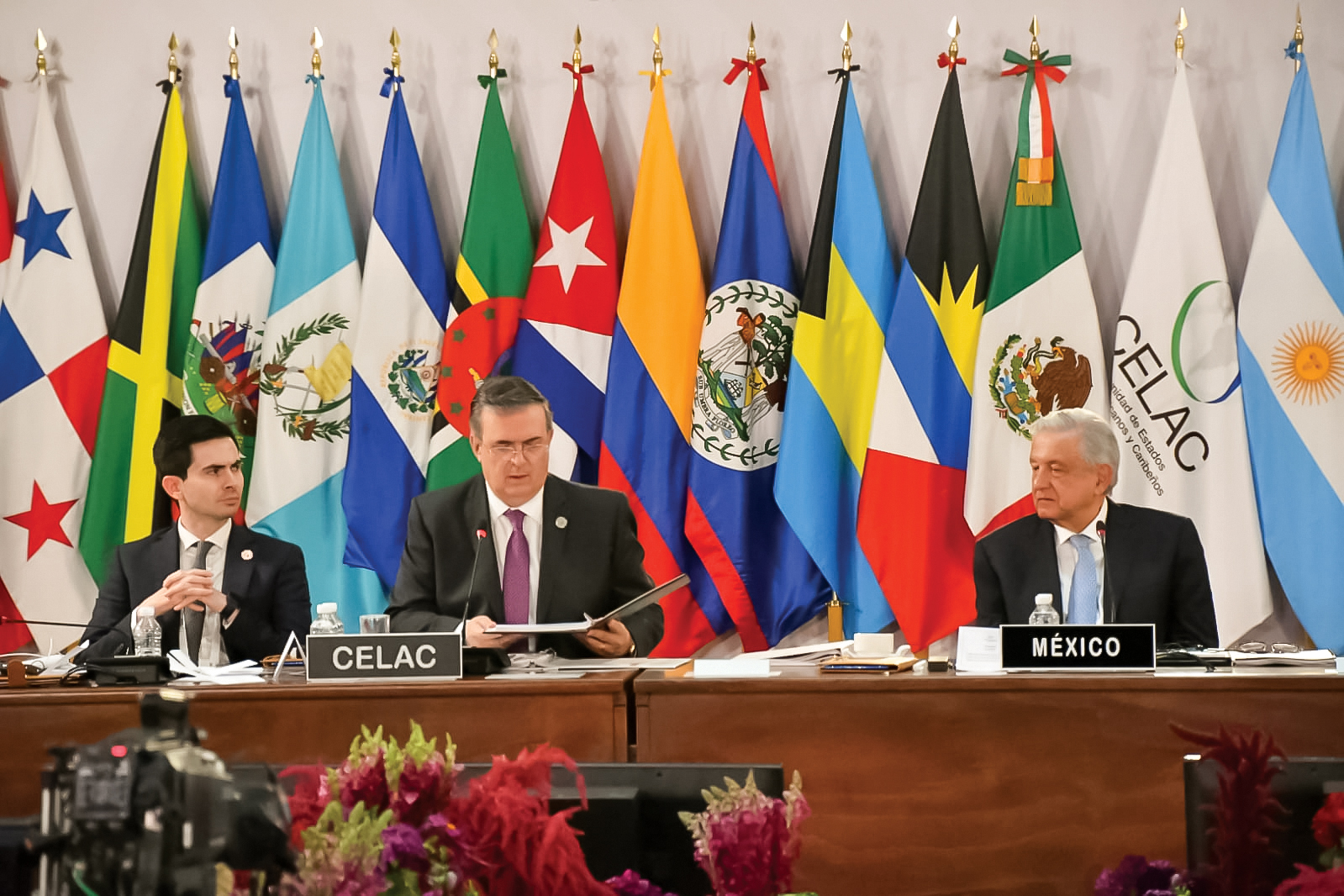
MEXICO CITY—The Latin American and Caribbean Space Agency (ALCE) held its first general assembly in Mexico in February, marking the transition of a five-year-old diplomatic ambition into an operational institution. Of the 18 countries that signed the agency’s founding convention in 2021, only 11 ratified it. The challenge ahead is making it matter.
Since its inception, the agency has attracted expressions of cooperation from the European Space Agency (ESA) and China’s National Space Administration (CNSA). Spain’s and Italy’s space agencies have followed suit, while South Korea’s Aerospace Research Institute (KARI) was designated as its permanent technical advisor.
But alongside expressions of international support, the case for internal concern is equally real. ALCE has yet to publicly disclose how much its member states contribute or what its operational budget is, and the institution needs to align the aspirations of many national agencies with limited resources. Mexico, the agency’s loudest advocate, slashed its 2026 budget by over a third, to around $2.6 million, making it one of the world’s most underfunded such agencies. A constitutional reform that would give the space sector a robust legal framework and attract private investment remains stalled in the Senate.
Besides these concerns, geopolitics cast doubt on ALCE’s future. Brazil, the region’s most advanced space power, never joined the agency, a decision compounded by its temporary withdrawal from CELAC, the regional body under which ALCE was established. Argentina, one of the agency’s early promoters and cofounders, signed the founding convention but never ratified it after the Milei government pivoted away from regional multilateralism.
“It is disheartening that, despite sharing a common language, cultural traits, and a shared geographical area, we are unable to establish cooperation for the common good,” Valeria Ramos Barba, a consultant on space law and policy based in Tokyo, told AQ.
Until now, the priorities ALCE has outlined—environmental monitoring, disaster risk management, food security, and digital connectivity—address real and urgent regional needs. The question remains whether the agency will be able to deliver on its lofty ambitions.
ABOUT THE AUTHOR

Cyntia Barrera Díaz
Reading Time: 2 minutesBarrera Díaz is a bilingual editor and journalist. She covered corporate and financial news across the U.S. and Latin America for Reuters and later served as a Spanish-language team leader and breaking news editor at Bloomberg.
NEW AQ: Latin America Looks to the Stars
The region has a huge opportunity in the booming global space industry. What is necessary to take full advantage?
The Space Race Comes to Latin America
The region wants to be not just a battleground, but a protagonist in the burgeoning space economy.
Latin America’s Quest for Space Sovereignty
The region’s pursuit of autonomy in the growing space sector will be complicated. The U.S. can be an important partner.
Brazil’s Landmark Satellite Program
Amazônia-1, the first satellite entirely designed and operated by Brazil, is part of a larger mission.
How Satellogic Is Trying to Reshape the Space Race
The company founded in Buenos Aires is pushing competitors to rethink who owns the sky.
Argentina’s Global Satellite Aspirations
The national space agency’s satellite program is a rare example of sustained strategic investment.
The Crucial Challenge of Building Space Expertise
As Latin America acquires more space technology, workforce development will be key to reaping the benefits.