



Majority of Americans Support Sheltering Unaccompanied Minors
A Reuters/Ipsos poll released Monday revealed that 51 percent of Americans oppose President Barack Obama’s plan to fast track deportations for unaccompanied Central American children apprehended at the U.S.-Mexico border. The online poll had a sample size of 1,566 people. The poll showed a divide in public opinion over how long the children should be allowed … Read more
Blood Spilled in Pursuit of Truth in Mexico
This June, Mexico’s Procudaría General de la República (Federal Prosecutor’s Office–PGR) issued a report that paints a gruesome picture of the country’s freedom of the press situation, releasing worrisome numbers on crimes and homicides committed against reporters and journalists for the past 14 and a half years. Between January 2000 and June 2014, an … Read more
Who Are Christian Congressmen Listening To?
Last Friday at 8:37 pm, 223 members of the U.S. House of Representatives voted to expedite the deportation process for unaccompanied Central American children by revising the William Wilberforce Trafficking Victims Protection Reauthorization Act of 2008, even though doing so would deport and endanger children, many of whom would otherwise be eligible for asylum. Shortly … Read more
Texas Relaxes Standards for Immigration Shelters
Due to the high volume of unaccompanied minors coming from Central America, the Texas state government announced yesterday that it would relax the rules governing the required conditions in its shelters. The regulatory changes reduced the number of square feet required for each child, increased the number of children assigned to a single toilet, sink … Read more
Mexico’s Energy Reform: Lessons from Colombia and Brazil
In the early 2000s, Colombia’s oil industry was weakening. There had been a decrease in new discoveries, followed by a decline in production from a peak of 800,000 barrels per day (b/d) in 1999 to nearly 550,000 b/d in 2004. Exploration and production had moved to increasingly remote areas with higher security risks and risky … Read more
Monday Memo: USAID and Cuba – Mexican Energy – U.S. Immigration – Argentine peso – Bridge in Colombia
This week’s top stories: USAID is accused of running a secret program in Cuba; Mexican energy reform passes in the lower house; U.S. Republicans pass immigration bills before recess; the value of the Argentine peso drops over debt woes; a bridge in Montería, Colombia collapses. USAID and Cuba: In a statement this morning, the United … Read more
Abandoned Houses Prove Golden Opportunity in Mexico
Miriam Rodríguez, 43, lives in Cañadas del Florido, a low-income neighborhood in Tijuana, Baja California, the northernmost state of Mexico. Three years ago, on any given day, Miriam and her three children would watch criminals, drug addicts, and vagrants frequent the empty house next door. Their streets were littered with garbage and dead animals. This … Read more
The United States Restricts Travel for Top Venezuelan Officials
The U.S. has issued a travel ban for a list of unnamed Venezuelan officials who are accused of involvement in human rights abuses after the Venezuelan military and police cracked down on anti-government protests earlier this year. The ban affects 24 high-ranking officials from Venezuela, ranging from cabinet members and senior judiciary members to members … Read more
Monday Memo: Mercosur Summit – General Hugo Carvajal – Gov. Jerry Brown – Mexican Energy Reform – Argentine Debt
This week’s likely top stories: Mercosur leaders meet in Caracas; former General Hugo Carvajal returns to Venezuela; California Governor Jerry Brown visits Mexico; Mexican Congress discusses energy reform; Argentina nears its debt deadline. Mercosur leaders to address Israel at Mercosur summit: Brazilian President Dilma Rousseff is expected to lead Mercosur leaders in condemning Israel’s military … Read more

Ask the Experts: Higher Education
Artur Cherbowski Lask answers: It’s important to keep in mind that a region consists of different countries, each with its own needs and strengths, and bound to its particular culture and history—although tied firmly to a common, shared history and culture. In this mosaic, universities try to respond to their regional, national and local demands. … Read more

Behind the Numbers: Women’s Rights
The gender-based data on social inclusion clearly indicate the opportunities and obstacles facing women in Latin America—as well as numerous contradictions and complexities. An examination of new trends, laws and policies brings to mind the Spanish expression, “Del dicho al hecho, hay mucho trecho.” In other words, even in many areas where there appears to … Read more

Bridge Institutions in Higher Education
The United States and Latin America are both struggling to find ways to improve participation in quality education in the face of a labor-market skills gap. But all too often, policymakers, businesses and educators have looked to elite universities as a way of meeting those gaps. While important for high-end jobs, labor market and social … Read more
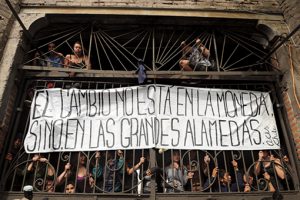
Protest U.
Millions of students have taken to the streets across Latin America in recent years in protests that reflect an unprecedentedly broad mobilization of popular opinion. Following massive demonstrations led by secondary school students in 2006 in Chile, university students launched a series of protests in May 2011. Powered by a coalition of public and private … Read more

Higher Ed: Private Investors Get Into the Game
The combination of sustained economic growth in Latin America, a region-wide expansion of the middle class, and a newly competitive business environment has boosted demand for quality education, and stoked desires for alternatives. The alternatives are coming from a slew of new and lower-cost online courses. This innovation has produced a wave of private investment … Read more

PUBLISHED BY AMERICAS SOCIETY/ COUNCIL OF THE AMERICAS
680 Park Avenue
New York, NY 10065
Phone: (212) 249-8950