



Monday Memo: Brazilian Elections – Gay Marriage – Renewable Energy – Missing Mexican Students – Peruvian Elections – Mining in Argentina
Brazil’s presidential elections lead to runoff: As predicted, Brazilians will return to the polls on October 26 to vote for president in a second round of elections—but in a last-minute surprise, challenger Aécio Neves of the Partido da Social Democracia Brasileira (Brazilian Social Democracy Party—PSDB) will face Brazilian President Dilma Rousseff. In Sunday’s first-round election, … Read more
Poll Predicts Morales Presidential Win
An election poll released on Wednesday—conducted by Ipsos, a France-based global market research company—showed that Bolivian President Evo Morales is on course to be elected to a third term on October 12. Morales is predicted to receive 59 percent of the vote—over 40 points more than his closest opponent, Samuel Doria Medina, a business man … Read more
Monday Memo: Canadian Executive Jailed – Missing Mexican students – Venezuelan Bolivar – Murder Suspects in Peru – Colombian Hackers
This week’s likely top stories: Canadian businessman Cy Tokmakjian is sentenced to 15 years in Cuba; Mexico searches for 58 missing students; Venezuela’s bolivar hits a new low; Peru arrests two suspects in the murder of Indigenous activists; Colombian peace negotiator Humberto de la Calle says his e-mail was hacked. Canadian executive jailed in Cuba: … Read more
Monday Memo: UN General Assembly and Climate Summit – Leopoldo López – El Salvador – Conflict in Guatemala – Clorox
This week’s likely top stories: World leaders gather for the UN General Assembly; Leopoldo López’ trial resumes in Venezuela; U.S. to approve aid to El Salvador; 8 killed in Guatemala conflict over cement plant; Clorox discontinues operations in Venezuela. World leaders converge in New York; thousands march for action on climate change: Some 140 heads … Read more
Shale Gas Development in Latin America
New technology and capital has boosted shale gas and tight oil production in the United States and Canada—a phenomenon dubbed the “shale revolution.” This revolution has important geopolitical implications and has shifted North America’s energy outlook from one of scarcity to one of abundance. The rest of the Western Hemisphere is also sitting on expansive … Read more
Colombia Senate Debates Uribe Paramilitary Links
Colombian lawmakers accused former President Álvaro Uribe of links to right-wing paramilitary groups during a polemic Senate debate on Wednesday. Senator Ivan Cepeda led the questioning of Uribe during a 90-minute presentation in which he introduced documents supporting the former president’s alleged ties to paramilitary groups and drug cartels, including the Medellin Cartel financier Luis … Read more
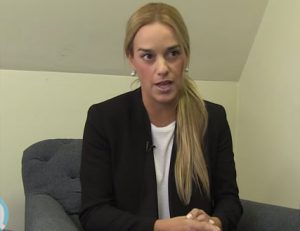
AQ Video: An Interview with Lilian Tintori
Venezuelan opposition leader Leopoldo López was just one of several political leaders—including current Mayors Daniel Ceballos of San Cristóbal and Enzo Scarano of San Diego—arrested after a wave of peaceful student protests that began in Venezuela on February 12, 2014. The protests soon turned deadly as demonstrators flooded the streets to protest high inflation, rising … Read more
Monday Memo: Venezuela in the UN – Brazilian Stalemate – U.S. Deportation – Santander – Ecuadorian protests
This week’s likely top stories: Venezuela is expected to win a seat on the UN Security Council; Brazilian President Rousseff and Marina Silva are tied in a new poll; U.S. deportations are at their lowest level since 2007; Santander’s new chairwoman will maintain the bank’s current strategy; Ecuadorian President Correa asks supporters to mobilize against … Read more
Venezuela Launches Investigation against American Television Network
The Venezuelan government opened an investigation against U.S.-based television network TNT on Tuesday because of the depiction of President Nicolás Maduro on the fictional spy drama “Legends.” In the third episode of the season, the Venezuelan executive is accused of stockpiling chemical weapons to use against anti-government protestors, referencing the protests that engulfed Venezuela in … Read more
Los Límites del Consejo de Defensa Suramericano
Entre el 14 y el 15 de agosto, en Cartagena de Indias, Colombia, el Consejo de Defensa Suramericano (CDS) llevó a cabo su reunión anual. Desde el momento en que Surinam fue seleccionada por rotación para presidir la Unión de Naciones Suramericanas (UNASUR), de acuerdo a entrevistas realizadas a funcionarios diplomáticos relacionados con la UNASUR, … Read more
Finding Gaston—And Peru’s Gastronomic Heritage
Food is powerful. After breathing, we all have to eat. And food can bring people together for celebrations or in times of sadness. In Peru, food has become the glue that has held together a nation that experienced difficult times over the last forty years. And today food has made Peru one of the most … Read more
Peru’s Congress Approves New Cabinet
Following a week of debate, Peru’s Congress approved President Ollanta Humala’s new 20-person cabinet yesterday, which will be led by Prime Minister Ana Jara. The cabinet was voted on a third time after the first two votes had too many abstentions to be valid, and approval was ultimately granted by a minimal margin for victory: … Read more
FARC Addresses Reparations for Conflict Victims
In a press release Wednesday, the Fuerzas Armadas Revolucionarias de Colombia (Revolutionary Armed Forces of Colombia—FARC) announced that it would create a special fund for reparations for victims of the armed conflict. The group also asked the Colombian government to take tangible actions to protect the rights of said victims. The release came on the … Read more
Monday Memo: Santos’ Cabinet – Venezuela-Colombia Border – Codelco – Argentine Ex-Captain Deported – Pemex Fire
This week’s likely top stories: President Juan Manuel Santos announces new ministers; Venezuela and Colombia crack down on smuggling; Codelco’s CEO has new plans for Chuquicamata Mine; Bolivia deports an Argentine accused of crimes against humanity; a fire at a Pemex refinery kills at least four people. President Santos to announce new Cabinet: Colombian President … Read more
Santos to Continue Peace Process in Second Term
Colombian President Juan Manuel Santos began his second term yesterday after winning reelection in the second round in June, defeating Óscar Iván Zuluaga who was backed by former President Álvaro Uribe. Santos based his campaign on the promise of a peace, with the hope of coming to an agreement the left-wing guerrilla group Fuerzas Armadas … Read more

PUBLISHED BY AMERICAS SOCIETY/ COUNCIL OF THE AMERICAS
680 Park Avenue
New York, NY 10065
Phone: (212) 249-8950