



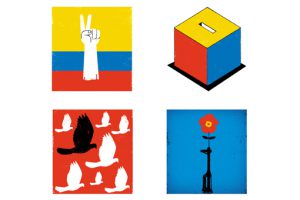
The Myths of the Colombian Peace Process
From its very beginning, Colombia’s peace process has aroused enormous expectations, not only within Colombian borders, but also in the international community. The negotiation is, in good measure, the result of the “Policy of Democratic Security” adopted by President Álvaro Uribe Vélez during his two terms (2002 to 2010), which helped limit the Fuerzas Armadas … Read more
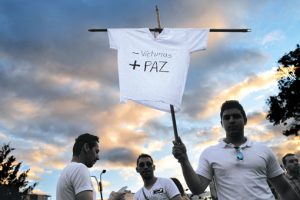
Ask the Experts: Colombian Peace Process
Clem McCartney answers: Colombia has already had the foresight and wisdom to analyze the experience of other countries in bringing internal conflicts to an end—including South Africa, the Philippines and Northern Ireland. As I write, representatives of the conflicting parties in Northern Ireland have just finished meeting Colombian government and FARC negotiators. Perhaps the immediate … Read more
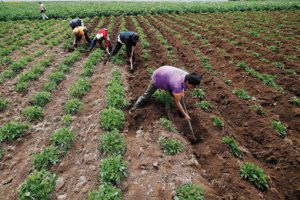
Post-Conflict Campesinos: Recovering Rural Colombia
Armed conflict and the presence of non-state armed actors harm both agricultural production and rural households’ well-being, for at least two broad reasons. First, conflict disrupts economic activities by hampering access to critical inputs and markets. As a result, producers may reduce or curtail planting or harvesting. Second, rural producers face an unpredictable environment for … Read more
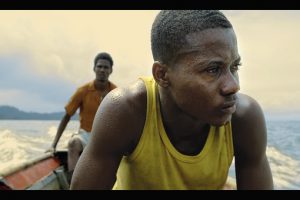
Manos Sucias
Brothers Delio and Jacobo stand by as two Colombian military officers inspect their boat, desperately hoping their stash of cocaine submerged just below the water won’t be discovered. After a few tense minutes, the officers depart, leaving the brothers to await further instructions from the drug lords. This is just one of several suspense-filled scenes … Read more
Bolivian Ombudsman Denounces Increased Violence Against Girls
Bolivian Ombudsman Rolando Villena voiced his alarm yesterday at the recent uptick in sexual violence against women, and particularly young girls, in the wake of the rape and murder of a four-year-old girl last week in the town of Palos Blancos. This attack follows the death of a five-year-old girl in the Cochabamba region who … Read more
Monday Memo: Ecuador Amendments — P&G Tax Fraud — Brazil Solar Parks — U.S. Midterm Elections – Colombia Paramilitary Sentenced
This week’s likely top stories: Ecuador’s National Assembly dismisses referendum on controversial constitutional amendments; Argentina suspends Proctor & Gamble for fiscal fraud; Brazil grants contracts for 31 new solar parks; U.S. gears up for midterm elections and immigration reform; Colombian court sentences AUC paramilitary leader to 8 years. Ecuador’s National Assembly Strikes Down Referendum on … Read more
Monday Memo: Brazil Elections – Uruguay Elections – Citgo Petroleum – Protests in Haiti – Chiquita
This week’s likely top stories: Brazil’s President Dilma Rousseff is re-elected; Uruguayan elections move to a second round; Venezuela scraps the sale of Citgo Petroleum; Haitians protest a lack of elections; a Brazilian consortium acquires Chiquita. Dilma Rousseff Re-elected President of Brazil: Brazilian President Dilma Rousseff was narrowly re-elected on Sunday in a runoff election … Read more

Policy Updates
A snapshot of policy trends and successes in the region.
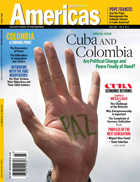
Cuba and Colombia
Articles: published article?1 A Skeptic’s View on the “Peace Dividend” by Alberto Bernal The economic benefits are neither direct nor certain. The Obstacles to Political Integration Post-Peace by Juanita León The obstacles to political integration. Full text available. Law and Reconciliation in Colombia by Rodrigo Uprimny Yepes and Nelson Camilo Sanchez Here’s how to achieve … Read more
Ecuadorian Minister Denounces Human Rights Watch Report
In a televised interview Tuesday, Ecuador’s Minister of the Interior, José Serrano, denied allegations of torture and police abuse detailed by a Human Rights Watch (HRW) report released on Monday, calling the report one-sided and an attack on progressive governments. The HRW report details police brutality that took place on September 17 and 18 when … Read more
UN High Commissioner Calls for Release of López
On Monday, UN High Commissioner for Human Rights Zeid Ra’ad Al Hussein called for the release of Venezuelan opposition leader Leopoldo López and former mayor of San Cristóbal Daniel Ceballos, as well as other prisoners detained over protests in February. Commissioner Zeid stated yesterday that “the prolonged and arbitrary detention of political opponents and protestors … Read more
Venezuela Wins UN Security Council Seat
Venezuela Wins UN Security Council Seat Venezuela secured a temporary seat on the United Nations Security Council in the first round of voting yesterday, earning 181 votes in support of its candidacy—52 over the 129 vote threshold it needed to clinch the seat. The win was trumpeted by Venezuelan President Nicolás Maduro as a sign … Read more
Morales Tackles Domestic Violence in Bolivia
On Tuesday, Bolivian President Evo Morales—fresh from his reelection to a third term on Sunday—moved to strengthen legal measures that would help reduce domestic violence against women in the Andean country. Law 348, titled Ley Integral para Garantizar a las Mujeres una Vida Libre de Violencia (Comprehensive Law to Guarantee Women a Life Free of … Read more
Colombia Submits Action Plan to EITI Secretariat
The extraction of natural resources, such as oil, gas, metals and minerals, is supposed to boost the economy and improve the quality of life of the residents of resource rich countries. However, in too many cases, resource extraction has led to social inequality, environmental degradation and corruption. In places like Colombia, it aggravates conflict. The … Read more
UN Finds Venezuela’s Detention of Leopoldo López Illegal
The family of imprisoned Venezuelan opposition leader Leopoldo López announced yesterday that the United Nations Working Group on Arbitrary Detention ruled in Opinion No. 26/2014 that López is being held illegally, and called for his release. The Working Group consists of five members appointed by the UN Human Rights Council that investigate possible cases of … Read more

PUBLISHED BY AMERICAS SOCIETY/ COUNCIL OF THE AMERICAS
680 Park Avenue
New York, NY 10065
Phone: (212) 249-8950