


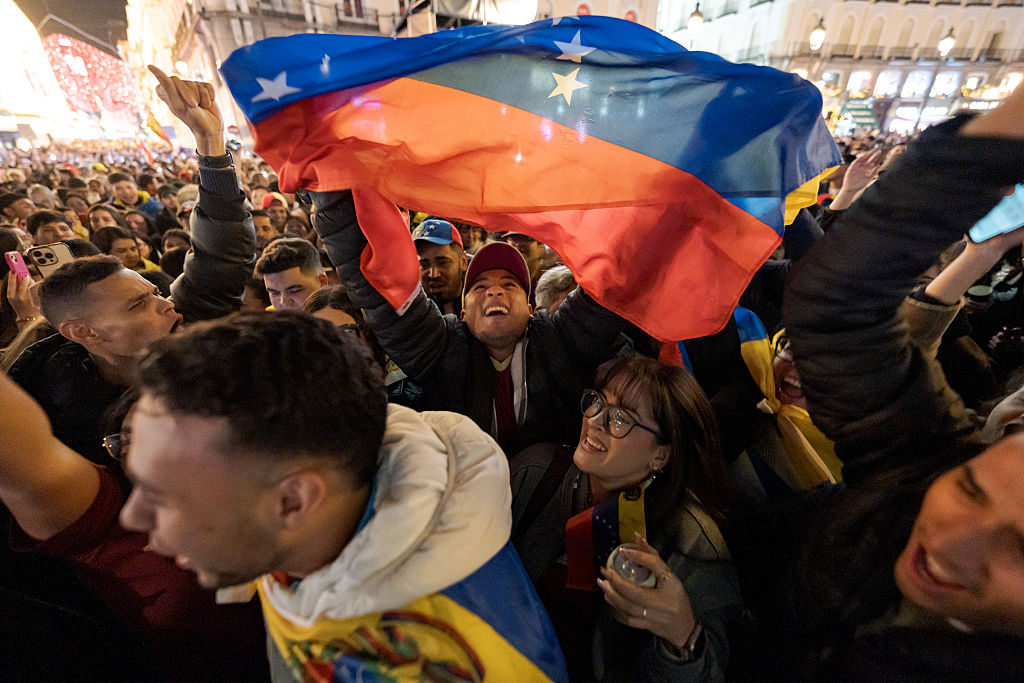

The United States will “run” Venezuela following the capture of dictator Nicolás Maduro, President Donald Trump said on Saturday, raising several questions about what’s next for Venezuela and for Latin America as a whole.
“We are going to run the country until we can do a safe, proper and judicious transition,” Trump told a news conference. He did not provide full details on implementation, and he surprised many observers by saying opposition leader Maria Corina Machado did not appear to have the support necessary to govern. Trump also said “American dominance in the western hemisphere will never be questioned again,” casting the historic military operation as a revival of the 203-year-old Monroe Doctrine and issuing warnings to the governments of both Mexico and Colombia that they needed to crack down further on drug trafficking.
The operation and Trump’s comments reverberated throughout the Americas, with Trump allies including Argentine President Javier Milei and Ecuador’s Daniel Noboa offering praise. However, even some critics of Maduro such as Chile’s Gabriel Boric condemned the operation as a violation of sovereignty and international law, raising questions about a political backlash that could affect U.S. allies and interests.
AQ asked analysts to share their reactions and perspectives.
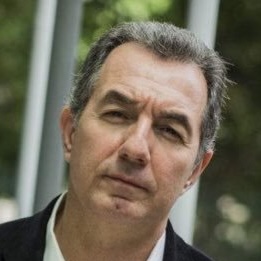
Benigno Alarcon Deza
Alarcón Deza is a political analyst, researcher, and former Director of the Center of Government and Political Studies at Universidad Católica Andrés Bello in Caracas.
After Maduro’s capture, Venezuela is not facing a conventional succession crisis, nor is it entering a managed transition under the stewardship of incumbent powerholders. What the country confronts instead is a legitimacy trap: a political vacuum created by the absence of Maduro, the non-recognition of his government, and the lack of a formally installed authority that is both effective and legitimate.
At present, Vice President Delcy Rodríguez will exercise de facto authority by virtue of her position within an internationally unrecognized government. This distinction is crucial. Whatever her administrative role, Rodríguez cannot serve as the foundation of a political transition because she inherits the regime’s original sin: the absence of democratic legitimacy. A transition that begins from an illegitimate source cannot credibly aim at democratic re-institutionalization.
Statements by U.S. President Donald Trump suggesting openness to working with figures inside the regime—whether deliberate or the result of confusion—risk reinforcing a flawed premise: that stability can be achieved by repackaging the existing power structure under external supervision. It cannot. Stability without legitimacy is merely controlled stagnation.
If Venezuela is to undergo a genuine political transition, it must be anchored in the only uncontested source of democratic legitimacy available: the result of the 2024 presidential election. The elected government—headed formally by Edmundo González Urrutia and politically led by María Corina Machado—is not merely a political alternative. It is the constitutional and moral reference point without which any transitional arrangement is doomed from the outset.
This is not an abstract legal argument; it is a strategic one. Any attempt to stabilize Venezuela while sidelining the 2024 mandate would immediately face three problems: domestic rejection, international fragmentation, and internal regime sabotage. By contrast, installing and protecting the elected government—potentially with international security and diplomatic guarantees—would reverse the legitimacy deficit and allow the hard work of re-institutionalization to begin.
Regional history is instructive. After the removal of Manuel Noriega in 1989, Panama’s recovery was possible not because remnants of the old regime were recycled, but because a legitimate civilian authority was empowered and shielded long enough to rebuild institutions. The lesson is not about intervention per se, but about sequence: legitimacy first, stabilization second.
Venezuela’s path forward is narrow but clear. A transition that does not respect the 2024 electoral outcome is not a transition—it is an evasion. And evasion, in Venezuela’s history, has always led back to authoritarianism under a different name.
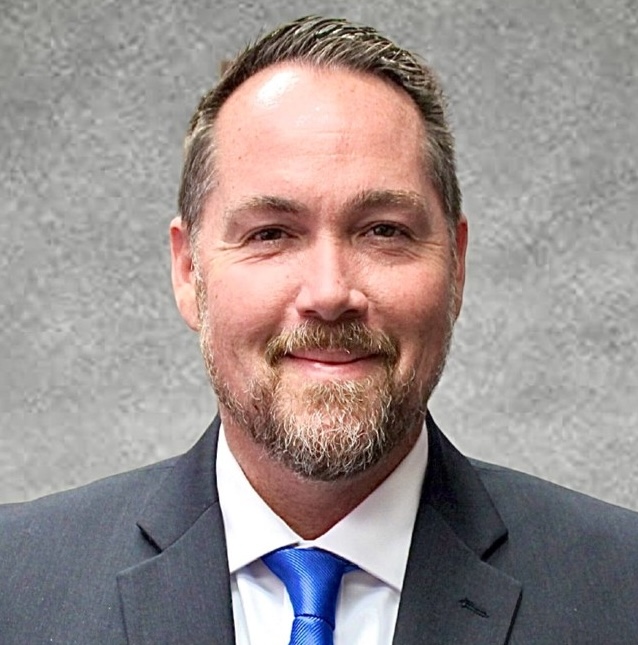
Brian Fonseca
Fonseca is the Director of Florida International University’s Jack D. Gordon Institute for Public Policy and an International Security Fellow at the DC-based think tank New America
This morning’s military operation was dramatic, but it is likely the easiest part of the process.
As I have argued before, a complete and immediate swing of power to the opposition is neither realistic nor stabilizing under these conditions. Figures such as María Corina Machado and Edmundo González Urrutia may enjoy strong popular support and were backed by a majority of Venezuelans in the July 2024 elections, but they have long been deeply unpopular with key institutions, especially the military. After twenty-five years of politicization, Venezuela lacks any intact framework capable of absorbing a sudden transfer of power. The armed forces remain the ultimate arbiter of force and a central institution in any transition. Ignoring that reality risks provoking resistance, fragmentation, or outright violence at precisely the moment when institutional cohesion is most needed. Democratic legitimacy matters, but so does the capacity of institutions to accept and implement political change.
For that reason, I believe the only viable path through Venezuela’s valley of transition from autocracy to democracy is a time-bound power-sharing governance structure. A transitional arrangement that includes elements of the existing political elite, opposition forces, and American advisers offers enough continuity to preserve relative stability while creating space for reform. This is not about preserving the old regime; it is about preventing institutional collapse while recalibrating the rules of the system so that future elections and governance can be credible and enforceable.
Ultimately, Venezuela’s challenge is not a simple struggle between personalities or camps, but a structural problem of rebuilding democratic authority in a deeply polarized society. Without power sharing and negotiated constraints on all actors, the country risks replacing one form of instability with another. With it, Venezuela at least has a chance to move from authoritarian rule toward a durable and legitimate democratic order.
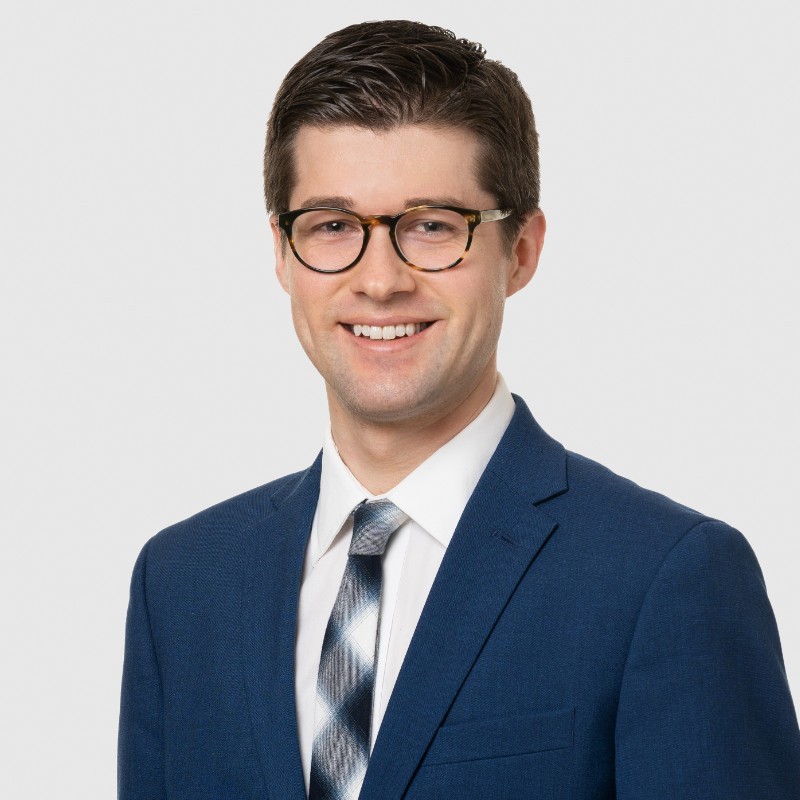
Ryan Berg
Berg is director of the Americas Program and head of the Future of Venezuela Initiative at the Center for Strategic and International Studies (CSIS)
This action leaves open a slew of questions—about what comes next, regional reactions, and the chavista regime, if it can survive Nicolás Maduro’s departure. In a subsequent press conference, President Trump hinted at the U.S. taking ownership of the leadership vacuum and establishing a provisional government involving designees, Secretary of State Marco Rubio, and others in the U.S. government. He appeared to indicate this as the best option because allowing Venezuela to continue in the hands of chavistas would be unacceptable. He mentioned the importance of energy resources and getting U.S. oil companies back into Venezuela. The press conference was light, however, on mentions of the Venezuelan opposition. At one point, Trump declared that Nobel Peace Prize winner Maria Corina Machado lacked popularity.
The operation contains several important implications for long-term regional geopolitics. First, it signals that the Trump Corollary outlined in the recent National Security Strategy is not mere bluster. Maduro met with a Chinese special envoy mere hours before U.S. forces snatched him from his home. There is speculation that Chinese diplomats did not make it out of the country in time before the U.S. operation began. This is quite a message for China, which has lent more money than any other U.S. adversary to the Venezuelan regime. Second, at the press conference, Trump affirmed that America First foreign policy means building a safer, more prosperous, more secure hemisphere.
The president himself explicitly endorsed the idea of living with better neighbors and making the neighborhood a zone of greater strategic benefit for the U.S. by taking out bad actors. He also drew a direct comparison to the strength and operational skill displayed in the decapitation strike on IRGC Commander Qassem Soleimani in his first administration, as well as Operation Midnight Hammer against Iran’s nuclear infrastructure during the summer of 2025. In doing so, Trump has outlined a muscular foreign policy that is more than willing to utilize military force and U.S. power to reshape the world—and now the Western Hemisphere—in the U.S. interest.
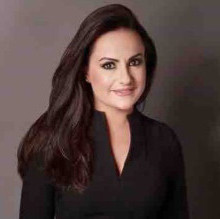
Brenda Estefan
Professor at IPADE Business School in Mexico City and a columnist at Reforma, Mexico’s leading newspaper
Hours after the U.S. military operation in Venezuela and the capture of President Nicolás Maduro, Donald Trump moved quickly to broaden the narrative. In an interview with Fox News, he said the operation was “not meant” as a message to Mexico. Yet almost in the same breath, he again portrayed Mexico as a country effectively run by drug cartels and said that he has repeatedly offered President Claudia Sheinbaum to allow the U.S. to eliminate the cartels in Mexico—an offer she has rejected. He described Sheinbaum as “a good woman,” before sharply undercutting her authority. “She doesn’t run Mexico,” he said. “The cartels do.” His conclusion was blunt: “Something is going to have to be done with Mexico.”
Mexico’s response to the U.S. operation in Venezuela was, like that of many other countries, to condemn the intervention by appealing to international law. Sheinbaum invoked the UN Charter, which explicitly prohibits the threat or use of force against the territorial integrity or political independence of any state. Many within Morena, the ruling party, would have preferred a tougher stance. But the president is aware that Mexico finds itself in a delicate position, managing an increasingly unpredictable relationship with Washington.
The operation on Venezuela crystallizes a revived Monroe Doctrine with a distinctly Trumpian corollary—an approach openly sketched in the U.S. National Security Strategy published just weeks ago. That strategy reasserts the Western Hemisphere as a privileged sphere of influence, one in which American primacy must be actively enforced and rival powers excluded.
Washington seeks to reassert control over the region, discipline defiance, promote governments aligned with Trumpism and secure key interests. Whether opposition figures such as María Corina Machado or Edmundo González participate in a transition is largely irrelevant to Trump. What matters is who governs, under what rules, and with which partners—particularly when oil contracts and geopolitical signaling are at stake.
Mexico is taking note. In just months, the USMCA will come up for review, amid an election year in the U.S. and a White House increasingly comfortable with coercion. Mexico’s economic weight—as America’s largest trading partner and biggest buyer of U.S. goods—offers leverage, but not immunity. Venezuela, in this reading, is less an endpoint than a warning shot. The message is unmistakable: Washington is speaking through force, and it expects the region to listen.
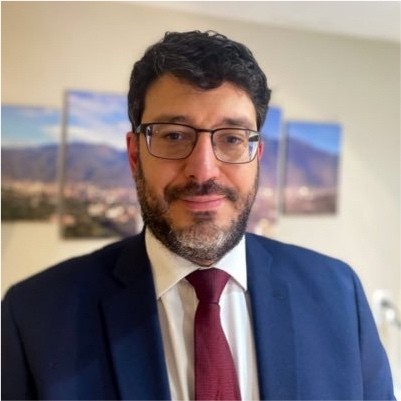
José Ignacio Hernández
Hernández is a Constitutional and Administrative Law Professor at Venezuela’s UCV and UCAB; and a Senior Associate at the Center for Strategical and International Studies, CSIS
The detention of Nicolás Maduro and Cilia Flores by U.S. forces during a law enforcement operation has created a power vacuum, though not strictly constitutional. Maduro has been moved abroad, preventing him from exercising the presidency and continuing the usurpation that started in 2018 and was worsened by ignoring the 2024 election results.
The Venezuelan constitution is currently not in effect, and Maduro is not the legitimately elected president of Venezuela. Theoretically, in the president’s absence, Article 234 provides that the Vice President should assume the presidency until the National Assembly formally declares Maduro’s absence, as specified in Article 233. If that occurs, new elections must be held within 30 days.
However, Delcy Rodríguez (the de facto Vice President) lacks constitutional authority to serve as interim president. Furthermore, there is no democratically elected National Assembly: the current fifth legislature, whose term ends on January 5th, was fraudulently elected, and the sixth legislature is also based on rigged elections held last year.
Most importantly, Rodriguez does not seem interested in serving as interim president. In her first broadcast conference, she did not act as an interim president; instead, she confirmed that Maduro remains the president. Claiming to act within the scope of the constitution—modern dictators are masters of legality, as Heinrich Rommen used to say— she submitted an emergency decree of external commotion, supposedly signed by Maduro weeks ago, to the Constitutional Chamber of the Supreme Court.
The Constitution Chamber, a crucial actor advancing in Venezuela’s democratic decline, will act expeditiously on this emergency decree. It might uphold the abusive constitutional practices, appearing to validate Rodriguez’s leadership, or it could initiate a transition that, in accordance with Articles 333 and 350 of the Venezuelan Constitution, ultimately terminates the tyrannical regime. Considering numerous precedents since 2013, it is likely that the Constitutional Chamber will uphold the de facto regime.
Maduro is no longer the de facto president of Venezuela, but this has not yet ended the tyranny in the country.
A Roadmap for Venezuela’s Future Transition
The U.S. should prepare humanitarian assistance and take other steps to help support a free Venezuela, two experts write.
Venezuela’s Possible Turning Point
Maduro’s repression is escalating alongside unprecedented U.S. military activity. The situation on the ground shows two likely paths forward.