



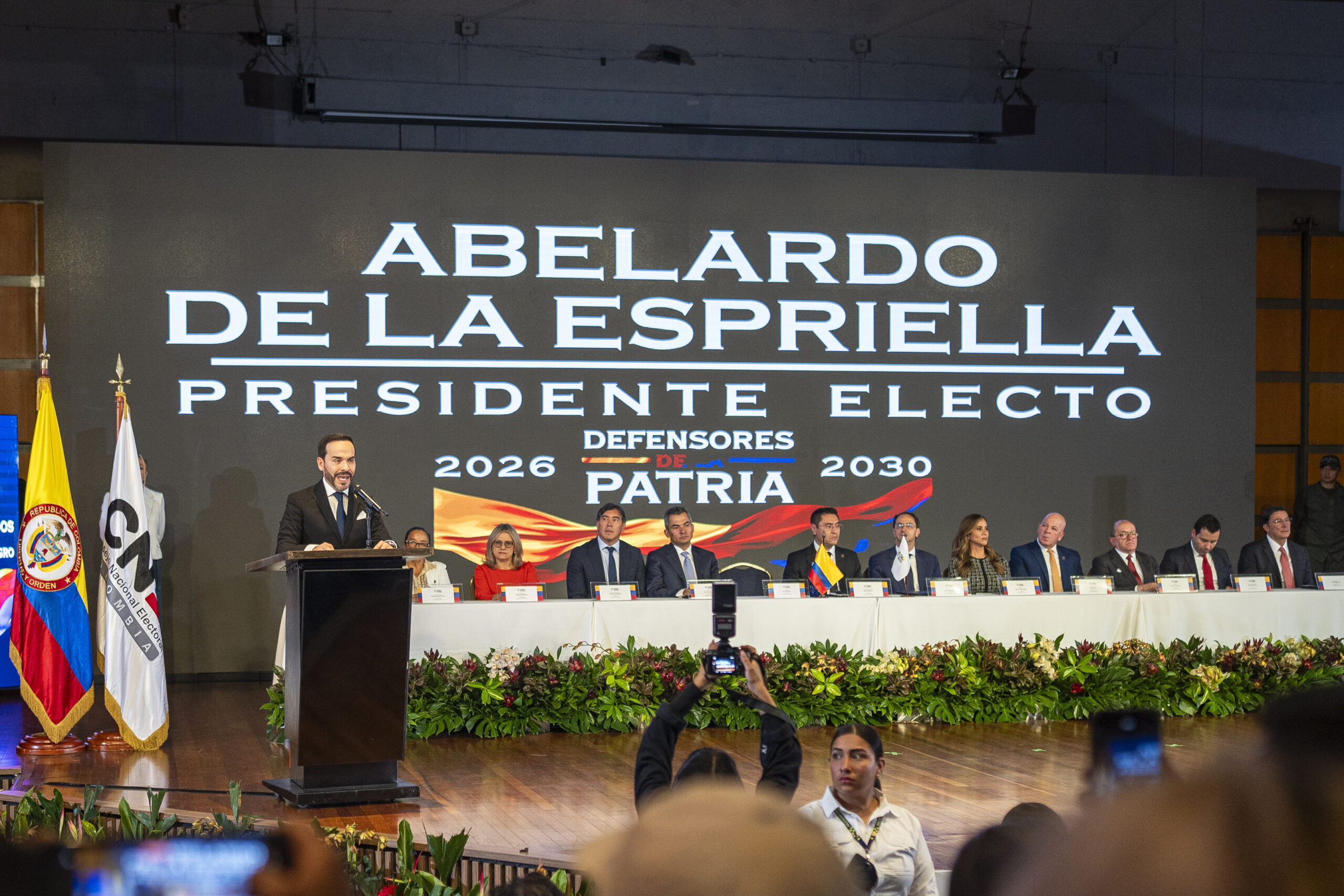
Abelardo De La Espriella will be the 22nd president in Latin America since the 1980s who can be classified as a newcomer: a figure elected to the presidency with minimal experience in public office. What do we know about these cases? Newcomers arrive with a big agenda, but they struggle to achieve their goals or even stay in the job—and when they do, damage to democracy is sometimes the result.
In De La Espriella, Colombia has elected its most unusual president in a generation. He is a criminal defense lawyer whose clients included questionable figures such as people linked to the paramilitaries, a notorious pyramid-scheme operator, and even Alex Saab, accused of laundering money for Nicolás Maduro’s government in Venezuela. He qualified for the ballot through citizen signatures rather than a major party, and has never held elected office.
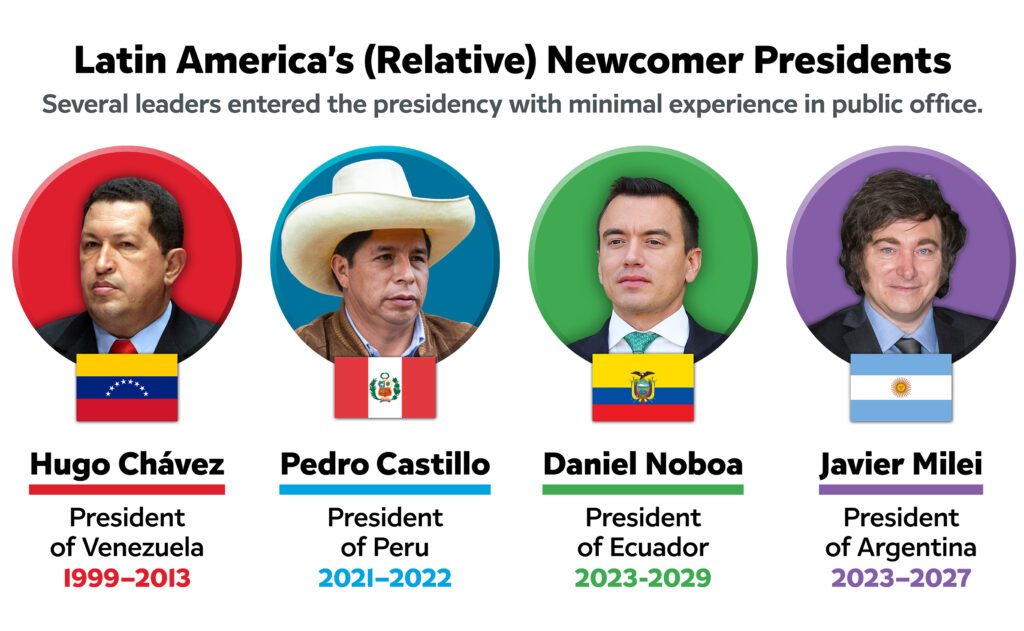
Newcomer presidents may be new to Colombia, but it is not a fringe, or even new, phenomenon in Latin America; figures with low experience in public office are common presidential candidates in the region (60 by my count since 1989). As elected presidents, newcomers span the ideological spectrum—Hugo Chávez on the left, De La Espriella on the right, with figures like Ecuador’s Rafael Correa blending different currents once in office. What unites them isn’t ideology but their thin political resumes. They emerge from outside the political class. They may be celebrities, but have no experience building coalitions. They arrive on a wave of public exhaustion with the politicians who came before.
That exhaustion has a specific shape. Newcomers typically follow one of three kinds of predecessor: the hyper-presidentialist, whose concentration of power makes the public crave a circuit-breaker (Alberto Fujimori, who gave rise to Alejandro Toledo); the hyper-ineffective, who simply failed to deliver (Rafael Caldera, succeeded by Hugo Chávez); or the hyper-unpopular, who exhausted the public’s patience outright (Alberto Fernández, who yielded Javier Milei). In addition, newcomers emerge when they compete against candidates strongly linked to an old, unpopular, corrupt and polarizing political movement (Daniel Noboa in Ecuador running against correísmo’s candidate, Luisa González, and Mauricio Funes in El Salvador, running against the right-wing ARENA).
De La Espriella’s rise stems from a combination of some of the above: Petro governed increasingly by decree and confrontation with other branches of the state (hyper-presidentialism). His “Total Peace” initiative, and probably his entire security policy, is judged by many to have failed (hyper-failure). In addition, De La Espriella competed against Iván Cepeda, an establishment figure who, like Petro before becoming president, represented continuity with Colombia’s unpopular radical left—a tradition still associated by many voters with the country’s guerrilla-era conflicts.
Newcomers tend to go for extreme populism: They often divide the electorate between “the good people” and “the villains,” with little room in between. Opposing the leader becomes a question not of disagreement but of villainy—of being anti-majorities, anti-people. Villains are blamed for society’s harms and deserve punishment. Establishment politicians are often the worst villains. The goal is not to be a president for all, but a president against some—the wrongdoers—with the leader and his team, not the courts, deciding who’s to blame.
De La Espriella scores high here. His platform promises an iron fist against crime, Nayib Bukele-style mega-prisons (which could pave the way for erosion of human rights), governance by emergency decree, and a culture-war front against same-sex adoption and “gender ideology.” He also has a history of animosity toward the press and his critics more broadly. While he did explicitly offer constitutional guarantees to Cepeda and the Colombian opposition in his speech on election night, De La Espirella spoke during his campaign of “gutting” the left and has called Bukele “too soft” in some areas. His rhetoric has focused on “reconstructing” Colombia, rather than “reconciling” a very polarized country.
Impact on democracy
Not all newcomers pursue a maximalist approach—Alejandro Toledo in Peru is an example. But generally speaking, newcomers are often tempted to go for broke once in office. When they do, they often overreach. And because of their inexperience, they tend to misfire.
A maximalist agenda often leads toward one of two fates.
One is for the leader to bend the system to his will—concentrating power in the executive branch, as Chávez, Correa and Noboa have each done to varying degrees.
The other path is for the system to push back hard, leading to stress and instability, and sometimes even forcing a premature exit, as it did with Alberto Fujimori, Jean-Bertrand Aristide, Lucio Gutiérrez, Fernando Lugo, and most recently Pedro Castillo.
The reason maximalist newcomers have a high potential for concentration of power has to do with the relationship to their parties: Newcomers often convert their electoral vehicles into a personalist governing party—the kind of organization that, per Erica Frantz, Andrea Kendall-Taylor, and Joseph Wright, exists to say yes to the leader rather than check him. Maximalism combined with personalist parties is a recipe for autocratization. The other tactic they try is to attach themselves to existing parties, becoming highly partisan, hoping their parties look the other way while they defy checks and balances, and sometimes even expand corruption. Both Antonio Saca from the right and Mauricio Funes from the left in El Salvador followed this path.
Conversely, newcomers who generate instability tend to fail for mirror-image reasons: inability or incapacity to sustain a governing coalition. Rather than producing personalist parties, they become what I once called “presidents without parties“—anchorless. They generate political storms with their maximalism, but because they lack a party machine ready to support them both in congress and in public debates, anchorless presidents struggle politically.
Colombia’s institutional machinery
Where does this leave De La Espriella? First, some caution: Much of what we’ve seen may simply be volume turned up for electoral appeal. Electoral discourse is sometimes just that, and there’s a real chance De La Espriella’s volume tones down once governing starts. His choices for vice president (José Manuel Restrepo) and interior minister (Rodrigo Lara) offer reassurance. These are not anti-establishment figures. They are career politicians/técnicos with a track record of preferring to work with the system, rather than against it.
That said, Colombia could plausibly face a path toward either democratic deterioration or democratic stress. De La Espriella wields anti-establishment rhetoric no previous Colombian president has matched, and his electoral machine could easily harden into a rubber stamp: He built his coalition through clan-based and social media support, typical catalysts for cult followings. His appetite for decree rule, his kinship with Bukele, and Washington’s active backing all supply more raw material for radicalization.
Yet his position is more fragile than meets the eye. He won by a small margin, and congress remains divided enough that his movement, Defenders of the Homeland, has no dominant legislative bloc. His relationship with uribismo, Colombia’s most established hard-right movement still holding 17 seats in the Senate, is complicated. Former President Álvaro Uribe only supported De La Espriella in the second round, and the president-elect never mentioned Uribe in his victory speech. If the right remains disunited, this could spell trouble for De La Espriella.
Furthermore, the system he’s entering has also spent two decades building resistance to exactly this test. Colombia’s judicial system blocked Uribe’s bid for re-election in 2010, and more recently forced Petro to repeal his own labor-referendum decree after the Council of State suspended it and the electoral registrar refused to organize the vote. Colombia’s central bank also repelled some of Petro’s worst economic ideas. De La Espriella thus inherits an anti-populist institutional machinery.
Whether that machinery holds against a more determined push, or his mandate is too thin to sustain one at all, is the real test ahead.
ABOUT THE AUTHOR
Javier Corrales
Reading Time: 5 minutesCorrales is a professor of political science at Amherst College and the author of Autocracy Rising (Brookings 2023) and co-author of Dragon in the Tropics: Venezuela and the Legacy of Hugo Chávez (2015).

REACTION: De La Espriella Wins Colombia’s Election by Narrow Margin
The right-wing lawyer is set to begin a four-year term on August 7.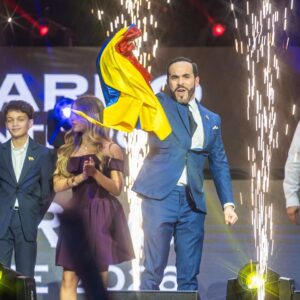
Colombia’s Bukele? Abelardo De La Espriella Surges Ahead
The right-wing frontrunner in Colombia’s election tells AQ he’s an “odd fish, but not a dangerous one,” and addresses questions about his past.