



CARACAS—Relevance. In a word, that is the goal of Venezuela’s opposition more than two months after the capture of Nicolás Maduro, a period that has seen acting President Delcy Rodríguez surprisingly consolidate herself as the country’s new leader with the support of Donald Trump.
As a result, the opposition is debating tactics and strategies to regain the upper hand – to recover momentum for democratic elections and ensure that the opposition’s leaders are not marginalized or forgotten by either the Venezuelan public or the international community.
“The danger, now already a reality, is the opposition’s irrelevance in the unfolding of events in Venezuela,” Andrés Caleca, who served as president of the National Electoral Council (CNE) in 1999, told AQ.
Key upcoming decisions include the timing of the return to Venezuela of María Corina Machado, the political leader and Nobel Peace Prize laureate; how forcefully and publicly to press Trump, and the international community more broadly, to schedule new elections; and how to ensure the release of the more than 500 Venezuelans still in prison for political reasons.
Some believe the opposition should take a less passive stance on these and other questions. “I think the opposition must now confront Delcy and Trump. It has to mobilize and fight to restore Venezuelans’ rights. No one else will do it,” said Ricardo Hausmann, a Venezuelan economist and professor at Harvard University, told AQ in a recent conversation.
Others in the opposition disagree, arguing that confrontation would only antagonize the White House and reduce the likelihood that Machado and her allies would shape Venezuela’s future, especially given Trump’s recent effusive praise for Rodríguez and his decision earlier this month to officially recognize her government.
However, there are some areas of apparent consensus among those seeking a democratic transition.
Reviving unity
One of the first short-term goals is to reactivate the Democratic Unitary Platform, an alliance that helped forge consensus among opposition groups for the 2024 elections, but has gone somewhat dormant since. Opposition leaders believe that negotiating with a united voice will be key in future talks with Rodríguez, as well as possibly the White House.
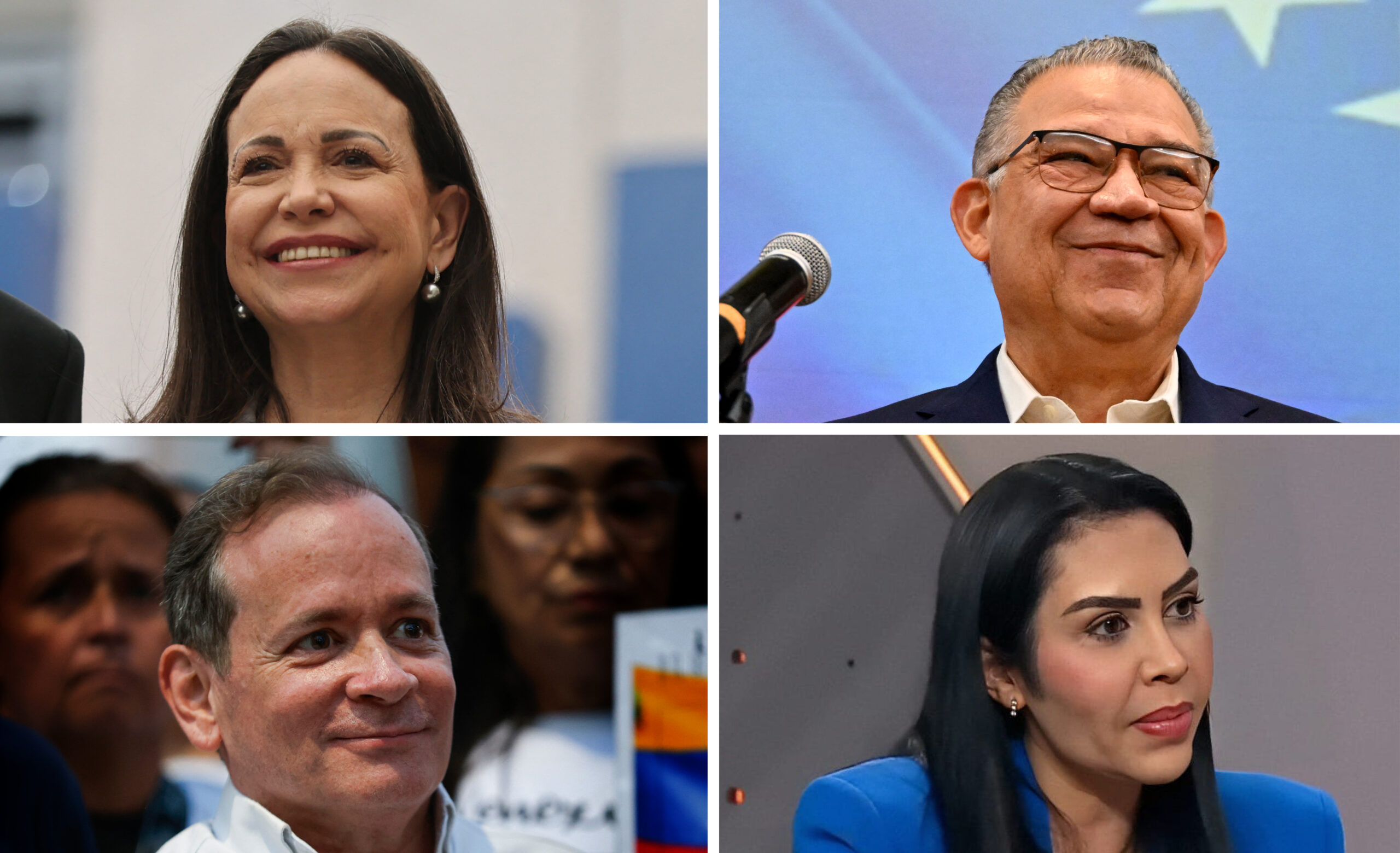
“We have designed a roadmap that we will make public soon,” Delsa Solórzano, a lawmaker and member of the Democratic Unitary Platform representing the party Encuentro Ciudadano, told AQ.
The new action plan, to be released in the coming weeks, has been crafted to align with the current U.S. strategy, as articulated by Secretary of State Marco Rubio, of stabilization, recovery, and then a democratic transition, Solórzano said. “This roadmap has to do with the three steps that the U.S. government itself has indicated must take place in Venezuela,” she added.
Henry Alviárez, the national coordinator of Vente Venezuela, the political party founded by Machado, says the party is ready to gain new momentum. “The party is reopening its doors, spreading once again across the country in this struggle. We will not rest until we reach the end—until we are free,” he said at a press conference on March 3. He was released from El Helicoide, the infamous jail for political prisoners, on February 8 after two years of incarceration.
Whether Rodríguez and her brother Jorge Rodríguez, the president of the National Assembly, are willing to engage in dialogue with the opposition at all is an open question. Even as it adopts a pragmatic stance toward Washington, Chavismo has kept its military, police, and political power structure intact, while positioning itself and its allies to manage key positions domestically and even in the U.S.
Leading voices in Venezuela’s democratic opposition
Despite the recent passing of the amnesty law, which facilitated the release of 690 political prisoners since January 8, the regime continues to hold 515 political activists captive, including 188 military officials, 53 women, and one adolescent, according to Foro Penal, a think tank tracking political prisoners in the country.
Freeing all political prisoners, the dissolution of security forces involved in torture, and the restoration of other individual freedoms that have been violated on a consistent basis for years remain some of the most pressing goals, said Carlos Blanco, a top Machado adviser.
Tensions are starting to rise in Venezuela. Earlier this week, public-sector unions went to the streets to publicly demand a minimum wage increase and better pensions, and a public transportation protest paralyzed Caracas, the nation’s capital. It was the first strike in years. At the same time, university students, the Catholic Church, and some civil society organizations and relatives of the inmates are timidly holding peaceful protests outside prisons, demanding the full release of still a sizable number of political prisoners. The nature of these protests shows that civil liberties remain severely limited in the country and that political dissent is still a source of concern.
For many analysts, the most delicate challenge may be Machado’s return.
Coming back home
During a meeting at the White House on March 6, President Donald Trump reportedly advised Machado not to return to Venezuela at this time, citing security concerns and a fragile political environment. Interior Minister Diosdado Cabello has also threatened to imprison Machado upon her return.
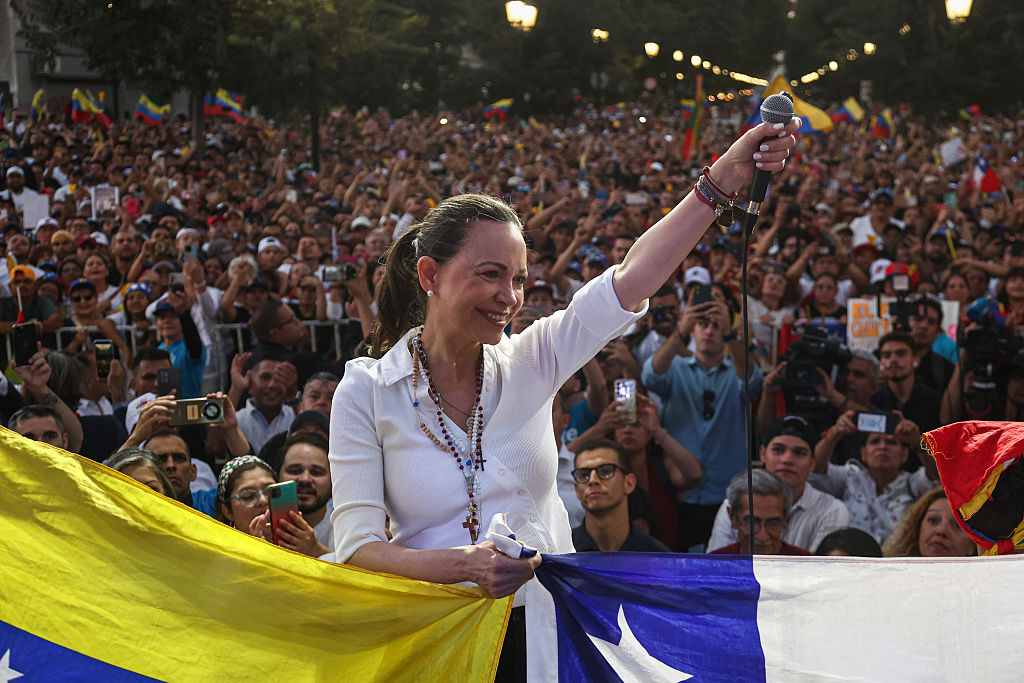
“My return to Venezuela will happen in a harmonious and coordinated way with our allies,” Machado told reporters gathered in Santiago, Chile on March 12. She also reiterated the idea of “a national accord” as the feasible political path for the country’s future. “This is not about one sector or one party. This is about ensuring that we will have a government for all Venezuelans,” she said.
Machado will probably need to rebuild her contacts with civil society on the ground in order to regain some visibility within Venezuela, said Ricardo Ríos, a public opinion expert in Caracas. “We must press for the political game to be opened up and talk about elections,” Ríos told AQ.
To avoid irritating the Trump administration, Machado and other national leaders have recently changed their strategy, now calling for fresh elections rather than pressing for the recognition of the opposition’s victory in 2024.
“What we need right now is recognition that there is legitimate political leadership with popular support,” Hausmann, the Harvard professor, said about Machado’s future. The political leader won the October 2023 opposition primaries, but was banned from running in the 2024 presidential election. She backed Edmundo González Urrutia, the widely recognized winner of the presidential election held on July 28, 2024. “If Rodríguez wants to have a government of national unity, she has to come to an agreement with Machado,” Hausmann said.
An elusive transition
The nation’s mood now revolves more around implementing new U.S.-pushed investments in oil and mining than on the long-sought democratic transition many had expected following Maduro’s capture. In some parts of Caracas, a new slogan has begun to gain traction: “Delcy Avanza” (Delcy Go Forward), a signal that Chavismobelieves Rodríguez is making the necessary moves to stay in power until the completion of Maduro’s original presidential term in 2030.
Enrique Márquez, a political leader invited by Trump to the State of the Union address last month, believes that the country is not ready to hold elections and that updating the voter registry is the first priority. “If I were invited to an election in three months, I could not participate because I have no confidence in the CNE (the electoral authority),” he said in a recent TV interview. Márquez, who ran as a presidential candidate in 2024, explained that a new electoral authority is needed to thoroughly review the electoral system, open the voter registry in the country and outside Venezuela, and update electoral legislation.
Some are urging patience. Juan Pablo Guanipa, a charismatic former congressman and leader of the Primero Justicia party, was released from jail on February 8. “We have to align ourselves with the view of the United States government,” Guanipa said on March 4 at a press conference. “All of us who are convinced that political change must take place in Venezuela must remain united,” he added.
Still, others feel the moment for a true democratic transition may be slipping away.
“We lack the real political organizational strength needed to influence the timetable of this roadmap agreed upon by” the White House and Miraflores, said Caleca, the former president of the CNE and leader of Movement for Venezuela (MPV), an opposition party that couldn’t participate in last year’s legislative contest despite being officially recognized by the electoral authority.
“What we are seeing is a consolidation of the Chavista regime with all its characteristics,” and therefore, there is no visible transition toward democracy, he added.
The evolving reality shows that the new era of conditional stability could be lengthy, and it is unclear what space will remain for those advocating for a new political future for the country.
ABOUT THE AUTHOR
Omar Lugo
Reading Time: 6 minutesLugo is an international correspondent and a former director of elestímulo.com and former editor-in-chief of El Mundo. He’s been covering Venezuela’s politics and economy for the past three decades.
Venezuela: A 2026 Snapshot
AQ tracks key indicators and political and economic trends to watch in 2026.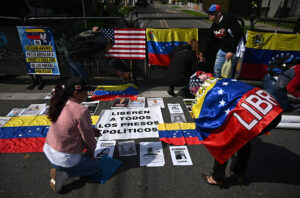
The Way Forward For Venezuela
A successful transition will depend on investment, who leads the military, and more.