


This article is adapted from AQ’s special report on Mexico’s path forward
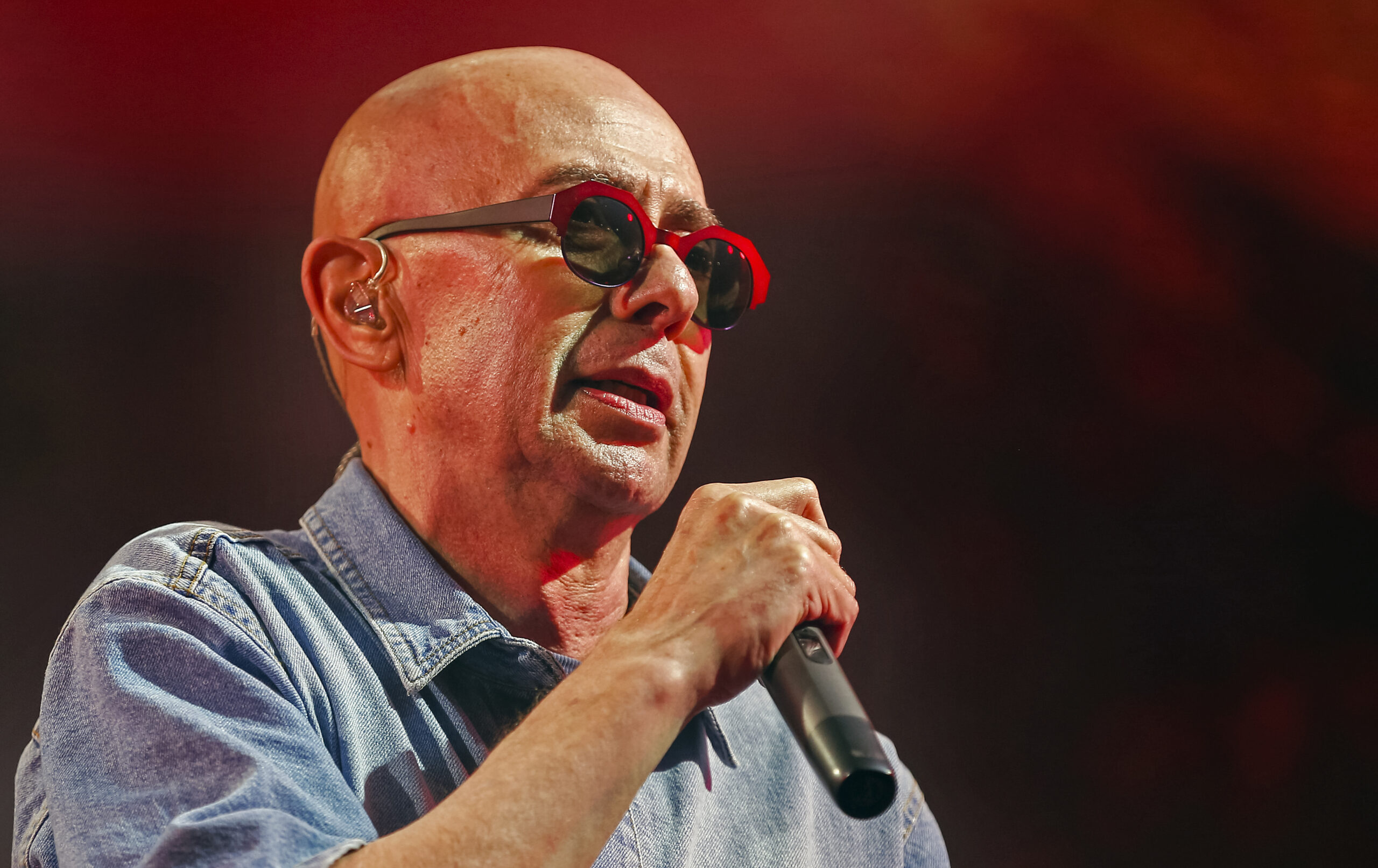
As I write this, it has been just over two months since the passing of Carlos Solari, “El Indio,” the frontman of the greatest rock band you have never heard of, unless you are one of his (and my) 45 million compatriots.
From 1978 to 2001, “Patricio Rey y sus Redonditos de Ricota” was an unstoppable force in Argentine life, as the country returned to democracy and navigated endless economic crises. Through 11 albums and increasingly massive shows, the band, called “Los Redondos” or “Patricio Rey” for short, created an enduring mythology, part hippie, part carceral, part hooliganesque, and musically brilliant. Together with guitarist Skay Beilinson and band manager Poli, El Indio kept Patricio Rey completely independent from major labels, which allowed them to retain control of their finances and creativity, an attitude he continued in his post-Redondos years. As lyricist, he wrote songs that were unapologetically populist, sometimes inscrutably metaphorical, and pro-working class. As he put it in his autobiographical book Recuerdos que mienten un poco, the allegories stopped at the time of taking a stance for the downtrodden: “All prisoners are political” or “violence is to lie” are as clear as they can be.
I attended most of “Los Redondos” concerts in Buenos Aires from 1986, when they were small affairs at underground venues, to stadium shows for tens of thousands in 1994. By 1991, the search for venues that could accommodate the ever-growing bandas ricoteras took us to unusual locations, such as the three shows at the Autopista Center over the weekend of November 21. Each show had a different setlist, which made me realize that they could play any of their songs in any order, in versions that were sometimes subtly different to those in the albums, which a band can only do this if it has full control of its time.
After a series of larger events in 1994, and finding themselves unable to guarantee the audience’s safety, they did not play in Buenos Aires for years, opting for almost unannounced, still massive, shows in mid-size cities across the country and in Montevideo (their only appearances outside Argentina). The breakup, after a concert in Córdoba in 2001, came over artistic differences—their last three albums, leaning heavily on electronics, were very different from the previous eight—and disagreements over custody of their master recordings.
El Indio kept making music, notably with Los Fundamentalistas del Aire Acondicionado, which performs a mix of Redondos covers and new songs across the country and released 12 albums until 2025. Diagnosed with Parkinson’s, he gave his last live concert in 2017 in Olavarría for a crowd of 400,000 (in a city of 125,000). After that, he continued to join the band via live video links, pre-recorded videos, and even holograms, released music videos from his home studio, published a graphic novel and the biographical volume, and created digital art.
The accompanying playlist highlights several unique musical traits that define El Indio’s music beyond their mythical power. There are long introductions that anticipate whole songs as in “Ya nadie va a escuchar tu remera,” instrumental sections whose melodies would be sung by the audience, as in “La bestia pop” and “Ji ji ji,” which, with its klezmer-sounding guitar interlude, became Los Fundamentalistas’ obligatory final piece. There are the astonishing Middle Eastern melodic and harmonic turns that can be traced to Beilinson’s Azeri family background, as in “Nuestro amo juega al esclavo,” Semilla Bucciarelli’s imaginatively melodic basslines, as in “Aquella solitaria cubana,” and “Mi genio amor,” a longing song that Los Redondos never recorded in a Fundamentalistas version that features the amazing energy of tens of thousands of people singing along (the memory of one performance, in Obras around 1990, still gives me chills).
“Put in some effort (not actually “effort,” but an anatomical synecdoche), Redondos/put in some effort and heart/because this crowd deserves rock ’n’ roll,” we would chant during shows. El Indio believed that everyone has the right to beauty, as much as he deserved to lead a modestly comfortable life dedicated to giving people moments of poetry. I hope he is smiling down at us to remind us to keep the flags flying and that “When the night is darkest/the day draws closer in our hearts.”.
ABOUT THE AUTHOR
Sebastián Zubieta
Reading Time: 3 minutesZubieta is music director at Americas Society and a composer and conductor who has taught music in Argentina and the U.S. He has conducted early and contemporary vocal music and presented his compositions throughout the region.

Exploring Bad Bunny’s Oeuvre
AQ’s music columnist examines the artist’s body of work ahead of his Super Bowl performance.
The Many Facets of Contemporary Tango
AQ’s music columnist highlights a mix of tracks showcasing the classic genre's modern sounds.