



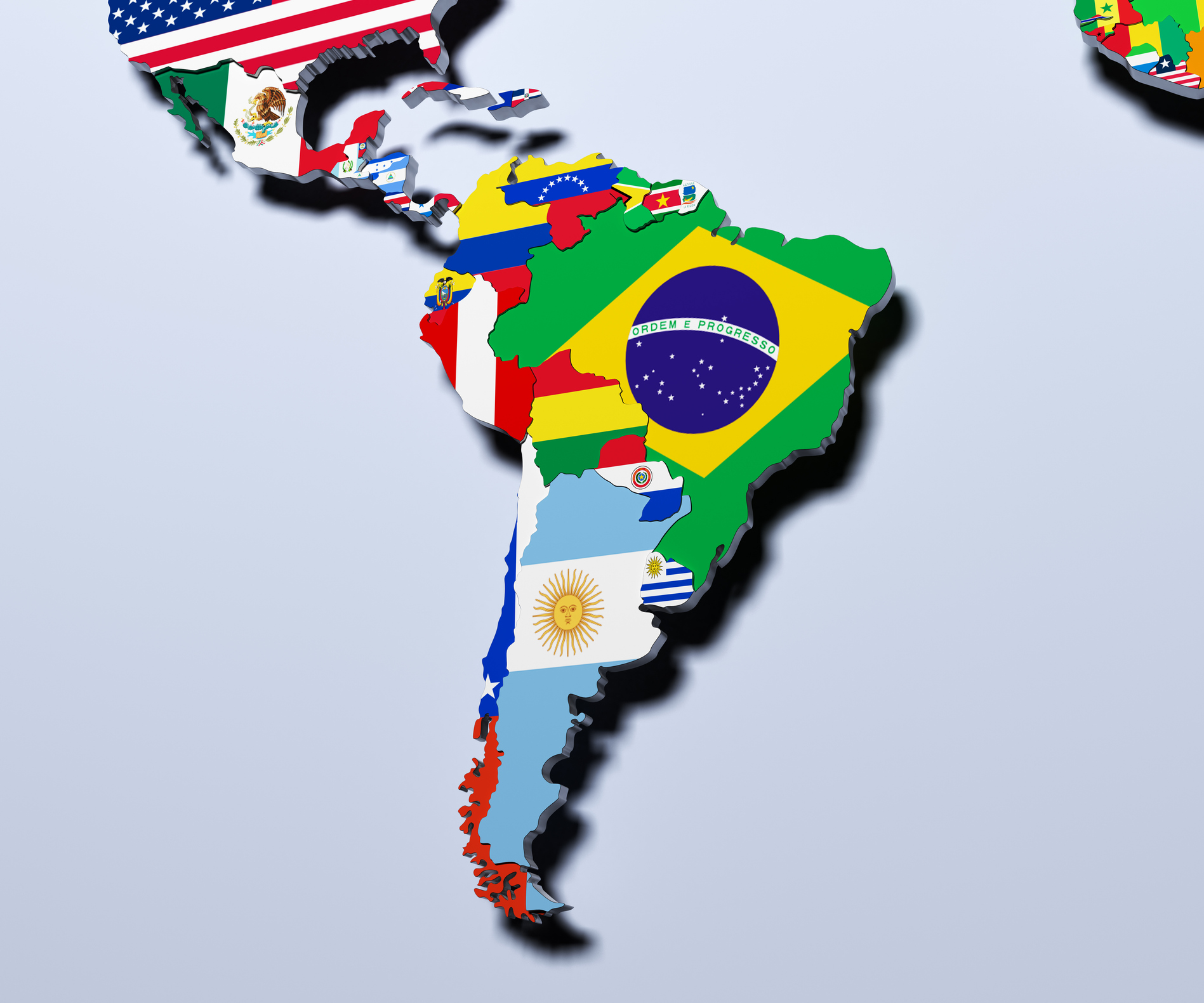
Earlier this month, I represented the Department of War and Secretary of War Pete Hegseth at the 17th Conference of Defense Ministers of the Americas (CDMA) in Cusco, Peru. There, I sought to lay out for the Western Hemisphere, on behalf of the Department, what we regard as a historic opportunity for the United States and its regional neighbors to work together, based on a realistic, pragmatic approach grounded in our shared enlightened self-interest.
Much has changed in the Western Hemisphere since the first CDMA meeting in 1995, at the height of the so-called “unipolar moment.” In that period, American and Western strategy were shaped by highly aspirational abstractions. A realistic outlook based on geography and national interests took a back seat to liberal internationalism and the “rules-based international order.”
Three decades later, whether one likes it or not, that era is far gone.
President Donald Trump and the Department of War are not only acknowledging those realities but actively reshaping American and our allies’ strategy to address them, guided by a flexible realism articulated in the 2025 National Security Strategy and 2026 National Defense Strategy.
This involves a fundamental change in our approach to the Western Hemisphere.
And this is needed. For the last generation, the very hemisphere where our own country is located was – frankly – a backwater in America’s strategic imagination. Focusing our strategy and our military on the Western Hemisphere and the problems we face here seemed to many of the bien pensant to be grubby, beneath the dignity of our armed forces.
Yet that putatively benign neglect, in practice, turned malign.
In recent decades, Latin America’s scourge of narco-terrorism grew far worse. A record number of Americans and their neighbors – hundreds of thousands in recent years – were killed by lethal drugs and narco-terrorist violence. Hard-left regimes that enabled narco-terrorists multiplied across our hemisphere from Nicolás Maduro’s Venezuela to Daniel Ortega’s Nicaragua to Evo Morales’s Bolivia. These governments and their allies failed in their own countries and exported that failure to ours by enabling mass migration. This contributed to the worst border crisis in the history of the United States while destabilizing many of our societies.
Under President Trump’s leadership, we see the Western Hemisphere differently. We look at it from the perspective of flexible realism, America First, and common sense. Through this lens, our own hemisphere, especially Central America, the Caribbean, and northern South America, is critical to the security and prosperity of the U.S. homeland and regular Americans.
The Trump Corollary
The Department of War’s role in this new approach is critical. But, to be clear, this is not an approach in which to a hammer everything is a nail. The Department’s role is part of an integrated, whole-of-government effort, actively working with regional partners.
At the same time, it is a signal that the national defense assets of the United States will very much be part of addressing these lethal threats. We will not treat the ISIS, the al Qaedas of this hemisphere, with kid gloves.
Instead, we will bring all the assets of the United States to address these threats, including our armed forces. This has been amply demonstrated in Operation Southern Spear, in which the Department has gone on offense against narco-terrorist networks– not to supplant other efforts but precisely to augment them. We see partner-led, joint kinetic operations with partner nations as force multipliers, as the way to lasting and durable progress against these perils.
More fundamentally, I laid out in Cusco how our heightened and sustained activities in this hemisphere are part of a larger geopolitical and defense strategy. And, critically, I submitted to our neighbors that the success of America’s new strategy and the defense elements of it are in their interests as well.
We call this strategy the Trump Corollary to the Monroe Doctrine – or, perhaps more memorably, the Donroe Doctrine. This Trump Corollary states that the U.S. will “protect our Homeland and our access to key terrain throughout the region. We will deny adversaries’ ability to position forces or other threatening capabilities in our Hemisphere.”
Of course, we recognize that the Monroe Doctrine is controversial in many quarters. But it is also often misunderstood. We associate our efforts with what we might think of as the Monroe Doctrine properly understood. This properly understood Monroe Doctrine is not the distorted version; rather, it is precisely about empowering, enabling, and supporting the independence, security, and prosperity of the Latin American and Caribbean nations.
This is critical to what makes our approach different.
In that vein, our contention is that the United States’ enlightened self-interest in the Western Hemisphere is not exploitation, subordination, or dependency. Rather, our interest as expressed in the Trump Corollary is in our neighbors’ success – their greater prosperity, security, and stability as free societies.
Changing military goals
Why is this?
The fact is that the United States doesn’t need its neighbors’ assets or dependency. The U.S. is an enormous country, by far the world’s most powerful state, with the world’s largest and most dynamic market, its most productive economy, its dominant currency, splendid stores of raw materials, and close security and economic relationships around the world. The upshot is that we do not need imperial possessions or dependencies, even from a strictly realpolitik point of view. This differentiates the United States from most historical empires.
Moreover, the Western Hemisphere is our neighborhood. Thus, we are directly affected by negative externalities that spill from the region over into our country. Our people are dying in large numbers because of the drugs that come into our country and the crime that accompanies them. Our society has been harmed by mass migration. Our neighbors, too, have been harmed by this.
This makes it clear that the problems from our neighborhood affect regular Americans very directly. But also that we do not need nor seek the exploitation of our neighbors. Rather, our interest is in our neighbors’ success – in their stability, prosperity, and security. That is, regular Americans will most benefit when their hemispheric neighbors are prospering and secure, in complement to our own prosperity and security, because those would be countries that no longer be export the ills that have afflicted us all in recent decades.
Now, this has been said before, but usually by those promising a kind of “Peace Corps” vision of American policy toward Latin America or a “root causes” vision of spending your way out of bad policy. Those policies failed in significant part because they framed our neighbors as dependent. We offer a more realistic and empowering option.
Our approach does not juxtapose defense against development, like the visions of the past; rather, it recognizes the verity that security is a basic prerequisite for national development.
To this end, our government is not only offering opportunities for market collaboration and diplomatic engagements. We are also reorienting our military and our security apparatus in the region to help enable partners to bring greater security and stability to their countries and, ultimately, development to our neighborhood through an interests-based approach.
But, as we have learned through hard experience across the world: This will only work if our neighbors demonstrate the political will, clarity, and seriousness needed for success.
It is an approach that calls on regional partners to employ effective force and government action to dismantle narco-terrorist networks and secure their national borders. Not merely because this is good for public safety, but because this allows partners to optimize limited resources to enable conditions for security and prosperity. This should include enhanced cooperation with the United States military where necessary, but it is also our goal that these operations become partner-led with enhanced capabilities that we can assist them in obtaining and mastering.
We also call on regional partners to protect their critical assets. This is not only a precondition for investment and development. It is their part in ensuring lasting peace.
As the U.S. works with allies and partners around the world to ensure favorable balances of power in other regions, we will not ask neighbors to project power out of this region. All we ask of our neighbors is that they work with us to deny any actor the ability to claim and exploit key assets here in this hemisphere.
Investing more in security
Third, it is critical that our hemispheric neighbors invest more in their own defense and security. There is no reason why any country, particularly those facing significant narco-terrorist threats, should spend so little on defense. Indeed, some spend less than 1% of GDP on national defense. This violates common sense. In the meantime, our allies around the world, including in Europe, are now moving toward significantly higher spending – 3.5% on core military spending and an additional 1.5% on security-related expenditures.
This is the Trump Corollary to the Monroe Doctrine in the defense realm, and we contend that it offers a powerful model for hemispheric defense and prosperity. It is a realistic approach based on the alignment of our reasonably conceived interests with that of our neighbors – and the resolve to pursue them.
Just over a decade ago, a U.S. secretary of state declared proudly that the Monroe Doctrine was “over.” What this approach meant in practice was American neglect of the real challenges of our neighborhood and of our own homeland defense. The result was not a strong Hemisphere with stronger nations. It was, in fact, the opposite.
Under President Trump’s leadership and with the Trump Corollary to the Monroe Doctrine, we are taking a different and better approach – not only for Americans but also for our neighbors. We want strong, reliable, and effective partners, not feeble and dependent ones. Together, we have a path to make this a reality. Let us take it together.
ABOUT THE AUTHOR
Elbridge Colby
Reading Time: 6 minutesColby is the U.S. Under Secretary of War for Policy. In this role, he is the principal advisor to the Secretary of War on matters of defense and foreign policy.