




SANTIAGO – For decades, Chile stood out as Latin America’s most reliable destination for foreign direct investment (FDI), capturing as much as $192 billion between 2000 and 2014, or 7.4% of the region’s total net inflows. But since then, the country has endured a substantial erosion of its ability to attract international capital. That may be about to change.
In April, President José Antonio Kast submitted an economic reform to Congress — the Reconstruction and Economic Development (RED) bill — that seeks to modernize the investment regime and encourage both international and local investment as the government aims to boost GDP growth to 4% annually by the end of his administration, double the average annual GDP growth rate reported since 2014. The goal is to reset the investment climate after years of lackluster performance, and the House already passed the proposal, which the Senate will begin discussing today. Kast defended the scope of the reform during his first annual address to the nation held at the National Congress in Valparaiso on Monday.
Reviving the investment environment and redefining its institutional framework presents a challenge: how to rebuild economic dynamism without undermining the regulatory legitimacy gained through social and political reforms of the recent past. This is a political question, not only an economic dilemma.
The clearest illustration of this challenge lies in the dismantling of the legal framework that once anchored investors’ confidence. For nearly five decades, Decree Law 600 (Foreign Investment Law) provided foreign investors with contractual guarantees that surpassed general regulatory protections. It insulated investments from future tax increases, foreign exchange restrictions, and discretionary policy changes. It operated through contracts between the state and investors. These contracts supported the expansion of mining, infrastructure, and energy, and helped the country position itself as a low-risk jurisdiction located in a volatile region. It created a durable expectation: policy stability would survive political transitions.
Overcoming the past
Between 1990 and 2014, the nation’s FDI inflows as a share of GDP exceeded the average for Latin America and the Caribbean, according to data compiled by the World Bank. During those years, Chile attracted an average of 6% of GDP in annual FDI net inflows, more than double the regional average of 2.8%. While Chile maintains advantages as an FDI destination, its distinctive factors have weakened.
To identify the factors behind this decline, one must first recall the foundations of Chile’s three decades of economic progress. With the end of Augusto Pinochet’s dictatorship, the country’s appeal rested not only on macroeconomic stability but also on a credible commitment to predictable rules and institutions. That model has been under strain during the last decade.
That certainty began to erode under the reforms sponsored by President Michelle Bachelet’s second term (2014–2018). Her administration pursued an agenda that addressed inequality through tax reform and expanded social spending. Bachelet — as Gabriel Boric would do a decade later — did not treat economic growth as an urgent priority. The 2014 tax reform increased the effective burden on capital and introduced complexity into the system. Regulatory expansion and red tape added further layers of costs and uncertainties. In 2016, Decree Law 600 was eliminated without a public policy or economic rationale. These changes marked a significant departure from an economic model built on investors’ certainty.
While the average annual growth of gross fixed capital formation between 1996 and 2013 was 7.56%, it dropped to 1.4% between 2014 and 2025. Average annual economic growth, which stood at 5% between 2000 and 2013, fell to 2% between 2014 and 2025. And the most recent figures underscore the depth of the challenge: unemployment has stood at 8% or higher for 40 consecutive months, GDP contracted 0.3% in Q1 of 2026, and the monthly index of economic activity (IMACEC) fell by 1.2% y/y in April, the sharpest contraction in three years.
The “estancamiento” — the country’s economic stagnation — is real, and it is accompanied by the widespread perception that Chile’s regulatory environment has become too costly to navigate. Fragmented approval processes have affected mining, infrastructure, housing, and energy sectors. The stalled expansion of lithium production illustrates this point. Notably, some economists who backed and designed Bachelet’s reforms — widely cited as contributors to the stagnation — have since acknowledged those changes rested on flawed assumptions.
Today, investors are waiting to see whether the new administration can turn things around. Chile does not need to build a new investment model from scratch; it must restore certain elements of the repealed Decree Law 600.
A plan for a steep challenge
Kast’s policy response reflects this logic. The RED bill seeks to reactivate investment through tax incentives, regulatory simplification, and targeted sectoral measures, with the explicit aims of attracting FDI and restoring fiscal balance.
In addition, the administration is proposing to create a foreign investment screening mechanism. This would allow the state to review certain transactions on national interest grounds, bringing Chile closer to practices already common in OECD countries. However, any form of state control must be carefully designed and implemented. The country’s historical model relied mainly on broad openness. Reintroducing any element of state screening — however narrowly defined — marks a departure from that tradition. Even so, Decree Law 600 contemplated an interministerial council that could be reinstated to serve as an investment screening authority.
The success of Kast’s strategy will depend less on individual policy measures than on overall coherence. Tax incentives and regulatory simplification may improve investment conditions at the margin. But restoring Chile’s attractiveness as an FDI hub will require a credible, stable framework that investors perceive as durable across political cycles. The legislative debate of the RED bill in Congress will be critical for investors. Any adjustments to it must balance the ambition for higher growth with fiscal discipline and respect for prevailing social commitments.
Anchoring hopes, the House already passed the RED bill, and debate in the Senate is set to begin today. Although there is public debate regarding the advisability of tax stabilization measures and the proposed reduction in the corporate tax rate and its effects on overall investment, the prospects for passage remain reasonable. Negotiations across party lines are expected. The country urgently needs to reclaim its leadership role in FDI and restore investor confidence.
Chile’s experience offers lessons to others. Economic models built on credibility and openness can deliver sustained growth, but they are not immune to social and political pressures. Adjusting those models requires careful calibration. Chile’s success will depend on whether it can reconcile growth and legitimacy — not as competing objectives, but as mutually reinforcing ones. Without both, investors will hardly commit.
ABOUT THE AUTHORS
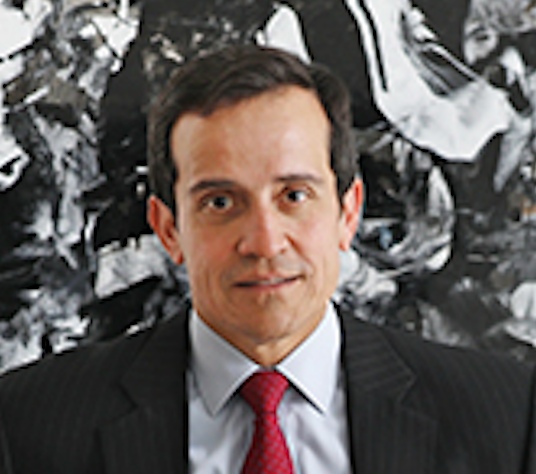
Matías Mori
Reading Time: 4 minutesMori is a lawyer (LLB, Universidad Católica; LLM, Chicago; MPA, Harvard). He has been Executive Vice President of Chile’s Foreign Investment Committee (2010-2013) and ICSID Arbitrator.

Sergio Urzúa
Reading Time: 4 minutesUrzúa is a Professor of Economics at the University of Maryland; and International Research Fellow, Clapes-UC.