


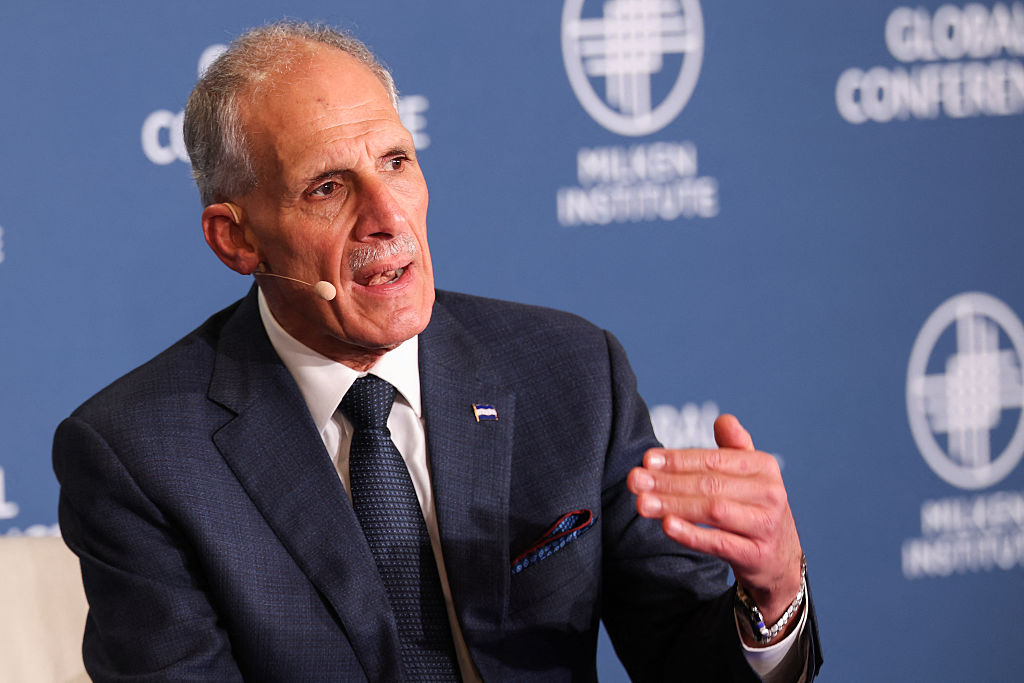
TEGUCIGALPA—When Nasry Asfura signed a decree to sell Honduras’ $14.8 million presidential plane on his first day in office, the gesture seemed to encapsulate the message that brought him to power: fewer symbols of privilege and a government focused on work and austerity. More than 100 days into his presidency, the promise coexists with a critical question: whether his administration marks a new beginning or the return of the National Party under the shadow of former President Juan Orlando Hernández.
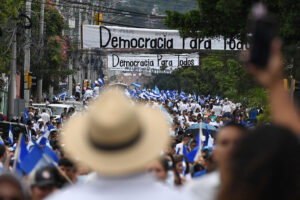
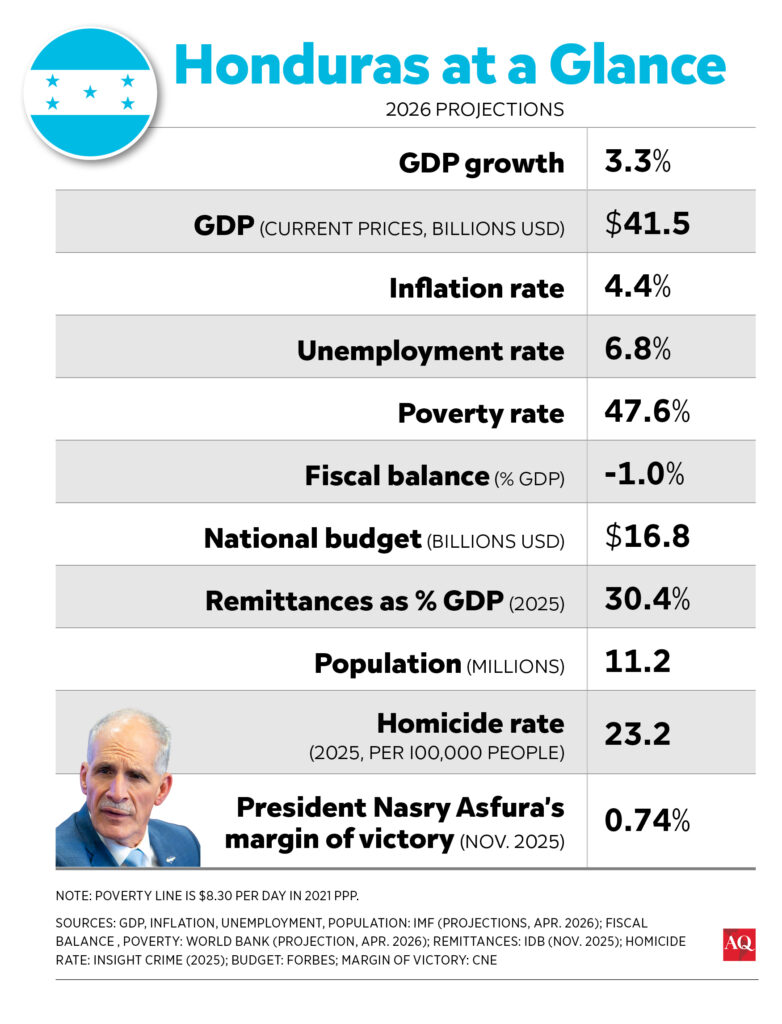
After winning the November 30 election by only a 0.74% margin over Salvador Nasralla, Asfura has sought to move away from the legacy of his predecessor, Xiomara Castro. Castro’s presidency expanded public investment and improved some social indicators, but failed to build a durable governing coalition in Congress, left its anti-corruption promise unfulfilled, and ended in confrontation with Washington.
Asfura is betting on a friendly Congress—where his National Party controls 49 of 128 seats, the largest bloc in the legislature—a close relationship with Washington, and initial backing from the private sector to navigate his first year in office. But he has yet to turn that advantage into a clear roadmap to address the country’s structural problems.
In late April, after a slow start on road projects and other campaign promises, Asfura’s response to critics captured that tension: “Don’t judge me by 60, 80, 90, 120, or 150 days. Judge me by the 45 months I have left,” he said.
Asfura inherited a country built on fragile foundations with high poverty and homicide rates. So far, he is attempting a mostly supply-side response: attracting investment, reviving export industries, improving legal certainty, repairing infrastructure, and improving basic services such as health care. His government has moved to rejoin ICSID, the World Bank arbitration body, to reassure foreign investors; extended the Temporary Import Regime, preserving tax incentives for exporters and maquilas; and begun a government digitalization process to reduce red tape. It has also launched a plan to reduce the surgical backlog, declared an emergency at the public social security system, and prioritized road repairs and visible infrastructure improvements.
The shadow of a scandal
As Asfura moves forward with his agenda, his political past is already weighing on him, with the figure of former President Hernández creating the most background noise. Hernández was sentenced in June 2024 in New York to 45 years in prison for drug trafficking and weapons-related crimes, but was later pardoned by President Donald Trump. Now, the recent release of audio recordings allegedly involving Hernández has created the new government’s first major political challenge.
According to Diario Red and Hondurasgate, the alleged recordings show efforts to build Hernández’s influence and create a media network that would undermine leftist governments in Latin America, implicating Honduran, American, and Israeli actors, including Trump and Benjamin Netanyahu. Pablo Iglesias, former Spanish vice president and director of Canal Red, said the material underwent forensic analysis and defended its authenticity, but the recordings have not been independently verified by Honduran or U.S. authorities, and Hernández rejects them as fake.
Whether or not the audio recordings are authentic, they pose a political danger to Asfura, who was already struggling to demonstrate his independence from the old National Party. In a BBC interview last week, Hernández denied wrongdoing and called the accusations against him “false and ridiculous.”
The challenge of security
Like much of Latin America, Honduras faces acute security problems. The country’s homicide rate fell significantly from 31.1 per 100,000 in 2023 to 23.2 in 2025, yet it remains one of the region’s most violent countries. To address crime, the Castro administration used a state of emergency that lasted more than three years and was criticized by human rights organizations. The measure was suspended in January, before Asfura took office, and he has ruled out reviving it; he will instead attempt to reduce extortion and violence without relying on emergency powers.
Last week, two attacks by organized crime killed at least 25 people in the northern part of the country, an area known for decades of agrarian conflict. On what is considered one of the nation’s most violent days in recent years, six police officers died in the incidents. “We will confront this scourge without fear and with strength,” Asfura said, reacting to the attacks.
However, so far, Asfura’s security agenda remains more a set of signals than a fully defined strategy. Earlier this month, Congress approved reforms to the Penal Code and Criminal Procedure Code aimed at toughening the fight against extortion, a major concern for businesses and households.
Washington and China
Few Honduran presidents have come to power with such a positive relationship with Washington. Days before the election, Trump publicly endorsed Asfura, and since then, the two leaders have maintained a close relationship. They met in February at Mar-a-Lago, following a January 12 meeting with Secretary of State Marco Rubio, during which the two countries committed to pursuing a free trade deal. Asfura also attended the “Shield of the Americas” summit alongside Argentina’s Javier Milei and El Salvador’s Nayib Bukele.
His government is reviewing its relations with Beijing and leaving open the possibility of restoring ties with Taiwan, which Castro severed in 2023. For Washington, a Honduran shift back toward Taiwan would demonstrate resistance to China’s growing influence in Central America.
A new IMF deal is a signal of Washington’s support. Earlier this month, the IMF reached a staff-level agreement with Honduras on an Extended Fund Facility (EFF) and Extended Credit Facility (ECF) arrangement. Once officially approved by the IMF—a move expected in late June—the country would have access to $245 million in funds.
An austere and smaller state
Asfura has tried to reinforce a message of austerity. His government adopted a revised 2026 national budget of $16.8 billion, a reduction of approximately $954 million, or 5.3%, from the Castro administration’s proposal, while aiming to reduce the state apparatus from 113 to 74 institutions by eliminating or merging agencies. The ministries of Social Development, Transparency, and Women’s Affairs are under review, a move that has drawn criticism from civil society organizations and UN agencies.
But the external context complicates austerity. Honduras imports all the oil derivatives it consumes, and according to the central bank, those purchases totaled $2.4 billion last year. Since January, fuel prices have risen by more than 41%, with regular gasoline reaching about $5.00 per gallon earlier this month. The government says it has already spent more than $20.5 million to offset part of the increase in fuel prices and has announced $17.6 million in electricity subsidies.
Asfura came into office with advantages rarely afforded to new presidents in Honduras. But the sale of the presidential plane—originally purchased under Hernández, with no official estimate yet for what the government expects to recover—offers a warning. Castro had also promised to sell it, but was stymied by legal obstacles that showed how even symbolic gestures can get trapped in Honduras’ bureaucracy.
If Asfura cannot turn his political moment into concrete results, that symbol of austerity will not be remembered as the gesture of a new beginning—it will be the same plane, with another pilot, flying in circles over the same place.
ABOUT THE AUTHOR

Joan Humberto Suazo
Reading Time: 5 minutesSuazo is an investigative journalist based in Tegucigalpa who has published with The New York Times, OCCRP and a range of Honduran outlets.
Honduras Begins Its Rightward Shift
President Nasry Asfura has legislative support for his austerity agenda, but the country's deep divides and endemic corruption will be hard to overcome.