



This article was updated on May 18
Peru’s elections authority officially announced on May 17 that conservative Keiko Fujimori would face leftist Roberto Sánchez in the June 7 runoff election. Fujimori bested a crowded field of 35 candidates, securing a first-place finish with 17%, while Sánchez earned 12%. Sánchez beat third-place finisher Rafael López Aliaga by just over 20,000 votes.
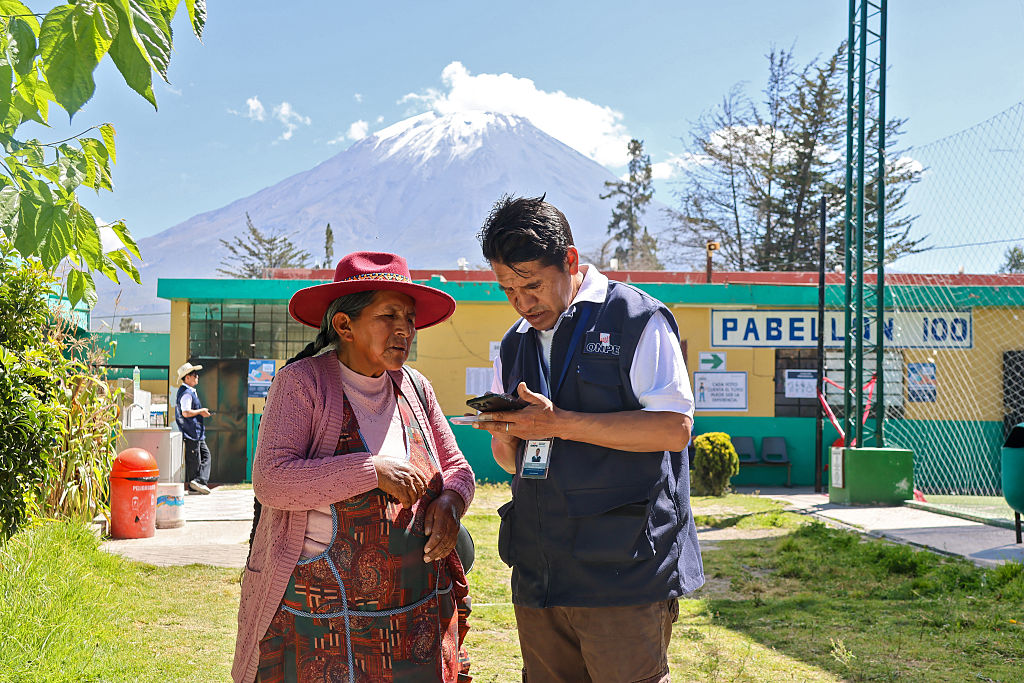
The first-round vote on April 12 was beset by delays and logistical failures, prompting officials to extend voting to the following day for about 60,000 people at 15 polling locations in Lima and two abroad. These complications, along with the tight race for second place, led to the postponement of the official results by more than a month. López Aliaga continues to reject the result, alleging fraud. The head of the EU elections observer mission reported on April 14 that its team had not found evidence to support Lopez Aliaga’s allegations.
AQ asked analysts to share their reactions and perspectives.
Alfredo Thorne
Principal director at Thorne & Associates, former finance and economy minister of Peru from 2016-17
On Sunday, Peru’s voters cast their ballots for president, Congress, the Senate, and the Andean Parliament. With 37 political parties competing, most feared that the vote could be dispersed and that those elected would secure only a small share of it.
With 91.5% of the votes counted, Keiko Fujimori leads with 17% of valid votes and will advance to the runoff on June 7. However, less clear is the second place, disputed between right-wing entrepreneur Rafael Lopez de Aliaga with 11.9%, and radical left-wing Roberto Sanchez with 12%, running in defense of former President Pedro Castillo. For now, fewer than 30,000 votes separate them. In a normal election, few would contest these results, but candidates may question them given the difficulties the country’s national elections office (ONPE) has had since election day.
Few anticipated that ONPE would have so much difficulty opening polling stations on Sunday that about 63,000 people were allowed to vote on Monday. Compared to the figure of 27 million eligible voters, it was a small number, yet it may prove critical to determining the second-place finisher.
Assuming these difficulties are overcome and Sánchez faces Fujimori in the runoff, the outcome remains uncertain, as Fujimori has lost three consecutive presidential runoffs. A close inspection of the vote results suggests she may be the only one who can beat Sánchez. She has a sizable presence in low-income communities, where Sánchez is also strong. However, she may need to appeal to opponents who have blamed her for the political crisis since 2016, when she confronted former President Pedro Pablo Kuczynski, leading to his impeachment and the ensuing crisis. In her campaign presentations, she has said she has learned from her past mistakes and adopted a more conciliatory tone.
More interesting may be the congressional election and the new Senate, the first upper chamber to take office since the 1990s. Based on seat composition estimates, the right-wing parties of Fujimori and López Aliaga may together have captured a majority in the Senate but not in the lower house, while the left-wing parties appear to have won about one-third of the Senate seats and 59 of 130 seats in the lower house. Between them is Jorge Nieto’s political party. A former defense minister in Kuczynski’s government, he defines himself as center-oriented. Both sides may need his votes for any major reform, making him the power broker.
Against this backdrop, with an all-powerful Senate and no single group capturing more than two-thirds of the votes, the chances of constitutional changes, such as those proposed by the left, can be ruled out, as can the recurrent impeachment of presidents.

Rodrigo Barrenechea
Assistant professor of political science at Universidad del Pacífico
Preliminary results show Keiko Fujimori and Roberto Sánchez as the most likely candidates for the runoff. Sánchez, a leftist who built his campaign on a vindication of former President Pedro Castillo and followed a “Castillista path” on the campaign trail, has become the latest representative of an electoral antagonism that has marked Peru’s 21st century: candidates supported by provinces most connected to markets and the state versus those most disconnected from both. Overall, this first round has illustrated old and new trends in Peruvian politics, some of them in their most extreme forms.
First, extreme fragmentation. The two candidates who reach the runoff will likely receive fewer than 30% of the combined first-round vote. Whoever wins the election will represent a small share of the Peruvian electorate and will therefore start his or her term with diminished legitimacy. The new president will also have a minority in Congress. Although coalitions that provide the new administration with stability are possible, they are less likely under a Sánchez presidency. The instability of the past few years could continue.
Second, extreme volatility. Although it is common for Peruvian voters to change party allegiances between elections, this contest has seen extreme volatility. “TikTok candidates” rose and fell in the polls, one after another. Seeking new faces to replace discredited incumbents, Peruvians found and switched candidates with staggering speed, as traditional Peruvian volatility met with social media attention spans.
Third, fraud allegations. Third-place candidate Rafael López Aliaga has already demanded that the elections be annulled, calling on his supporters to take to the streets in what he termed a “civil insurgency”—all without providing evidence of fraud. Electoral observers and civil society organizations have rejected the fraud claims, but the damage to institutional credibility may already be done.
Fourth, the economy. International observers have long noted the striking contrast between Peru’s volatile politics and its resilient economy. However, recent years of instability seem to have taken a toll on growth and fiscal discipline. Fujimori’s party is among those that pushed increased spending through Congress, despite warnings from Peru’s independent Fiscal Council. And unlike in any previous campaign, candidates on the left openly questioned Julio Velarde, the chair of Peru’s central bank, who has held the position for nearly two decades. If the informal consensus that has shielded macroeconomic management from political turbulence is breaking down, Peru may be running out of its most reliable source of stability.
With all its unpredictability, Peruvian politics remains a lottery for power. Fortune and volatile voters will grant unexpected candidates a shot at the presidency, and Congress will decide when they have enjoyed the prize for long enough. The question now is whether Peru’s institutions—political and economic alike—can survive another spin of the wheel.

Gonzalo Alcalde
Public policy analyst and professor at Pontificia Universidad Católica del Perú
Although official results are not yet available, the most likely runoff scenario is another head-to-head contest between right and left, as in 2021: Keiko Fujimori (from the right, after three consecutive runs without a win) and Roberto Sánchez (from the left, having served as a member of Congress in the last legislative term).
Keiko Fujimori is in a better position now compared with her previous runoffs. She has burnished an image that seeks to convey serenity and a simple message of restoring order against a backdrop of eroding public security. Despite having led the dominant party—Fuerza Popular—in a highly unpopular Congress, she seems poised to win the first round with a higher percentage of votes than in the first round of 2021 (13.4%), when she finished second. It seems the outlook is better for her now than it was then, when she lost by a very narrow margin, and even in the contests held in 2016 or 2011.
Compared to López Aliaga, the likely third-place finisher, it seems that Fujimori has managed to position herself as the more moderate and thoughtful candidate on the right. It is difficult to imagine either of them capturing the hard-core anti-Fujimori vote, but the erosion of López Aliaga’s image in recent weeks, with his violent rhetoric and erratic statements, could help Fujimori win over undecided voters.
In contrast, Sánchez, the left-wing candidate, faces an uphill battle to win over voters in Lima and other coastal regions, where his support has been lower than Pedro Castillo’s in 2021. Will he be able to appeal to anti-Fujimori sentiment, which worked in the last three elections? It is quite possible that, at this point, anti-Fujimorismo has reached its limits as a cohesive force and that it is not as decisive now as it was for the outcome of previous elections.
The markets will inevitably not react well to the possibility of a left-wing victory, but even if Sánchez wins, his government’s ability to pass reforms will be limited in the context of a strengthened bicameral Congress likely dominated by the right. Despite Peru’s poor performance over the last five years—in public security, poverty, health, education, and even economic growth below potential—status quo parties did relatively well in the legislative elections. Given that Congress now dominates policymaking, we can expect few substantive reforms in the coming years.
Peru: Meet the Candidates 2026
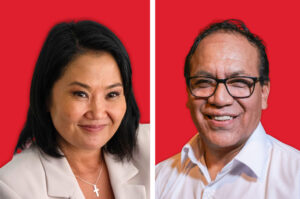
Keiko Fujimori and Roberto Sánchez will compete in a polarizing runoff on June 7, with crime and protracted political instability top of mind for voters.
Peru: A 2026 Snapshot
AQ tracks key indicators and political and economic trends to watch in 2026.