


This article was updated on May 18
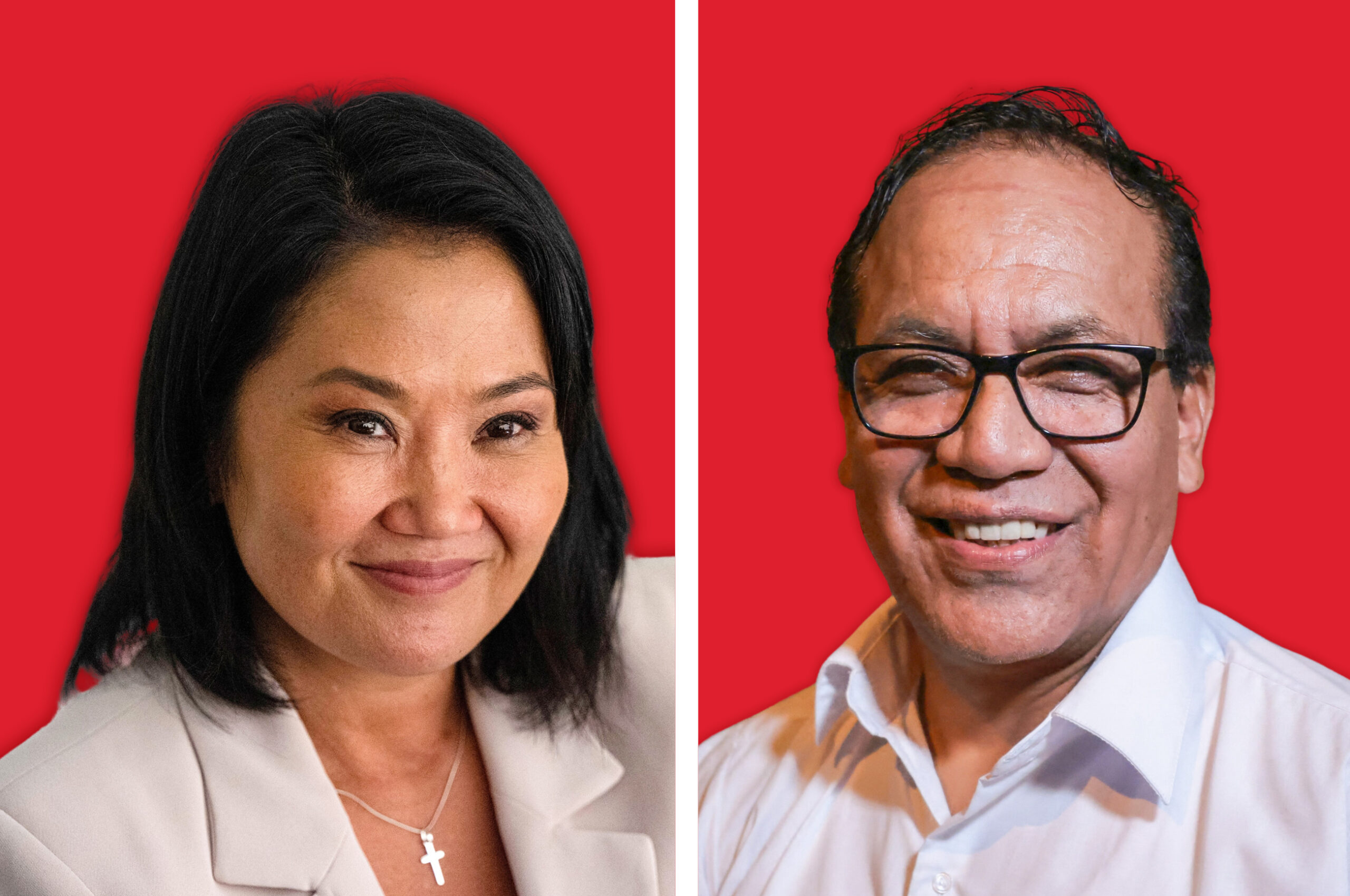
After more than a month of uncertainty, Peru’s elections authority announced on May 17 that conservative Keiko Fujimori will face leftist Roberto Sánchez in the June 7 presidential runoff. Fujimori earned a first-round victory over a crowded field of 35 candidates with 17%, while Sánchez won 12%, beating third-place finisher Rafael López Aliaga by just over 20,000 votes.
The vote on Sunday April 12 was complicated by long lines and logistical failures that prompted officials to extend voting to the following day for tens of thousands of people at 15 polling locations in Lima and two abroad. López Aliaga seized on the dysfunction to allege widespread fraud. He has called for the vote to the annulled and continues to contest the results.
This is just the latest episode in Peru’s long-running political turmoil, which has brought the country nine presidents in the past 10 years. This instability and a rise in violent crime have been top of mind for voters. The country’s homicide rate has doubled since 2019, and extortion and other gang-related crimes have also become much more common.
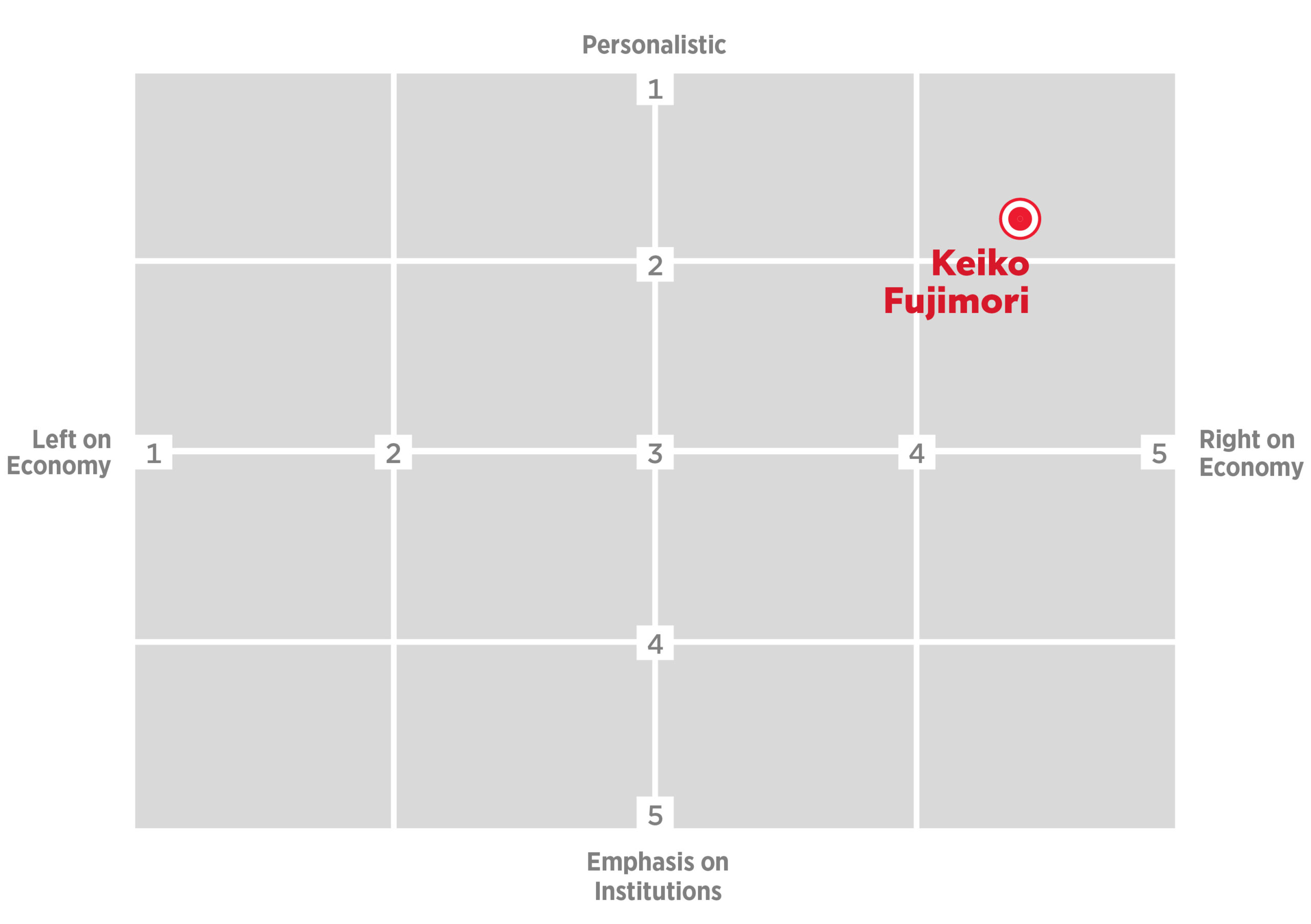
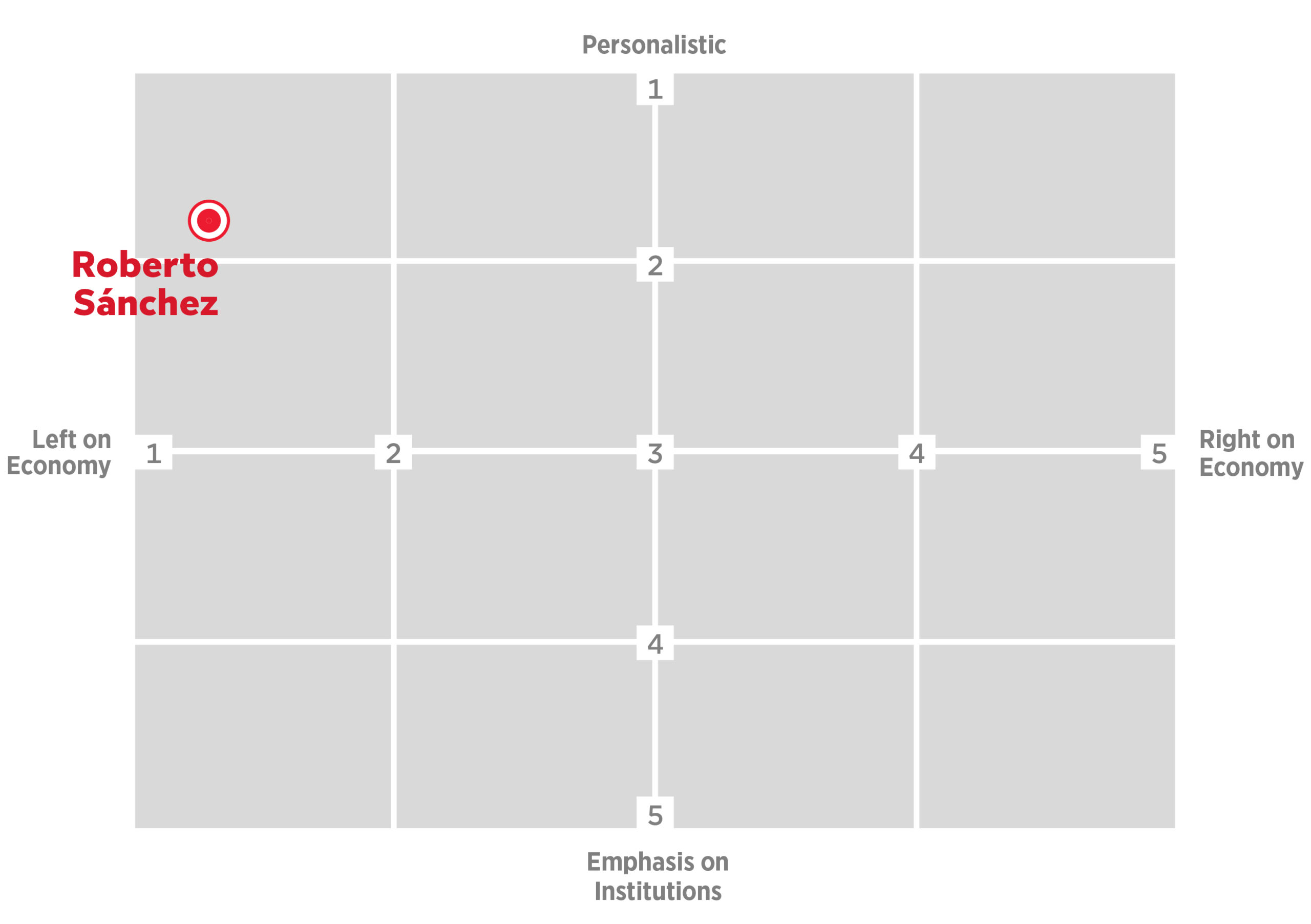
AQ has listed the candidates in alphabetical order by last name, and has asked eight nonpartisan experts on Peru to help us identify where each candidate stands on two spectrums: left versus right on economic matters, and personalistic versus institutionalist on leadership style. The results are mapped on the charts below. We’ve published the average response, with a caveat: Platforms evolve, and so do candidates.
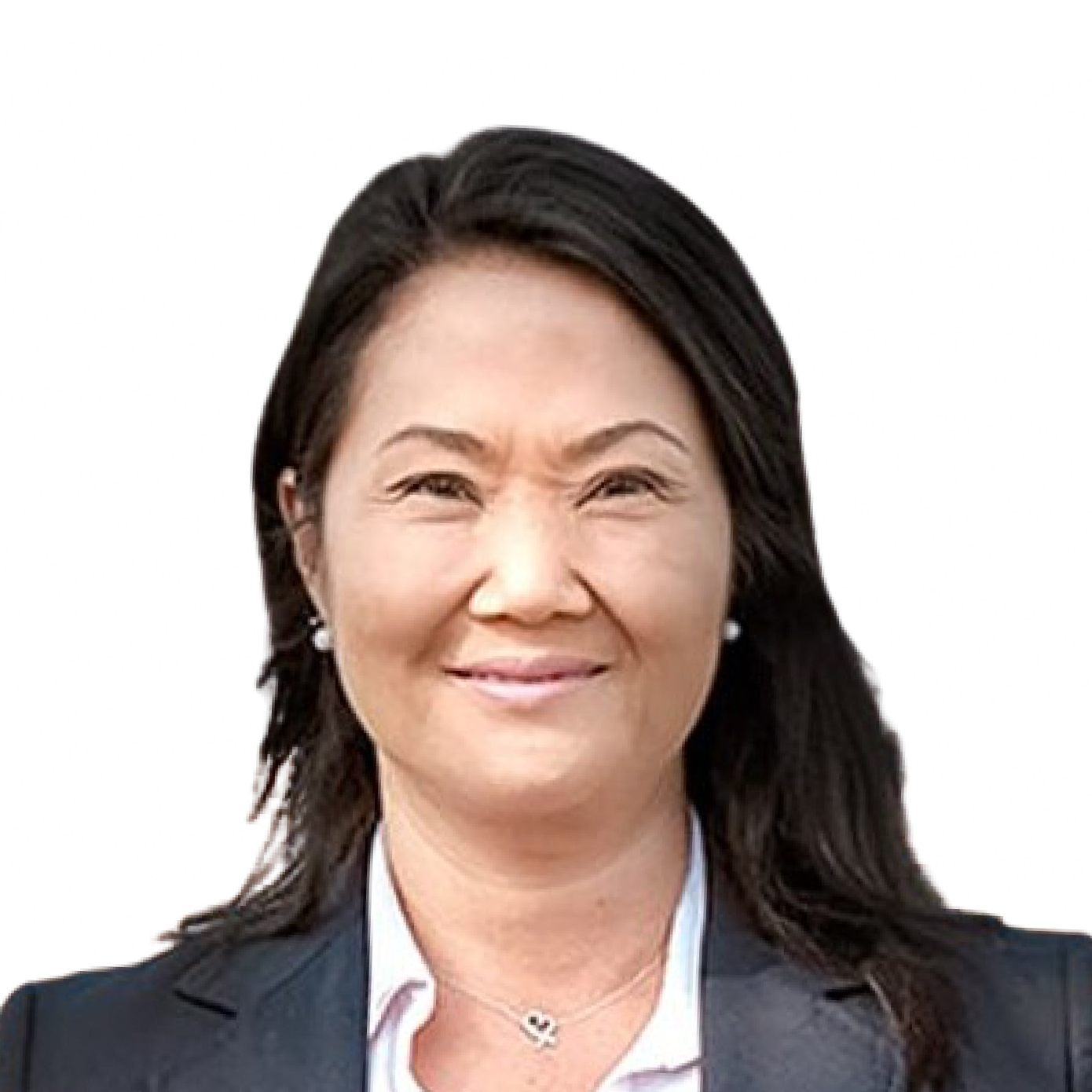
Keiko Fujimori
50, former member of Congress
President, Fuerza Popular party
“The goal is to lead and to rescue Peru from violence.”
HOW SHE GOT HERE
Keiko Fujimori, the daughter of former President Alberto Fujimori (1990-2000), served as first lady for most of his presidency. She has led his political bloc since 2010 and represented one of Lima’s districts in Congress from 2006-2011. Fujimori ran for president in 2011, 2016, and 2021, losing narrowly in the runoff each time. She has remained a powerful political operator as head of the conservative Fuerza Popular party.
WHY SHE MIGHT WIN
Fujimori has strong name recognition, and public memory of her father, who died in 2024, has evolved. Her father was convicted in 2009 on charges of bribery, illegal wiretapping, and crimes against humanity in separate cases. But he is also remembered for tackling hyperinflation, growing the economy, subduing violent insurgencies, and expanding social programs. Amid today’s high crime rates and protracted economic and political instability, the memory of his mano dura, which she promises to replicate, albeit within democratic bounds, has greater appeal.
WHY SHE MIGHT LOSE
Some conservative voters who view Fujimori favorably may opt to vote for other right-wing candidates out of pragmatism, given her three straight runoff losses. And after three decades on the political scene, she has become a polarizing figure. Fujimori was held in pre-trial detention for 16 months on charges of laundering illegal campaign donations from Odebrecht, though the Constitutional Court dismissed the case in October of last year on procedural grounds. She and her party were also implicated in the “White Collar” judicial corruption scandal that shook the country in 2018, and they face new campaign-finance accusations from 2021, though she has not been convicted of any related crimes and denies wrongdoing in connection with all accusations against her.
WHO SUPPORTS HER
Promising to build on her father’s legacy, Fujimori has a strong support base. She is especially popular in some of the poorest areas in and around Lima among those who benefited from her father’s expansion of social programs, and in northern Peru among those who remember her father’s attentive response to the devastating El Niño floods of 1998. Fuerza Popular holds the largest bloc in Congress, and many see her more as a savvy politician than a populist, which may appeal to voters seeking stability.
WHAT SHE WOULD DO
Fujimori has pledged to deploy troops, military intelligence, and other armed forces units to combat street violence and organized crime. She has also stated she would temporarily place the military in charge of the prison system to overhaul it from the ground up. Additionally, Fujimori promised to allocate more funds for assistance to children and the elderly and to free up resources by requiring prison inmates convicted of serious offenses to work. Her party platform introduction advocates for “deregulatory shock.”
IDEOLOGY
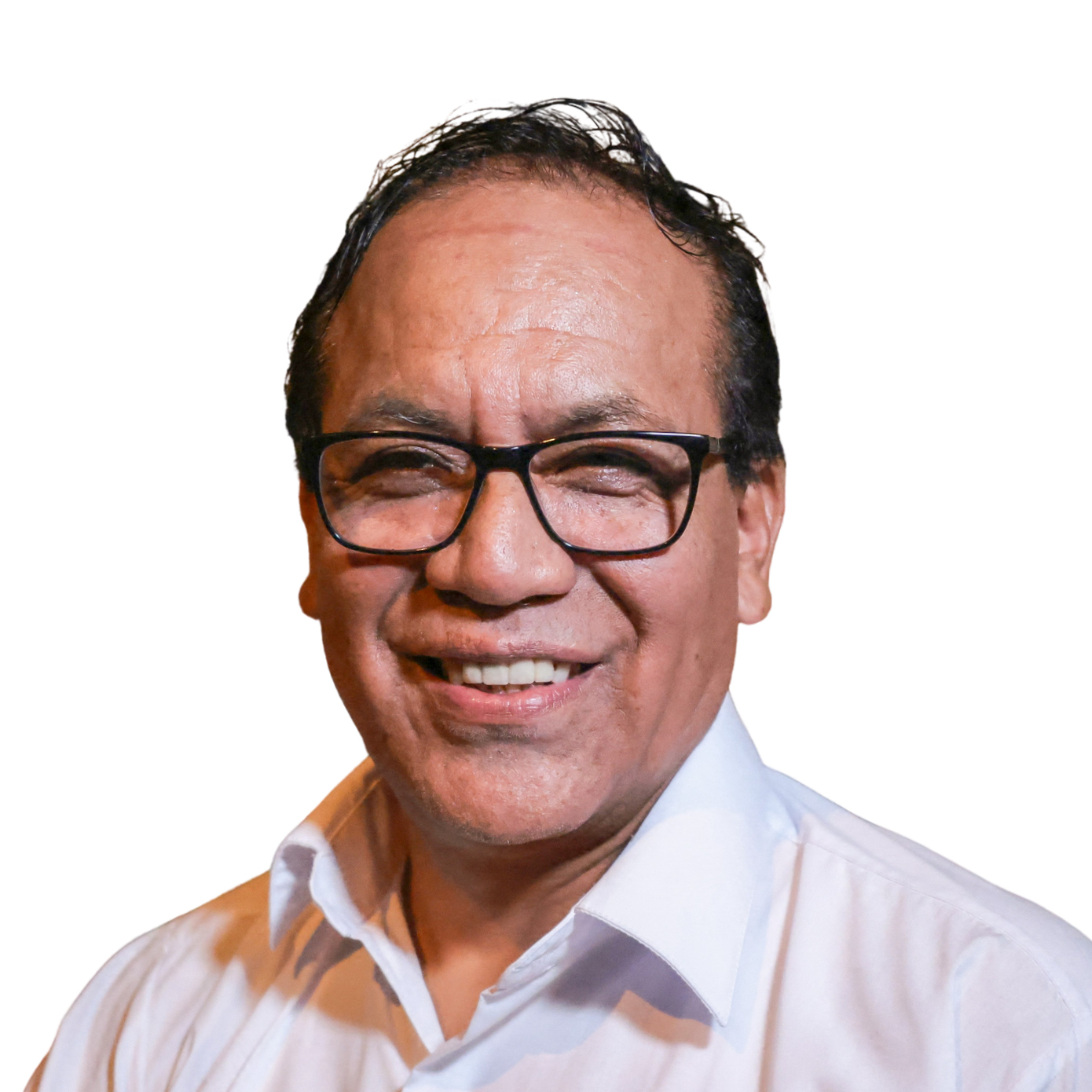
Roberto Sánchez
57, Member of Congress
Juntos por el Perú party
“The moment for a true refoundation of our homeland has arrived.”
HOW HE GOT HERE
Sánchez has positioned himself as the heir of former President Pedro Castillo’s leftist political movement. He was Castillo’s Trade and Tourism Minister before Castillo was removed from office in 2022 after attempting to dissolve Congress. Sánchez has also been a member of Congress since 2021 with the left-wing Juntos por el Perú party, which he has led since 2017. He is president of a congressional commission monitoring the Chinese-funded Chancay megaport, a project that has drawn strong criticism from the U.S. A social psychologist by training, Sánchez was a development official in the government of Huaral province, in Lima department, before joining Congress.
WHY HE MIGHT WIN
Sánchez could consolidate a coalition similar to the one that pushed Castillo past Fujimori in the 2021 presidential runoff, powered in large part by rural voters. He has also focused his rhetoric on offering sweeping change, which has resonated with some of those desperate for solutions to corruption and inequality. Fujimori has lost three straight runoff elections, and Sánchez may benefit from being a relative political outsider at a time when Peru’s political class is especially unpopular. Though he garnered under 15% of the vote in the first round, he may be able to attract voters from the camps of candidates like Ricardo Belmont, Jorge Nieto and Alfonso López Chau.
WHY HE MIGHT LOSE
Many voters are seeking a return to political stability, and Sánchez’s identification with Castillo may hurt him. Castillo’s administration is often remembered as especially unstable, even by the standards of Peru’s disorderly political landscape, given its frequent Cabinet reshuffles and policy reversals and Castillo’s impeachment and arrest after he dissolved Congress. While Sánchez’s proposals for deep economic changes and constitutional reforms have generated some momentum for his campaign, they may scare off moderate voters in the runoff.
WHO SUPPORTS HIM
Sánchez’s strongest support comes from some of Peru’s most marginalized areas. In the first round, he performed especially well in rural southern and eastern regions and has long polled well among the country’s poorest communities and in areas with large Indigenous populations. Voters seeking to prioritize deep economic and social change over the “order” promised by Fujimori are likely to gravitate to Sánchez’s campaign.
WHAT HE WOULD DO
Sánchez has promised major economic changes, including a process to draft a new constitution, a dramatic expansion of government spending, an extensive reform of the tax system, a review of the country’s trade agreements, and partial nationalization of Peru’s natural resources. He has said he would overhaul the mining sector to reform its concessions system and formalize small-scale operations, and aim to boost spending on health care from 4% to 9% of GDP and spending on education from 6% to 10% of GDP over five years to, among other goals, make higher education free. He has promised to free Pedro Castillo, and also attempt deep reforms to law enforcement agencies and the justice system to address crime. He also plans to invest in a new “ministry of science, technology and innovation” and push new industrialization efforts.
IDEOLOGY
ABOUT THE AUTHOR

Rich Brown
Reading Time: < 1 minuteBrown is an editor and production manager at Americas Quarterly.
Peru’s Chaotic Election — and Some Reasons for Hope
While the country's politics remain in poor shape, the June 7 runoff offers a new opportunity to rethink the future.
REACTION: Peru Braces for a Polarizing Fujimori-Sánchez Runoff
Keiko Fujimori and Roberto Sánchez appear headed to a high-stakes runoff on June 7 after the first-round vote indicated critical new dynamics.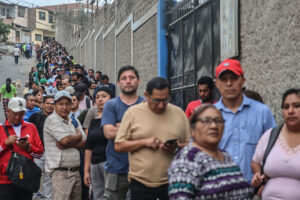
A New Test for Peru’s Economic Resilience
A runoff between Fujimori and Sánchez, if confirmed, will put the country’s famous macroeconomic stability at risk, a former finance minister writes.