


This page was last updated on January 23rd, 2026.
Over 3.7 million Costa Ricans are expected to elect a president, two vice presidents, and all 57 seats in the legislature on February 1. If no presidential candidate wins at least 40% of the vote, the two leading contenders will advance to a runoff on April 5. Since 2014, no presidential candidate in Costa Rica has secured the necessary 40% of votes in the first round.
A rising crime rate, strain on the education and health care systems, as well as the state of the economy and unemployment, are among the main concerns on citizens’ minds. Voter sentiment is still dynamic: 75% of citizens no longer identify with any political party and a January survey from the Centro de Investigación y Estudios Políticos (CIEP) at the Universidad de Costa Rica showed that 32% of the electorate remains undecided, with 69% of those saying they will decide their vote on election week.
The election seems poised to be a contest between Laura Fernández — President Rodrigo Chaves’ handpicked successor, given that he cannot run for immediate reelection — and a fragmented opposition comprising 19 political parties. Leading up to the vote, Chaves remains popular, and in the recent survey, his approval rating was at 58%, only five percentage points down from a two-year high of 63% in October.
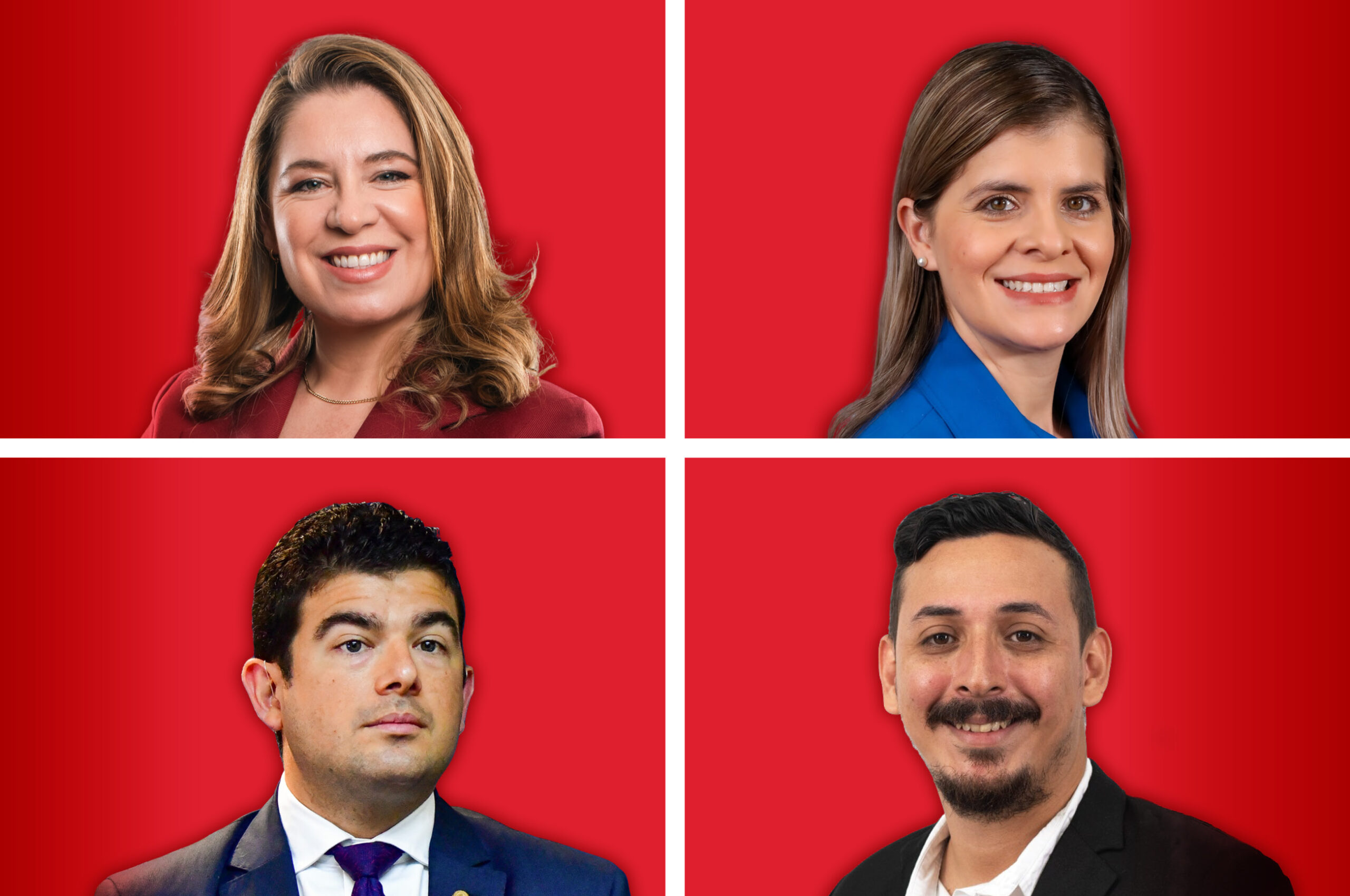
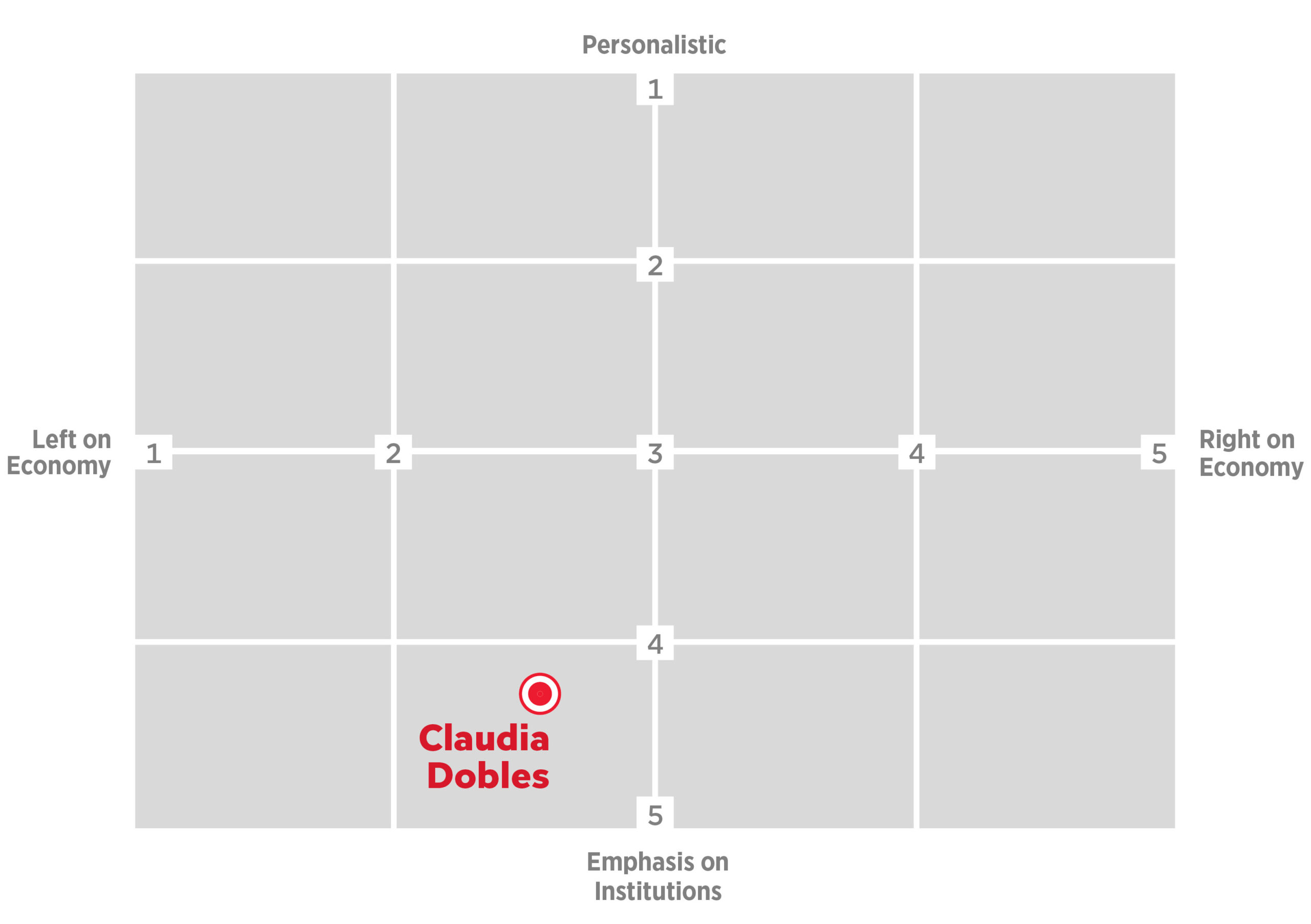
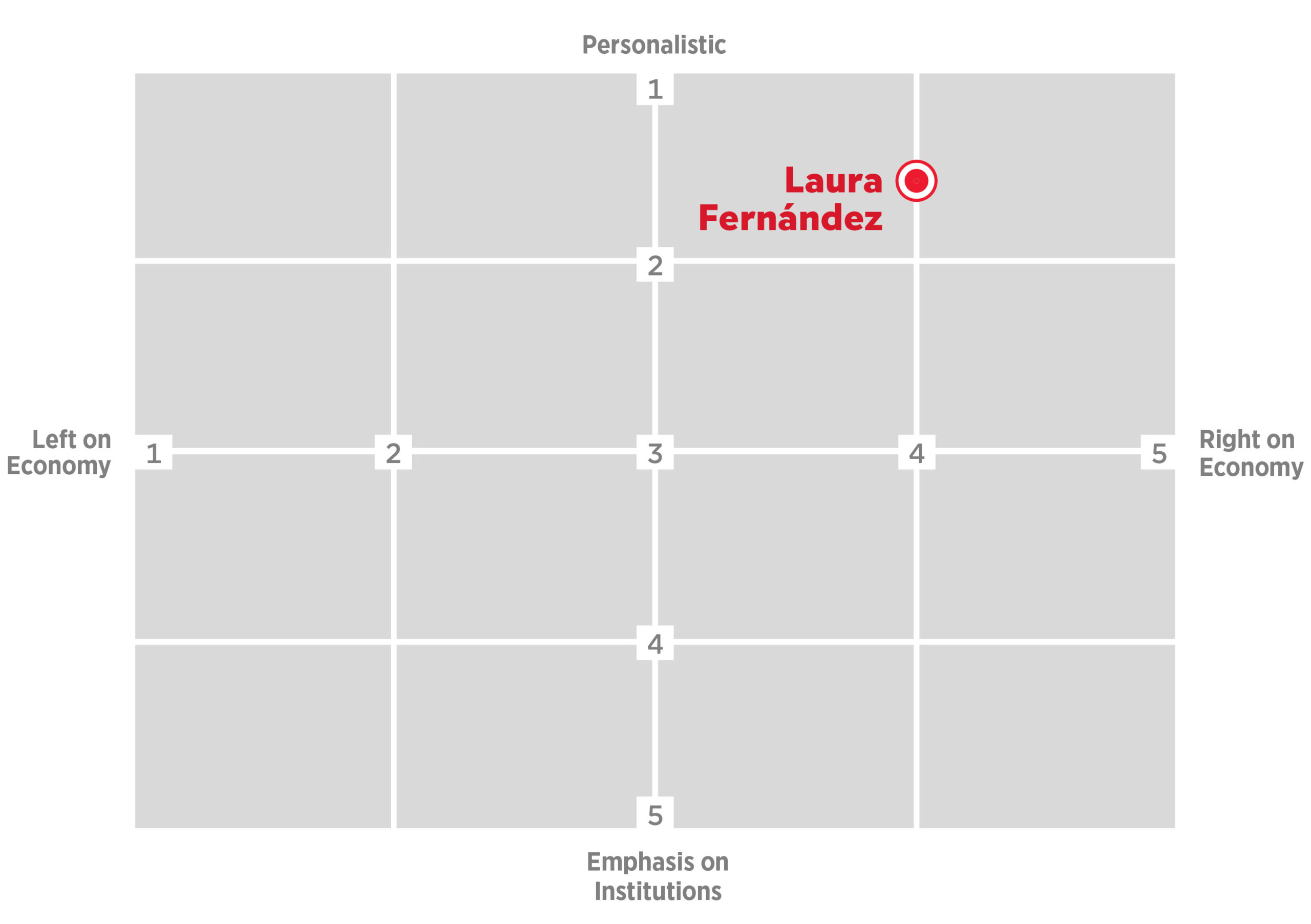
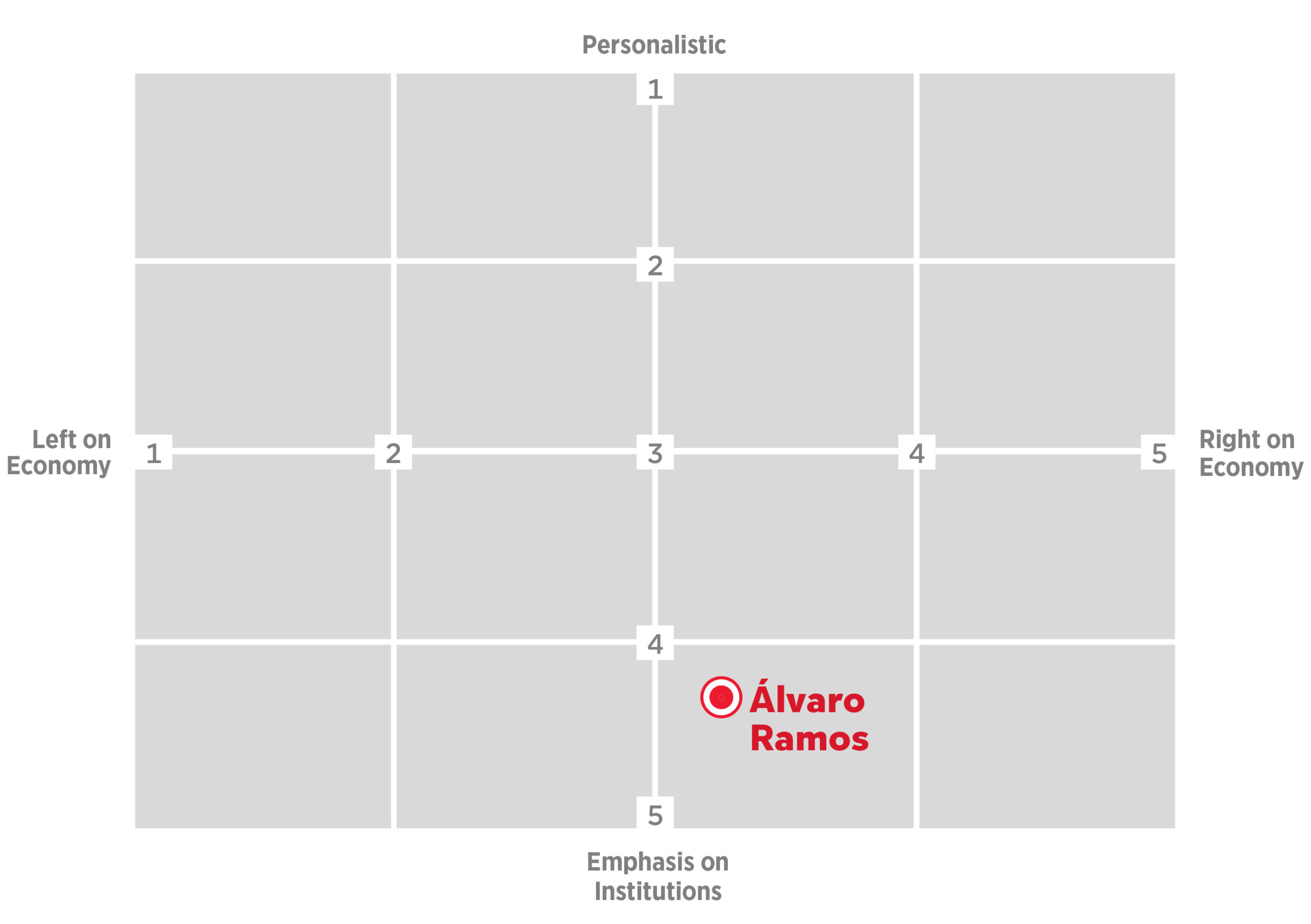
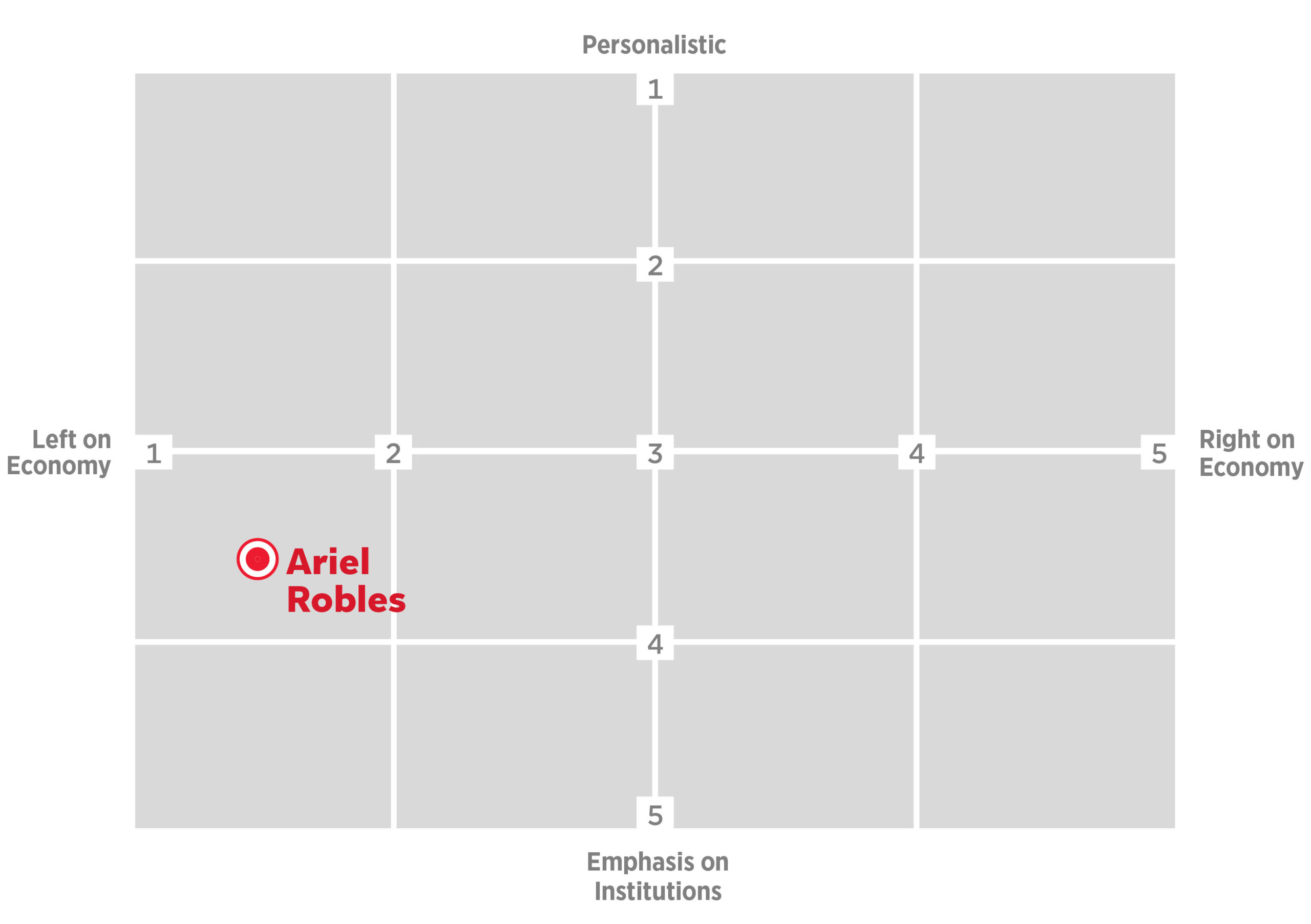
The top four candidates leading the January CIEP/UCR poll are included below. AQ asked a dozen nonpartisan experts on Costa Rica to help us identify where each candidate stands on two spectrums: left versus right on economic matters, and personalistic versus institutionalist on leadership style. The results are mapped on the charts below. We’ve published the average response, with a caveat: Platforms evolve, and so do candidates.
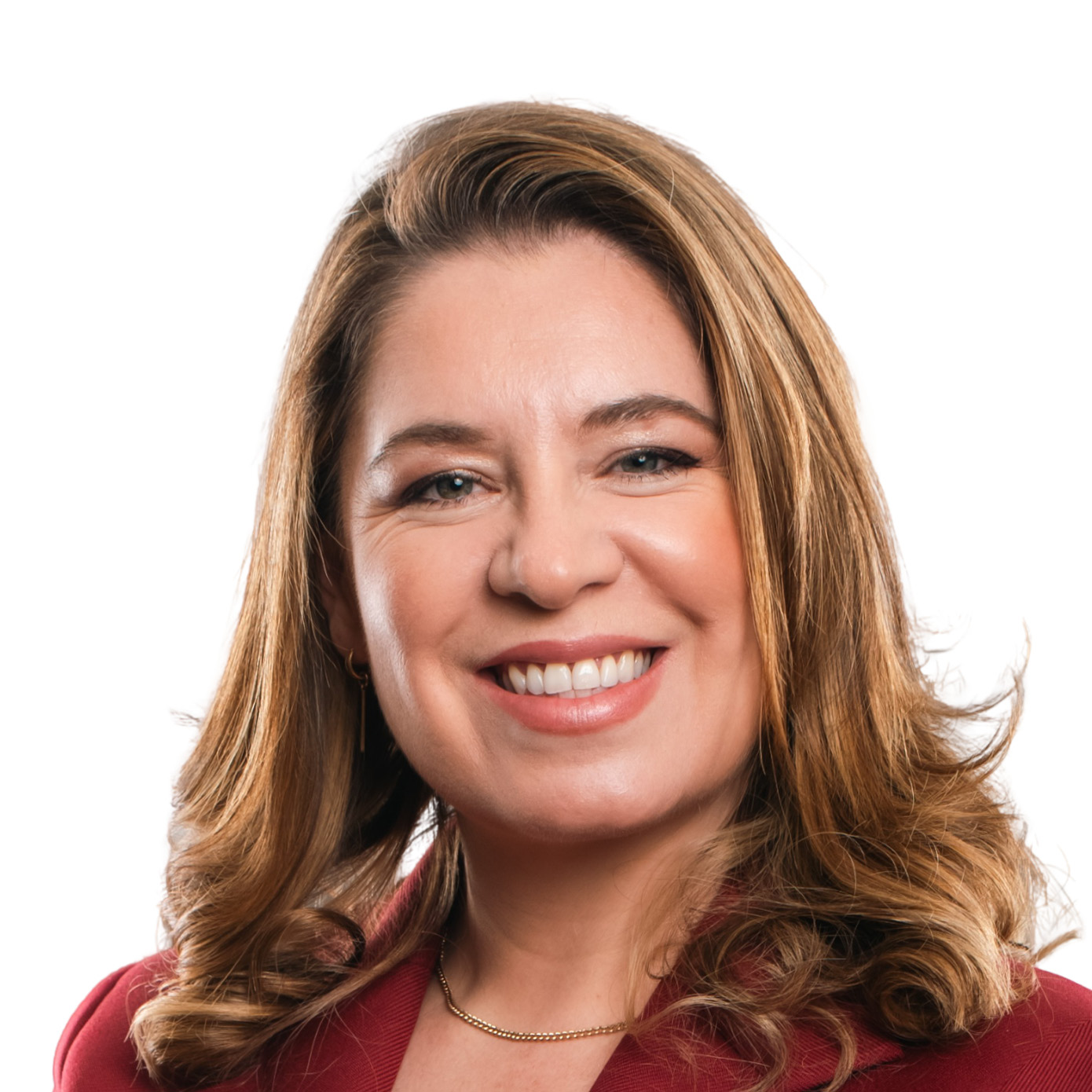
Claudia Dobles
44, architect, urban planner, and former first lady
Coalición Agenda Ciudadana
“Costa Rica deserves to return to sanity.”
HOW SHE GOT HERE
Dobles is a Costa Rican architect and urban planner who served as first lady from 2018 to 2022 during the presidency of her husband, Carlos Alvarado. She has leveraged her professional background to build a public profile focused on infrastructure. Dobles became a key advisor to the government on economic policies to replace fossil fuels with renewable energy, and has also been a central player in Costa Rica’s National Decarbonization Plan, a roadmap to net-zero emissions by 2050.
WHY SHE MIGHT WIN
Dobles brings professional expertise and is a disciplined campaigner. Analysts praise her communication skills and pragmatic platform. Her background in urban planning addresses major concerns over mobility and infrastructure, especially in the capital, San José. She could appeal to more centrist voters seeking a change from the current administration, and has strong visibility on social media (although much of it is negative).
WHY SHE MIGHT LOSE
Dobles’ Acción Ciudadana has limited mass appeal. In the 2024 local elections, it recorded its worst result in history, losing almost all of its municipal representation, and currently has no seats in the national legislature. Her husband left the presidency with an 18% approval rating, and Dobles has tried to rebrand her political profile to distance herself from the party’s poor electoral performance. President Rodrigo Chaves has made this more difficult, by consistently blaming previous governments for the country’s current ills.
WHO SUPPORTS HER
Dobles’ two-party coalition has Acción Ciudadana (Alvarado’s party) and Agenda Democrática Nacional (ADN). Supporters of both parties could rally behind her, as well as urban progressives, primarily those in the capital city of San José. Her voter base is mainly in the 34-64 age group, with medium to high education levels.
WHAT SHE WOULD DO
Dobles’ platform focuses on “bringing back” dignity, equality, transparency, respect for diversity, and peaceful coexistence. She proposes establishing a gradual investment plan to bring education spending to 8% of GDP, which, despite a constitutional mandate, hasn’t been achieved due to a lack of funding. (Costa Rica earmarked 4.5% of its GDP to education in 2025). Dobles also supports a “digital transformation” for schools and sustainable technological infrastructure. On security, she proposes resuming large-scale operations to combat organized crime, establishing a National Police task force, increasing penalties for the illegal possession of firearms, and increasing confiscation of illicit drugs through the public security ministry. She has a unique focus on funding cultural programs that promote the creation of museums, cultural spaces, public libraries, and other cultural institutions.
IDEOLOGY

Laura Fernández
39, former minister of the presidency
Pueblo Soberano
“Don Rodrigo Chaves paved the way, now it’s my turn to continue the progress.”
HOW SHE GOT HERE
A longtime consultant and public servant, Fernández has served as minister of National Planning and Economic Policy (2022-2025) and minister of the presidency (2024-2025) under the current administration, resigning in January 2025 to run for president. She was one of two vice-presidential candidates in 2018 on the ticket of Mario Redondo Poveda, who lost in the first round in an election later won by Carlos Alvarado.
WHY SHE MIGHT WIN
As the ruling party’s official candidate, Fernández benefits from her close association with Chaves, who has remained popular due to his personalistic style and crusade against political elites. Despite corruption allegations, which he has denied, and two attempts to remove his presidential immunity, Chaves’ approval rate stayed over 50% since 2024. Fernández is positioning herself as the continuation of the president’s agenda, mobilizing voters who support his leadership and policies. In the January CIEP poll, the voting intention for Fernández was 40%, right on the spot for winning on the first round. However, because the number of undecided voters remains high (32%), many of the other candidates are still hoping for a second round.
WHY SHE MIGHT LOSE
Chaves’ support is based at least in part on his personality and style, and this support won’t automatically transfer to Fernández. The race remains unpredictable, with 20 candidates in the mix. Plus, surveys indicate that over 75% of voters would prefer a candidate representing change rather than continuity.
WHO SUPPORTS HER
Fernández draws backing from voters aligned with the ruling party and Chaves. She recently gained endorsements from several conservative and evangelical Christian groups, who praised her commitment to upholding conservative social values tied to family and faith, and championing economic freedom. According to the October CIEP survey, those who intend to vote for Fernández are mostly men with a high school education.
WHAT SHE WOULD DO
Fernández proposes an “integrated system” to strengthen security and justice through improved social services, greater territorial control, direct confrontation with organized crime, and stronger national defense. In interviews, she has expressed support for the extradition of Costa Ricans involved in serious crimes, the construction of a prison for gang members (in the style of El Salvador’s President Nayib Bukele’s CECOT), and curtailing civil rights in areas with high crime rates. Fernández plans to increase foreign investments, reduce red tape, modernize ports and other infrastructure.
IDEOLOGY

Álvaro Ramos
39, former minister of the presidency
Liberación Nacional
“The ruling party represents empty promises; we represent the ability to govern.”
HOW HE GOT HERE
An economist by training, Ramos has held several high-profile government roles, including his current post as president of the Costa Rican Social Security Fund, the central institution that manages health care and pensions, a position he has held since 2020. Ramos also served as deputy minister of finance (2011-2015) and as superintendent of pensions (2015-2020). He holds a PhD in economics from the University of California, Berkeley, and served as an expert consultant to the UN’s International Labor Organization (2020-2022).
WHY HE MIGHT WIN
Ramos has tried to distance himself from the image of his party, which is internally fractured. He is perceived as well-prepared, and his appeal could broaden if he manages to consolidate the opposition vote, which is currently divided among a dozen political parties.
WHY HE MIGHT LOSE
His party, PLN, has been weakened by internal conflicts among regional leaders and by ongoing challenges that have continued to threaten the party’s ability to access public funding. This led it to underperform in the 2024 local elections, moving from 43 mayors in 2020 to 29. His messaging has largely stayed reactive, focusing on criticizing Chaves rather than offering his own vision. Analysts believe that without a tangible, compelling narrative, Ramos could struggle to gain momentum. Ramos led the protest vote in the December CIEP survey, with 30% of respondents saying they would never vote for him — a rejection related to his association with the PLN.
WHO SUPPORTS HIM
Ramos draws support from the traditional base of the PLN, which is strongest in the coastal areas of Guanacaste, Puntarenas and Limón. He is also popular among voters over 55, with a college degree, and high support for democratic institutions. Ramos has earned support from voters who are critical of Chaves, as he has advocated publicly for lifting the president’s immunity.
WHAT HE WOULD DO
Ramos’ platform emphasizes security and health care. On security, he proposes a “smart-security nerve center” that would use technology to detect and prevent threats; nationwide security operations; thousands of new police officers on the streets; and education programs to prevent crime. On health care, he advocates for strengthening the social security fund (CCSS, by its acronym in Spanish), creating community mental health centers, and improving coordination to make health care more accessible. His economic plans prioritize high-impact activities such as tourism, trade, and sustainability by offering development credit and tax support, and by modernizing the legal framework to boost public-private projects and partnerships.
IDEOLOGY
Ariel Robles
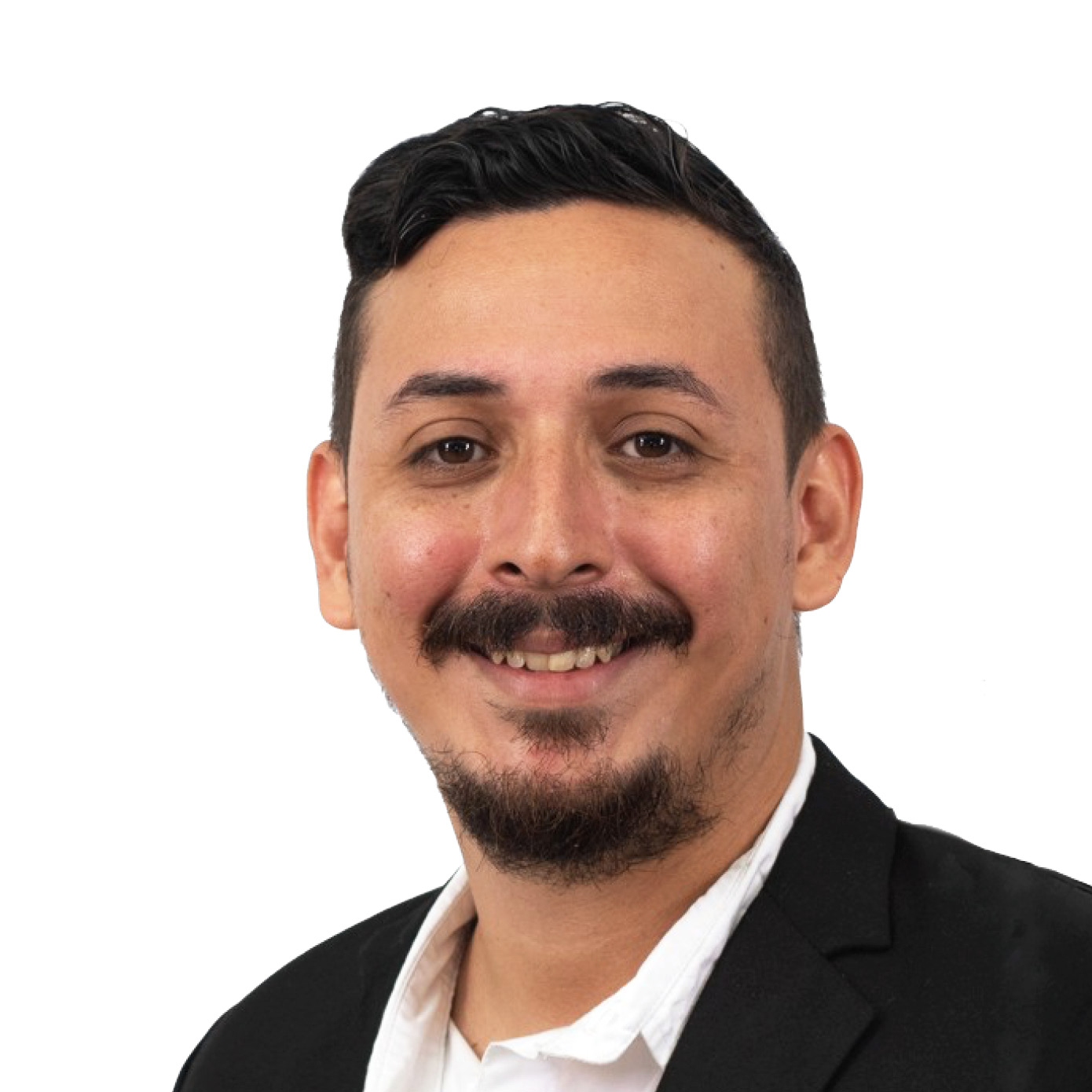
34, National legislator
Frente amplio
“We can use politics as an instrument of equity, justice and solidarity.”
HOW HE GOT HERE
Robles has been a member of the national legislature since 2022. He began his political career in 2016 as a part-time grassroots political organizer for the center-left Frente Amplio. He has also served as a coordinator for local municipal committees addressing homelessness and Indigenous territorial conflicts. Robles holds a master’s degree in educational management with specializations in leadership development (2016) and English language learning (2022) from the Universidad Nacional.
WHY HE MIGHT WIN
Robles could leverage dissatisfaction with current policies, particularly related to education and security, to present himself as a new-generation alternative. His vocal opposition to Chaves and his focus on progressive politics could help mobilize anti-status-quo sentiment. If he manages to consolidate voters dissatisfied with more traditional options, Ramos could reach the second round.
WHY HE MIGHT LOSE
If Robles advances to a runoff, he is unlikely to win, analysts say. Most Costa Rican voters lean more toward the center or the right, and the Frente Amplio calls itself socialist, which may limit Robles’ appeal, as could his relative inexperience.
WHO SUPPORTS HIM
Robles’ support comes primarily from younger voters who identify as progressive or are ideologically left-of-center. His emphasis on progressive politics and rhetoric on the environment, gentrification, Palestine, Indigenous rights, and social justice concerns resonate with voters seeking an alternative to the traditional parties or the current administration.
WHAT HE WOULD DO
Robles is proposing social and economic inclusion through “universal cash transfers” for people living in extreme poverty, improving and updating the welfare state, and encouraging the participation of cooperatives, women’s groups, and unions in public procurement. He is in favor of “democratic security” through prevention and structural approaches to crime, alongside a gradual increase in salaries and labor protections for the police force. On education, he advocates for gradually increasing spending to the 8% of GDP mandated by the constitution. Robles also supports creating a state-regulated “Cannabis Institute” to legalize adult use of marijuana and foster a formal industry for it.
IDEOLOGY
ABOUT THE AUTHOR

Miranda Mazariegos
Reading Time: < 1 minuteMazariegos is an editor at AQ.
Costa Rica’s ‘Safe Haven’ Faces a Reckoning
The country is experiencing an unprecedented security crisis ahead of the February 2026 election.
A Rocky Road Ahead for Costa Rica’s Rodrigo Chaves
The former economy minister’s victory reflects political disaffection as inequality threatens the country's stability.