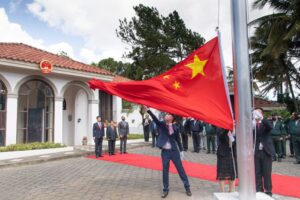



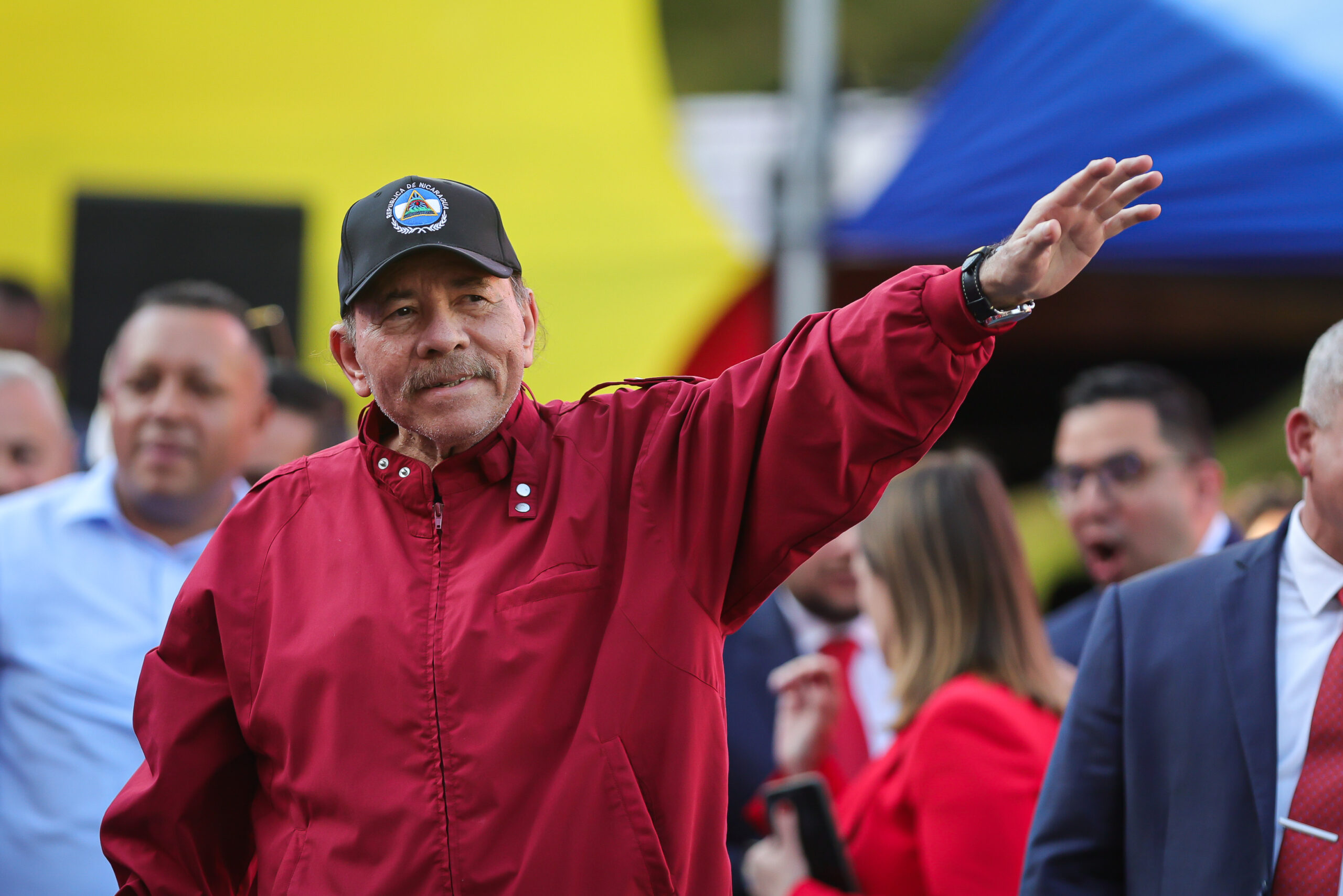
Earlier this week, Nicaragua’s President Daniel Ortega said the country will no longer hold elections, effectively eliminating the possibility of the opposition coming to power. The 80-year-old Sandinista leader has governed the nation without interruption since 2007 and last year appointed his wife, Rosario Murillo, as his co-president.
Speaking during the commemoration of the 47th anniversary of the 1979 Sandinista Revolution in Managua, Ortega said that the Sandinista-controlled National Assembly would pass legislation creating what he called “a wall, a blockade” against political parties backed by what he described as foreign interference. Nicaragua’s last election, in 2021, was widely disputed, as Ortega persecuted and jailed presidential opponents, silenced independent media and criminalized dissent.
Nicaragua was scheduled to hold general elections in November 2027. Constitutional amendments made last year had already extended the presidential term to six years, pushing that election date back and casting doubt on whether it would occur at all. Ortega’s latest statement marks an explicit rhetorical shift, with potentially long-lasting consequences.
AQ asked analysts to share their reactions and perspectives.
Kevin Sullivan
Vice President of the Americas Society/Council of the Americas and head of the AS/COA Washington office. Served as U.S. ambassador to Nicaragua from 2018 to 2023.
No one was expecting free or even mildly competitive elections in Nicaragua in 2027. After all, in the run-up to the country’s last presidential elections, the Ortega regime imprisoned not one but seven potential opposition candidates, shuttered or exiled independent media, and shut down other civil society institutions. The Biden Administration at the time called what remained of the electoral process that year “a farce.” Things have not gotten any better since then; today there is no space in Nicaragua for organized human activity that Daniel Ortega and his “co-president” wife, Rosario Murillo, do not control.
And yet Ortega’s announcement that there would be literally no electoral process at all next year, made on the 47th anniversary of the Sandinista Revolution, was still striking. The aging revolutionary himself, visibly and audibly enfeebled, embodied an exhausted political project seeking against all odds to perpetuate itself, rationing its little remaining energy for essential functions only.
Nicaragua’s electoral processes over the last decade and a half have constituted little more than political pageantry meant to minimally satisfy a Western democratic audience, especially the United States, upon which the country’s surprisingly successful economy still depended for aid and export markets. When Ortega made the fateful decision in 2021 to jail all his opponents when the electoral process was still in its early phases, he simultaneously initiated a strategic shift away from the United States and Europe and toward China. While U.S.-oriented supply chains remain important, over the last several years China’s economic and political sway in Nicaragua have grown dramatically. Russia’s crucial role in supporting Ortega’s surveillance state, meanwhile, has continued despite Putin’s military quagmire in Ukraine. Russia and China are, to say the least, unconcerned about the trappings of a democratic process, so why bother?
U.S. Secretary of State Marco Rubio has rightly criticized the Ortega regime’s turn toward unabashed authoritarianism, but his call for the international community to push back together against this development is unlikely to amount to much. Western governments have less leverage over Ortega than they used to, and have largely resigned themselves to keeping their distance. The multiple rounds of sanctions both Biden and Trump imposed on the Nicaraguan regime over the last several years have not moved the needle, and the Trump II team does not appear to have gotten traction on negotiations with Managua. The Trump Administration has demonstrated in Venezuela, and to some extent in Cuba, that it is prepared to take extraordinary measures to disrupt the status quo in the region’s authoritarian bastions. Will Ortega’s eschewing of elections finally move Managua off the back burner?

Valeria Vásquez
Associate Director at Control Risks’ Global Risk Analysis team based in Mexico City
Ortega’s statements about Nicaragua no longer holding elections came as no surprise. Over the past decade, we have seen Co-Presidents Ortega and Rosario Murillo consolidate virtually all political power as they brought the electoral system, judiciary, legislature, security forces and much of civil society under their control. In practice, Nicaragua stopped functioning as a competitive democracy years ago. What stands out now is the confidence behind the remarks. At a time when Washington has intensified its focus and pressure on authoritarian governments like Cuba and Venezuela, Ortega appears unconcerned about the international backlash his comments could trigger.
That confidence may prove to be a double-edged sword. While Ortega has demonstrated an ability to withstand sanctions, diplomatic isolation and international criticism, openly making such remarks suggests that the regime no longer sees much value in managing international perceptions. This could further reduce Nicaragua’s room for maneuver internationally and may strengthen the case in Washington for maintaining or even expanding pressure on Managua.
More importantly, the comments offer a glimpse into what appears to be the regime’s longer-term objective. The focus is no longer simply on maintaining Ortega in power, but on ensuring the continuity of the political system he and Murillo have built. Recent reforms have further concentrated authority around the presidency and expanded the role of the ruling family within key state structures. At the same time, the increasingly prominent role of their son, Laureano Ortega, in diplomacy, investment promotion and strategic international relationships underscores how political influence is becoming more deeply embedded within the Ortega-Murillo family itself.
In that sense, Ortega’s remarks may be less about elections than about signaling confidence that the current model can survive beyond his presidency. Whether the U.S. is willing to tolerate that trajectory is a different question.
Steven Hendrix
Chief executive of Hendrix LLC and senior research fellow at DePaul University College of Law.
Daniel Ortega’s declaration that Nicaragua will hold no more elections does not create a dictatorship. It acknowledges one that already exists.
The audacity of the announcement is difficult to overstate. Russia, Cuba, China, Venezuela and even North Korea continue to stage elections. None offers genuinely competitive national democracy, but each still finds the electoral ritual useful—for legitimacy, elite management, public mobilization or the appearance of popular consent. Ortega now proposes to dispense even with the pretense.
For years, the Ortega-Murillo government preserved the shell of electoral politics while stripping away its substance. Opposition candidates were imprisoned or exiled. Independent parties, universities, media outlets, and civic organizations were shut down or absorbed. The judiciary, legislature, police, and armed forces were brought under the control of a single family. Elections remained political theater. Now even the theater has become intolerable.
This is a confession of weakness. Governments confident in their control can tolerate even the limited uncertainty inherent in a managed election. Ortega and Rosario Murillo apparently cannot.
I first worked in Nicaragua during its democratic transition in the 1990s and later served as USAID’s democracy director there from 2005 to 2007, as Ortega prepared his return to power. I traced that return—and the bargains and institutional weaknesses that enabled it—in my book, The New Nicaragua. Nicaragua’s tragedy is not that democracy proved culturally foreign or institutionally impossible. Nicaraguans built competitive elections, transferred power peacefully, and created a vigorous civil society after a decade of revolution and war. Those gains were dismantled deliberately, agreement by agreement and institution by institution.
The announcement also clarifies the question of succession. Nicaragua is no longer governed merely by an aging caudillo. It is governed by a family enterprise seeking permanence. With Murillo elevated as co-president, eliminating elections removes another uncertainty from a prospective dynastic transfer.
Rubén Darío wrote, “Si pequeña es la Patria, uno grande la sueña”—if the homeland is small, one dreams it great. Ortega’s final ambition is to make Nicaragua smaller than himself. Nicaragua’s future belongs to those who continue to dream beyond him.
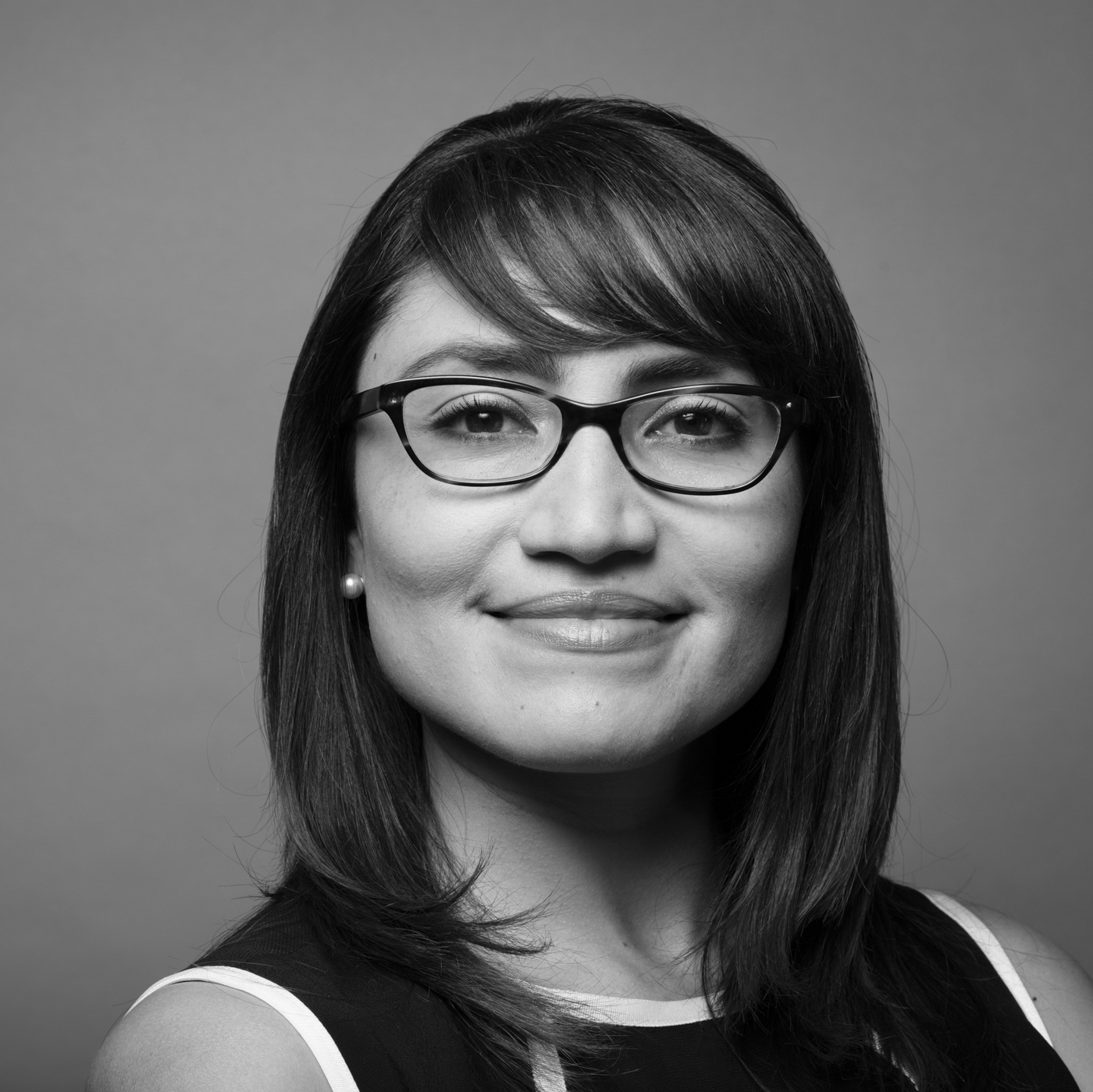
Gema Kloppe-Santamaría
Associate Research Professor of Latin American History at George Washington University and Lecturer of Sociology at University College Cork.
Daniel Ortega’s announcement constitutes perhaps the clearest and most unequivocal public declaration of the regime’s dictatorial character. It comes as no surprise to those who have endured its consequences in the form of forced exile, torture, imprisonment, harassment, and overt repression. Nevertheless, its significance should not be underestimated.
It reveals the regime’s perceived vulnerability in the domestic arena, reflected in its apparent need to eliminate even the semblance of an electoral process. It also underscores the regime’s confidence that it enjoys de facto impunity in the face of an international community that has thus far proved incapable of exerting sufficient pressure to dismantle—or even meaningfully weaken—the Ortega-Murillo regime. The latter is even more significant if we place it against the backdrop of the United States’ renewed interest in asserting its dominance in the region via aggressive and military actions toward those regimes perceived as a threat to U.S. interests (as manifested by the capture of Nicolás Maduro).
Following Ortega’s announcement, Secretary of State Marco Rubio called on the international community to “join forces to demonstrate to the Murillo-Ortega dictatorship that it cannot expect to maintain business as usual with other nations when it is thwarting the basic tenets of our democratic hemisphere.” It is not clear, however, what this call to join forces entails or how, if at all, Ortega’s latest provocation will actually translate into a substantial change to how the U.S. approaches the regime. Although the U.S. government has implemented stringent sanctions on individuals and state-run entities linked to the regime, it has failed to tackle the financial networks that sustain Nicaragua’s dictatorship, and it has, in effect, undermined the country’s civil society organizations and oppositional groups through the freezing of humanitarian assistance and the revoking of humanitarian parole.
Nicaragua’s descent to dictatorship has been long and painful. Over the last 10 years, as repression became more acute, human rights organizations and religious leaders, along with journalists, student activists, and political dissidents, have played a pivotal role in denouncing the regime’s abuses. They have also paid the consequences. Will Ortega’s announcement finally come to be seen as an important enough demonstration of the dictatorial, undemocratic, and repressive character of the regime to call for unequivocal and concerted international condemnation and consequences for the government? The jury is still out.
What Nicaragua Gains From Russia’s Embrace
A new agreement with Moscow signals that the Ortega-Murillo regime will continue to tighten its grip in Managua, an expert writes.
Will Trump 2.0 Play Tougher on Nicaragua’s Dictatorship?
Initial actions by the White House, such as cutting USAID programs, undermine the country’s struggling opposition.