


This article is adapted from AQ’s special report on Latin America’s demographic transformation

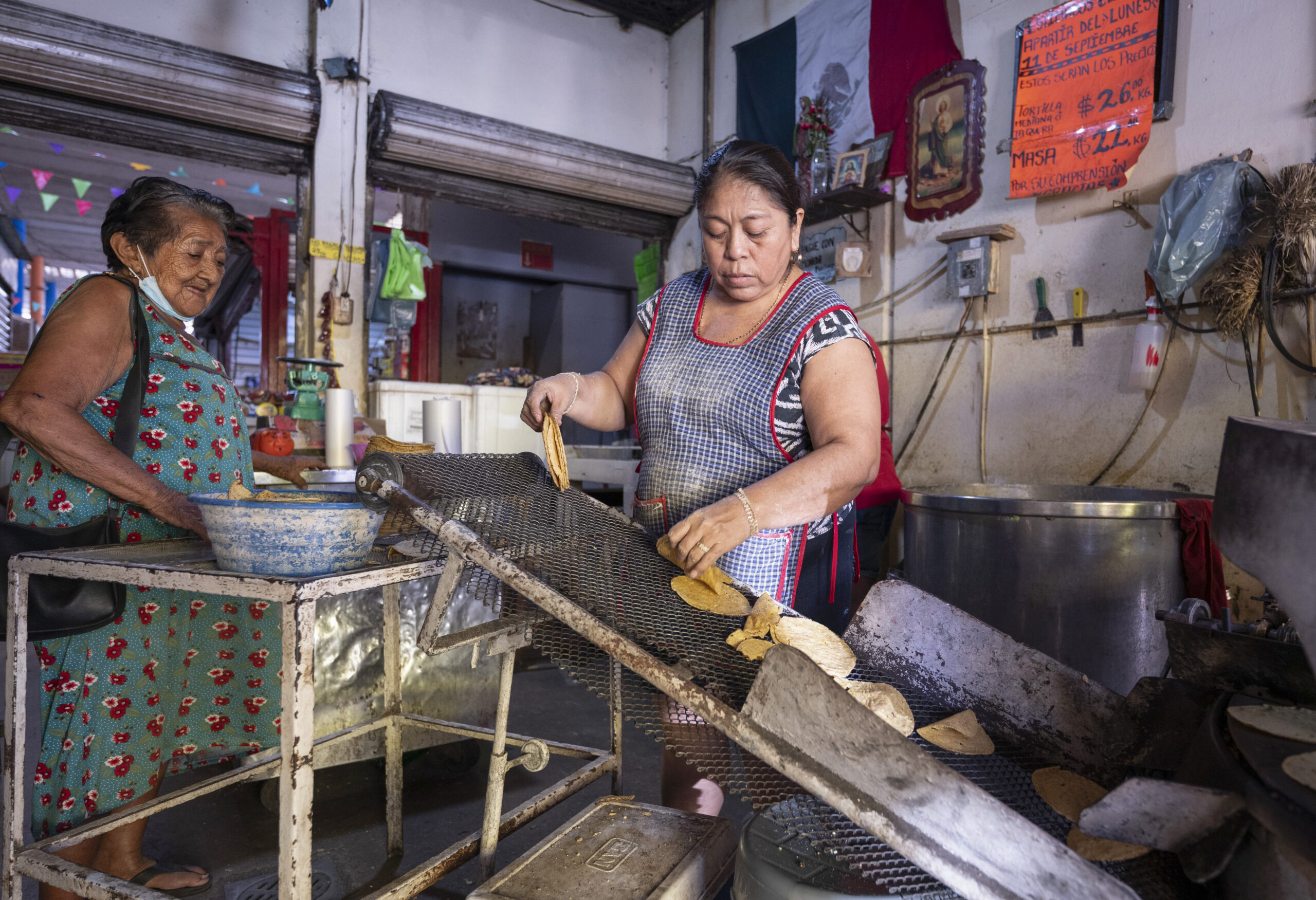
Every weekend, Mariel Luna, a doctor in social sciences, travels for two hours to visit her parents in Mérida, Yucatán, where she keeps them company, helps them with the household chores, and looks after their pets. She also juggles a chronic illness, two jobs, and the dream of one day joining Mexico’s National System of Researchers. Children, she said, are not part of her plan.
“I’m very objective with my situation: Having a child is too expensive, at least for the lifestyle I’d like to give them,” she said. “And my work is very demanding, I wouldn’t have the time to take care of my kids. I just feel like my professional path isn’t compatible with the possibility of having children.”
Luna’s story shows how Latin America’s demographic transformation is having a disproportionate effect on women. While care work falls unequally across gender lines throughout the world, it does so especially in Latin America. In Mexico, for example, women do 74% of unpaid household work. In fact, they spend an average of 24% of their time on household tasks such as laundry, shopping, and taking care of family, compared to 8% for men. CEPAL estimates that, of the 64.8 total hours women work per week, three more than men, 42.8 are unpaid.
For an older generation that cared for their aging parents, seeing family structures change and their descendants unpreoccupied with having children is not only worrisome—it leads them to question the sustainability of the entire care structure. Dennise Díaz, a gerontologist and researcher based in Yucatán, said the elderly adults she works with wonder: If their daughters don’t have children, who will eventually care for them?
“One of the main comments I’ve heard is that they’ve historically seen how their mothers were left behind. It’s a shared sentiment: They don’t want to replicate what they saw their mothers go through. It’s not just taking care of the children, it’s also caring for their partners, their grandchildren, if someone falls ill.”

For many women, the alternative has been to invest in their professional lives, a path that, as Luna suggests, can feel incompatible with motherhood. But according to Magdalena Rodríguez Romero, co-founder and co-director of ProSociedad, a development agency in the state of Jalisco with projects focused on women’s economic empowerment, many women still face judgment in their communities, however subtle, for having formal jobs that keep them away from housework. Informality is a double-edged sword: It gives women the freedom and flexibility they need to perform care but not the social protections that come with formal work. As a result, women in the region are contributing less to pensions than men.
“Young women now have more years of education than men, but that hasn’t translated into greater economic participation or higher labor income,” she said, pointing to a 31% gap in economic participation between women and men at the national level, with an even more disproportionate difference in rural areas.
In Latin America, the family unit has long been the default model of care. Yet Díaz insists that solutions must go beyond involving men more in household work as family structures.
“The question isn’t simply about replacing family with community. The question is: How do we integrate family, market, community, and state so that caregiving doesn’t fall disproportionately on women?” she said.
ABOUT THE AUTHOR

Miranda Mazariegos
Reading Time: 3 minutesMazariegos is an editor at AQ.
The Gray Tide: Latin America’s Demographic Transformation
A perfect storm of plunging birth rates and rapidly aging populations will break over Latin America in coming decades. Is there a silver lining?
NEW AQ: Latin America’s Demographic Cliff Is Here
Falling fertility rates are already having profound political and economic effects.
Migration Has Emerged as a Key Factor in Fertility
In a region on the move, the role of migration in driving demographic shifts deserves more attention.