


This article is adapted from AQ’s special report on Latin America’s space race
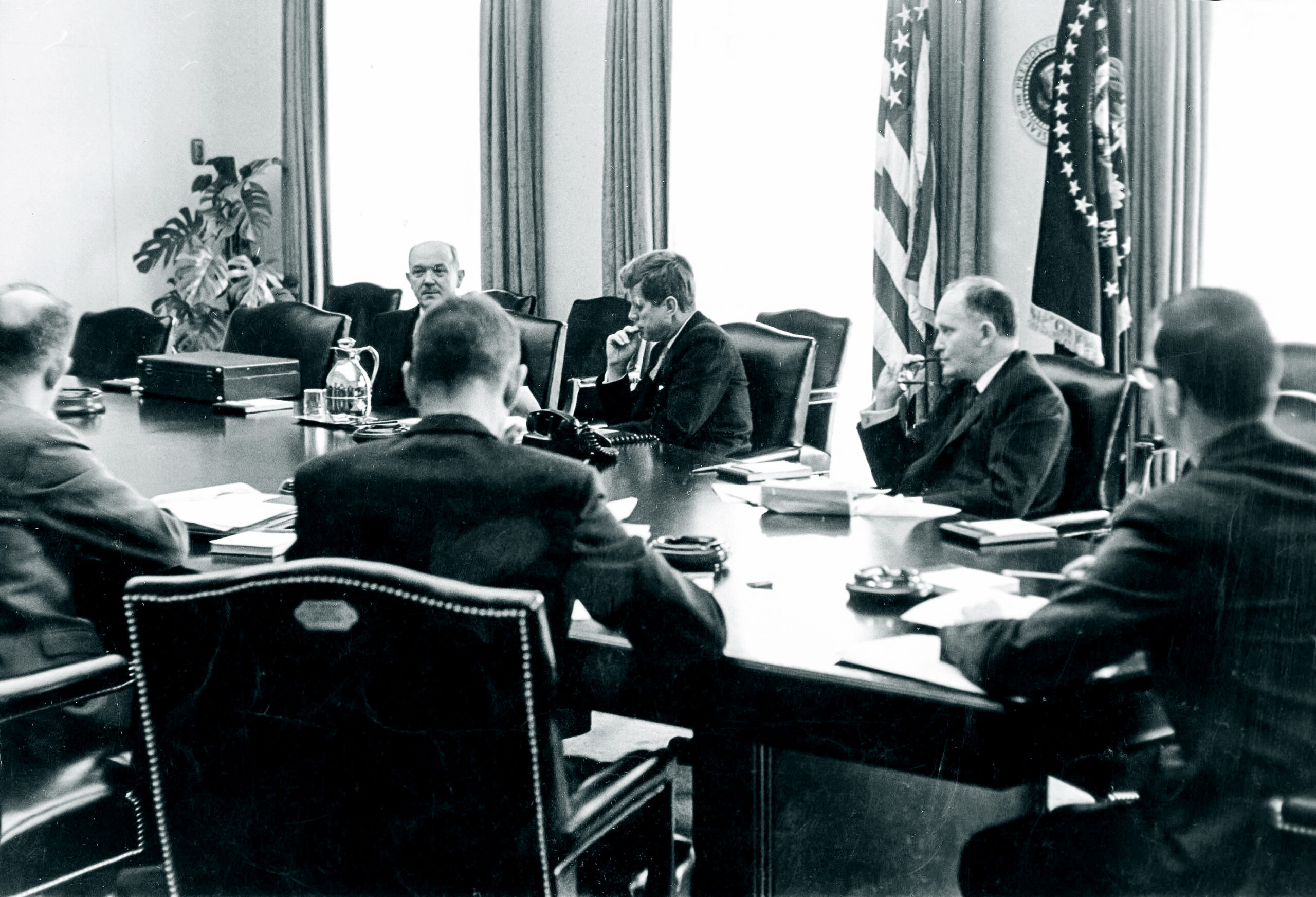
From the very first days of the Cuban missile crisis, in October 1962, U.S. President John F. Kennedy and his top advisors were discussing potential repercussions in the rest of Latin America.
Secretary of State Dean Rusk warned the crisis could threaten political stability throughout the region. Even at the confrontation’s height, on October 27, CIA Director John McCone emphasized scenes far beyond Cuba in a briefing to Kennedy and his top advisors, saying: “There are reports that anti-U.S. demonstrations have broken out in several Latin American capitals, including Buenos Aires, Caracas, and La Paz.”
As threats of nuclear war grew, the political fallout was causing bloodshed hundreds of miles from Havana. This violence was a stark reminder that the crisis was about more than just Cuba or Soviet missiles—and that the longer it dragged on, the greater its repercussions would become.
From the beginning, Kennedy and his advisors viewed the crisis through a hemispheric lens. Yet histories of this event tend to forget this, focusing on the showdown between Kennedy and Nikita Khruschev and eliding the actions of millions of everyday people. Citizens across the region seized active roles, organizing demonstrations, committing sabotage, and battling each other in deadly riots. Just as McCone reported and Rusk warned, Latin Americans were not willing to sit idly by.
That ordinary people throughout Latin America took action to weigh in on the crisis is an underappreciated part of the story. Today, this level of engagement can seem hard to imagine, raising questions about how ready the region is to respond to provocations from great powers in the modern day.
A tidal wave of action
In country after country, thousands of people took to the streets. Some demanded peace, others showed solidarity with Cuba, and still others supported the U.S. As the crisis went on, demonstrators’ demands became more urgent—and local authorities’ responses became more violent, especially in places where political tensions were already high. The missile crisis lit a match to the dry kindling of Cold War politics.
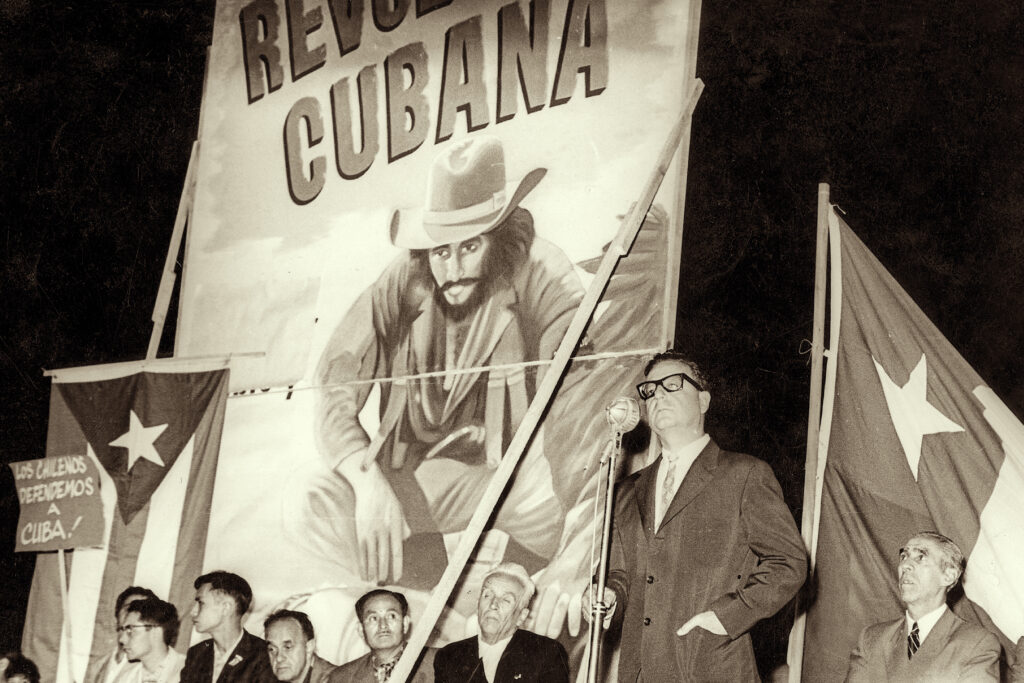
Thousands of Costa Rican students marched through downtown San José to denounce Castro’s decisions. In Chile, thousands gathered along Santiago’s main avenue for a pro-Cuba demonstration organized by students and workers. Then a senator, socialist Salvador Allende spoke at the rally, calling for world peace and criticizing the U.S.
Sometimes, the demonstrations were met with violent opposition. A large pro-Cuba rally at Uruguay’s National University on the night of October 29 ended in a violent clash between security forces and protesters. For more than two hours, 1,000 police officers assailed 6,000 demonstrators with tear gas, water cannons, and bayonets. Soldiers with trucks and tanks and a cavalry platoon on horseback lent a hand in the fighting, as did paramilitary anti-communist student groups.
The elegant streets of Argentina’s capital, meanwhile, became an urban battleground. Night after night, police chased protesters through Buenos Aires and neighboring cities, leaving broken windows and clouds of tear gas in their wake. Just before midnight on October 23, police confronted members of the Commission of Solidarity with Cuba, who were placing pro-Castro posters on city walls. When the police tried to arrest them, the Castro supporters answered with gunfire.
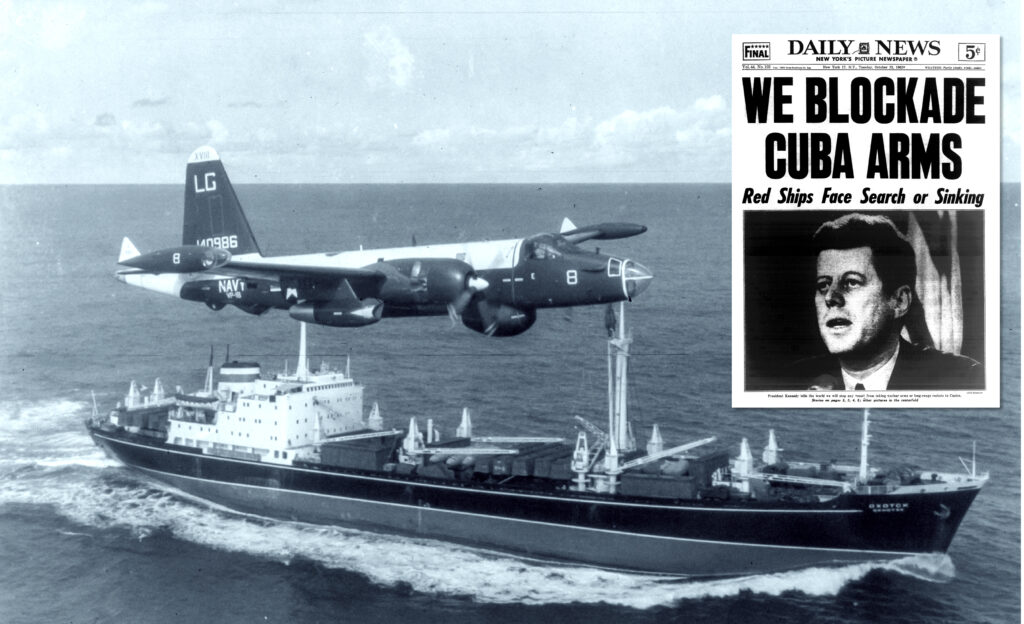
Inset: Front page of the New York Daily News on October 23, 1962. NY Daily News Archive/Getty.
The next evening, saboteurs threw Molotov cocktails at a Pepsi-Cola bottling plant, a Ford dealership, a supermarket, a Parker Pen factory, and a Bonafide coffee shop. On the evening of October 25, saboteurs shattered windows at the central offices of the newspapers Clarín and La Nación, the local IBM headquarters, and the Singer office building. They lobbed incendiary bombs over the fence of a General Motors factory, fired shots at the offices of the public electric company, and threw Molotov cocktails that damaged equipment of the Parke-Davis and Johnson & Johnson pharmaceutical companies.
The next afternoon, they targeted the American Club, scorching its outer walls with incendiary devices. Truckloads of police deployed on the streets of downtown Buenos Aires, using tear gas and batons to break up small “lightning” protests. Two police officers who were chasing a suspect accidentally ran into a crowd of pro-Castro protesters, who beat them until they fired their guns toward the sky to summon help.
When a thousand people gathered for a larger demonstration on the Avenida de Mayo and started marching toward the Palace of the Argentine National Congress chanting “¡Viva Cuba!” and “Muerte a los yanquis,” police filled the air with more tear gas and chased down stone-throwing protesters. By the end of the night, seven people, both protesters and police officers, had been seriously injured.
In Caracas, the U.S. embassy received anonymous phone calls threatening to kill one American in Venezuela for every Cuban who died due to Yankee aggression. Just before midnight on October 24, a bomb exploded in front of a branch of the National City Bank. Two days later, three men armed with machine guns invaded a Goodyear Tires warehouse, forcing employees to the floor and burning stocks of tires. Other saboteurs set off a bomb in the downtown headquarters of Pan American Airways, and the next day a bomb exploded in front of the U.S. embassy.
Venezuelan opposition groups also targeted their country’s vital oil industry. Shortly before midnight on October 27, saboteurs dynamited the installations of the Standard Oil subsidiary Creole Petroleum Corporation in Lake Maracaibo, almost completely destroying four power substations. Observers at the U.S. embassy described the attack as “one of the most successful sabotage acts in Venezuelan history.” A leftist guerrilla group took credit for the bombing, issuing a statement that their attack on the oil fields was “in response to the order of military mobilization decreed by [President Rómulo] Betancourt in support of the United States.” Less than a week later, three oil and gas pipelines belonging to the Mene Grande, Texaco, and Mobil exploded.
ADN-Bildarchive/Ullstein Bild/Getty
Blurred battle lines
In Argentina and Venezuela, the line between activism and terrorism blurred, as groups that were prevented from expressing their positions peacefully—the Communist Party was outlawed in Argentina and under threat of banning in Venezuela—resorted to violence. Both countries already had significant opposition movements that were forming guerrilla groups, and the missile crisis added new tension to the situation.
It was in Bolivia, however, where the wave of violence crested and crashed. Groups on both extremes of the ideological spectrum organized demonstrations in La Paz on October 26. Anti-communist students were the first to take to the streets. Around 10:30 a.m., some 2,000 high school students marched, shouting pro-U.S. and anti-Castro slogans and calling on their government to break relations with Cuba.
Then, supporters of the Cuban Revolution took their turn. Among their march of around 500 workers and students were popular communist miners’ union leaders, and a man newspapers dubbed the “Killer in Blue,” who carried a rifle that he fired into the air every few minutes. The march ended in front of the headquarters of the miners’ federation and the Central Obrera Boliviana, where up to 3,000 people had gathered to hear speeches from union leaders. As speeches were made, someone in the crowd set an American flag on fire and raised it high in the air to shouts of derision and a chorus of Bolivia’s national anthem. A group of young anti-communists began advancing from about a block away, hurling rocks, which were quickly reciprocated. The two sides clashed in a microcosm of what the missile crisis could become: ideological opponents launching projectiles indiscriminately.
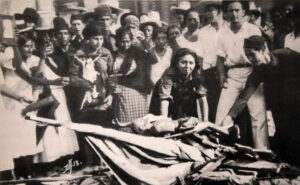
The confrontation devolved into a chaotic riot. The U.S. embassy and local conservative papers painted a dramatic scene of communist demonstrators armed with machine guns, rifles, revolvers, and dynamite clashing with carabineros and Catholic school students, supposedly outnumbered 10 to one and armed only with tear gas and stones. El Diario claimed that the communist groups posted snipers with backpacks of ammunition in strategic locations, and Presencia printed photos on its front page of the so-called Killer in Blue crouching on one knee and firing his rifle forward. President Víctor Paz Estenssoro finally ordered the army to occupy La Paz about two hours after the riot began. By the time order was restored, five people were dead.
Why did so many Latin Americans put their lives on the line during the Cuban missile crisis? Just like Kennedy and his advisors, people across Latin America knew that what happened in Cuba could affect the rest of the hemisphere. They believed that great power intervention would set a dangerous precedent, and they fought to defend their own sovereignty by defending that of Cuba.
Today, that attitude seems long forgotten. The U.S. has become more aggressive in recent months, abducting Nicolás Maduro, tightening its embargo on Cuba to an extreme, and undertaking deadly military strikes on land and sea in Latin American territory. Yet, compared to 1962, there has been little regional outcry. It seems that Latin America’s sense of shared destiny has withered, leaving the U.S. with a freer hand to deal with countries individually. It is no longer treating the region as an interconnected whole, as Kennedy had, and in response Latin America appears quiescent. But back in 1962, Bolivian protesters put it this way: “Today it is Cuba, tomorrow it will be us.”
ABOUT THE AUTHOR

Renata Keller
Reading Time: 6 minutesKeller is an associate professor of history at the University of Nevada, Reno. She is the author of the award-winning book The Fate of the Americas: The Cuban Missile Crisis and the Hemispheric Cold War (University of North Carolina Press, 2025).
The Unfulfilled Promises of Colombia’s Peace Process
Why the 2016 deal has fallen short of expectations and what it says about the country today.
The Battle Over Brazil’s Isolated Tribes Takes a New Turn
An Indigenous patrol has emerged in the Javari Valley to protect a forest and its people.