


For decades, Miami stood largely alone in its fixation on Cuba. That is no longer the case. Today, Cuba has reemerged as a national security priority in Washington.
Over the past several months, the Trump administration has stepped up pressure on Cuba, with the most assertive policy of any in recent memory. It has indicted senior Cuban officials; placed new sanctions on regime leaders, the state oil company, and military-linked entities; increased intelligence and military activity in the Caribbean; and sent General Francis Donovan, head of U.S. Southern Command, and Defense Secretary Pete Hegseth to visit Guantanamo Bay.
Senior administration officials have also increasingly framed developments on the island as a direct threat to U.S. national security. Secretary of State Marco Rubio has cited Cuba’s humanitarian crisis, foreign intelligence facilities, alleged ties to terrorist organizations, and growing drone capabilities as threats to the U.S. homeland.
Whether Washington is pursuing a defined objective or deliberately preserving strategic flexibility remains unclear. What is evident is that the administration is expanding its options. Four scenarios seem increasingly likely: 1) Humanitarian intervention, 2) Limited coercive action, 3) Internal regime fracture, or 4) Negotiated concessions.
Which path the crisis takes will depend in part on Cuba’s internal dynamics. The Cuban armed forces remain the regime’s principal guarantor of stability, and the way military and political elites interpret mounting economic pressures, social discontent, and international isolation may prove as consequential as any measure adopted in Washington. Public reactions to deteriorating living conditions could further shape elite calculations.
Here, then, are four possible scenarios:
1. Humanitarian intervention
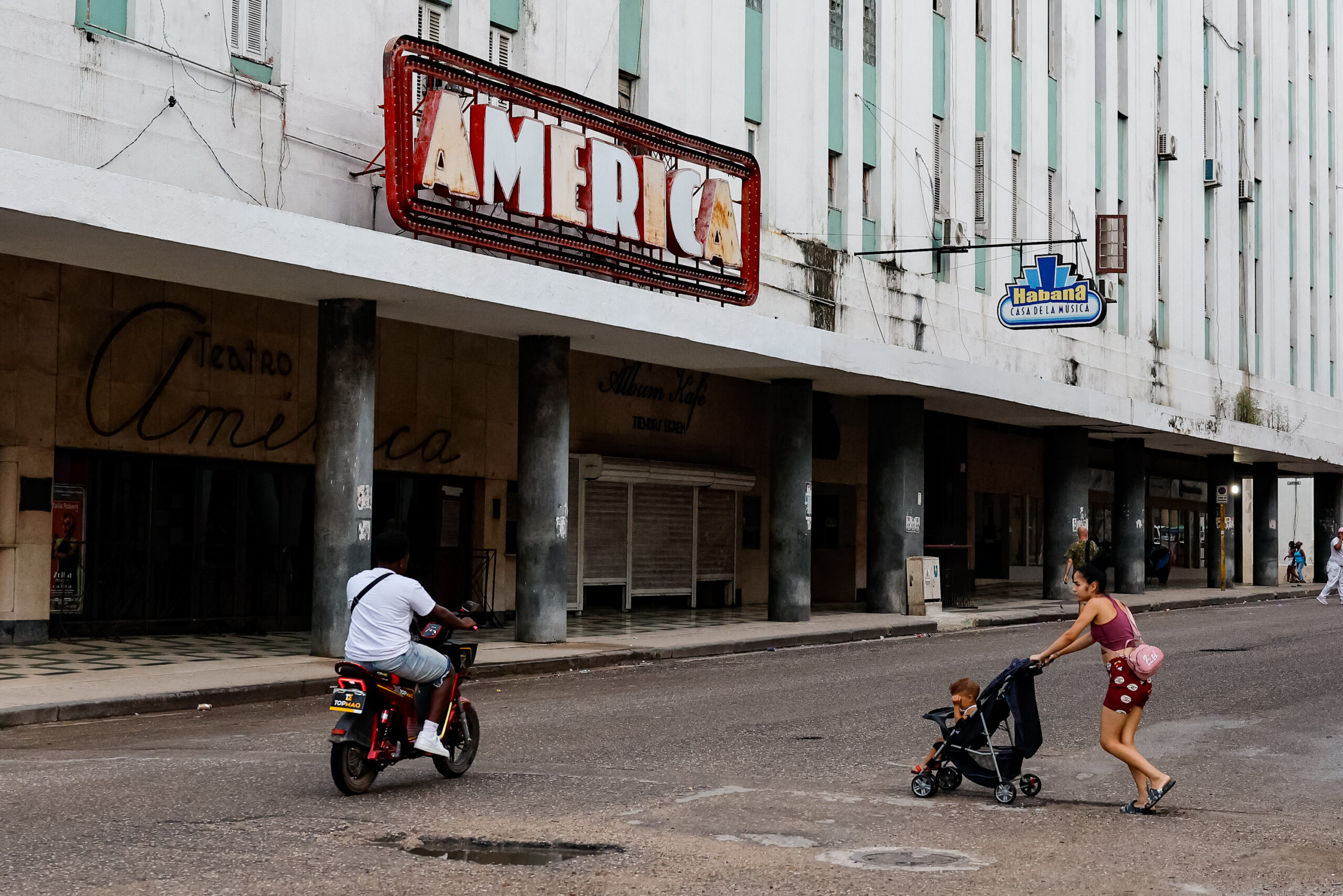
The most immediate challenge facing Cuba is not political but humanitarian. Amid a renewed U.S. blockade, severe fuel shortages, recurring blackouts, deteriorating infrastructure, declining public health conditions, and growing public frustration have placed an extraordinary strain on the population. Conditions are likely to worsen in the coming months, and hurricanes or extreme summer heat could exacerbate the situation.
In this context, humanitarian intervention could emerge as Washington’s preferred mechanism for expanding its presence on the island while avoiding the costs and risks of traditional military action. Washington’s justification for such involvement would not be regime change but the need to address a humanitarian emergency with implications for regional stability, migration, and U.S. national security. The administration has already begun framing conditions on the island in those terms.
The trigger would be a crisis severe enough that Havana proves unwilling or unable to respond effectively, perhaps involving prolonged nationwide blackouts, worsening public health conditions, food shortages, or widespread unrest. Washington’s initial moves would likely focus on working with international organizations, faith-based groups, and other nongovernmental actors to deliver humanitarian and medical aid. The U.S. military’s role would center on maintaining the blockade while facilitating certain logistics, transportation, communications, and security assistance.
The benefits include immediate humanitarian relief, reduced migration pressures, and stabilization without explicitly pursuing regime change. The risks are equally significant: Havana would likely frame outside involvement as a violation of sovereignty, fueling nationalist backlash and complicating international cooperation. Any sustained U.S. presence could create expectations for broader political engagement that Washington may be unwilling to meet.
2. Targeted coercive action
A second scenario is a limited military or law enforcement operation to increase pressure on Cuban leadership without assuming responsibility for governing the island. Rather than a conventional invasion or regime-change campaign, the objective would be to impose costs on the regime, degrade specific capabilities, and alter the calculations of key decision-makers.
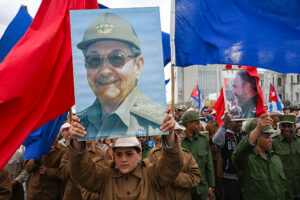
The recent indictment of Raúl Castro and five co-defendants establishes a judicial framework that could be used to justify coercive measures, along the lines of what preceded the capture of Nicolás Maduro. Senior Cuban officials are increasingly being treated not simply as political adversaries, but as criminal defendants.
The U.S. could undertake law enforcement operations aimed at apprehending indicted officials, or conduct limited strikes against intelligence, security, military, or other strategic infrastructure deemed to threaten U.S. national security. Such actions would not be intended to overthrow the regime or occupy Cuban territory. Instead, they would seek to demonstrate the vulnerability of senior officials, impose costs on the state, and increase uncertainty within the regime.
This strategy goes beyond just Raúl Castro: By demonstrating that individuals and institutions are not beyond the reach of U.S. power, Washington could seek to weaken elite confidence and force regime insiders to reassess their political futures.
Hints that the U.S. is adopting this approach would include additional indictments; intelligence disclosures linking regime figures to criminal activity or security threats; expanded U.S. military deployments in the Caribbean; and growing public discussion of accountability, extradition, transnational criminal conduct, or threats emanating from the island.
3. Pressure produces an internal fracture
Sustained pressure could ultimately produce a fracture within the Cuban regime, leading to a leadership transition. In this scenario, Washington’s objective is not immediate collapse but the gradual erosion of elite cohesion and the political foundations that sustain the current leadership. The strategy relies on economic pressure, targeted sanctions, public diplomacy, engagement with Cuban civil society, and the credible threat of additional coercive measures.
The strategy also uses negotiation; every time the Cuban regime releases prisoners, adjusts policies, or even acknowledges engagement with Washington, it risks internal dissention. Over time, these pressures could divide those committed to the status quo from those who view limited reforms and engagement with the United States as necessary for regime preservation.
Such divisions could become especially pronounced during any leadership transition. Raúl Castro is 95 years old, and if he passes away, Díaz-Canel and other senior leaders could gradually lose influence through formal or informal shifts within the Communist Party, the FAR (Cuba’s armed forces) , and its security services.
The risks of this approach, however, are significant. Internal fragmentation could lead to political uncertainty, competing centers of authority, and increased repression as rival factions vie for influence.
4. The regime makes concessions
U.S. pressure could also lead to new negotiations. Historically, Cuban leaders have negotiated when it served the interests of regime survival. Yet history also suggests that intense pressure may not yield major concessions.
Resistance to external coercion remains deeply embedded in the regime’s political identity. Still, if economic and humanitarian conditions continue to deteriorate and pressure increasingly affects elite interests, some leaders may conclude that limited concessions are preferable to escalation.
Cuban officials are also monitoring developments in Venezuela. The Maduro operation demonstrated Washington’s willingness to combine economic, legal, intelligence, and military tools and signaled that it may work with successor elements of an existing regime rather than insist on an immediate democratic transition.
In this scenario, negotiations would likely focus on practical outcomes rather than ideological change: the release of political prisoners, expanded international humanitarian aid, migration cooperation, limited economic liberalization, growth of the private sector, and broader engagement with international institutions.
For Washington, the objective would be meaningful reform; for Havana, it would be economic relief and reduced external pressure while preserving political control.
The challenge would be finding an acceptable off-ramp. Cuba has historically resisted reforms that threaten Communist Party rule, while successive U.S. administrations have struggled to justify concessions absent meaningful political change.
U.S. legal constraints could further complicate negotiations. The Helms-Burton Act codified key elements of the embargo and ties major sanctions relief to conditions that may be difficult to reconcile with the continued existence of Cuba’s current government. While a president can adjust some aspects of U.S. policy, the most significant forms of economic relief could require congressional approval. This could limit Washington’s flexibility and therefore reduce Havana’s incentives to negotiate. In short, both sides would be walking a challenging political tightrope.
A new range of outcomes
Cuba stands at a consequential juncture. The convergence of economic deterioration, growing social discontent, intensified U.S. pressure, and increasing international scrutiny has created a new range of potential outcomes. Yet history cautions against predictions of imminent transformation. The Cuban system has repeatedly demonstrated a remarkable capacity for survival under adverse circumstances.
There remains a very real possibility that none of these scenarios materializes in the near term, and that Cuba instead experiences a prolonged period of managed deterioration: continued economic decline, sustained emigration, periodic social unrest, and heightened repression, while the regime maintains sufficient cohesion, particularly through the support of the FAR and security apparatus, to endure.
Importantly, these pathways are not mutually exclusive. Internal fractures could prompt negotiations, while escalating unrest could trigger both elite divisions and increased external involvement. As the 2026 midterm elections approach, the administration may face mounting pressure to demonstrate progress on a Cuba policy it has increasingly framed as a national security priority.
Whether pressure ultimately produces reform, fracture, confrontation, or merely a more entrenched stalemate will depend on decisions made in both Washington and Havana, especially within Cuba’s military and political elite. The coming months will reveal whether Cuba is approaching a genuine inflection point, or simply another chapter in its long history of resilience amid crisis.
ABOUT THE AUTHORS
Brian Fonseca
Reading Time: 5 minutesFonseca is the Director of Florida International University’s Jack D. Gordon Institute for Public Policy and an International Security Fellow at the DC-based think tank New America. He is also co-founder of ARSoft US, a U.S.-based AI and immersive technology company.
Liany Diaz Gonzalez
Reading Time: 5 minutesDiaz Gonzalez is a research assistant at the Security Research Hub, leading the Small Arms, Light Weapons (SALW) Dashboard at Jack D. Gordon Institute for Public Policy of Florida International University.
The OAS’s Existential Challenge
Washington is threatening to walk away from one of the hemisphere's most essential institutions. The region needs to say something about it.
Can the Donroe Doctrine Help Deliver Stability in Haiti?
Getting it right in Haiti is good policy and politics for the Trump administration.