



This article is adapted from AQ’s special report on Latin America’s demographic transformation
Can ordinary people’s actions change how they are governed? It’s a timely question, but one with few simple answers. Besides protests or armed revolts, opportunities for change have sometimes emerged during periods of instability caused by new communication tools, such as the internet, the telegraph, newspapers, or the printing press.
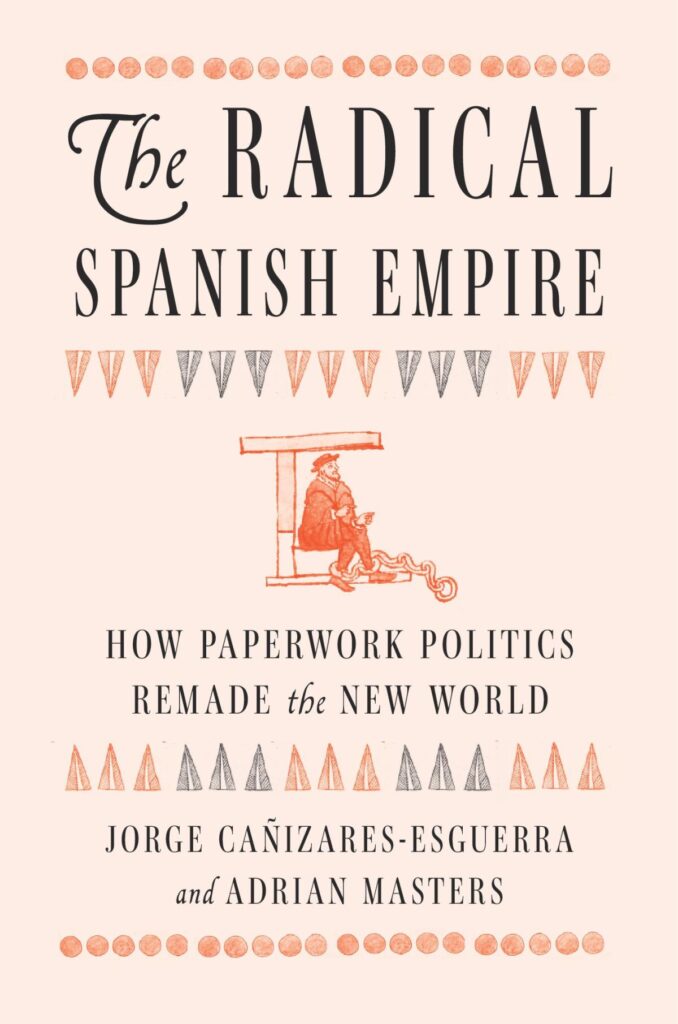
Yet a new book by Jorge Cañizares-Esguerra and Adrian Masters, The Radical Spanish Empire, argues that, in the early Spanish Empire, the most radical tool to undermine the power of the conquistadors was paperwork. Published by Harvard University Press, the book draws on thousands of documents from archives across Spain and Latin America to reconstruct how colonized people in 16th-century New Spain used the legal system to challenge authority. Handwritten petitions, audits, denunciations, witness interrogations, and lawsuits became the tools of the humblest vassals, including women and men of Indigenous and African ancestry.
The authors argue that people were inspired less by the circulation of print publications than by their fury, confusion, and desperation amid volatile social disorder. The onset of Spanish rule in the 16th century had upended how they organized their labor, land, and communities. In response, people petitioned for individual privileges and local and regional reforms, and they took their disputes to court. If historians are familiar with these sources as windows into the lives of colonial subjects, Cañizares-Esguerra and Masters insist that the collective impact of what they call “lawfare” has been largely overlooked.
Commoners’ concerns didn’t fall on deaf ears. Viceroys, magistrates, and investigators all stood to benefit from reading and acting on these demands, and their responses chipped away at the seigneurial privileges of conquistadors, Catholic friars, and Indigenous leaders, all of whom claimed some credit for laying the groundwork for a long-term colonial project. Petitions and lawsuits resulted in thousands of royal decrees, notarial documents, and court sentences.
But the results went beyond that. Swamped with cases, officials who wrote royal decrees often borrowed language from the petitions they were responding to, and in doing so, inadvertently handed colonial subjects a seat at the table. Among the book’s many compelling achievements is its depiction of this world, co-created between the Crown and commoners out of a “communication free-for-all.” To improve tribute collection, for example, a viceroy in New Spain studied pre-contact Indigenous tribute systems based, in part, on Moctezuma’s own documents; many of the casta categories had their origins in petitions that used the terms to attack rivals, only to be redeployed in decrees and other official writing; and one mestizo frontiersman persuaded the king himself to authorize a royal audit of colonial officials—and archives. In the end, these records of investigations, petitions, and challenges to authority became, in the authors’ words, “the truths on which a whole new social order was built.”
Yet Cañizares-Esguerra and Masters don’t offer a neat, happy ending to the story of bottom-up initiatives. Royal officials saw the far-reaching effects of the paperwork politics of ordinary subjects and began controlling that power, which started with managing the documentary record. The Crown seized the archives of those who meticulously documented the turbulent earlier decades, including figures like Bartolomé de las Casas and Bernal Díaz del Castillo. By the 1580s, royal authority and its archival certainties overshadowed the time when truth was “wild, spontaneous, and highly pliable.” Instead, a “pedantism” took hold, reducing calls for change and tempering faith in a system that left room for venality and corruption.
After that, a 17th-century Spanish proverb said it best: Papel y tinta, y poca justicia (Lots of paper and ink, little justice). Still, the authors leave readers with examples of present-day lawfare among Latin Americans, continuing an enduring Iberian tradition of challenging authority when truth itself is up for grabs.
ABOUT THE AUTHOR

David Sartorius
Reading Time: 3 minutesSartorius teaches Latin American history at the University of Maryland. He is the author of Ever Faithful: Race, Loyalty, and the Ends of Empire in Spanish Cuba (Duke University Press, 2013).

Latin America’s Unfinished Revolutions
Alma Guillermoprieto’s reportage in “The Years of Blood” embodies the drama and complexity of our new century.
Following British Footsteps in South America
A new book revisits the fascinating but often overlooked history of the British presence across the continent.