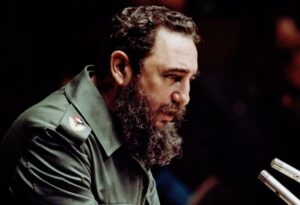



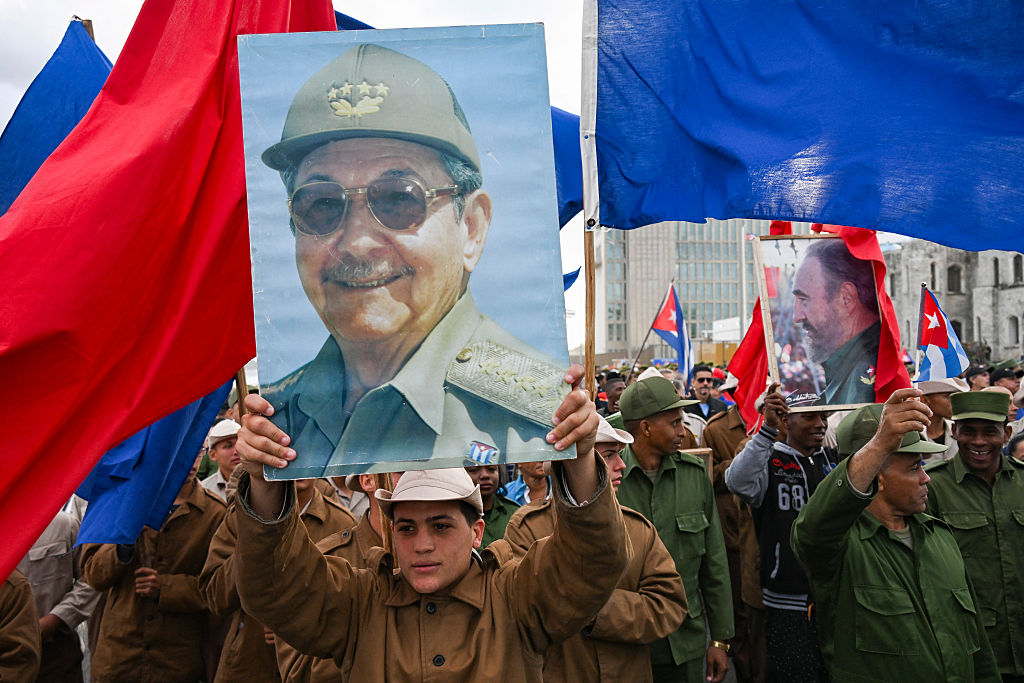

For more than six decades, U.S. policy has failed to dislodge the Cuban regime, even when it appeared economically and politically vulnerable. As Washington again intensifies pressure on the island, policymakers must confront a central reality often overlooked in external debates: the decisive role of Cuba’s Revolutionary Armed Forces (FAR).
More than a traditional military institution, the FAR functions as a political, economic, and administrative pillar of the state. It mediates regime continuity, oversees strategic sectors of the economy, and would shape the parameters of any eventual transition. In practice, the keys to both change and stability in Cuba are likely to rest not with opposition movements or external actors, but with key members of the FAR.
This reality is uncomfortable, particularly in the United States, where engagement with military institutions tied to authoritarian systems carries moral and political costs. Yet such cooperation with Latin American dictatorships has historical precedents. During the Cold War, Washington frequently worked with authoritarian regimes across the region when doing so served broader strategic objectives.
More recent developments, including Washington’s willingness to engage with Venezuela’s regime following the January 3 capture of Nicolás Maduro, suggest that moral and political costs may be less compelling in practice, even if they remain part of the policy discourse in the U.S. Still, the issue may be particularly sensitive within the Cuban diaspora, many of whom view the armed forces as inseparable from repression and exile. If the objective of U.S. policy is long-term change rather than symbolic pressure, Washington will likely conclude that engagement with Cuba requires engaging with the FAR.
A unique institutional culture
The FAR is not a conventional military. Unlike professional militaries designed primarily for external defense, the FAR has long viewed itself as a co-founder and guardian of the political system rather than a subordinate institution. While this self-conception is not entirely unusual in a Latin American context, the Cuban case stands out for the degree to which this role has been institutionalized. Revolutionary legitimacy, ideological cohesion, and regime preservation remain central to its identity. The FAR is not simply part of the Cuban state; it is one of the pillars sustaining it. More than six decades of open confrontation with Washington have also reinforced a strong institutional esprit de corps and a narrative of guardianship over the revolution.
This institutional culture helps explain why decades of isolation and external pressure have failed to produce political transformation. Policies premised on expectations of military fracture, coup incentives, or rapid depoliticization misread how the FAR understands its role. Loyalty is not merely transactional; it is deeply embedded in institutional memory shaped by the 1959 Revolution, the Bay of Pigs invasion, Cold War confrontation, and decades of economic shocks and external threats, particularly from the U.S.
At the same time, focusing solely on ideology overlooks the FAR’s critical role in the Cuban economy. Over the past three decades, the military expanded into economic management, overseeing major sectors through military-run conglomerates tied to tourism, logistics, infrastructure, and commercial services. Control over these enterprises gives the FAR a material stake in economic stability and regime survival.
The most prominent example is the Grupo de Administración Empresarial S.A. (GAESA), the military’s principal business conglomerate, widely estimated to control roughly 35% of Cuba’s economy. GAESA holds assets estimated at approximately $18 billion, including about $14.5 billion maintained in bank accounts within financial institutions belonging to the group itself. Even if future reforms sought to separate GAESA from formal military control, senior officers would likely remain among the few actors with the managerial capacity and institutional reach to oversee such assets effectively, given the absence of a fully developed private sector capable of absorbing them. For example, roughly 55% of Cuba’s retail sales now occur in the non-state sector, up in recent years but far below the global norm of 90%.
This economic embeddedness creates a paradox. On one hand, it reinforces regime continuity. FAR leaders with institutional and financial interests are unlikely to support abrupt political liberalization that threatens their position. On the other, it encourages pragmatism. Military leaders responsible for ports, supply chains, disaster response, and tourism must solve practical problems rather than ideological ones.
In short, the Cuban military often behaves ideologically in politics, but pragmatically in economics. That duality represents one of the few realistic leverage points available to Washington to effect durable change.
Therefore, Washington should not frame engagement as “normalization” or endorsement. It should instead be framed as risk management and influence-building, and focused on narrow, technical cooperation in areas aligned with the FAR’s self-image as a protector of the Cuban national interest. Disaster response, maritime safety, search-and-rescue operations, environmental protection, and humanitarian response are areas where U.S. and Cuban security institutions have engaged in limited technical coordination in the past, making them natural starting points for renewed engagement with the FAR. These domains carry relatively low political risk while helping build habits of communication that can reduce miscalculation during crises. They also address shared regional challenges, including migration flows, hurricanes, and transnational trafficking routes.
Constraints on engagement
Even if Washington concludes that selective engagement serves U.S. interests, U.S. law was built to make that difficult. The Cuban Liberty and Democratic Solidarity (Helms-Burton) Act codified the embargo and asserts that political transition must precede normalization. That legal architecture could narrow executive flexibility to engage defense and internal security institutions.
Certain Helms-Burton’s “trafficking” provisions and related visa authorities create reputational and financial risks for companies, banks, and foreign partners whose participation is often necessary even for modest technical cooperation. Functional engagement rarely occurs in isolation, and it touches ports, communications systems, contracting arrangements, and third-party service providers. Perceived legal exposure could discourage participation, even when cooperation is operationally sensible. Policymakers must anticipate these constraints and design engagement to be tightly compartmented and legally insulated.
Domestic politics further complicate the landscape. Engagement with the FAR will be interpreted by many Cuban Americans as engagement with repression itself, and members of Congress will respond accordingly. This must be addressed directly. History suggests isolation alone has often strengthened the narratives that sustain hardline positions in Havana. Policies perceived as existential threats generally reinforce siege mentality and strengthen institutional cohesion rather than weakening it.
Nuance about the officer corps is also critical here. There are effectively two worlds within the institution: a broad cohort of officers focused on logistics, engineering, and administrative responsibilities—some not even Communist Party members—and a smaller, usually older senior leadership deeply embedded in political and security structures. Treating the FAR as a monolith invites blunt policy tools and predictable backlash. A credible strategy would distinguish between these strata and prioritize less-political issues while maintaining clear human rights guardrails.
Changing of the guard
Targeted engagement probably will not lead to rapid democratization. That is why change in Cuba, if it comes, is more likely to be incremental and mediated through institutional evolution rather than regime collapse.
None of this will satisfy those seeking moral clarity or immediate outcomes, but foreign policy ultimately requires choosing between strategies that feel satisfying and those likely to work. Ignoring the military’s centrality does not weaken it; it merely limits Washington’s ability to influence outcomes.
The core strategic insight is straightforward: Cuba’s political future will be mediated through the FAR, not around it. The institution functions as the regime’s continuity actor, shaping leadership transitions, economic management, and national stability. Strategies that bypass this reality are unlikely to produce meaningful results.
ABOUT THE AUTHOR
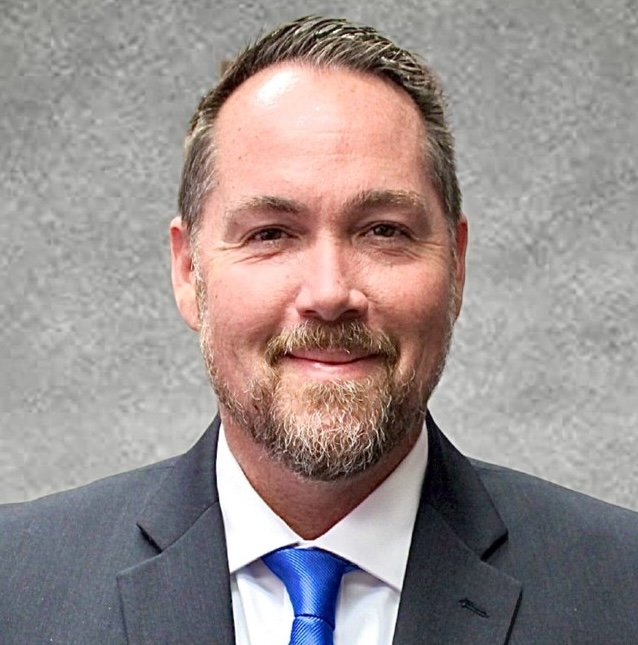
Brian Fonseca
Reading Time: 5 minutesFonseca is the Director of Florida International University’s Jack D. Gordon Institute for Public Policy and an International Security Fellow at the DC-based think tank New America. He is also co-founder of ARSoft US, a U.S.-based AI and immersive technology company.

AQ Podcast | Cuba on the Brink
CNN’s Havana bureau chief on the U.S. oil blockade, the crisis gripping Cuba, and what might come next for the island.