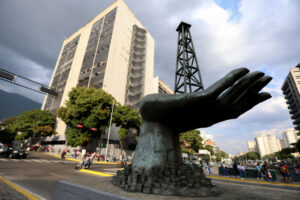



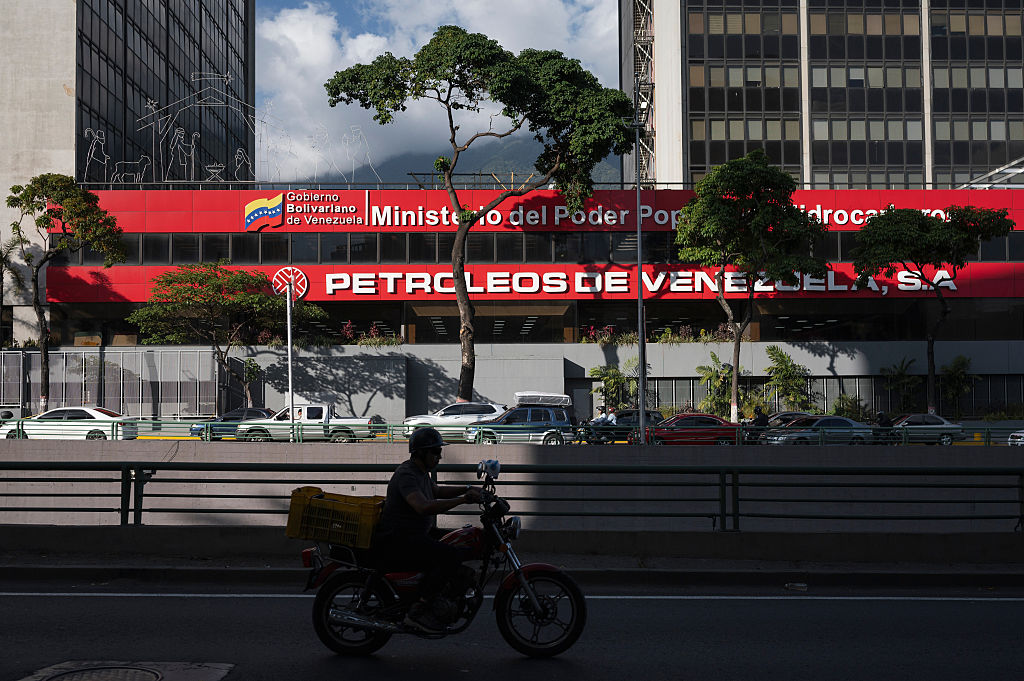
MADRID—An OPEC founder and once the world’s largest exporter of crude oil, Venezuela is again attracting the attention of nearly everyone—experts and amateurs alike in the energy world—interested in how political change in the country could open new doors for rebuilding its oil and gas industry.
A nation that was the darling of the Seven Sisters during the first half of the 20th century was the focus of intensive foreign investment in the 1990s. During this century, however, it became the best example of what could go wrong in a country due to misguided ideology, inefficiency, and corruption of its political class.
The same political class that survived Nicolás Maduro’s capture on January 3 has now embarked on an effort to rush a reform of the nation’s hydrocarbon law, enacted in 2006, as a way to reconcile preservation of power with the pressure exerted by the U.S. to rebuild Venezuela’s energy infrastructure and production. But the revival of the country’s oil industry is uncertain.
As news from the White House clarifies that a quick return to democracy in Venezuela is unlikely, the U.S.’s focus has shifted from regime change to recasting Venezuela as a reliable and growing oil supplier—even if that means accepting an unpalatable regime in Caracas for an unspecified period. It appears that the narrative of the Maduro regime’s illegitimacy, along with that of interim President Delcy Rodríguez, is now being overshadowed by oil interests.
To increase oil supply, President Donald Trump has said he will “encourage” U.S. oil companies to repair deteriorating infrastructure and make multimillion-dollar investments needed to reactivate Venezuela’s hydrocarbon industry, thereby helping to generate the wealth required to rebuild Venezuela.
Large-scale investment like the one Trump wants requires a sustainable and secure legal, fiscal, and institutional framework that Venezuela lacks, and it’s unclear whether the reform under discussion will address this. Except for companies such as Chevron, Repsol, and Maurel & Prom, which need to recover debts from PDVSA and have structured deals under OFAC licenses that they can now upgrade, investor reluctance will persist. ExxonMobil hasn’t been a fan of Venezuela since the 70’s oil industry nationalization, but why are other investors gun-shy?
Limiting legal and financial frameworks
Venezuela’s current hydrocarbons law not only limits private equity participation in joint ventures, forcing them to be a minority partner with PDVSA, but also sidelines them by giving the national company a monopoly over operational decisions, contracts, and purchases, and, crucially, the control of the oil trade. In short, the law makes private investors the proverbial fifth wheel. If one adds that PDVSA is financially bankrupt and operationally ineffective, the need for reform becomes obvious.
Because this law is regarded as one of Hugo Chávez’s main legacies, reforming it has not been easy for Chávez’s heirs. Maduro’s regime, under the cover of U.S. sanctions, passed the so-called anti-blockade law (2020), which basically bypasses all constitutional and legal obstacles and has allowed companies like Chevron to operate and control its operations, albeit with modest investments, despite the hydrocarbon law.
Among her first actions, Rodríguez introduced a bill to the National Assembly to reform this law, including provisions for private participation currently found in the so-called “Production Participation Contracts.” At the time of publication, the regime had secured initial approval of the reform without much debate and now awaits public consultation and a second and final discussion, which may come in a matter of weeks. As expected, it is a cautious attempt at change, and the minimal adjustments it makes are left to the executive branch’s discretion and are subject to undefined triggers.
The private participation in joint ventures, for example, is left as in the existing law, although it opens the window for private companies to operate the joint venture under contract—the so-called Chevron model. This model is now formalized under the reform and extended as a new type of participation in the oil industry, ironically akin to the operational contracts of “La Apertura Petrolera” of the 90’s. There is also some flexibility for private companies to trade oil, but also under very unclear rules.
No less important is the matter of fiscal terms. Royalties, income tax, and other taxes make for a burdensome government take, reducing the competitiveness of the Venezuelan basin at relatively low prices. Hence, any reform effort should consider the effects of rising and falling oil prices. A lesson from the recent past is that when governments feel that private investors are earning more than their fair share, the impulse to renegotiate (or nationalize) is almost irresistible. The reform tries to tackle these issues by allowing royalty reductions for certain projects and introducing something called the economic equilibrium, but in a haphazard way that makes it useless.
Yet if companies are to invest billions of dollars over the years, they will surely need something more than a hurried reform carried out under duress from Washington.
Finally, in the short term, the natural gas projects already in operation or close to it, which are subject to a different legal regime, can be accelerated and serve as a preview of things to come. Repsol, ENI and Shell may be willing to take a well-measured risk to expand production in La Perla and to develop the north of Paria fields, respectively. The Gaseous Hydrocarbons Law, passed at the beginning of the century, allows for all that the liquid hydrocarbons law forbids: full private participation in production, transportation and trading of natural gas.
Stability at the forefront
The main concern for a multinational company interested in investing in Venezuela, even for Chevron, is trust and stability. Is the Chavista regime’s change of direction to be trusted? Were these reforms in the making before Maduro was ousted, or is it just a pragmatic move to survive a political and economic crisis? Will the new contracts be watertight enough to withstand a change of government or the inevitable forces of the oil political economy? Given the history of the past 25 years, the companies will surely ask for more assurances and guarantees that the Chavista regime is likely or willing to give.
On the other hand, because Venezuela is a large brownfield, these reforms may open the door to smaller operators who can tackle the reactivation of some smaller fields, where investment can be managed in short phases. Returns may be huge within a relatively short period of time. The risks will still be there: the rule of law, human resources, physical security, and electricity generation, to name a few. One can speculate that these types of companies will be eagerly courted by Venezuela and the U.S., since an early rise in their production can be portrayed as an early victory.
In my work with M. Juan Szabo, we have estimated three production scenarios for the next two years. The “American Dream” is predicated on the conditions being right for attracting multinational companies; “Risk Takers…” assumes that some small operators decide to take the plunge with the announced reform or something like it, and “Business as usual” is the present inertia guided by Chevron. To project more than two years is a fool’s errand as things stand today.
The Venezuelan oil and gas industry is more complex than simply producing oil and gas. The reactivation of refining, petrochemicals, internal market demand, service companies, and all kinds of activity related to the hydrocarbons value chain, to name just a few aspects, also needs to be addressed.
Tinkering with a few articles of the law is a necessary starting point. Still, without significant reform of the political system responsible for Venezuela’s dire situation, its impact will quickly fade.
ABOUT THE AUTHOR
Luis A. Pacheco
Reading Time: 5 minutesPacheco is a nonresident fellow at Rice University’s Baker Institute for Public Policy and a former PDVSA executive.

AQ Podcast | A Realistic Look at Venezuelan Oil
A longtime PDVSA executive discusses what political and economic steps are necessary for the Venezuelan oil industry to begin its long recovery
Without Institutional Change, Venezuela’s Oil Bonanza Remains Unviable
Sanctions relief, a democratic transition, and deep reforms are essential to recover production.