


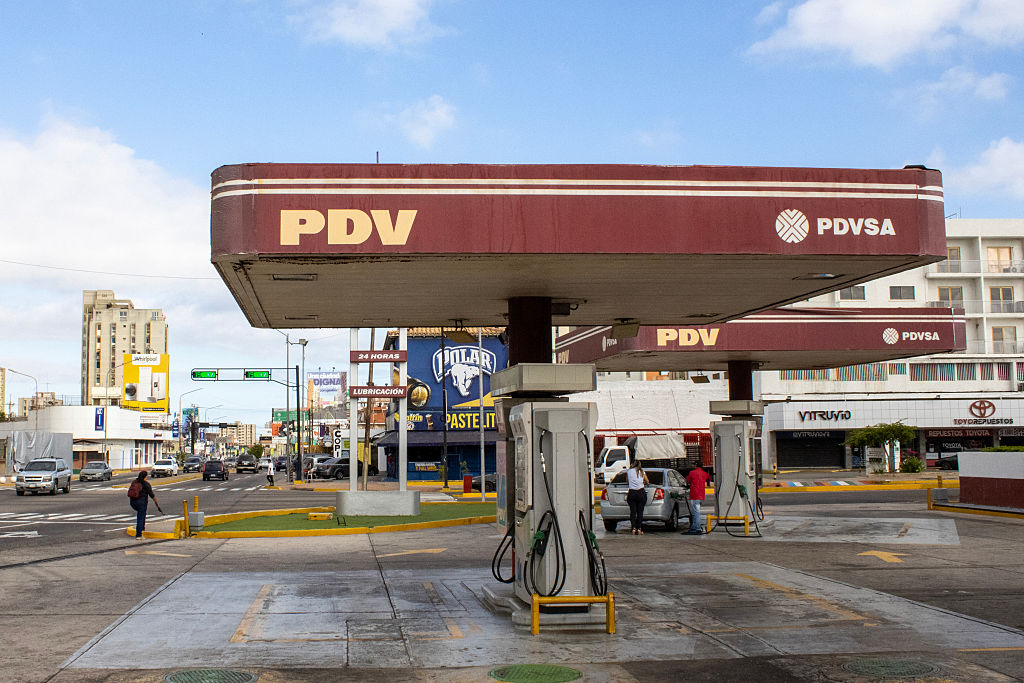
The head of security at Caracas’ Simón Bolívar International Airport in recent years was rumored to be nicknamed “Sacapasaportes”—he who takes away passports. He was said to lead a criminal ring whereby his associates in the crowded terminals would act like official airport personnel, request and confiscate passengers’ passports, and then demand that victims pay hundreds of dollars in bolivares to get them back. If victims didn’t have cash, they would be directed to the airport convenience store to “purchase” hundreds of dollars’ worth of goods with their credit cards, paying the money but leaving the store with nothing in hand.
Usually, and even in destabilized countries lacking reliable governance structures, the international airport is a safe place. But not in Venezuela. The person tasked with guaranteeing security was implicated in threats himself.
This could give an idea of the environment that companies planning to enter Venezuela should prepare for. The Trump administration’s Venezuela transition plan depends on international companies establishing a presence, rebuilding infrastructure, and revitalizing the energy sector.
But how will these companies operate there while still complying with laws against foreign bribery, economic sanctions, money laundering, and support of terrorism? According to the administration, narcotraffickers and other bad actors are widespread in Venezuela, meaning a company might easily end up doing business with sanctioned parties. Two criminal gangs in the country have already been designated by the U.S. State Department as Foreign Terrorist Organizations (FTOs), Tren de Aragua and Cartel de los Soles, so any “material support” a company provides to them could be considered a criminal offense under U.S. law.
The corruption risk
The 2024 Latin America Corruption Survey, which measured how businesspeople view corruption levels in 17 countries across the region, found corruption to be most widespread—by far—in Venezuela (Haiti wasn’t surveyed). Over 90% of respondents with business experience in Venezuela considered corruption a “significant obstacle.” The next most corrupt country—Bolivia—had 75% of respondents saying it has significant corruption. When the survey was conducted four years earlier, in 2020, there weren’t enough businesspeople from Venezuela willing to participate, making the data invalid. The assumption was that they were too afraid to take part.
Venezuela’s state-owned oil company, Petroleos de Venezuela (PDVSA), currently under U.S. sanctions, will be key to efforts to revive the energy sector. It is also considered perhaps the most corrupt state-run company in the region. More than a dozen enforcement actions under the U.S. Foreign Corrupt Practices Act (FCPA) have involved improper payments to PDVSA officials. The rigorous controls and safeguards needed to manage PDVSA interactions and effectively reduce risk will be both time-consuming and costly.
To manage security risks, some predict a model in which the Venezuelan military will be tasked with escorting and accompanying international companies so they can carry out their work. This, too, could increase corruption risks, as a company’s employees would then have direct, regular interactions with those military officials. Officials could demand illicit payments to perform their protective work.
Typically, a company would follow corporate compliance best practices when entering a high-risk jurisdiction for corruption. It would implement policies and procedures, establish hotlines, and train its staff on the rules. It would carry out thorough due diligence on counterparties to understand their reputations and verify they aren’t connected to government officials or problematic actors. But do dependable intelligence providers even exist in Venezuela to help uncover government links and other actionable information about local actors? How can a company ensure that its suppliers aren’t connected to criminal groups?
Economic sanctions risk
Current U.S. economic sanctions apply to PDVSA, various other actors in the energy sector, and the Venezuelan government. Days ago, in a widely publicized event at the White House, U.S. President Donald Trump urged a group of international companies to invest a historic $100 billion in the nation’s oil industry. On the idea, ExxonMobil CEO Darren Woods asserted that Venezuela is currently “uninvestable,” and others pointed to significant changes to make the country attractive once more.
For companies to do business and rebuild the oil industry as envisioned, the U.S. government would need to provide some form of sanctions relief.
The U.S. could do this in one of three ways. The U.S. Department of the Treasury’s Office of Foreign Assets Control (OFAC) could comprehensively remove certain sanctions, as occurred with Syria last year, Sudan starting in 2017, and Iraq in 2003. The diplomatic overtures that have begun between the U.S. and Venezuelan governments, including restoring formal relations and reopening embassies, suggest this might be the likely path.
But even if there is a comprehensive lifting, sanctions would still likely remain in place for FTOs, human rights violators, certain government officials, Russians, Iranians, and companies owned by these people. Companies would still need to perform careful screening and diligence on counterparties to ensure they are not inadvertently dealing with sanctioned parties and violating U.S. law.
Sanctions could remain in place, and OFAC could issue a series of general licenses authorizing certain activities related to oil exploration and production and related activities. OFAC used this approach in a previous round of negotiations with Venezuelan authorities while advocating free elections, but then rescinded the general licenses when Venezuelan authorities failed to follow through with commitments.
If general licenses are issued, companies would still need to be careful about how they operate, as general licenses may include technical terms and conditions related to counterparties, payment structures, reporting, and recordkeeping. Protocols should be integrated into existing compliance frameworks to ensure that general licenses are strictly followed.
Finally, sanctions could remain in effect, and OFAC could issue specific licenses to certain companies to engage with currently sanctioned entities. This would require companies to prepare applications, possibly negotiate with OFAC over terms, and then comply with the terms. Again, this path requires companies to have robust compliance protocols to ensure they are operating consistently with the specific license.
These broad compliance challenges are not insurmountable. The global energy sector has faced similar challenges before and has handled them with varying success in other unstable and difficult environments, like Nigeria and Iraq. As international companies plan their strategies to enter Venezuela, they should carefully consider the legal compliance and ethics risks involved.
ABOUT THE AUTHOR
Matteson Ellis
Reading Time: 4 minutesEllis is the Latin America practice lead at Miller & Chevalier.
AQ Podcast | After Maduro: Risks in Venezuela and Beyond
Andrés Martínez-Fernández of the Heritage Foundation on what the capture of Nicolás Maduro might mean for the country and beyond.
Maduro’s Miscalculations Are a Cautionary Tale for Rodríguez
Venezuela’s interim president faces an existential balancing act: cooperating with the Trump administration while staying loyal to her base.