




A Key Pending Challenge for Milei’s Argentina
After making strong fiscal progress, Argentina’s government still confronts a fragile exchange rate regime as it seeks a new IMF program.

Argentina’s Inflation Challenge
Recent setbacks highlight how difficult it will be for the Milei government to slow price increases.
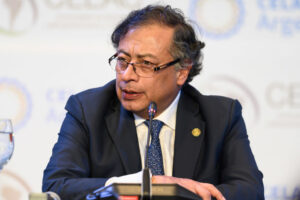
Colombia’s Growth Is Slowing, Imperiling Gustavo Petro’s Agenda
This year, plans for major reforms will collide with slower growth and efforts to tame inflation.

Argentina Could Really Use a Win
Politics and soccer mix everywhere, but this year it’s not just the government hoping for a championship to lighten the national mood.

100 Days of Sergio Massa’s Balancing Act
Argentina’s economy minister has prevented wholesale collapse. Is that enough to claim victory?

Venezuela’s Ad Hoc Economic Recovery Is Not Yet Sustainable
Ruling-party politics will likely determine whether the recovery continues or collapses.
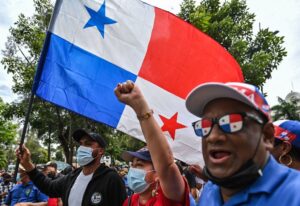
In Panama, Protesters Want Deeper Reform
The demonstrations that have rocked the country for weeks go far beyond inflation.

Photo Essay: In Peru, a Daily Grind Against Inflation
In a poor neighborhood on Lima’s outskirts, supply disruptions and rising prices have residents struggling to afford staples.

Four Scenarios for Argentina’s Inflation Crisis
History suggests that inflation’s path will determine the outcome of the 2023 elections.
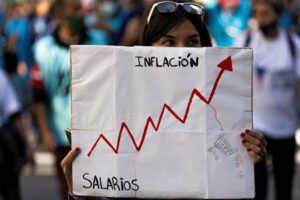
How Is Latin America Handling the Inflation Crisis?
From raising central bank rates to subsidizing gas costs, the region is fighting to contain price hikes that hit the poorest hardest.

Dollarization Is No Silver Bullet for Latin America’s Inflation Woes
Recent proposals in Argentina and elsewhere tout a simple solution for a complex problem.

It’s Groundhog Day in Argentina
What explains the endless cycle of recession and crisis? A leading economist offers a less traditional diagnosis – and suggests remedies.

How to Stop Venezuela’s Hyperinflation? Brazil Offers an Idea.
The 1994 “Real Plan” stopped 2,500% inflation, thanks to an ingenious tool that Maduro’s eventual successors may want to replicate.

PUBLISHED BY AMERICAS SOCIETY/ COUNCIL OF THE AMERICAS
680 Park Avenue
New York, NY 10065
Phone: (212) 249-8950