

![]() |
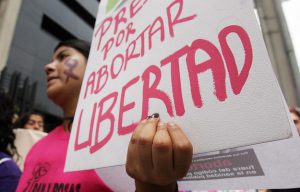
Doctors in Brazil sparked debate yesterday when the Conselho Federal de Medicina (Federal Council of Medicine) published a petition endorsing the legalization of first-trimester abortions.
The council, which represents approximately 400,000 doctors throughout the country, will submit the petition to a Senate commission that is reviewing several amendments to the country’s penal code. The document was met with overwhelming approval from the council’s 27 member organizations, 80 percent of which supported it.
Abortion is currently illegal in Brazil, except in limited cases: when the pregnancy risks the mother’s life, if the fetus presents signs of severe mental disability or in cases of rape. Nevertheless, Brazilian newspaper Folho de Sao Paolo reports that according to the Brazilian Ministry of Health, approximately 1 million abortions are performed illegally each year in Brazil. In spite of the ban, a 2010 study revealed that 20 percent of Brazilian women under the age of 40 have undergone an abortion, and 55 percent of them have been hospitalized due to resulting complications. The high risk of illegal abortions prompted the Council’s petition, which called the issue of abortion “an urgent matter of public health.”
A change to the law would make Brazil the second country in Latin America to relax abortion prohibitions recently. In October 2012, Uruguay passed the region’s first decriminalization law, permitting abortion within the first 14 weeks of pregnancy in cases of rape and allowing late-term abortions when a woman's health is at risk. Brazil’s proposed change goes further, allowing first-trimester abortions even for healthy pregnancies.
President Dilma Rousseff struggled with the issue in her 2010 presidential campaign. Although she initially supported abortion decriminalization, pressure from Catholic voters prompted her to attenuate her position.
In the most populous Catholic country in the world, the petition has provoked condemnation from Brazil’s Council of Bishops. Moreover, the proposal comes just as the selection of an Argentine Pope has drawn attention to reinvigorating Catholicism in Latin America and comes on the heels of Pope Francis’ meeting with Rousseff—only his second meeting with a head of state since his inauguration.
![]() |
The lower house of Uruguay’s Congress approved a law on Tuesday that authorizes abortion within 12 weeks of conception. The bill was approved by a narrow margin of 50 to 49 votes after 14 hours of debate.
The law project allows abortions only after a woman has met with a team of at least three professionals—a psychologist, a social worker and a “conscientious objector” (also known as an anti-abortion activist)—who can provide information on the risks, alternatives and adoption programs that are available. Five days after such meeting, if the woman confirms her willingness to end the pregnancy, the physicians arrange the procedure. This approval process does not apply in cases of pregnancy caused by rape or when pregnancy represents a high risk for the woman’s health, in which abortion is unrestricted if it happens within the first 14 weeks after conception.
President José Mujica has said he will approve the law if passed by Congress. This is the third attempt to decriminalize abortion promoted by the Frente Amplio (Broad Front—FA) since it assumed power in 2005. In 2008 a law was vetoed by former President Tabaré Vázquez from the FA due to his belief that if abortion is legalized the number of cases will proliferate. Then, in December 2011, the party was only one vote away from passing the bill, but debate was postponed for one more year. According to Iván Posada, a deputy for the Partido Independiente and key advocate of the project, the law “proposes an intermediate solution, the road that is less bad in terms of conflicting values.” It must now be approved by the Senate, where it is expected to pass by the end of the year.
In a region where the majority of people are Catholic, reproductive rights are a highly contested topic in Uruguay, as in the rest of Latin America. Although abortion is legal in several countries—including Cuba, Guayana and Mexico City—this is the first time a South American nation has taken steps toward decriminalizing abortion without restrictions to the reason for this practice. According to Joan Caivano and Jane Marcus-Delgado, 12 percent of all maternal deaths in Latin America are estimated to result from unsafe abortions.
![]() |
A bill to legalize abortion in Uruguay, having passed the Senate in December 2011, remains stalled in the Chamber of Deputies. Earlier this year, the Frente Amplio (Broad Front—FA) coalition, which controls congress and the presidency, was one vote away from agreeing to the Senate bill that would decriminalize abortion within the first 12 weeks after conception.
The deciding vote, from opposition Deputy Iván Posada in the Partido Independiente (Independent Party), offered up a compromise proposal in April that would permit abortion only after a pregnant woman submits to a counseling committee made up of a psychologist, a social worker and a “conscientious objector,” also known as an anti-abortion activist. The woman would then be given five days to decide whether to move forward with the abortion, and allowed to undergo a legal abortion procedure after that waiting period. The bill still remains on the floor in the Chamber of Deputies and Deputy Pedro Abdala of the Partido Nacionalista (Nationalist Party), the second-largest party in congress, favors sending the issue to a national referendum if the bill eventually passes in the Chamber.
In the absence of bill passage, Uruguayan pregnant women are turning to drugs like misoprostol. Obstetricians or gynecologists cannot prescribe misoprostol, although some still do illegally and the drug can be found on the black market. Misoprostol has a 97 percent success rate in terminating a pregnancy, but a 2001 survey shows that 30 percent of female deaths in Uruguay were attributed to illegal abortion measures.
The deadlock in Uruguay underscores Joan Caivano and Jane Marcus-Delgado’s argument in the latest issue of Americas Quarterly: “In Latin America and the Caribbean, 12 percent of all maternal deaths are estimated to have been the result of unsafe abortion. Annually, about 1 million women in the region are hospitalized for complications ranging from excessive blood loss and infection to septic shock arising from unsafe terminations of pregnancy. Despite these dire statistics, and their dramatic effect on women’s health, the efforts to address reproductive rights have been marked by divisive politics.” For more from Ms. Marcus-Delgado, she will be speaking at the Americas Quarterly Summer 2012 issue launch on August 17.
![]() |
The Argentine Supreme Court ruled unanimously yesterday to decriminalize abortions in cases of rape. The landmark decision came out of a case where a 15-year-old girl was raped by her stepfather, a senior officer of the police force in the Argentine province of Chubut. In 2010, a Chubut court had ruled in favor of the adolescent having an abortion, which meant that yesterday’s decision formally backed the original ruling. The victim went forward with the abortion after the initial court decision.
Prior to Tuesday’s ruling, abortions were only considered legal in cases where the woman was mentally ill or if her life is threatened by birth. Doctors who performed illegal abortions could have faced between one and four years in prison. But the Supreme Court’s decision now permits doctors to perform abortions with the legal permission of the rape victim without having to seek court orders.
![]() |

En los últimos seis años de gobierno panista bajo la dirección del Presidente Felipe Calderón, 16 estados de 32 entidades federativas que conforman México han cambiado sus constituciones locales para defender la vida humana desde el momento de la concepción.
La Constitución mexicana salvaguarda el derecho de las mujeres y de las parejas a decidir sobre el número y espaciamiento de las y los hijos, por lo que las recientes enmiendas de las constituciones locales devienen inconstitucionales, incluso ante la prohibición del uso de la píldora del día después y la fertilización in vitro.
La propuesta del ministro Fernando Franco de declarar fuera del marco de la Constitución general mexicana estas reformas estatales, ha despertado un gran debate en el que han tomado partido varias figuras públicas de alto nivel y defensores de derechos humanos como José Narro, rector de la Universidad Nacional Autónoma de México, máxima casa de estudios en México o del ombudsman nacional, Raúl Plascencia.
Sin menospreciar las declaraciones del propio jefe de gobierno del Distrito Federal, Marcelo Ebrard, quien se ha manifestado –profusamente y en repetidas ocasiones—en favor del respeto a la libre decisión de las mujeres sobre su cuerpo, la arenga pública ha advertido que este tipo de prohibiciones pone en entredicho el Estado laico. Pocas naciones en el mundo pueden presumir de esta condición que a México le costó varias guerras y muertes entre los siglos diecinueve y veinte en aras de construir una nación fuerte y democrática.
Pero en este periodo aciago que México vive y la llegada de mentes conservadoras a puestos de poder han inclinado la balanza para que nuestro país se hunda más en el oscurantismo. Tras haber sido durante décadas una nación que mantenía un respetado liderazgo en América Latina, actualmente México—con niveles de desempleo superiores a los vistos en los periodos de crisis, con tasas de crecimiento a la baja durante los últimos 10 años, y en donde se ha recrudecido la violencia contra las mujeres (feminicidio)—se pone a la vanguardia en un afán irrevocable por volver a la ignorancia.
![]() |
Yesterday was a monumental moment for the future of reproductive rights in Colombia. Five years after Colombia’s Constitutional Court ruled in favor of abortion under three specific circumstances—rape, risk to the mother's life or congenital malformation of the fetus—the fate of reproductive and sexual rights was on the cusp of change. This would have been a setback for all Colombians.
Instead, the Senate voted against a proposal to overrule the 2006 Constitutional Court decision allowing select abortions. If the Senate bill had passed, it would have prohibited all forms of abortion, and made the use of emergency contraceptives and in vitro fertilization illegal and subject to prosecution. Fortunately, with nine votes against the proposed bill and seven in favor, the status of abortion in Colombia remains the same. The bill did not have the support of Colombia’s inspector general, Alejandro Ordoñez, who despite efforts from the Liberal party, Polo Democratico and grassroots organizations to stop the voting, kept the pressure on.
![]() |
Reports from Brazil this week indicate that the presidential candidates’ positions on abortion are becoming a significant factor in the country’s October 31 second-round contest between Worker’s Party candidate Dilma Rousseff and her Social Democracy Party opponent José Serra. Abortion has not historically played a prominent role in national elections in Brazil despite having the world’s largest Catholic population and a growing number of evangelical Christians.
The rise to prominence of the abortion issue is likely tied to the candidates’ efforts to woo supporters of Green Party candidate and evangelical Marina Silva, who dropped out of the race after winning an unexpectedly high 19 percent of the national vote. Analysts are now suggesting that the Workers’ Party’s traditional support for abortion and gay marriage may have cost Dilma Rousseff in the first round of voting and could play a defining role in the increasingly tight race's outcome.
In a televised debate last Sunday, Rousseff and Serra publicly clashed on the abortion issue. Serra accused Rousseff of changing her previous stance, while Rousseff responded that Serra “has a thousand faces” and accused him of slander.
Abortion is illegal in Brazil except in cases of rape or if the mother’s life is at risk. Estimates vary, but the Brazilian Ministry of Health claims one million illegal abortions are performed per year and are the fourth largest cause of maternal mortality.
AQ's coverage and post-trip analysis of the President's May 2-4 visit.