
![]() |
Leaders of the Fuerzas Armadas Revolucionarias de Colombia (Revolutionary Armed Forces of Colombia—FARC) responded on Thursday to a letter signed by members of the U.S. Congress in March in support of the Colombian peace negotiations, which resumed this week in Havana.
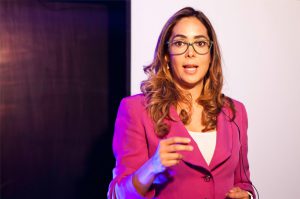
In a press conference on Thursday, FARC member Victoria Sandino Palmera read a letter from the FARC, which acknowledged the “altruistic gesture” of the 62 U.S. congressmen who signed the letter to U.S. Secretary of State John Kerry. Signatories included: James P. McGovern (D – MA), Janice D. Schakowsky (D-IL), Joseph R. Pitts (R-PA), John Lewis (D-GA), and Randy K. Weber (R-TX), among others.
The FARC response also asked the legislators for their support in pushing for the release of FARC rebel Simon Trinidad.
Trinidad, whose real name is Ricardo Palmera, is fulfilling a 60-year sentence in the U.S. for kidnapping three Americans in Colombia who were later released. The FARC delegation has requested Trinidad’s presence during the peace negotiations. "We have appointed Trinidad as the FARC’s spokesman and we expect the Colombian government to hold talks with the U.S. government to achieve his incorporation into the peace process," said Ivan Marquez, head of the guerrilla delegation.
In almost half a century, Colombia’s internal conflict has killed at least 600,000 people and displaced another 3 million.
![]() |
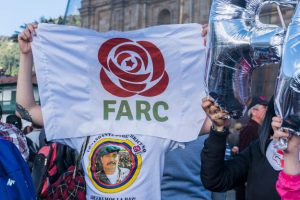
Colombian President Juan Manuel Santos joined hundreds of thousands of Colombians in a march through Bogotá on Tuesday to support the peace negotiations between the Fuerzas Armadas Revolucionarias de Colombia (Revolutionary Armed Forces of Colombia—FARC) and the Colombian government.
The march drew together an estimated 800,000 people across Colombia and 200,000 in Bogotá alone, making it the largest demonstration to take place in Colombia’s capital city. Similar demonstrations took place in Cali, Barranquilla, and Santander. In an address to the crowd, President Santos urged unity and said that “All conditions are set…[for] an end to the conflict.”
Since peace talks began in Oslo in October, the Colombian government and representatives of the FARC have been negotiating a peace treaty that is expected to address agrarian reform, a top priority for the FARC. The president and his team have also addressed the demilitarization and disarmament of the rebels and explored ways to integrate the FARC’s leadership into the political system. In addition to agrarian reform and demobilization, social development—health, education, housing, and poverty eradication—have been a top priority for both sides.
However, Santos announced last week that the government would not negotiate a bilateral ceasefire with the FARC until the two sides reach a final agreement. Without ceasefire in place, some Colombians fear that there will be no end to the conflict which has killed at least 600,000 people and displaced another three million.
Political opponents of the current administration, including former Colombian President Álvaro Uribe, refused to participate in Tuesday’s march. Uribe and other politicians have argued that the march supports the FARC, rather than victims of violence and kidnappings.
![]() |
Today concludes the seventh round of peace talks between the Fuerzas Armadas Revolucionarias de Colombia (Revolutionary Armed Forces of Colombia—FARC) and the Colombian government in Havana, Cuba, with news yesterday signaling there could be an agreement on one of the most important issues on the agenda: agrarian reform.
The issue of land reform is an important part of the negotiations for both sides, yet progress has been slow. In the past, the FARC has declared that to solve agrarian problems, there must be a “democratization,” which means distribution of land held by large landowners. The FARC’s proposal for land reform includes a demand for a redistribution of land and the improvement of property conditions.
By the end of today, there will likely be a press conference detailing the solutions reached in this latest round of dialogues with negotiations resuming again on April 2.
The Colombian peace process began ceremoniously in Oslo, Norway, in October 2012 with negotiations commencing in Havana, Cuba, in November 2012. Lead negotiators include former Vice President Humberto De La Calle on behalf of the Colombian government and Ivan Márquez on behalf of the FARC.
![]() |
Peace talks between the Revolutionary Armed Forces of Colombia (FARC) and the Colombian government are slowly progressing in Havana, Cuba, despite renewed violence and generally low expectations. Land reform continues to be a contentious area and just last month the FARC unveiled a 10-point communiqué outlining its requests. While the plan failed to explicitly mention the 4 to 5 million citizens currently displaced due to the conflict, successful peace talks could create new opportunities for these Colombians to return to their land.
The multiple perpetrators in Colombia’s armed conflict mean that a peace treaty with only one group (the FARC in this case) will not provide a complete solution. The FARC and the paramilitaries (the largest and most organized adversaries for much of the conflict) each displaced millions of civilians from some 7 million total hectares of land. Although estimates vary, by all counts the paramilitaries displaced as many individuals as the FARC and perhaps even twice the amount. Drug traffickers and organized criminal groups like the new bandas criminales (BACRIM) have also followed suit, ousting a good portion of 2011’s estimated 200,000 displaced persons, according to the Consultoría para los Derechos Humanos y el Desplazamiento (CODHES).
The first step to reversing the displacement is providing basic security, particularly in the areas most affected by the conflict (Caqueta, Putamayo, Valle del Cauca, among others). Here the FARC peace agreement would begin this process, but comprehensive disarmament, demobilization and reintegration is critical.
![]() |
Colombian President Juan Manuel Santos announced today that six members of the Fuerzas Armadas Revolucionarias de Colombia (Revolutionary Armed Forces of Colombia—FARC) and two policemen were killed in an attack near the Venezuelan border. The announcement comes only days after the president requested that the Ejército de Liberación Nacional (National Liberation Army—ELN) set free two German citizens who were seized last week in the northern Catatumbo region. These events have raised concern about the viability of the peace talks in Havana, but both the government and the FARC remain optimistic about progress.
Iván Márquez, head of the FARC’s negotiating team, believes there are many reasons for his side to be optimistic about the peace process. “Destroying the road towards peace over claims of armed conflict would be unreasonable,” he stated. But since the group’s two-month ceasefire came to an end on January 20, kidnappings and violence have resumed in the country.
Smaller but more politically motivated than the FARC, the ELN has also expressed its interest in engaging in peace talks with the government, but the group refuses to stop its attacks on civilian and military targets as a precondition to begin the negotiations. The peace-building process held in Cuba recently concluded its third phase, with no major progress made toward ending the longstanding conflict. Land reform is currently the main focus of the negotiations.
![]() |
Thursday marked the conclusion of the third round of peace talks between the Fuerzas Armadas Revolucionarias de Colombia (Revolutionary Armed Forces of Colombia—FARC) and the Colombian government in Havana, Cuba, with no major progress made toward ending this long-standing conflict as the Colombian government continued to rule out a ceasefire with the FARC to gain greater peace.
Humberto de la Calle, head of the Colombian government’s peace negotiation team, declared in a press conference that he would rule out a ceasefire with the FARC until definitive peace agreements were set. "We want peace, but not at any cost. Not if as a result of the conversations the guerrillas are able to get stronger and continue to wage war." January 20 marked the end of the two-month-long unilateral ceasefire on behalf of the FARC.
He also cited that the round of discussions should be instrumental in avoiding further guerilla operations. "Once the conflict ends and the FARC are reintegrated into society, they are eligible to have physical and legal guarantees, but this will not happen prior to a solid partnership. Politics and weapons should not be combined.”
The FARC, however, are pushing for land reform and social development investments. During this latest round of negotiations, the FARC emphasized the need for greater support for food production to meet basic nutritional needs and proposed that 25 million hectares (62 million acres) of land, more than 20 percent of the country, be handed over to the country's poor.
Progress is likely to be made confidentially during negotiations to facilitate honest and impactful discussion, according to De la Calle. He stated said that peace processes do not come to fruition if facilitated through the media, and that the negotiating team will maintain periodic announcements of progress.
![]() |
With the fate of peace talks between the Fuerzas Armadas Revolucionarias de Colombia (Revolutionary Armed Forces of Colombia—FARC) and the Colombian government hanging in the balance, the FARC requested yesterday that Colombian Agriculture Minister Juan Camilo Restrepo participate in the negotiations in Havana, Cuba, to address the guerrilla group’s demand for agrarian reform.
The FARC’s proposal, presented on Monday, calls for a complete rural agrarian reform that includes property redistribution and the improvement of property conditions, among other elements. (See this document for more details.) Hours after the FARC’s request, Restrepo praised the group’s intentions but said that the proposal should be discussed by the members of the peace negotiation team, to which he does not belong. Besides land reform, the agenda for the peace talks includes the end of armed conflict, guarantees for the exercise of political opposition, drug trafficking and the rights of victims of the conflict.
On Monday, the FARC’s chief negotiator, Iván Márquez, said that the two-month ceasefire would come to an end on January 20. The rebel group’s intention to resume military operations—as well as the FARC’s allegedly increasing weapons acquisitions in Ecuador—may endanger the peace process that began in October.
The government’s chief negotiator, Humberto de la Calle, stressed that Colombia is willing to extend guarantees to the rebels as long as the FARC agrees to end the fighting. Talks in this third phase of negotiation will go on for 11 days, followed by a three-day break. The deadline for the negotiations is set in November.
![]() |
Yesterday afternoon, the Fuerzas Armadas Revolucionarias de Colombia (Revolutionary Armed Forces of Colombia—FARC) guerrilla group complained that the Colombian government’s usage of military force during peace talks threatened the harmony of the negotiations. Iván Márquez, chief negotiator for the FARC, stated that “in contrast with our act of humanity, President Santos announces that he will intensify the war on all national territory,” adding it was “nonsense.”
Although the FARC declared a two-month ceasefire last month, the move turned out to be unilateral as Santos made clear that the Colombian government would not reciprocate, and would continue a military offensive until a peace agreement is reached. The Colombian army has been largely successful in its effort, killing 20 FARC fighters earlier this month. In declaring its ceasefire, the FARC has petitioned for a bilateral ceasefire but to no avail. Márquez renewed the call yesterday: “[if the government] continues to be adamant in war, it should at least […] sign a treaty of regularization […] searching always to preserve the lives of the people and respect for their rights.”
The bilateral negotiations began ceremoniously in Oslo, Norway, this past October and intensified the following month in Havana, Cuba, where Cuban- and Norwegian-mediated talks—with Chilean and Venezuelan observation—have been taking place intermittently since the middle of November. The FARC was established in 1966, and its rebellion against the Colombian government marks Latin America’s longest running internal guerrilla conflict.
![]() |
Top stories this week are likely to include: Mercosur convenes; first week of Enrique Peña Nieto’s presidency; FARC peace negotiations resume; Peru, Chile dispute their border at The Hague; and Rousseff’s oil royalties veto makes waves in Brazil.
Mercosur Considers Ecuador and Bolivia: When Mercosur’s member nations convene on Friday in Brasilia, they will consider upgrading Bolivia and Ecuador—currently associate members—to full membership. Brazilian Foreign Minister Antonio Patriota cites a desire to deepen South American integration. AQ Editor-in-Chief Christopher Sabatini notes that “with each new addition to Mercosur the original intent of the customs union is becoming diluted. The additions may be economic benefits to Brazil and serve a broader political end, but with Venezuela and now potentially Bolivia and Ecuador the task of coordinating a common external tariff and ensuring that monetary policy doesn't interfere with internal trade is nearly impossible.”
Peña Nieto in the Presidency: After announcing his cabinet on Friday and transitioning into power the following day, Mexican President Enrique Peña Nieto undergoes his first full week in Mexico’s highest office. Yesterday, the main domestic political parties announced the Pacto por México (Pact for Mexico) that outlines desired political reforms for Peña Nieto’s term. The reforms center on three areas: strengthening the state; economic and political modernization; and expansion of social rights. As AQ Senior Editor Jason Marczak observes, “the show of unity with the joint signing of the Pacto por México is an important accomplishment for Peña Nieto but the specifics of how to implement these reforms will be the real challenge especially with PRD legislators already threatening to block them.”
Peru, Chile at The Hague: Beginning today, the International Court of Justice will hear a lawsuit by Peru brought against Chile over an unclear maritime border. In the lead-up, however, both Chilean President Sebastián Piñera and his Peruvian counterpart Ollanta Humala have discouraged their respective citizens from being belligerently nationalistic. Piñera wrote against “exacerbated nationalism, which poisons the soul of the people,” while Humala urged for both countries to consider the outcome of the lawsuit as “the end point of a dispute between brother countries.”
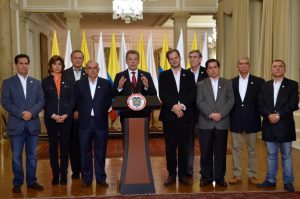
Colombia, FARC Continue Talks: Both sides will resume peace negotiations in Havana on Wednesday. The Colombian government’s chief negotiator, Humberto de la Calle, has stressed “a stable and enduring peace” as the desired outcome of the talks; President Juan Manuel Santos recently announced that he has designated November 2013 as the deadline for an agreement.
Impact of Dilma’s Partial Veto: Brazilian President Dilma Rousseff was absent at last Friday’s Unasur meeting in Lima due to “domestic engagements.” The issue in question was whether she would sign into law a controversial law on oil royalties, which would spread the nation’s resource wealth to non-producing states. According to Reuters, Dilma’s veto “changes the bill so that producer states continue to receive royalties on output from existing oil concessions. She signed most of the rest of the bill passed [in early November] by Congress, redistributing royalties from all future oil concessions so that non-producing states get a greater share.” The oil-producing states had threatened to take their case to the Supreme Court, which would have dragged out the case amid Brazil’s preparations for the 2014 and 2016 sporting mega-events. Pay attention this week to see further reactions within Brazil to Dilma’s partial veto.
![]() |
The Fuerzas Armadas Revolucionarias de Colombia (Revolutionary Armed Forces of Colombia—FARC) was criticized on Monday for violating the two-month, unilateral ceasefire that the rebel group announced in Cuba last week. In an interview with El Tiempo, Colombian Defense Minister Juan Carlos Pinzón accused the FARC of targeting energy infrastructure and the local police in the department of Antioquia despite the ceasefire having been in effect since midnight on November 20. The FARC denied intentionally violating the ceasefire and responded by saying that their forces on the ground had not received the order in time, blaming the media for not disseminating the news properly.
The Colombian government has resisted pressure to respond to the ceasefire. “Those who have an obligation to demonstrate credibility and commitment [to the peace process] are the FARC, who have historically lied to Colombia,” said Minister Pinzón referring to the 1987 ceasefire that the rebel group violated and the demilitarized zone that the FARC used to rebuild its numbers and capability during the last attempted peace negotiation (1999-2002). Instead, President Juan Manuel Santos and his negotiating team are focusing on long-term peace and the integration of the rebels’ leadership into the political system. Minister Pinzón emphasized the government’s hope that the negotiations succeed and that the FARC “once and for all declare a ceasefire for the rest of time.”
Despite the controversy surrounding the ceasefire, the Colombian government and the FARC will continue to negotiate the end of the 50-year conflict behind closed doors. The talks are being mediated by Norway and Cuba, while Chile and Venezuela—seen as sympathetic to the Colombian government and the FARC, respectively—provide diplomatic support.
AQ's coverage and post-trip analysis of the President's May 2-4 visit.