
![]() |
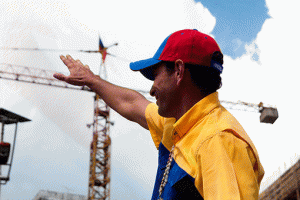
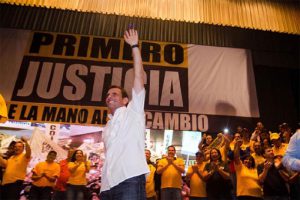
Tuesday marks the official start of Venezuela’s 10-day campaign ahead of the April 14 presidential election. The election will be a choice between interim President Nicolás Maduro and Miranda State Governor Henrique Capriles—both of whom have been unofficially campaigning for weeks.
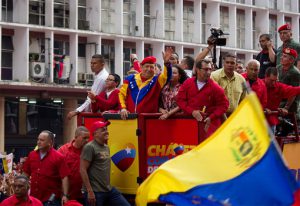
Maduro, Chávez’ political heir, has vowed to honor the late president’s socialist legacy and is campaigning on a spiritual message, committing to follow the steps of his “father.” This election poses a new challenge for chavismo, which for the first time will attempt to retain the presidency without the charismatic presence of its late leader.
Capriles, the candidate of the Coalition for Democratic Unity (Mesa de la Unidad Democratica—MUD), is basing his campaign on the premise that “Maduro is not Chávez.” He is associating Maduro with the country’s corrupt and unstable environment and is criticizing the government for having to implement two currency devaluations in less than 60 days.
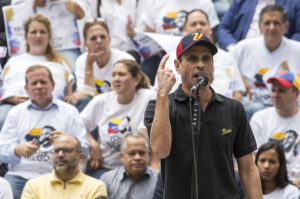
Both candidates were expected to kick off their respective campaigns today in Barinas state, where Chávez was born in 1954. On Sunday, after Maduro accused Capriles of seeking to provoke violence by cheduling his first rally in the same state, Capriles announced that he would move the rally to Monagas state. He will campaign in Barinas on Wednesday. Capriles also joined thousands of his followers in a nighttime walk on Monday night to protest against violence and insecurity in Caracas.
In less than two weeks, 18.9 million Venezuelans are eligible to vote for a second time in six months. Although much has changed since Chávez’ victory in October, chavismo is still leading the polls. Local polling firms Datanalisis and Hinterlaces give Maduro a more than 10 percentage point lead over Capriles; other studies indicate that Capriles is trailing by a smaller gap than what was observed in the October presidential election.
![]() |
Top stories this week are likely to include: Strong chavista performance in Venezuelan regional elections; Mayan peoples celebrate the thirteenth b’ak’tun; Argentina faces international fiscal isolation; and Peru and Chile sign a pact to remove mines from their shared border.
Impact of Venezuela Regional Elections: Although Venezuelan President Hugo Chávez’ health remains uncertain after a surgical operation in Cuba last week, his influence could not be ignored as Venezuelans went to the polls to elect state governors and legislators. Chávez-allied candidates dominated yesterday, winning 20 of 23 states; the opposition won only the states of Amazonas, Lara and Miranda. The Miranda victor was Henrique Capriles Radonski, who formerly held the governorship before resigning it to contest Chávez unsuccessfully during the 2012 presidential election in October. What will this mean for Venezuela? Observes AQ Editor-in-Chief Christopher Sabatini: “While Capriles’ win in Miranda reinforces his leadership of the opposition, this was clearly a victory at the state level for the chavista PSUV party—expanding their control over patronage and state offices which may come in handy if the country has to hold new presidential elections.”
Mayans Prepare for End of the Thirteenth B’ak’tun: Friday, December 21, marks the end of the current b’ak’tun in the Mayan calendar. Each b’ak’tun lasts approximately 394.3 solar years, but this Friday is especially noteworthy since it also marks the end of the Great Cycle—a period of 13 b’ak’tuns that began in 3114 BC. Given the importance of this date, some eschatologists believe the world will experience cataclysmic events; Mayas in Mexico’s Yucatán Peninsula are approaching the date with “calm and equanimity,” according to the Associated Press. Later this week, AQ contributing blogger Nic Wirtz will report from Guatemala on the preparations being undertaken there for the historic event.
Argentina Faces International Fiscal Isolation: The International Monetary Fund (IMF) will issue a report today on the failure of the Argentine government “to provide accurate data on inflation and growth to the Fund as members are required” within a three-month timeline, reports MercoPress. In September, IMF Managing Director Christine Lagarde warned that she would give the Argentine government a “red card” if it did not produce accurate inflation statistics. “Argentine officials report the country’s inflation rate at about 10 percent, but independent analysts have the number somewhere between 25 to 30 percent,” says Business Insider. If the IMF report is condemnatory, Argentina faces the prospect of expulsion from the Fund as well as the G-20 group of industrial nations.
Peru, Chile Demine Shared Border: The two Pacific countries are expected to announce on Thursday that approximately 300 anti-personnel and anti-tank mines have been cleared along their shared border. The mines date back to the contentious Peruvian-Chilean bilateral relations during their respective military dictatorships several decades ago. This action was agreed upon this past September by both foreign ministers at the UN General Assembly, and has been facilitated by the Norwegian People’s Aid.
![]() |
*This post originally appeared on the Revista Perspectiva blog and is being republished with permission of the author.
Caracas, Venezuela - Con una participación histórica, equivalente al 80,94% del censo electoral, Presidente Hugo Chávez ha ganado su cuarta elección presidencial consecutiva con más de un millón de votos de diferencia frente a su contendor, el candidato por la Mesa de la Unidad Nacional (MUD), Henrique Capriles Radonski. Chávez se dio su ya tradicional baño de multitudes al pie del balcón del Palacio de Miraflores, y los fuegos pirotécnicos que preparó el oficialismo no pararon de iluminar el cielo caraqueño por cerca de dos horas. Me pregunto ¿qué hubiese pasado con tantos preparativos de no haber conseguido la victoria?
Pese al llanto y las caras largas de casi la mitad de los votantes, la jornada ha sido un hito sin precedentes que demostró la enorme vocación cívica y democrática de la sociedad venezolana. Muchos se agolparon a los centros de votación desde las 4 de la madrugada y las filas en muchos colegios electorales se hicieron “eternas” en horas de la mañana. La alegría, el positivismo y los mensajes de servidores públicos, políticos experimentados y líderes juveniles, que a través de la televisión y la radio repetían invitaciones a votar en paz, fueron la constante.
Destaca también la efectividad y la sencillez del sofisticado sistema de votación, aunque no por ello del proceso en general, que lució lento por cuenta de las varias instancias que había que superar para llegar finalmente a las mesas. De acuerdo con Federico Pinedo, diputado argentino del Partido Propuesta Republicana (PRO), que ejerció como observador internacional, el trámite de anotar el documento de identidad a la entrada de los centros de votación tuvo que ser levantado en la tarde—en muchos sitios—para agilizar la dinámica.
El proceso de observación tampoco estuvo exento de dificultades. Convertido más en un acompañamiento que en una observación formal con entidad para cuestionar posibles irregularidades, en algunos puntos no permitieron la entrada de los “acompañantes;” en otros fueron supervisados por efectivos de la Fuerza Armada Nacional Bolivariana (FANB), y en otros más intimidados por la presencia de manadas de motociclistas simpatizantes del chavismo que llegaron a muchos centros gritando consignas con megáfonos.
![]() |
*This post originally appeared on the Revista Perspectiva blog and is being republished with permission of the author.
Caracas, Venezuela - Con una participación histórica, equivalente al 80,94% del censo electoral, Presidente Hugo Chávez ha ganado su cuarta elección presidencial consecutiva con más de un millón de votos de diferencia frente a su contendor, el candidato por la Mesa de la Unidad Nacional (MUD), Henrique Capriles Radonski. Chávez se dio su ya tradicional baño de multitudes al pie del balcón del Palacio de Miraflores, y los fuegos pirotécnicos que preparó el oficialismo no pararon de iluminar el cielo caraqueño por cerca de dos horas. Me pregunto ¿qué hubiese pasado con tantos preparativos de no haber conseguido la victoria?
Pese al llanto y las caras largas de casi la mitad de los votantes, la jornada ha sido un hito sin precedentes que demostró la enorme vocación cívica y democrática de la sociedad venezolana. Muchos se agolparon a los centros de votación desde las 4 de la madrugada y las filas en muchos colegios electorales se hicieron “eternas” en horas de la mañana. La alegría, el positivismo y los mensajes de servidores públicos, políticos experimentados y líderes juveniles, que a través de la televisión y la radio repetían invitaciones a votar en paz, fueron la constante.
Destaca también la efectividad y la sencillez del sofisticado sistema de votación, aunque no por ello del proceso en general, que lució lento por cuenta de las varias instancias que había que superar para llegar finalmente a las mesas. De acuerdo con Federico Pinedo, diputado argentino del Partido Propuesta Republicana (PRO), que ejerció como observador internacional, el trámite de anotar el documento de identidad a la entrada de los centros de votación tuvo que ser levantado en la tarde—en muchos sitios—para agilizar la dinámica.
El proceso de observación tampoco estuvo exento de dificultades. Convertido más en un acompañamiento que en una observación formal con entidad para cuestionar posibles irregularidades, en algunos puntos no permitieron la entrada de los “acompañantes;” en otros fueron supervisados por efectivos de la Fuerza Armada Nacional Bolivariana (FANB), y en otros más intimidados por la presencia de manadas de motociclistas simpatizantes del chavismo que llegaron a muchos centros gritando consignas con megáfonos.
![]() |
The Venezuelan electorate has chosen to give President Hugo Chávez another six-year mandate. Last night, the Consejo Nacional Electoral (National Electoral Council—CNE) announced that with 90 percent of ballots counted, Chávez earned 54 percent of votes while challenger Henrique Capriles Radonski took in about 45 percent.
The CNE also announced that the participation rate of eligible voters was nearly 81 percent, one of the highest in recent history. However, not all votes were factored into the quick count. As AQ guest blogger Mariana Marval reported from London, “[CNE] changed the rules so that the votes from abroad will now not be counted at the same time as the votes in Venezuela.”
The uncounted votes nevertheless will not surpass Chávez’ large margin of victory. At a closing campaign rally in Caracas last week, Chávez vowed to redouble his socialist policies, stating, “We’ve laid the foundations of 21st-Century Socialism and […] we’ll launch the second socialist cycle, from 2013 to 2019, with much more strength.”
![]() |
Cindy is Venezuelan and lives in Vietnam. Her husband’s career as a pilot took them to Ho Chi Minh, two and a half hours away from the nearest Venezuelan embassy. For Cindy and her husband, distance is not a restriction to vote in Sunday’s election. Their problem is their official status overseas: with only a tourist visa, they lack legal status abroad—signaling their fate according to Venezuelan law.
Article 124 of the Ley Orgánica de Procesos Electorales (Organic Electoral Processes Law) establishes that those who wish to register to vote abroad must have a proof of residence or “any other element that denotes the legality of their permanence outside of Venezuela”. However, requirements to register have varied from consulate to consulate. Some ask for birth certificates to process registration, others require passports and identification cards issued by the country of residence. As a result, thousands of Venezuelans like Cindy will not be able to exercise their democratic right abroad.
On October 7, voters will cast their ballot at the nearest Venezuelan foreign mission to re-elect President Hugo Chávez or vote in former Miranda Governor Henrique Capriles Radonski. To date, 124 of the 127 possible voting centers have begun to get ready for Sunday’s vote. Damascus, Syria, Tel Aviv, Israel, and Asunción, Paraguay, are the exceptions due to political instability or a hiatus in diplomatic relations with Venezuela.
But the biggest obstacle for Venezuelans living outside the country was the closure of the largest voting center abroad. On January 8, 2012, the United States expelled Livia Acosta Noguera, Venezuela’s consul general in Miami. Five days later, Chávez ordered an “administrative close” of the consulate.
With 19,542 registered voters, the voting center in Miami was bigger than any other—including any voting center inside Venezuela itself. In June, however, Venezuela’s electoral authority, the Consejo Nacional Electoral (National Electoral Council—CNE), announced that registrants in Miami could still vote. Except there was one not-so-small caveat: the closest place to do so was at the voting center in New Orleans, Louisiana—two hours away by air and 20 hours away by bus.
![]() |
Tensions have continued to heighten in Venezuela just days before Sunday’s presidential election between President Hugo Chávez and Henrique Capriles Radonski.
Electoral law prohibits opinion polls from being published four days ahead of the Venezuelan elections, but the most recent polling results reveal markedly different figures. Datanalisis has Chávez polling at 49 percent compared to Capriles’ 39 percent, while Consultores 21 poll shows Capriles in the lead with 47.7 percent versus Chávez’ 45.9 percent.
Despite assurances to the contrary from the Chávez-dominated National Electoral Council, some suspect their ballots won't be kept confidential. This is due in part to la Lista de Tascón, a private list of some 2 million people who had supported a 2004 plebiscite against President Chávez that was later publicly released by Venezuelan deputy Luis Tascón. Many state employees whose names appeared on the list were subsequently dismissed. Maribel Rodríguez, a 42-year-old homemaker who lives in the poor neighborhood of Catia west of the capital said, "My husband tells me he is obliged to vote for Chávez because he works with the government. What sort of democracy do we have?" The Venezuelan government currently employs at least 2.4 million people.
Motivated by Chavez’ daily assertions that his opponent will remove social benefits such as medical treatment, subsidized food and other components that have provided relief to the underprivileged, some citizens fear violence might occur if the incumbent loses the election. Government officials are fearful of losing their prominent position of power, facing criminal investigations or losing influence overnight if their patron is voted out of office.
![]() |
At a rally on Tuesday in the town of La Grita in Táchira state, Henrique Capriles Radonski, the candidate from the opposition’s Democratic Unity coalition, again invited President Hugo Chávez to join him in a debate that would be broadcast on television and radio and would focus on their respective platforms and views for Venezuela’s future. Once again, Chávez refused to debate him.
Capriles emphasized that a debate is important for discussing proposals, among them how to address the violence and insecurity that have led to more than 160,000 deaths in the 14 years of the current government. “”Only one hour, I don’t need five,” he stated, referring to the President’s national messages that often continue for several hours. Chávez’s response: a refusal to debate against “nothing,” dismissing Capriles.
This is not the first time the opposition candidate has called for a public debate. On September 7, he said in a speech in Monagas state: “I challenge them [government officials]. We are going to debate our government proposals. We are going to debate wherever they wish.” The president did not acknowledge this first call for a debate.
The presidential election is 18 days away, and is the fourth time Chávez will face voters. This includes presidential elections in 1998 and 2006 as well as a referendum in 2004. According to Luis Christiansen, president of polling firm Consultores 21, this is the first time in 14 years that the electoral scene looks balanced. His firm’s latest poll indicates that Capriles has 48.1 percent of voter support, with Chávez at 46.2 percent, a slight increase from the firm’s August poll. However, the Consultores 21 poll is the only one that gives the opposition candidate a lead.
![]() |
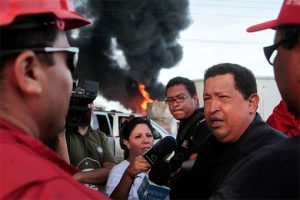
A large crowd of Venezuelan President Hugo Chávez’s supporters blocked a main road near an airport Wednesday prior to the arrival of opposition presidential candidate Henrique Capriles. The crowd congregated near the Bartolomé Salom airport in the coastal town of Puerto Cabello, causing turmoil during Capriles’ campaign rally. A truck and motorcycle were set ablaze and both sides hurled rocks, giving 14 people minor injuries.
At an outdoor rally afterwards, Capriles said, “Those actions aren’t spontaneous. There’s someone responsible for those actions.” Referring to Hugo Chávez without mentioning the president’s name, he added, “It’s you who wants that scenario. It’s you who wants to sow fear.”
Chávez recently claimed that his rival has a hidden right-wing agenda “that would lead Venezuela to a civil war.” As the melee erupted, some of the red-shirted government supporters went into the airport compound and carried away speakers and a generator. In a separate incident, the AFP and Reuters reported that one of their assigned photographers was beaten and kicked as Chávez supporters attempted to get hold of his camera.
Jorge Rodríguez, Chávez's presidential campaign manager, blamed government opponents and said that the Carabobo police, which are under Governor Henrique Salas' command, attacked Chavez's supporters. He said the crowd had "a right to protest and demonstrate freely" against Capriles’ visit.
Carabobo state Governor Henrique Salas Feo, a Chávez adversary, condemned the violence on television and said, “the country needs peace.” Yesterday was the third time in less than a month that Capriles has visited Carabobo state, and each time his presence has sparked altercations between Venezuela’s current administration and the opposing party.
![]() |
Top stories this week are likely to include: a political fracture among the Mexican Left; one month before the Venezuelan election; impact of U.S. suspension of intelligence sharing with Honduras; and the tenuous El Salvador gang truce.
A Split among Mexico's Progressives: Presidential runner-up Andrés Manuel López Obrador’s (AMLO) departure from the Partido de la Revolución Democrática (Party of the Democratic Revolution—PRD) that he led since 1996 sent shockwaves around the Mexican political establishment. AMLO, who made the announcement yesterday at a rally in Mexico City’s zócalo, ran for president under the PRD label in 2006 and 2012, and placed second both times. He announced that he would focus his efforts through the Movimiento Regeneración Nacional (National Regeneration Movement—MORENA) movement, which has not been formally registered as a party according to BBC. How will the formation of MORENA affect the PRD, and will it mean a great split among the electorate of the Mexican Left?
Venezuela Election Countdown: The presidential contest in Venezuela between incumbent Hugo Chávez and challenger Henrique Capriles Radonski occurs in less than one month, on October 7. While Chávez claims that his victory is “written in stone,” Univisión reports that he is been falling in the polls, resulting in attacks on Capriles Radonski. Before the weekend, Capriles Radonski challenged Chávez to a debate anywhere in the country.
Related: Americas Society and Council of the Americas will host a discussion on September 18 entitled “The Road to Venezuela’s Elections: A Look at the Media, Public Opinion, and the Economy.”
Fallout of U.S.-Honduras Intelligence Cooperation Suspension: After two separate incidents in which Honduran forces shot down a suspected drug plane in July, it was likely that counternarcotics cooperation with the United States would be affected in some way. Over the weekend, the U.S. State Department announced that it was suspending intelligence sharing efforts with Honduras. This comes after a steady build-up in cooperation between the two countries. What will be the effect in overall security cooperation and on efforts such as the Central America Regional Security Initiative?
A Break in the El Salvador Gang Truce: Break in the El Salvador Gang Truce: After negotiation of a truce earlier this year between the Mara Salvatrucha and Calle 18 gangs, El Salvador has observed a dramatic drop in its murder rate. But is this delicate truce beginning to unravel? A new report from Fox News Latino seems to suggest that recent killings may point to a new reality in which gangs operate. “The truce was never intended to be the answer to El Salvador’s crime problems, but what it has done is placed increased urgency on finding solutions to prevent crime in the first place. This fragile peace is an opportunity for the country that cannot be missed,” notes AQ Senior Editor Jason Marczak.
AQ's coverage and post-trip analysis of the President's May 2-4 visit.