
![]() |
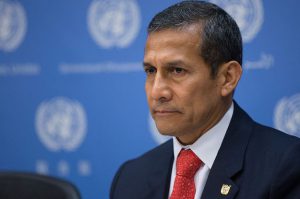
Peruvian President Ollanta Humala concluded a five-day visit to the People’s Republic of China after meeting with Chinese Prime Minister Li Keqiang and representatives of top corporations on Monday. The objective of the meetings is to boost bilateral relations and attract strategic Chinese investments in Peru.
China is Peru’s main source of foreign investment, and the two countries signed a Free Trade Agreement on April, 2009. For Peru, increasing trade with China is a key way of diversifying its export economy. For China, Peru is an important source of minerals, primarily copper. Noting the mutual interests of the two countries, Li Keqiang called on the Peruvian leader to enhance collaboration in fields such as trade and investment, finance, infrastructure, technology and human resources.
Peru still has a lot of room to grow in terms of non-traditional exports such as squid, grapes, seaweed, wood, liver and frozen foods. According to the Chamber of Chinese-Peruvian Commerce (Capechi), Peruvian exports to China are expected to increase by 25 percent in 2013. China’s growing demand for energy has led to plans to build and operate a natural gas pipeline—the Southern Peruvian Gas Pipeline—which will provide gas to Cusco, Arequipa, Puno, Moquegua and Tacna.
A stronger partnership with Peru is part of a greater Chinese effort to consolidate its presence in Latin America. During his tour through Brazil, Argentina, Uruguay and Chile in 2012, former Chinese premier Wen Jiabao advocated for the creation of a China-Latin America cooperation forum, a platform to improve market conditions and increase political trust between China and Latin American nations. Today, China is the leading commercial partner of Brazil, Chile, Peru and Argentina; and the second of Costa Rica, Mexico and Uruguay.
![]() |
President Ollanta Humala is on a three day visit to France, Spain and Portugal as part of his effort to strengthen Peru’s ties with European countries. On Thursday, Humala met with his counterpart in France, François Hollande, where both leaders signed agreements related to student exchanges programs and mutual recognition of diplomas.
![]() |
Peruvian President Ollanta Humala indicated Wednesday that his government had received no formal request from former President Alberto Fujimori’s family for an official humanitarian pardon from the state. However, according to Fujimori’s lawyer, César Nakazaki, Fujimori is planning to ask for a pardon sometime this week, with legal documents expected to be submitted this Friday.
Fujimori is currently serving a 25-year prison sentence for human rights violations that occurred during his 1990-2000 presidency. The sentence was handed down in 2009 after Fujimori was linked to the massacre of 25 people by the Grupo Colina paramilitary death squad in the early 1990s and the kidnapping of a businessman and a journalist in 1992. About 70,000 people died in Peru’s internal conflict, which occurred as the government launched an offensive against the Maoist-inspired Shining Path rebels.
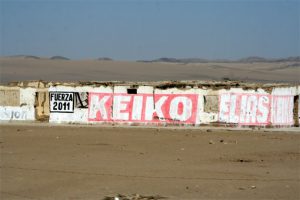
Fujimori, 74, is currently suffering from oral cancer and has undergone five operations since 1997, according to his daughter, Keiko Fujimori, who ran for president in 2011. In September, Fujimori’s family said that the former president would seek a humanitarian pardon. “I will continue to fight for my health, my liberty and my innocence,” the elder Fujimori said in a letter.
Humala has said he will not grant the former president a pardon unless he or his family expressly requests one. “There’s nothing written on this topic, and therefore, it’s not on the government’s agenda right now,” said Humala during a press conference at a hotel in Miraflores.
Fujimori’s son, Kenji Fujimori, said his father would not ask for forgiveness for crimes that he didn’t commit, but that he may be willing to admit he was at fault for certain “errors” during his administration.
The Fujimori family says that the former president is focusing on his health, but some Peruvian politicians have speculated that the elder Fujimori could re-enter politics in 2016. “For grave crimes against humanity, Fujimori was only sentenced to 25 years; there was no permanent disqualification [from politics]because the Public Ministry never asked for one,” said Congressman Heriberto Benítez.
![]() |
The Peruvian Congress gave their vote of confidence to President Ollanta Humala on his new cabinet early Tuesday morning—Peru’s third cabinet under President Humala, who has one year in office remaining. After 10 hours of debate, 73 legislators voted in support of the new cabinet and 38 opposed it.
The debate largely focused on how the new cabinet will work to address the social conflicts that have plagued the country recently—specifically mining conflicts in Cajamarca—as well as security issues and budget expenditures to respond to increasing social demands.
The prime minister, Juan Jiménez, presented the potential cabinet members to Congress on Monday afternoon. The new cabinet members will have a significant role to play in the forthcoming months since many ministries plan still have yet to spend almost 80 percent of their budgets.
![]() |
Top stories this week are likely to include: Chávez travels to Brazil for Venezuela’s formal incorporation into Mercosur; Foreign mining to continue in Peru, as Humala marks one year in office and reaffirms commitment to social spending; Cuba set to further open its economy; Argentina tightens control over energy industry; and Colombia’s economy slows.
Chávez travels to Brazil: Venezuelan President Hugo Chávez travels to Brasilia today—his first official foreign trip of the year—to attend Tuesday’s Mercosur summit. The gathering has been convened to formalize Venezuela’s entry into Latin America’s largest trade bloc, whose members include Argentina, Brazil, Paraguay, and Uruguay. Paraguay’s membership was suspended on June 28 following the ouster of President Fernando Lugo. For six years, Venezuela’s entry had been blocked by the Paraguayan parliament, but once suspended, the other three countries quickly moved forward with Venezuela’s membership. Still, questions remain about the process in which Venezuela has joined Mercosur: “Suspending Paraguay due to Mercosur’s determination that it undemocratically removed President Lugo, and then using the opening created to then welcome in Chávez is a double standard. Clearly, realpolitik won out over ideology,” says AQ Senior Editor Jason Marczak. It is expected that Chávez will use the visit as a sign of his good health and strength to compete in Venezuela’s presidential elections on October 7.
Mining—and associated controversies—to continue in Peru: Production is expected to resume in the next few days at the La Oroya metallurgical complex in the Peruvian Andes, after the plant—owned by the U.S.-based company Doe Run—had been shut down for three years. Rocío Chávez, the manager of Doe Run Peru, said operations will begin with the zinc-processing circuit and continue with the processing of lead and copper.
The announcement that metallurgical operations would resume in the small mountain town of La Oroya, where economy has long depended on mining but where residents have suffered from exposure to the plant’s toxic wastes and emissions, coincided with President Ollanta Humala celebrating one year in office. With his approval rate having fallen to an all-time low of 40 percent—largely a result of social unrest over mining (today there are more than 250 disputes nationwide over natural resources)—Humala vowed to ramp up social spending for the poor and spread the benefits of Peru’s economic boom to all its citizens.
Cuba to continue opening its economy: Following last week’s meeting of the National Assembly, Cuba will begin implementing a series of reforms that will continue moving its economy in a more market-friendly direction. A new tax law—to be published next month and to go into effect next year—will replace an old Soviet-style system and eventually require everyone to pay income and property taxes for the first time since the 1960s, according to Marino Murillo, head of the Communist Party commission responsible for implementing reforms. Murillo also announced that an unspecified number of state-owned companies will be partially deregulated by the end of the year. They will be allowed to make day-to-day business decisions without awaiting government approval and will be evaluated on “four or five indicators” such as earnings and productivity. In addition, 222 small- to medium-size businesses will become cooperatives—previously an option only available in the agricultural sector.
Read more about Cuba’s economic opening in the latest issue of Americas Quarterly.
Controversy over government intervention in Argentina’s energy industry: Controversy over the state’s role in the economy is likely to continue this week in Argentina, following Deputy Economy Minister Axel Kicillof’s announcement last Friday that the federal government will assume greater control over private oil companies. According to a decree published in the Official Gazette, oil companies operating in Argentina will have to present an annual investment plan by September 30 and could face fines or other sanctions if they fail to comply with this and other rules. This morning, Planning Minister Julio de Vido denied that the government is “intervening” in the energy sector, calling the new regulations “planning, pure and simple,” but that is unlikely to put Argentine and foreign business communities at ease.
Colombian economy at risk of downturn: Economists and administration officials are likely to be keeping a close eye on Colombia’s economy as prices for oil—the country’s top export—continue to decline. On Friday Colombia’s central bank unexpectedly reduced its overnight lending rate from 5.25 percent to 5 percent—the country’s first interest-rate cut in two years. Central Bank president Jose Dario Uribe said, “Global economic growth continues to weaken more than expected;” the bank adjusted its forecast for economic growth in Colombia in 2012 to 3 to 5 percent, down from its previous target of 4 to 6 percent. Andres Langebaek, senior economist at Banco Davivienda SA, who correctly predicted the cut, forecasts that the Central bank will cut rates a further 0.75 percentage point by year-end. Analysts will be on alert for inflation, although the risk is “really benevolent,” said Camila Estrada, chief analyst at Bogotá-based Helm Bank SA.
![]() |
Amid continued crackdowns on anti-mining protesters and growing social unrest, Prime Minister Oscar Valdés stepped down yesterday as part of President Ollanta Humala’s cabinet reshuffle. Valdés, a former army officer, assumed office in December 2011. Two government sources said the president would likely pick as Valdés’ successor Justice Minister Juan Jimenez, a human rights lawyer who has already replaced Valdés in dealing with many controversies.
Valdés tweeted his resignation, thanking friends for their “support and constructive criticism.” In keeping with Peru’s constitution, all other cabinet ministers also offered their resignations. While some, like Finance Minister Luis Miguel Castilla, are likely to be reappointed, Interior Minister Wilver Calle is also expected to be replaced.
Promoting Jimenez may help Humala counter the argument that his government has taken a militant approach toward civilians protesting major mining projects, including the $4.8-billion Minas Conga project operated by the Minera Yanacocha consortium (led by U.S.-based Newmont Mining) in the northern Cajamarca region, where clashes have already led to the deaths of five civilians this month. The conflicts have largely erupted over environmental concerns, with anti-mine protesters contending that mining operations will lead to water, air and agricultural contamination. Regional government leaders who have led the protests also say Humala has turned his back on the rural poor, who largely voted for him in last year’s presidential election but have benefited little from mining activities in their communities. President Humala has said that the Conga project will move forward as long as the company meets certain requirements aimed at mitigating its environmental impact, including ensuring that water in the surrounding area is both available and of good quality.
Oscar Valdés’ predecessor, Salomon Lerner, resigned after five months of serving in the Humala administration. His departure was also precipitated by social unrest, which at that time caused President Humala to declare a state of emergency in the province of Cajamarca.
Humala’s approval ratings fell to 40 percent in July, according to the Ipsos Apoyo survey—down from a peak in February of 59 percent. Analysts attribute the decline in popularity to the growing discontent and social unrest that has claimed the lives of 15 people since Humala took office. The president is expected to deliver a nationwide speech marking his first year in office on July 28.
![]() |
Top stories this week are likely to include: post-election protests in Mexico; OAS to issue its report on Fernando Lugo’s ouster; anti-mining protests continue in Peru; Raúl Castro arrives in Vietnam; and ASEAN-Latin America Business Forum gets underway.
PRD Alliance Questions Peña Nieto’s Victory: Although officially declared the winner on Friday by the autonomous Instituto Federal Electoral (Federal Electoral Institute—IFE), Mexican President-elect Enrique Peña Nieto still faces criticism of fraud by second-place candidate Andrés Manuel López Obrador (AMLO) of the Partido de la Revolución Democrática (Party of the Democratic Revolution—PRD) . Ricardo Monreal, AMLO’s campaign manager, accused the PRI of vote-buying at a press conference this morning. In addition, tens of thousands of demonstrators claiming to belong to no political party protested over the weekend in Mexico City decrying the IFE result. Will the situation turn to a repeat of 2006? AQ Senior Editor Jason Marczak notes there’s a clear difference between the 2012 election and what happened six years ago: “With only a few hundred thousand votes separating López Obrador and Calderón in 2006, AMLO saw an opening for a recount through protests and pressure on a still fragile electoral process. But this time, in losing by about 3.5 million votes, AMLO will only serve to discredit his nationwide appeal by crying foul and once again being a sore loser.”
Updates on Lugo’s Ouster: The Organization of American States (OAS) is expected to release its report today on its fact-finding mission last week to Paraguay to investigate former Paraguayan President Fernando Lugo’s removal from office. The delegation was headed by OAS Secretary-General José Miguel Insulza. The U.S. has said it would wait for the OAS verdict to issue a formal statement on the legality of the ouster—a move that has drawn criticism. With Venezuelan Foreign Minister Nicolás Maduro reportedly endorsing a military coup to restore Fernando Lugo to power, the situation in Paraguay is still contentious and perhaps the OAS report will provide more clarity on the issue.
Peruvian Anti-Mining Protests Heat Up: After police clashed with protesters demonstrating against natural resource extraction in northwest Peru, the death toll has climbed to five. A state of emergency has been imposed in the Cajamarca region, and Peruvian President Ollanta Humala has come under fire for his administration’s handling of the demonstrations. Nevertheless, tensions are still high and this week could very likely see a new wave of protests. AQ Editor-in-Chief Christopher Sabatini, who is in Huaraz, Peru this week, notes, “President Humala will have to do something to address the protests, including trying to verify claims of pollution and improving overall access to social services in mining communities—while not appeasing some of the more extreme groups.”
Raúl Castro in Vietnam: After wrapping up a trip to China last week, Cuban President Raúl Castro arrived in Vietnam yesterday for a four-day official visit aimed to strengthen bilateral relations. This is Castro’s first visit to Vietnam as Cuba’s president, and he is scheduled to meet with Vietnamese Prime Minister Nguyen Tan Dung, Community Party General Secretary Nguyen Phu Trong and Vietnamese President Truong Tan Sang. Sabatini observes, “The purpose of the trip is twofold: First, to help Raúl and the group better understand the process of economic and limited political reform that has taken place in Vietnam as a model for Cuba—though the comparison is thin. But second, Cuba—in this and other efforts it has made—is trying to diversify its economic relations and lifeline beyond Venezuela.”
ASEAN, Latin America Deepen Commercial Ties: The third annual business forum between Latin American nations and ASEAN (Association of Southeast Asian Nations) members takes place today and tomorrow in Jakarta, Indonesia. The theme of the forum is: “Towards a Sustainable Future.” ASEAN is comprised of Brunei, Burma, Cambodia, Indonesia, Laos, Malaysia, Philippines, Singapore, Thailand, and Vietnam. For more information on the forum, including programs, speakers, organizers, and partners, access its website.
![]() |
Top stories this week are likely to include: G-20 economic summit in Los Cabos; Rio+20 conference on sustainable development in Rio de Janeiro; the hemisphere reacts to Obama’s immigration policy shift; South Korea’s president and China’s premier embark on separate Latin America tours; and Humala’s approval hits a new low.
G-20 Summit Kicks Off in Mexico: The annual global economic and financial summit known as the Group of Twenty, or G-20, takes place today and tomorrow in Los Cabos, Mexico, after having been preceded by the B-20 business summit. The G-20 is comprised of the European Union members and 19 other major economies; together, they represent 90 percent of the world’s GDP, 80 percent of worldwide commerce and two-thirds of the globe’s population. The world will pay close attention to any developments from the summit, given the fragility of the eurozone and the apparent slowdown in China, which has led to a growth deceleration in Brazil and other economies dependent on Chinese manufacturing. AQ Editor-in-Chief Christopher Sabatini posits, “President Felipe Calderón has promised a major breakthrough on the economic crisis that has the world on edge. But can the G-20 really affect the deeper structural and confidence issues facing the global economy?”
Rio+20 Hits the Ground Running: Although the United Nations Conference on Sustainable Development, or Rio+20, began last week, the high-level meetings take place from Wednesday through Friday after the G-20 concludes. Nearly 115 heads of state are expected to attend this environmental summit, which is the largest UN conference in history—with nearly 50,000 in attendance. However, U.S. President Barack Obama, British Prime Minister David Cameron and German Chancellor Angela Merkel will be noticeably absent. Will Rio+20 produce any tangible results? Notes Sabatini: “What was once considered the starting point of global discussions over environmental issues has unfortunately become just an anniversary. To inject this forum with the importance and urgency that is necessary to change the course of global environmental issues, the United States and other developed nations need to step up—this time for real.”
The Hemisphere Reacts to Obama Policy Shift: Friday’s surprise announcement from the U.S. Department of Homeland Security that the Obama administration will stop deporting young undocumented immigrants with no criminal records and who have completed some college education or military service sent shockwaves around the U.S. and beyond. While critics of the Obama administration, such as Arizona Governor Jan Brewer, derided the move as “backdoor amnesty,” the League of United Latin American Citizens (LULAC) praised the Obama administration for answering “the prayers of families across the nation by implementing a long-awaited change to the current immigration policy.” However, some in Latin America lament the timing of the directive. La Tribuna in Honduras believes that the policy shift “arrived late” for many Hondurans, with La Opinión concurring that the Obama plan came late for “many dreamers.” Says Sabatini: “While appreciated, it’s sad that it’s taken this long to get to an issue that should have been easy three years ago. Has the immigration debate sunk so low and political opportunism climbed so high that this is the most important pro-immigration piece of policy reform that can be passed today—and clearly for electoral reasons?” AQ Senior Editor Jason Marczak agrees: “The president’s executive action is a great moment for the 800,000 undocumented youth who grew up in the United States and will now be able to more fully contribute to our society. But why couldn’t this have been done in late 2010 when the DREAM Act was blocked in Congress? The beneficiaries of this policy could have been legally working without the fear of deportation for the last 18 months if action had been taken sooner.”
South Korean and Chinese Leaders to Visit Latin America: South Korean President Lee Myung-bak will attend the G-20 and Rio+20 conferences, and then depart afterward to Chile and Colombia later this week for bilateral visits. Further, Chinese Premier Wen Jiabao will pay official visits to Brazil, Uruguay, Argentina, and Chile, where he will meet with the presidents of those four countries and deliver a speech at the UN Economic Commission for Latin America and the Caribbean (ECLAC) secretariat in Santiago.
Humala’s Approval Rating Hits New Low: Peruvian President Ollanta Humala’s approval rating has hit its lowest mark since he took office in July 2011, according to a new poll from the Ipsos Apoyo firm published yesterday. His approval rating stands at 45 percent while his disapproval rating is 48 percent. This is likely due to his stance on pushing forward with mining projects and invoking the emergency law to quash protests in northern Peru. Can he turn the unpopular tide? Sabatini says that “President Humala has failed to articulate how his outsider campaign and alleged commitment to social inclusion is different from his predecessors. In the absence of a defined, structured party system, Peruvian presidents are hostage to the vicissitudes of popular opinion—and this can be very dangerous.”
![]() |
Top stories this week are likely to include: proposed OAS human rights commission reform; OAS meeting underway in Bolivia; Pacific Alliance meeting on Wednesday; Peru-Chile relations; and no end in sight to the anti-mining protests in Peru.
OAS Human Rights Reform Considered: Organization of American States (OAS) member states such as Ecuador and Venezuela are calling for reforms to the Inter-American Commission on Human Rights (IACHR), the independent human rights organ of the regional body. Ecuadorian Foreign Minister Ricardo Patiño called for changes such as cutting funding for the OAS special rapporteur on press freedom, warning that the OAS “will disappear” otherwise, which earned the endorsement of Venezuela. Insulza has further called for renegotiation of the IACHR’s statute and procedures including allowing governments to decide how the IACHR monitors them. Last Friday, the Washington Post editorial board responded to these proposals, writing, “It’s not surprising that Venezuela and its allies would push for noxious initiatives, or that Mr. Insulza would serve as their frontman […] Canada and the United States… and their democratic allies should work to ensure that the Insulza proposals are rejected—and that the OAS is perserved as an institution committed to democracy and human rights.”
AQ Editor-in-Chief Christopher Sabatini concurs: “The reasoning behind the proposals that Insulza is bringing to the General Assembly is unclear. What is clear is that their effect would be to whittle away at much of the independent voice of the Commission—the most effective office in the OAS—and he’s doing it by making common cause with some suspect governments."
Developments at the OAS General Assembly: Representatives from the 35 OAS member states are in Cochabamba, Bolivia, from June 3 to 5 for the organization’s 42nd General Assembly. In addition to the IACHR reforms, other issues on the table include Bolivian President Evo Morales’ desire for forward movement in regard to his country’s lack of access to the Pacific Ocean, a longstanding dispute with Chile. Argentina’s leadership wishes to rally hemispheric consensus around its claim to the Falkland (Malvinas) Islands. OAS Secretary-General José Miguel Insulza briefed the assembly that Latin America is still far from achieving the UN’s Millennium Development Goals (MDGs). The UN has set 2015 as its target date for achievement of the MDGs. But expectations for concrete results are not high, notes Sabatini: "The OAS general assembly has become a theater for overreach and meaningless debate."
![]() |
Top stories this week are likely to include: Hugo Chávez post-radiation therapy; Michel Martelly begins his second year as president; Dominicans head to the polls; Peru minus two ministers; and Brazil creates a new social program.
Chávez Ends Cancer Treatment: Venezuelan President Hugo Chávez returned from Cuba on Friday claiming that he had ended his radiation therapy session in Havana “in a successful manner.” This appears to be the first full week in the past several weeks where Chávez governs the country while on its soil. Despite his repeated absences, the latest poll by Datanálisis reports that Chávez returns home with a 17 percentage point advantage over opposition candidate Henrique Capriles Radonski ahead of the October presidential election. Now the question is whether Chávez is truly recovered; the recently-formed Council of the State casts some doubt. AQ Editor-in-Chief Christopher Sabatini points out, “Sure Chávez says he is in the clear, and we all hope he is. But President Chávez has said that before. Given the chronic lack of transparency of this regime, it’s impossible to know.”
Martelly in Second Year: Haitian President Michel Martelly was sworn in one year ago last Friday, and this is his first full week of the new presidential year. The Associated Press ranks his first year as one of “modest gains” that many in Haiti view with “guarded surprise.” Despite clashes with parliament, Martelly has overseen successes such as reduced tuition for schools, funded by a tax on international phone calls, as well as a steady recovery after the devastating January 2010 earthquake. But it has not been without challenges. According to AQ Senior Editor Jason Marczak, “A top priority in the next few months will be getting to the UN to devote all the resources necessary to control the cholera outbreak. This cannot be a piecemeal approach; it must be dealt with rapidly and comprehensively before more Haitians die.”
Elections in the Dominican Republic: Dominicans elect a new president on Sunday, May 20; the two leading candidates are Hipólito Mejia of the Partido de la Revolución Dominicana (Dominican Revolution Party—PRD) and Danilo Medina of the ruling Partido de la Liberación Dominicana (Dominican Liberation Party—PLD). President Leonel Fernández of the PLD is not running for re-election. Sabatini notes, “This election, and the Dominican Republic’s future, turns really on the ability of the PLD and the political system’s capacity generally to renew itself. The truth is: without broader leadership change across the parties, the political and economic miracle of the DR may be at risk—not now, but in the future.”
Peru and the Ministerial Gap: After last week’s resignation of the interior and defense ministers, Peruvian Prime Minister Oscar Valdés must quickly restore order to President Ollanta Humala’s cabinet. The ministers resigned after a failed operation against the Shining Path rebels killed at least nine soldiers, and they faced a congressional censure. This is not the first ministerial change; the entire cabinet was dissolved by former Prime Minister Salomón Lerner after Indigenous Peruvians protested against the controversial Conga mine. “Increasingly, we’re seeing a government that is shifting more in favor of investor rightism in large part as a recognition of the need of the state to generate revenue to support its social inclusion agenda,” observes Sabatini.
Brazil Combats Extreme Poverty: Brazilian President Dilma Rousseff announced a new social program to fight extreme childhood poverty yesterday. The program, Brasil Cariñoso (Caring Brazil), will spend $4 billion to create 6,000 new daycare units for children and an increased subsidy of the popular Bolsa Família program—and it will affect the most impoverished areas of Brazil, the north and northeast. Marczak says, “The very poor have yet to join in the Brazil miracle, but this newest program has the right ingredients for their young children to have access to many of the foundations needed for success. Once again, Brazil is an example for the region.”
AQ's coverage and post-trip analysis of the President's May 2-4 visit.