
btn_subscribe-top
btn_give-a-gift
btn_login
btn_signup
btn_rss

Monday Memo: AQ’s Top Expected Stories for the Week of August 27

August 27, 2012

by AQ Online

Top stories this week are likely to include: impact of the Amuay refinery tragedy in Venezeula; aftermath in the Caribbean of Tropical Storm Isaac; YPF and Chevron move toward an alliance; fallout of a cabinet shift in Colombia; and Canada seeks to strengthen commercial ties with Southeast Asia.

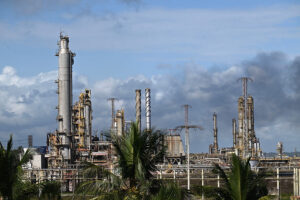
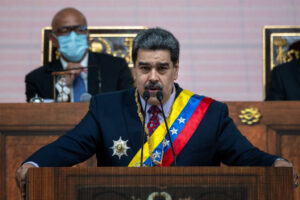
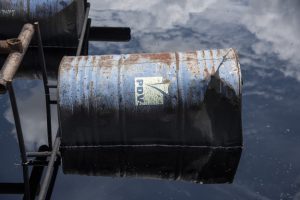
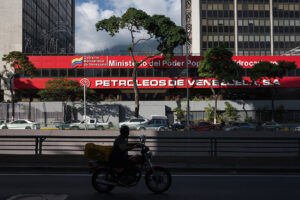
Disaster at Amuay Refinery Continues: After Saturday’s deadly explosion at the Amuay oil refinery in Venezuela’s Falcón state, much remains up in the air. Flames were still burning as of this morning, and President Hugo Chávez has ordered an investigation and declared three days of mourning. However, as the death toll remains unpredictable—it already climbed to 41 from 39 overnight, with 20 of the dead belonging to Venezuela’s National Guard—pay attention to any developments in the aftermath of the worst accident in Venezuela in recent memory.

Isaac Causes Damage: Over the weekend, Tropical Storm Isaac slammed Hispaniola, killing 10 total—eight in Haiti and two in the Dominican Republic—and displacing thousands. Haiti’s Civil Protection Office reported 14,000 had fled their homes and another 13,500 were living in temporary shelters. How will the island rebound? And what lies in store for Isaac? It is picking up speed in the Gulf of Mexico and will likely turn into a hurricane early this week, with projected landfall near New Orleans, Louisiana, on Wednesday—six years to the day after Hurricane Katrina ravaged the coastal city. (Donate to the American Red Cross.)

YPF, Chevron in Advanced Talks for Alliance: YPF, Argentina’s state-controlled energy company, is mulling a strategic accord with Chevron, Latin America’s leading private energy investor. YPF CEO Miguel Galuccio held a meeting on Friday with Ali Moshiri, Chevron’s Latin America chief, and noted that YPF needs more experienced partners to help develop Argentina’s massive shale reserves, which are the world’s third largest. Of particular interest is the Vaca Muerta field in the Nequén province, and Chevron is already involved in three wells in Vaca Muerta. Galuccio will present a five-year plan this Thursday.

Cabinet Shakeup in Colombia: Having recently crossed the halfway threshold into his four-year term, Colombian President Juan Manuel Santos decided to reshuffle his cabinet last Thursday when he asked all 16 of his ministers to resign. Some posts have been reassigned; former mines minister Mauricio Cardenas has assumed the finance portfolio. However, Cardenas’ replacement, as well as other vacant posts, has not yet been named. This week will likely see movement in Santos’ cabinet.

Canada Seeks Increased Trade Ties in Asia: Canadian Trade Minister Ed Fast begins a trade mission today to Southeast Asia, where he will conduct official visits to Vietnam, Thailand and Cambodia followed by the first Canada-ASEAN Economic Ministers Meeting in Cambodia. Fast will then continue to Burma, marking the first time a Canadian trade minister has ever done so. In a statement, Fast said, “This year, as we celebrate the 35th anniversary of relations between Canada and the Association of Southeast Asian Nations, we are committed to moving our trade and investment relationship with ASEAN forward.”

Tags: Canada, Colombia, Dominican Republic, Venezuela, oil, Argentina, Haiti, Hugo Chavez, Juan Manuel Santos, YPF, Mauricio Cardenas, ASEAN, Ed Fast

Oil and Education in Brazil

November 9, 2011

by Eduardo J. Gomez

The author also wrote “Dilma’s Education Dilemma” in the Fall 2011 issue of AQ.

When Dilma Rousseff assumed the Brazilian presidency in January 2011, she inherited perhaps Brazil’s most challenging socioeconomic issue to date: improving its education system. In recent years, Brazil has registered low rankings in international standardized assessments of topics like writing, reading comprehension and math. When coupled with other longstanding issues like inadequate federal funding as well as insufficient human and infrastructural resources, Brazil’s system is simply not able to keep up with the economy’s growing demands—especially in the high-tech sector.

Nevertheless, my article in the Fall 2011 issue of Americas Quarterly explains the delicacy of improving system: while increasing federal spending for education, Dilma must find ways to prune the budget, reduce fiscal deficits and keep foreign investors happy. By following in the footsteps of her predecessor, Luiz Inácio Lula da Silva (Lula), Dilma will turn to state-owned resources like oil to fund education policies—and maintain or increase the level of foreign investment.

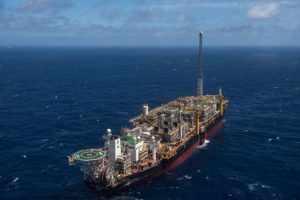
Federal efforts to address the decline in educational performance began under Lula. While education reform was also important under the Cardoso administration (1994-2002), the Lula administration sought to expand and use its oil resources in order to fund education policy rather Cardoso’s approach which had been to pursue privatization and decentralization. In response to the discovery of new Pré-Sal (pre-salt) oil reserves off of the coast of Rio de Janeiro in 2007, before two years had passed Lula created a new federal agency for the national reserves and a “social fund” within the agency. This social fund uses approximately half of Pré-Sal’s earnings to fund education policy, signaling a clear break from Cardoso’s anti-statist approach to education policy—that is, to strategically expand and use state-owned resources in order to enhance the quality of education.

Read More

Tags: Education, oil, Dilma Rousseff, Bolsa Familia

Mexico's New Refinery: The Wait is Finally Over

August 19, 2009

by Eugenio Fernández

In 2008, in the midst of the debate over oil reform, Mexican President Felipe Calderón promised to build a new refinery. Now, one year down the road, the refinery’s location and a $9 billion investment have finally been chosen in a process that was the victim of a slow-moving bureaucratic machine.

Whenever it had seemed that the final decision will at last be announced, some other delay appeared. The process to pick a spot, secure land and actually begin the construction has revealed many of the inefficiencies of the Mexican state, including the lack of a trustworthy land registry and the inability of both federal and state governments to move forward with their decisions.

Calderon's choice—or failure to make one—surprised quite a few. Instead of keeping the old Mexican tradition of vertical orders, he started a contest for the refinery. States who felt they could manage the facility were to send proposals and studies to Pemex (the state oil company), and technicians in the company would then decide for the president. After months of bitter debate in the media between governors and pundits, oil experts announced the winner, or rather a winner and a half, on April 14. The state of Hidalgo, some 50 miles (80 kilometers) north of Mexico City, was selected as the preferred refinery location. But since Hidalgo is governed by the opposition Institutional Revolutionary Party (PRI), the president’s party (National Action Party – PAN) received a consolation prize: expansion of the existing refinery in Guanajuato, a state they govern. The "award" was given on the condition that states acquired and donated to Pemex the land needed for the refineries in less than 100 days.

Read More

Tags: Mexico, oil, Felipe Calderon, Pemex, Guanajuato, Hidalgo


Connect with AQ


Twitter YouTube Itunes App Store


Issues in Depth: President Obama's travel to Mexico, Costa Rica

AQ's coverage and post-trip analysis of the President's May 2-4 visit.

» Read more.


WEB EXCLUSIVES

Most Popular

MOST POPULAR ON AQ ONLINE

  • Most Viewed
  • Past:
  • 1 day
  • 1 week
  • 1 month
  • 1 year

NOW ON AS/COA ONLINE

Loading...

AQ MEDIA PARTNER

Loading...