
![]() |
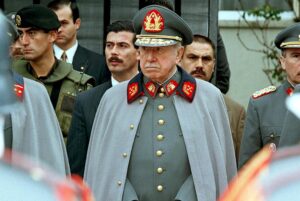
Despite transferring presidential power to democratically elected Patricio Aylwin in 1990, General Augusto Pinochet’s reign as military ruler and dictator (1973-1990) remains a controversial topic among the Chilean people. It then came as no surprise that the lead-up last week to Sunday’s screening of “Pinochet,” a sympathetic documentary paying homage to the army general, led to significant public backlash.
“Pinochet” aims to outline political context leading up the 1973 military coup and focus on the positive outcomes of the consequent 17-year rule. Over 1,000 people attended the screening at Santiago’s Teatro Caupolicán on Sunday, including politically conservative invitees from the United States, Spain, France, and Argentina. As the opening credits appeared on screen that bore the title of the dictator’s surname, the audience erupted into empathic applause.
Protest groups lobbied to have the screening banned, calling for the federal government to clamp down on what they see as implicit approval of the human rights violations that were committed across 17 years. More than 3,200 people were murdered or disappeared during Pinochet’s rule, while 37,000 cases of torture and illegal imprisonment have been documented.
“In Chile, state-sponsored terrorism existed, torture existed, forced disappearances and executions existed, along with the systematic violation of hundreds of Chileans for over 17 years. We can’t allow a tribute to this,” human rights activist Alejandra Arriaza decried last week.
AQ's coverage and post-trip analysis of the President's May 2-4 visit.